
 Voorvertoning
 Verstuur
 Delen
Delen
 Details bekijken
 Gids
Gids

 Download
 Vergelijkbare items
 Röntgenonderzoek
 Diavoorstelling
 Q&A
Q&A Statistieken
Self-portrait

- 69.0 x 58.0 cm


 Lees meer
Giclée / Kunstafdrukken
Giclée- of canvasafdruk van museumkwaliteit met een snelle productie en flexibele afwerkingsmogelijkheden. ( Bestel handgeschilderde reproductie Schakel over naar digitale afbeeldingen)




P118B €10

P118H €10

P118W €10

P438Z €10

P508JH €12

P508YH €12

P805H €10

P805Z €10

P919BZ €10

P919G €10

P919XJ €10

P959ZH €10

P968JZ €12

W106C €8

W218G €10

W218JH €8

W218Y €10

W307PJ €10

W316G €10

W316PJ €8

W316Y €10

W398PJ €8

W4111J €10

W500HY €15

W500JH €15

W692G €12

W849H €8

W940BG €15

W953PJ €8




Kies uit onze vooraf ingestelde maten die overeenkomen met de originele verhoudingen van het kunstwerk.

Voer de gewenste breedte en hoogte in, passend bij uw lijst of muur. Een afdruk kan alleen worden ingekort en nooit groter worden gemaakt dan het origineel; een formaat met andere verhoudingen zal daarom een deel van de afbeelding verliezen. Wij sturen u een digitaal mockup ter goedkeuring voordat we tot drukwerk overgaan. De afbeelding op deze pagina toont niet de werkelijke uitsnede — dit is alleen te zien op het mockup.
Wereldwijde levering () binnen 2 weken in plaats van de standaard 4/5 weken. (2 november)

Gratis wereldwijde expressverzending

Hoogwaardig linnen canvas

Volledige verzendverzekering

Garantie op terugbetaling van invoerrechten

Garantie op exacte kleurweergave

Retourbeleid van 100 dagen (alleen bij defecten)

100% Geld-terug-garantie

Korting bij meerdere afnames
 De optie voor glas is alleen beschikbaar bij een formaat kleiner dan 110 cm.

Self-portrait
Giclée / Kunstafdrukken
Afmetingen reproductie
-


Eindtotaal
€ 72
A Portrait of an Era: Unveiling Joseph Wright's Self-Portrait
In late 2009, the National Gallery of Victoria received a remarkable gift – two paintings by the pivotal 18th-century British artist, Joseph Wright of Derby. Among these treasures is his “Self-Portrait,” a work that transcends mere likeness and offers an intimate glimpse into the mind of a revolutionary artist grappling with a rapidly changing world. More than just a depiction of a man in fur, this painting is a carefully constructed meditation on identity, artistic ambition, and the burgeoning fascination with light and shadow that defined Wright’s career – and indeed, the dawn of the Industrial Age.

The Language of Light and Shadow: Technique and Style
Wright’s mastery lies in his manipulation of chiaroscuro, a technique borrowed from Caravaggio but profoundly adapted to his own unique vision. The painting is dominated by a deep, enveloping darkness – a deliberate choice that serves not as an absence of light, but as the very canvas upon which Wright sculpts his subject's form. The soft, warm illumination that washes over Wright’s face, clothing, and hands isn’t harsh or dramatic; it’s subtle, almost diffused, creating a sense of intimacy and inviting the viewer into his private world. Notice the meticulous modelling of the fur collar, rendered with an astonishing level of detail – each strand appears to shimmer with reflected light. The rich green of his house-coat, Wright's signature color, is applied in smooth, layered glazes, adding depth and texture. The loose, expressive brushwork throughout contributes to a sense of immediacy, as if we are witnessing a fleeting moment captured on canvas.
A Symbol of Ambition: Context and Interpretation
This self-portrait isn’t simply a record of Wright's appearance; it’s a carefully considered statement about his artistic identity. The scarf wrapped around his head, a fashionable detail inspired by Rembrandt’s elaborate self-portraits, speaks to Wright’s awareness of artistic precedent and his desire to be recognized as a sophisticated artist within the European art world. The exotic headwear was already something of a cliché among Wright’s profession, but he elevates it with a confident bearing, suggesting an embrace of this trend as a symbol of his elevated status. The gesture of his chin resting on his hand – a pose of thoughtful contemplation – is remarkably endearing, devoid of the confrontational intensity often found in portraits of the era. Wright's gaze, rivetingly hypnotic, draws us into his psychological space, inviting us to share in his quiet introspection.
A Window into Derby’s Industrial Awakening
Created around 1768, this painting reflects Wright’s growing fascination with the scientific and technological advancements transforming England. Wright was a keen observer of the burgeoning industrial revolution, documenting its impact on society through his paintings – from scenes of scientific experimentation to depictions of factory life. This self-portrait can be seen as a microcosm of that larger movement: a man grappling with his own identity within a world undergoing profound change. It’s a testament to Wright's ability to capture not just the outward appearance of his subjects, but also their inner lives and aspirations. The painting stands as a poignant reminder of a pivotal moment in human history – a time when art began to reflect the complexities and contradictions of an era defined by innovation and transformation.
Veelgestelde vragen
Hoe is de kleurcompositie van "Self-portrait" door Joseph Wright van Derby opgebouwd?
In "Self-portrait" wordt een Gentle contrast gecombineerd met een Strong Color Unity harmonie.
Hoe verzadigd is het kleurenpalet van "Self-portrait"?
Het kleurenpalet van "Self-portrait" heeft een verzadiging van Muted.
Wie is de maker van "Self-portrait" en bij welke stroming hoort dit werk?
Joseph Wright van Derby creëerde "Self-portrait" binnen de Neoclassicism-stroming.
Biografie kunstenaar
The Luminary of Derby: Joseph Wright and the Dawn of the Industrial Age
Joseph Wright, known to history as “Wright of Derby,” was more than a painter; he was a visual philosopher who captured a pivotal moment in human existence. Born in 1734 amidst the burgeoning industrial heartland of England, Wright didn’t merely depict his time—he *illuminated* it, both literally and figuratively. His canvases weren't filled with grand historical narratives or aristocratic portraits alone; they pulsed with the energy of scientific discovery, the drama of enlightenment thought, and the stark beauty of a landscape irrevocably altered by human innovation. He stands as the first major artist to truly grapple with, and celebrate, the spirit of the Industrial Revolution, an era that would redefine civilization itself. His early life in Derby, steeped in the practical world of his father’s legal profession, provided a grounding that perhaps informed his later fascination with precision and observation. Though initially destined for law, young Joseph's inclination towards art proved irresistible, leading him to London at seventeen to study under Thomas Hudson, a prominent portrait painter of the day. This formal training laid a foundation, but it was Wright’s innate curiosity and independent spirit that would ultimately forge his unique artistic path.Chiaroscuro and the Spirit of Inquiry
Wright's technical mastery is immediately apparent in his dramatic use of chiaroscuro, a technique borrowed from Baroque masters like Caravaggio but employed with a distinctly modern sensibility. He wasn’t simply interested in creating visual drama; he used light and shadow to symbolize the unveiling of knowledge, the struggle between darkness and understanding. Consider masterpieces such as *An Experiment on a Bird in the Air Pump* (1768), where candlelight throws stark relief upon the faces of onlookers witnessing a scientific demonstration—a scene brimming with both wonder and anxiety. The painting isn’t just about the experiment itself; it's an exploration of humanity’s burgeoning curiosity, its willingness to probe the mysteries of nature, and the ethical implications of such endeavors. Similarly, *A Philosopher Lecturing on the Orrery* (1766) presents a captivating scene where a miniature solar system is unveiled, illuminating not only the faces of the captivated audience but also the expanding universe of scientific thought. These weren’t isolated incidents; Wright consistently sought subjects that allowed him to explore the intersection of science, philosophy, and human emotion. His style was subtly influenced by Alexander Cozens, particularly in his compositional approaches, yet he remained fiercely independent, forging a visual language uniquely his own.Beyond Portraits: Landscapes and the Romantic Sensibility
While Wright is celebrated for his “candlelight pictures,” to limit him to that single aspect of his oeuvre would be a grave disservice. He was also a gifted landscape painter, capturing the rugged beauty of Derbyshire and beyond with an increasingly Romantic sensibility. Works like *Dovedale by Moonlight* showcase his ability to evoke atmosphere and emotion through subtle gradations of light and shadow, transforming familiar scenes into evocative visions. His landscapes weren’t merely topographical representations; they were imbued with a sense of awe and reverence for the natural world—a sentiment that resonated deeply with the growing Romantic movement. Even in these seemingly tranquil scenes, however, there's often an undercurrent of melancholy or mystery, hinting at the fragility of nature and the inevitability of change. *Rydal Waterfall* (1795), exemplifies this skill, showcasing his mastery of capturing both power and serenity within a single composition.The Influence of Scientific Inquiry
Wright’s fascination with science wasn't merely aesthetic; it profoundly shaped his artistic vision. He meticulously studied the scientific demonstrations depicted in his paintings, often consulting with leading figures of the day to ensure accuracy. *An Experiment on a Bird in the Air Pump* is a prime example – Wright didn’t simply invent the scene; he visited the laboratory where it was conducted, observing the apparatus and interviewing the scientists involved. This commitment to realism—not just visual but also intellectual—elevated his work beyond mere illustration and established him as a chronicler of the age. His paintings weren't celebrations of progress in themselves, but rather explorations of the *consequences* of that progress – the potential dangers alongside the undeniable wonders. He captured not only the excitement of discovery but also the anxieties and uncertainties that accompanied it.A Legacy Forged in Light and Shadow
Wright’s impact on British art was profound, though perhaps not immediately recognized during his lifetime. He faced some resistance from the established artistic circles, notably declining full membership to the Royal Academy after feeling slighted—a testament to his independent spirit. However, his influence extended beyond formal institutions. Artists like William Pether and John Downman were directly inspired by his techniques, particularly his dramatic use of light and shadow. More broadly, Wright’s work paved the way for a new generation of artists who sought to capture the dynamism and complexity of the modern world. He didn't just paint what he saw; he painted what he *felt*—the excitement, the anxiety, the wonder—of an era on the cusp of transformation. His paintings remain powerful reminders of a time when humanity dared to question everything, to explore the unknown, and to embrace the possibilities of a new age. Today, his works are held in major museums worldwide, ensuring that the luminary of Derby continues to illuminate our understanding of art, science, and the human spirit.- Notable Works: *An Experiment on a Bird in the Air Pump*, *A Philosopher Lecturing on the Orrery*, *Dovedale by Moonlight*.
- Influences: Thomas Hudson, Alexander Cozens, Baroque masters like Caravaggio.
- Key Characteristics: Dramatic chiaroscuro, exploration of scientific themes, Romantic landscapes.

Joseph Wright van Derby
1734 - 1797 , Verenigd Koninkrijk
Belangrijkste feiten
- Artistic Movement Or Style: Chiaroscuro, Romantiek
- Artists Who Influenced This Artist:
- Thomas Hudson
- Alexander Cozens
- Date Of Birth: 3 september 1734
- Date Of Death: 29 augustus 1797
- Full Name: Joseph Wright of Derby
- Nationality: Britse kunstschilder
- Notable Artworks:
- Dovedale door maanlicht
- Filosoof leert...
- Experiment met vogel
- Place Of Birth: Derby, Verenigd Koninkrijk
Gerelateerde artikelen

Illuminating Enlightenment: Joseph Wright of Derby's Scientific Vision
Explore the captivating world of Joseph Wright of Derby, a pioneer of Enlightenment art. Discover his masterful chiaroscuro, scientific themes & investment potential. Expert analysis for collectors.

The Enduring Power of Painting: A Historical & Contemporary Exploration of Form and Emotion
Explore the rich history & enduring techniques of oil painting with OriginalUniqueArt. Discover masterpieces, learn about art collecting, and find authentic handmade reproductions crafted by skilled artists.

The Enduring Legacy of Oil on Canvas: Technique, History & Aesthetic Impact
Explore the rich history & techniques of oil painting – from Renaissance masters to Impressionism. Discover pigments, layering methods, and why this timeless medium endures. Expert insights for artists & art enthusiasts.
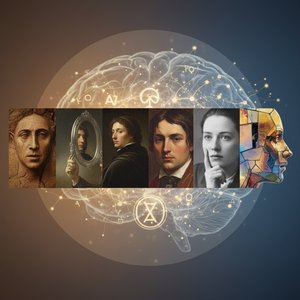
Reflecting the Self: A History of Portraiture & Psychological Insight
Explore the fascinating history of self-portraiture from Renaissance masters like Dürer & Rembrandt to modern interpretations. Discover the psychological insights and artistic techniques behind these iconic works. Expert analysis for art enthusiasts.

Oil on Canvas: A Historical & Technical Exploration of a Timeless Artistic Medium
Explore the rich history & enduring techniques of oil painting on canvas. Discover the science behind its longevity, conservation practices, and contemporary relevance. Expert insights for art enthusiasts.
