

 Bekijk op ware grootte
 Verstuur
 Delen
Delen
 Details bekijken
 Gids voor studentenkunstwerken

 Download
 Vergelijkbare items
 Röntgenonderzoek
 Diavoorstelling
 Statistieken
Untitled (red and blue reflections on sewer covers in wet street)
 Collage
- WallArt
- Surrealism
 Modern
 23.0 x 18.0 cm
 Lees meer
Giclée / Kunstafdrukken
Giclée- of canvasafdruk van museumkwaliteit met een snelle productie en flexibele afwerkingsmogelijkheden. ( Koop handgeschilderd kunstwerk Schakel over naar digitale afbeeldingen)




P118B $10

P118H $10

P118W $10

P438Z $10

P508JH $12

P508YH $12

P805H $10

P805Z $10

P919BZ $10

P919G $10

P919XJ $10

P959ZH $10

P968JZ $12

W106C $8

W218G $10

W218JH $8

W218Y $10

W307PJ $10

W316G $10

W316PJ $8

W316Y $10

W398PJ $8

W4111J $10

W500HY $15

W500JH $15

W692G $12

W849H $8

W940BG $15

W953PJ $8




Kies uit onze vooraf ingestelde maten die overeenkomen met de originele verhoudingen van het kunstwerk.

U kunt uw eigen afmetingen opgeven om in een specifieke lijst of ruimte te passen. Als de door u gekozen maat niet overeenkomt met de proporties van het originele kunstwerk, zullen wij de afbeelding bijsnijden of uitbreiden met een gespiegelde of effen rand. Een digitaal mockup wordt ter goedkeuring naar u verzonden voordat de productie begint.
Houd er rekening mee dat de preview op het scherm de werkelijke bijsneding of uitbreiding niet weergeeft. Alleen de mockup toont de uiteindelijke compositie nauwkeurig.
Hoewel aangepaste maten beschikbaar zijn, raden wij aan een afmeting uit de vooraf bepaalde lijst te kiezen om de originele proporties te behouden.
Wereldwijde levering () binnen 2 weken in plaats van de standaard 4/5 weken. (26 september)

Gratis wereldwijde expressverzending

Hoogwaardig linnen canvas

Volledige verzendverzekering

Garantie op terugbetaling van invoerrechten

Garantie op exacte kleurweergave

Retourbeleid van 100 dagen (alleen bij defecten)

100% Geld-terug-garantie

Korting bij meerdere afnames
 De optie voor glas is alleen beschikbaar bij een formaat kleiner dan 110 cm.

Untitled (red and blue reflections on sewer covers in wet street)
Giclée / Kunstafdrukken
Formaat reproductie
-


Totaalprijs
$ 81
Untitled (red and blue reflections on sewer covers in wet street) - A Study in Urban Surrealism
Joseph Cornell's Untitled (Red and Blue Reflections on Sewer Covers in Wet Street), created circa 1940s, is a captivating collage that exemplifies the artist’s unique ability to transform mundane urban scenes into evocative works of art. Measuring just 23 x 18 cm, this small-scale piece packs a powerful punch, drawing viewers into a dreamlike world where reality and reflection intertwine.
Subject Matter & Composition
The artwork depicts a stylized view of a city street, focusing primarily on the reflections shimmering on wet sewer covers. The composition is dominated by two centrally positioned manhole covers, their circular forms echoing in the water's surface. Above these, a vibrant and somewhat chaotic sky—rendered with bold reds and blues—creates a striking contrast against the darker foreground. Cornell masterfully uses perspective to flatten the scene, prioritizing visual impact over realistic spatial representation. The subject matter itself – everyday urban elements – is elevated through Cornell’s artistic lens, transforming the ordinary into something extraordinary.
Style & Technique: Assemblage and Collage
Cornell was a pioneer of assemblage art, known for his innovative use of found objects and collage techniques. In this piece, he employs collage to create layers of texture and visual interest. The bold colors—particularly the intense reds and blues—are applied with visible brushstrokes, suggesting an impasto technique that adds depth and dimension. The reflections are not rendered realistically; instead, they are abstracted and stylized, contributing to the overall dreamlike quality of the work. Cornell’s style draws inspiration from Surrealism, evident in his juxtaposition of disparate elements and creation of a sense of mystery.
Historical Context & Symbolism
Created during World War II, Untitled (Red and Blue Reflections on Sewer Covers in Wet Street) reflects the anxieties and uncertainties of the era. The urban setting, often associated with alienation and anonymity, is further emphasized by the distorted reflections. The sewer covers themselves can be interpreted as symbols of hidden depths or underlying realities beneath the surface of everyday life. Cornell’s work frequently explores themes of memory, nostalgia, and the passage of time, and this piece is no exception. The vibrant colors against a backdrop of urban decay create a poignant commentary on the human condition.
Emotional Impact & Legacy
Untitled (Red and Blue Reflections on Sewer Covers in Wet Street) evokes a sense of wonder and quiet contemplation. The dreamlike quality, combined with the unexpected subject matter, invites viewers to pause and reflect on their own perceptions of urban life. Cornell’s ability to find beauty and meaning in the mundane has cemented his place as a significant figure in 20th-century art. This piece, now housed within the Smithsonian American Art Museum, continues to inspire artists and collectors alike with its unique blend of surrealism, abstraction, and poetic sensibility.
Biografie van de kunstenaar
A World Within Worlds: The Enigmatic Art of Joseph Cornell
Joseph Cornell, geboren op Pasen 1903 in Nyack, New York, blijft een van de meest unieke en diepgaand beïnvloedende figuren in de Amerikaanse kunst. Zijn leven was een studie in contrasten – een diepgewortelde privacy verweven met een buitengewoon fantasierijke artistieke productie. Hij werd niet gedreven door grote manifesten of een wens naar brede bekendheid; Cornell cultiveerde juist een rustige, intens persoonlijke visie die verspilde objecten omtoverde in poorten naar andere werelden. Vroege invloeden waren subtiel maar significant. Hoewel hij grotendeels zelfstandig was, bleek de bloeiende Surrealistische beweging in New York tijdens de jaren 30 cruciaal voor hem. De dromerige logica en de acceptatie van het irrationele binnen het werk van kunstenaars als Max Ernst en René Magritte resoneren diep met Cornell’s eigen neiging tot poëtische samenstelling. Echter, hij identificeerde zich nooit volledig met een bepaalde school, waardoor hij zijn eigen, unieke pad creëerde. Zijn vroege carrière omvatte praktische werkzaamheden als textielverkoper, een beroep dat mogelijk zijn oog voor textuur, patroon en de inherente schoonheid van materialen scherpzinnig maakte – kwaliteiten die kenmerken zouden worden van zijn kunst.The Poetry of Found Objects
Cornell’s artistieke doorbraak kwam met de uitvinding van de ‘shadow box’ – ingewikkelde, driedimensionale constructies gehuisvest in glazen behuizingen. Dit waren geen simpele collages uitgebreid in de ruimte; het waren zorgvuldig geconstrueerde werelden op zichzelf. Hij speurde rommelmarkten, antiekwinkels en bibliotheken af op zoek naar vergeten schatten: vintage foto’s, kaarten, gedroogde bloemen, miniatuurfiguurtjes, stukjes gekleurd glas en fragmenten van alledaagse het leven. Elk object werd niet willekeurig geselecteerd, maar eerder gekozen om zijn evocatieve kracht, zijn vermogen om herinneringen op te wekken of zijn resonatie met een bepaald thema. De dozen zijn vaak doordrenkt van een gevoel van verlangen, nostalgie en melancholische schoonheid. Werken als *Medici Princess* (1948) illustreren dit perfect – een delicate compositie die de Renaissance oproept, gefilterd door de lens van persoonlijke fantasie. Hij was niet geïnteresseerd in het nabootsen van de realiteit, maar in het creëren van alternatieve werelden, poëtische narratieven die in beperkte ruimtes werden opgesloten. Zijn techniek bestond uit zorgvuldige laag na laag en juxtaposities, waardoor een gevoel van diepte en mysterie ontstaat dat uitnodigt tot langdurige contemplatie. Cornell verlegde ook zijn artistieke horizon naar experimentele filmmaak, waarbij hij aangrijpende collage films produceerde zoals *Rose Hobart* (1936), die verder exploreerde zijn fascinatie voor fragmentarische beelden en dromerige sequenties.Influences and Inspirations
Cornell’s artistic vision was shaped by a diverse range of influences, reflecting his eclectic interests and profound sensitivity. The Surrealists undoubtedly played a pivotal role, providing him with a framework for exploring the subconscious and challenging conventional notions of reality. However, he drew inspiration from various sources beyond this movement, including Japanese art (particularly the meticulous craftsmanship and use of miniature objects), American folklore, and the works of writers like Walt Whitman and Ezra Pound. The influence of his brother Robert, who suffered from cerebral palsy, is also deeply felt in Cornell’s work – his sensitivity to disability and his desire to create spaces of refuge and beauty are evident throughout his oeuvre. He was particularly drawn to objects that held personal significance or evoked a sense of lost time and forgotten memories. The seemingly random selection of items within his boxes often concealed a carefully considered narrative, inviting the viewer to participate in constructing meaning.The Shadow Box as a Universe
The shadow box itself became Cornell’s signature form, a meticulously crafted microcosm that contained an entire universe of associations. He treated each object with reverence, recognizing its potential to trigger memories and evoke emotions. The process of assembling these boxes was deeply meditative for Cornell – he would spend hours carefully arranging and layering the components, creating a sense of harmony and balance within the confined space. The use of light was also crucial; he often employed strategically placed lamps to cast dramatic shadows and highlight specific elements of the composition. It’s important to note that Cornell rarely provided explicit explanations for his work, preferring to let the objects speak for themselves. This deliberate ambiguïteit is een deel van wat zijn kunst zo aantrekkelijk maakt – het stelt de kijker in staat om hun eigen emoties en ervaringen op de dozen te projecteren.Legacy and Enduring Influence
Joseph Cornell’s invloed strekt zich ver buiten het domein van assemblagekunst uit. Hij heeft een weg geëffend voor latere generaties kunstenaars die gevonden objecten gebruikten en thema's onderzochten zoals herinnering, nostalgie en het onbewuste. Zijn werk anticipeerde op de benadering van alledaagse beelden door Pop Art en de nadruk op ideeën boven traditionele esthetiek in Conceptuele Kunst. Vandaag de dag worden zijn dozen bewaard in belangrijke musea over de hele wereld, waaronder het Museum of Modern Art in New York en het Smithsonian American Art Museum. Zijn innovatieve gebruik van materialen inspireert kunstenaars nog steeds over verschillende disciplines. De poëtische gevoeligheid en emotionele diepte van zijn werk resoneren met kijkers die kunst zoeken die verder gaat dan puur visuele aantrekkingskracht. Cornell’s onwrikbare toewijding aan zijn unieke visie is een krachtig bewijs van het transformatieve potentieel van artistieke expressie. Hij stierf in 1972, waarbij hij een oeuvre achterliet dat nog steeds fascineert en intrigeert. Joseph Cornell deed niet alleen kunst; hij creëerde werelden – intieme, evocatieve en eeuwig betoverende werelden. Zijn nalatenschap is niet alleen die van een kunstenaar, maar ook die van een visionair die de prachtige schoonheid verborgen in het alledaagse liet zien.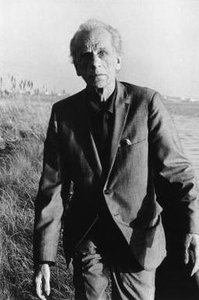
Joseph Cornell
1903 - 1972 , Verenigde Staten van Amerika
Snelle feiten
- Artistic Movement Or Style: Assemblage/Surrealisme
- Artists Or Movements Influenced By This Artist: ['Avant-garde film']
- Artists Who Influenced This Artist:
- Max Ernst
- René Magritte
- Date Of Birth: 24 dec 1903
- Full Name: Joseph Cornell
- Nationality: Amerikaans
- Notable Artworks:
- Box met geografie
- Untitled (1940s)
- Medici Prinses
- Place Of Birth: Nyack, USA
Gerelateerde artikelen
Concrete Narratives: Exploring Urban Life in Modern & Contemporary Art
Explore the evolution of cityscape painting with OriginalUniqueArt. Discover key artists from Realism to contemporary movements & invest in timeless urban visions. Expert guidance, museum-quality reproductions.
Azure Visions: Exploring Representations of the Blue Dress in Western Art History
Explore the rich history of the blue dress in Western art! Discover its symbolism, from Renaissance masterpieces to modern interpretations by artists like Martin & Schiele. Uncover cultural meanings and artistic techniques.
The Allure of Azure: Exploring the Symbolic & Aesthetic Depths of Blue in Art History
Explore the rich history of blue in art! Discover its symbolism, from ancient pigments to modern masterpieces by Kandinsky & Seurat. Uncover the psychological impact and cultural meanings behind this captivating hue.
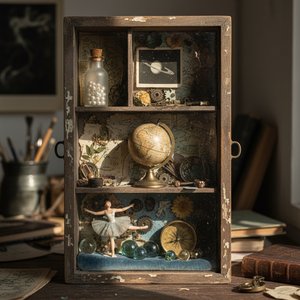
Joseph Cornell: Assemblage, Shadow Boxes & the Poetics of Found Objects
Explore the captivating world of Joseph Cornell's assemblage art & shadow boxes. Discover his unique process, Surrealist influences, and lasting legacy with OriginalUniqueArt.

Top 10 Meesterwerken gedomineerd door 'Slate Blue': Kunst voor uw interieur
Ontdek 10 beroemde schilderijen gedomineerd door de prachtige tint 'Slate Blue'. Van Monet tot Van Gogh, leer over kunstgeschiedenis & techniek. Museumkwaliteit reproducties voor uw interieur op OriginalUniqueArt.com! Ontdek de collectie online.