
 Voorvertoning
 Verstuur
 Delen
Delen
 Details bekijken

 Download
 Vergelijkbare items
 Röntgenonderzoek
 Diavoorstelling
 Statistieken
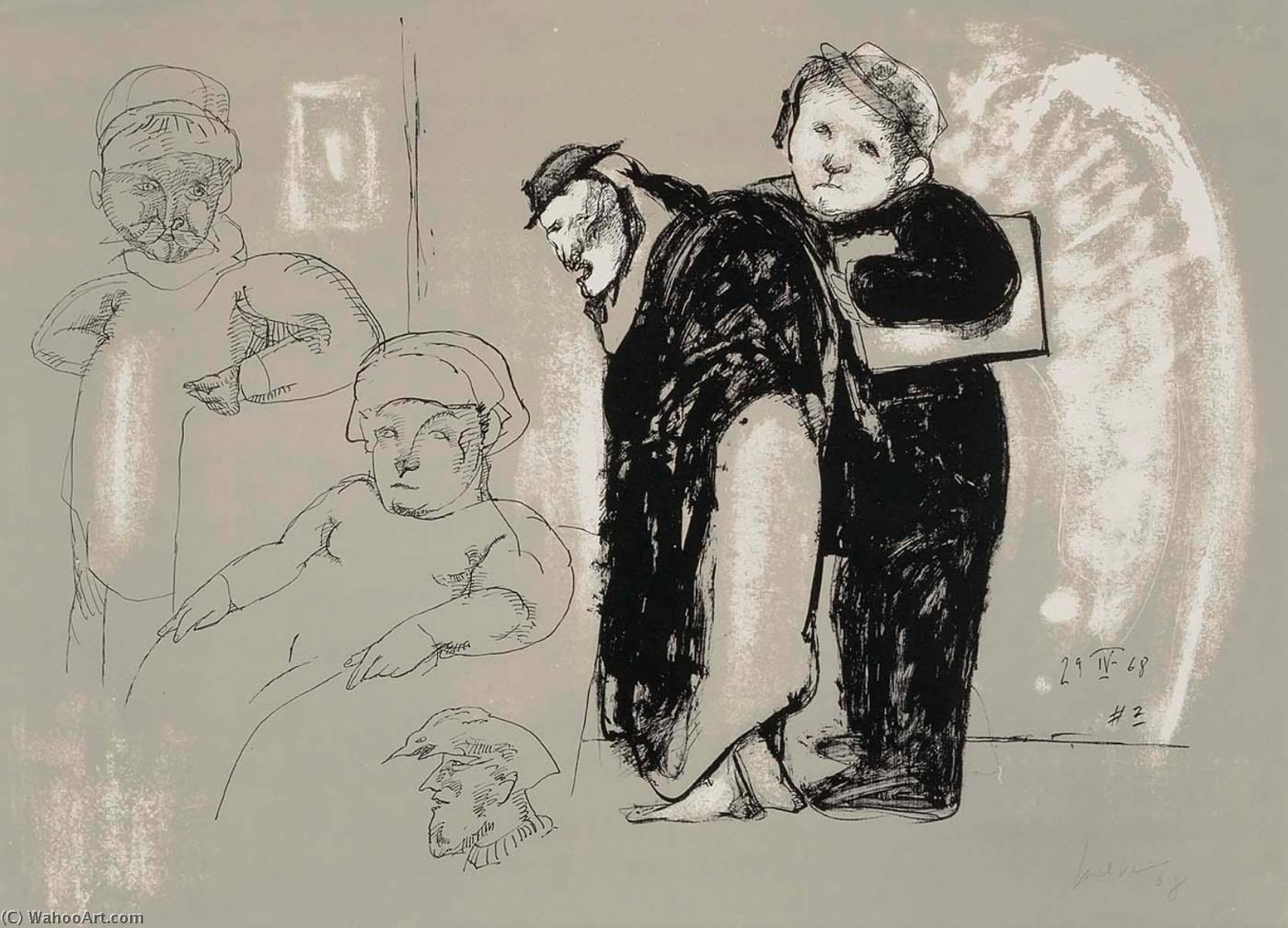
Interior
 1968
1968 56.0 x 76.0 cm
 Lees meer
Koop een digitale afbeelding in hoge resolutie met verbeterde kwaliteit, die veel superieur is aan de online voorvertoning.
Elk bestand wordt met uiterste precisie voorbereid door onze interne specialisten, met behulp van geavanceerde tools en deskundige handmatige retouche. Wij garanderen dat elke afbeelding een uitzonderlijke helderheid, nauwkeurige kleurweergave en verfijnde details bezit.
Het uiteindelijke bestand wordt binnen 72 uur per e-mail geleverd, geoptimaliseerd voor direct gebruik in professionele, redactionele en printomgevingen. Dit is dezelfde kwaliteit waarop vooraanstaande designstudio's, uitgevers en galerieën vertrouwen.
Digitale afbeeldingen
Download een bestand met hoge resolutie voor persoonlijke weergave, afdrukken en creatieve projecten. ( Schakel over naar print Bestel handgeschilderde reproductie)
Inbegrepen bij elke bestelling van een digitale afbeelding
Professionele digitale levering, gegarandeerd
Wanneer u kiest voor OriginalUniqueArt.com, ontvangt u niet alleen een afbeelding – u krijgt een professioneel verbeterd digitaal kunstwerk, met precisie vervaardigd en voorzien van een tevredenheidsgarantie. Dit is alles wat automatisch bij uw bestelling is inbegrepen:

Snelle levering per e-mail
Uw hoogwaardige digitale afbeeldingsbestand wordt binnen 72 uur na bestelling naar u gemaild – klaar voor direct gebruik.

AI-verbeterd digitaal bestand
Uw kunstwerk wordt professioneel geoptimaliseerd met behulp van geavanceerde AI-tools en handmatige bewerkingen, waardoor maximale details, helderheid en kleurnauwkeurigheid worden gegarandeerd.

Gratis levenslange herlevering van digitale afbeeldingen
Je bestand per ongeluk verwijderd of kwijtgeraakt? Geen zorgen – we sturen het u op elk gewenst moment gratis opnieuw toe.

Geen invoerkosten – nooit
Geniet direct van uw kunstwerk zonder invoerrechten, belastingen of verzendkosten – digitale downloads zijn altijd belastingvrij.

Garantie op kleurgetrouwheid
Met behulp van professionele hulpmiddelen en kleurbeheer zorgen wij ervoor dat uw digitale afbeelding de originele kleuren zo nauwkeurig mogelijk weergeeft.

100 dagen tevredenheidsgarantie
Als u niet tevreden bent met uw digitale afbeelding, passen wij deze aan of storten wij 100% terug binnen 100 dagen - zonder vragen te stellen.

100% Geld-terug-garantie
Niet tevreden? Ontvang een volledige terugbetaling binnen 100 dagen na ontvangst van uw digitale bestand - zonder vragen te stellen.

Korting bij grote bestellingen
Koop 3 afbeeldingen, bespaar 10% - Koop 5, bespaar 15% - Koop 10+, bespaar 20%. Ideaal voor creatieve projecten, galerieën en bureaus.
Understanding the Artist's Vision
Jose Luis Cuevas was a Mexican artist known for his rebellious personality and dark humor, which is reflected in his artwork. Interior features three main figures in the foreground, with one man standing on another man's shoulders while holding onto a third person. The overall composition of the painting creates a sense of depth and intrigue, leaving the viewer to ponder the relationships between the characters. Key Elements of the painting include the use of lithography, which adds a layer of complexity to the artwork. The Smithsonian American Art Museum has an extensive collection of Jose Luis Cuevas' works, including Wanted, Dreams of Rasputin, and History of Crime. These pieces showcase the artist's ability to experiment with different techniques and themes.Exploring the Artistic Style
Jose Luis Cuevas' artistic style is characterized by his use of bold lines, vibrant colors, and a mix of realism and surrealism. His artwork often features everyday people in unusual situations, which adds to the sense of intrigue and mystery. As seen in Interior, the artist's use of lithography creates a sense of texture and depth, drawing the viewer into the world of the painting.- Visit https://OriginalUniqueArt.com to explore more artworks by Jose Luis Cuevas and other renowned artists.
- Discover the Smithsonian American Art Museum's collection of Jose Luis Cuevas' works, including Wanted, Dreams of Rasputin, and History of Crime.
- Learn more about the artist's life and work on Wikipedia: https://en.wikipedia.org/wiki/Jos%C3%A9_Luis_Cuevas
In conclusion, Interior by Jose Luis Cuevas is a fascinating piece that showcases the artist's unique style and technique. As a professional expert in Art and salesman at https://OriginalUniqueArt.com, I highly recommend exploring more of the artist's works and discovering the world of handmade oil paintings reproductions.
Kunstenaarsbiografie
Een Rebelse Geest: Het Leven en de Kunst van José Luis Cuevas
José Luis Cuevas, geboren in Mexico-Stad in 1934, groeide uit tot een cruciaal figuur in de Mexicaanse kunstgeschiedenis door de gevestigde dominantie van het muralisme, dat de artistieke identiteit van het land decennialang had bepaald, met lef uit te dagen. Zijn rebellie was niet geworteld in louter stilistische verschillen, maar vormde een diepgaande bevraging van de sociale en politieke narratieven die in die monumentale werken besloten lagen. Geboren te midden van het geroezemoes van de papier- en potloodfabriek van zijn familie, werd de vroege jeugd van Cuevas gekenmerkt door zowel creatieve stimulans als fysieke kwetsbaarheid. Een kinderziekte dwong hem tot langdurige perioden van isolatie, waarin hij een blijvende passie voor tekenen en graveren ontdekte – vaardigheden die hij onder de begeleiding van Lola Cueto aan het Mexico City College perfectioneerde. Deze periode van afzondering bleek vormend; het voedde een diep persoonlijke artistieke visie die consequent introspectie boven grootse proclamaties zou verkiezen. Hoewel hij kortstondig de prestigieuze Escuela Nacional de Pintura, Escultura y Grabado "La Esmeralda" bezocht, dwongen zijn gezondheidsproblemen hem uiteindelijk om een onafhankelijk pad te bewandeling. Al op veertienjarige leeftijd richtte hij een eigen atelier op en omarmde hij zelfstudie als zijn voornaamste methode van artistieke ontwikkeling.Breuk met de Traditie: De Generación de la Ruptura
Cuevas werd een leidende stem binnen de Generación de la Ruptura (de Breukgeneratie), een collectief van kunstenaars die het expliciet nationalistische en sociaal-didactische karakter van het muralisme verwierpen, een stroming die werd aangevoerd door grootheden als Diego Rivera, José Clemente Orozco en David Alfaro Siqueiros. Waar deze meesters streefden naar het verbeelden van de Mexicaanse geschiedenis en strijd op monumentale schaal, keerden Cuevas en zijn tijdgenoten de blik naar binnen om thema's als vervreemding, existentiële angst en de duistere aspecten van de menselijke ervaring te verkennen. Zijn werk wordt gekenmerkt door vervormde figuren, gefragmenteerde vormen en een doelbewust verontrustende esthetiek die een diepe desillusie met de heersende ideologieën weerspiegelt. Hij was niet geïnteresseerd in het vieren van een collectieve identiteit; in plaats daarvan richtte hij zich op het psychologische landschap van het individu, waarbij hij vaak figuren afbeeldde die geteisterd werden door innerlijke strijd of gevangen zaten in onderdrukkende omstandigheden. Deze bewuste verschuiving markeerde een cruciaal keerpunt in de Mexicaanse kunst en maakte de weg vrij voor grotere experimenteerdrift en persoonlijke expressie. Zijn vroege werk werd in 1953 tentoongesteld in de Galera Prisse in Mexico-Stad, waarna hij al snel internationale erkenning begon te verwerven.Een Controversiële Visionair: Thema's en Technieken
Het artistieke oeuvre van Cuevas is opmerkelijk divers en omvat schilderkunst, tekenkunst, grafiek, sculptuur en literatuur. Toch loopt er een consistente draad door zijn gehele werk: een onverzettelijke verkenning van de menselijke conditie in al haar complexiteit en imperfectie. Hij beeldde regelmatig scènes van geweld, verval en moreel corruptie af, waarmee hij de kijker uitdaagde om de ongemakkelijke waarheden over zichzelf en de samenleeling onder ogen te zien. Zijn zelfportretten, die in de honderden lopen, zijn bijzonder veelzeggend; ze bieden een rauwe en vaak brute eerlijkheid over zijn eigen angsten, kwetsbaarheden en obsessies. Hij maakte gebruik van uiteenlopende technieken en toonde meesterschap in gravure, lithografie en mixed media. Hij stond bekend om zijn minutieuze grafische precisie en zijn vermogen om met minimale middelen krachtige beelden te creëren. Zijn stijl evolueerde door de jaren heen en incorporeerde elementen van het expressionisme, surrealisme en abstracte kunst, maar bleef altijd onmiskenbaar persoonlijk en herkenbaar. Hij was niet bang voor controverse en gebruikte vaak schokkende beeldtaal en provocerende uitspraken om conventionele normen uit te dagen en debat uit te lokken.Erfenis en het Museo José Luis Cuevas
Gedurende zijn gehele carrière bleef José Luis Cuevas een vurig onafhankelijke en uitgesproken figuur, die niet terugdeinsde om hen te bekritiseren die hij zag als mensen die hun artistieke integriteit opofferden voor politiek of commercieel gewin. Zijn compromisloze houding bracht hem zowel bewonderaars als tegenstanders, wat zijn reputatie als een rebel binnen de kunstwereld verstevigde. In 1982 vertegenwoordigde hij Mexico op de Biënnale van Venetië, wat zijn internationale status verder bezegelde. Wellicht zijn meest blijvende nalatenschap is het Museo José Luis Cuevas, opgericht in 1992 in het historische centrum van Mexico-Stad. Het museum herbergt een uitgebreide collectie van zijn eigen werk, evenals een indrukwekkende reeks precolumbiaanse artefacten en Europese meesterwerken die hij door de jaren heen verzamelde. Het staat als een monument voor zijn eclectische smaak en zijn onwankelbare toewijding aan artistieke excellentie. Hij bleef werken en exposeren tot aan zijn dood in 2017, waarmee hij een enorm en invloedrijk oeuvre achterliet dat het publiek tot op de dag van vandaag inspireert en uitdaagt. Zijn impact op de Mexicaanse kunst is onmiskenbaar; hij bevrijdde een generatie kunstenaars van de beperkingen van de traditie en moedigde hen aan om hun eigen unieke stem te vinden, zelfs als die stem ongemakkelijk of impopulair was. Hij blijft een krachtig symbool van artistieke vrijheid en intellectuele onafhankelijkheid.
José Luis Cuevas
1934 - 2017 , Mexico
Belangrijkste feiten
- Artistic Movement Or Style: Generación de la Ruptura
- Date Of Birth: 26 februari 1934
- Date Of Death: 3 juli 2017
- Full Name: José Luis Cuevas
- Nationality: Mexicaans
- Notable Artworks:
- Interior
- Rasputin
- Cast of Characters
- Place Of Birth: Mexico-Stad, Mexico