
 Voorvertoning
 Verstuur
 Delen
Delen
 Details bekijken

 Download
 Vergelijkbare items
 Röntgenonderzoek
 Diavoorstelling
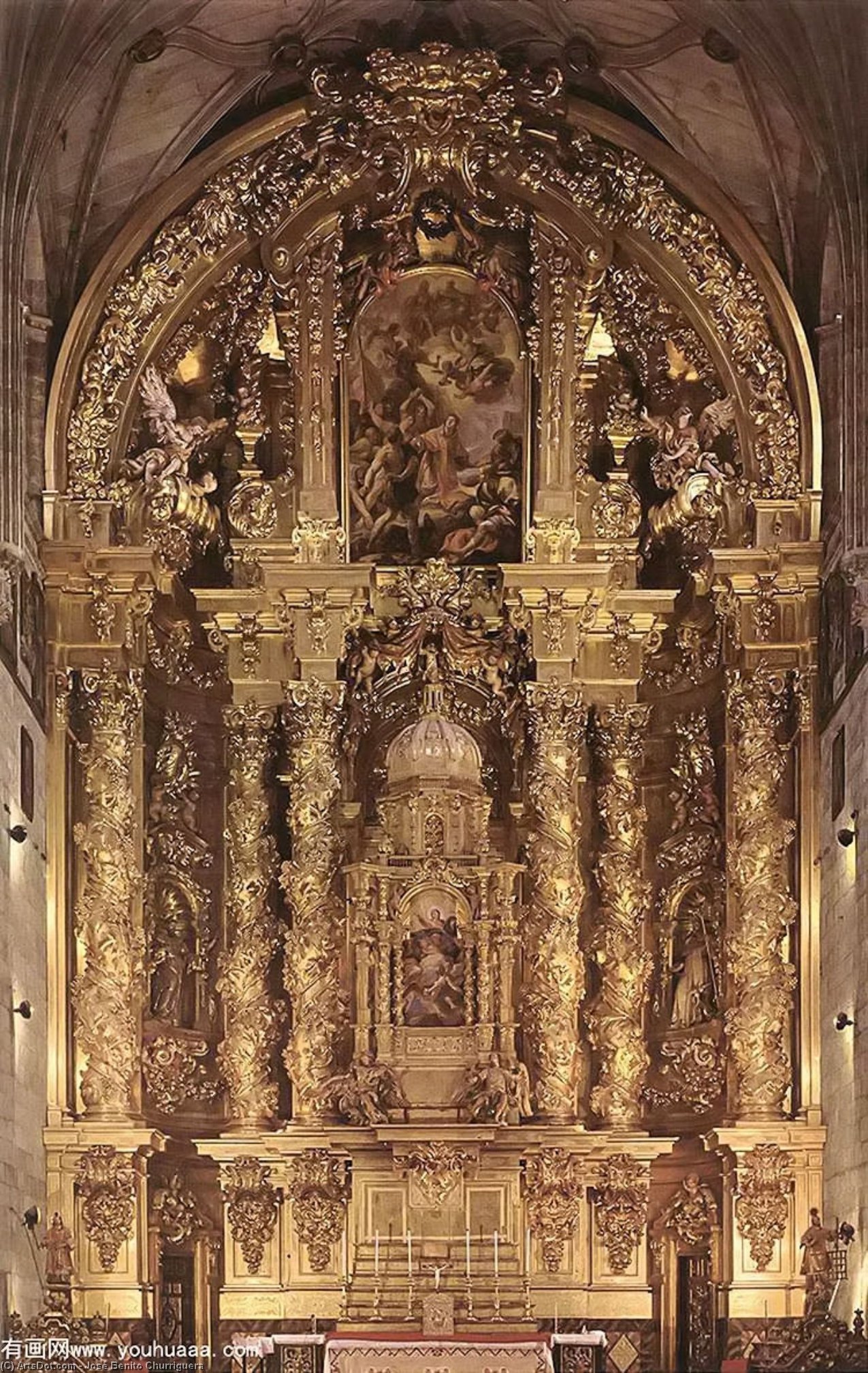
Main Altar


 Lees meer
Handgemaakte olieverfreproductie
Met de hand geschilderd in olieverf op canvas in uw gewenste maat en lijst, op bestelling gemaakt door onze kunstenaars. ( Bestel print Koop afbeelding)




































Kies uit onze vooraf ingestelde maten die overeenkomen met de originele verhoudingen van het kunstwerk.

U kunt uw eigen afmetingen invoeren om in een specifieke lijst of ruimte te passen. Als de door u gekozen maat niet overeenkomt met de verhoudingen van het originele beeld, zullen we het kunstwerk bijsnijden of het schilderij uitbreiden met extra handgeschilderde elementen. Een digitale mockup wordt ter goedkeuring naar u verzonden voordat de productie begint.
Houd er rekening mee dat de preview op het scherm niet de werkelijke uitsnede of uitbreiding weergeeft. Alleen de mockup toont de uiteindelijke compositie nauwkeurig.
Hoewel aangepaste afmetingen mogelijk zijn, raden we aan een maat uit de vooraf gedefinieerde lijst te selecteren om de originele verhoudingen te behouden.
Na de bestelling zal het team van OriginalUniqueArt.com per e-mail contact opnemen met de klant voor instructies en een mockup-voorbeeld sturen.
Wereldwijde levering () binnen 3 tot 4 weken in plaats van de standaard 5 weken. (18 augustus). Zonder concessies aan de kwaliteit.

Gratis wereldwijde expressverzending

Hoogwaardig linnen canvas

Volledige verzendverzekering

Garantie op terugbetaling van invoerrechten

Garantie op exacte kleurweergave

Retourbeleid van 60 dagen (alleen bij defecten)

100% Geld-terug-garantie

Korting bij meerdere afnames
 De optie voor glas is alleen beschikbaar bij een formaat kleiner dan 110 cm.

Main Altar
Druktechniek
Afmetingen reproductie
-


Eindtotaal
$ 300
Biografie van de kunstenaar
The Architect of Excess: José Benito Churriguera and the Spanish Baroque
José Benito de Churriguera, born in Madrid in 1665, stands as a towering – and arguably overwhelming – figure in the history of Spanish art. He wasn’t merely an architect; he was a sculptor, urban planner, and the embodiment of a particular aesthetic sensibility that would come to define a period: the Churrigueresque. His name became synonymous with a style characterized by exuberant ornamentation, dramatic flourishes, and a relentless pursuit of visual impact. To understand Churriguera is to understand a Spain grappling with religious fervor, national pride, and a desire for artistic expression that bordered on the theatrical. He was born into a family deeply entrenched in the decorative arts; his father, Josep Simó Xoriguera i Elies, was a Catalan cabinetmaker, gilder, and altarpiece joiner who instilled in his sons – José Benito, Joaquín, and Alberto – a mastery of materials and an appreciation for intricate detail. This familial workshop served as the crucible where the foundations of the Churrigueresque were forged.From Workshop to Monumentality: The Development of a Style
Churriguera’s early training focused on the practical skills necessary for creating elaborate altarpieces and church furnishings. However, he quickly surpassed his father's expertise, demonstrating an ambition that extended beyond mere craftsmanship. He sought to integrate sculpture, painting, and architecture into cohesive, emotionally charged environments. The initial stages of his development saw a gradual escalation in complexity. Early works display a Baroque sensibility – dynamic compositions, strong contrasts of light and shadow – but lack the extreme density of detail that would later become his hallmark. It was through projects like the retablo for the church of San Esteban in Salamanca (completed around 1708) that Churriguera began to articulate his unique vision. This altarpiece, with its swirling forms, gilded surfaces, and profusion of figures, served as a manifesto for the new style. The term “Churrigueresque” itself, initially used pejoratively, acknowledged the family’s influence but also hinted at an excess that some found unsettling. However, Churriguera embraced this perceived extravagance, pushing the boundaries of ornamentation to unprecedented levels. He wasn't simply decorating spaces; he was transforming them into immersive spectacles designed to inspire awe and devotion.The Essence of Churrigueresque: A Visual Language
What precisely defines the Churrigueresque style? It’s a question that has occupied art historians for centuries. At its core, it's characterized by an horror vacui – a fear of empty space. Every surface is covered with elaborate carvings, twisting columns, and dynamic sculptures. Motifs often include shells, foliage, fruit, and fantastical creatures, all rendered with meticulous detail. The style also draws heavily on classical elements, but these are rarely used in a restrained manner; instead, they are distorted, exaggerated, and integrated into the overall decorative scheme. The influence of Moorish architecture is undeniable, particularly in the use of intricate geometric patterns and stucco work. Churriguera’s mastery of light and shadow played a crucial role in enhancing the dramatic effect of his designs. He strategically placed windows and openings to create striking contrasts, highlighting certain elements while obscuring others. The overall impression is one of overwhelming richness and complexity – a deliberate attempt to stimulate the senses and evoke a sense of spiritual transcendence.Major Achievements and Lasting Legacy
While Churriguera worked on numerous projects throughout Spain, several stand out as particularly significant examples of his style. The Plaza Mayor in Salamanca (remodelled 1733-1755 with his brother Alberto) is perhaps his most famous achievement – a grand urban space framed by ornate facades and sculptural details. Other notable works include the church of San Marcos in León, where he transformed a former hospital into a stunning Baroque sanctuary, and the retablo for the church of Santo Tomás in Madrid. His influence extended beyond architecture and sculpture; he also designed furniture, carriages, and even theatrical sets, demonstrating his versatility as an artist. Churriguera’s work wasn't without its critics. Some found his style overly ostentatious and distracting, arguing that it detracted from the religious experience. However, his designs proved immensely popular, inspiring a generation of artists to emulate his approach. The Churrigueresque became synonymous with Spanish Baroque art, shaping the aesthetic landscape of the 18th century.Historical Significance: A Reflection of its Time
José Benito Churriguera died in Madrid in 1725, leaving behind a legacy that continues to fascinate and inspire. His work reflects the complex social and religious climate of his time – a period marked by both fervent piety and growing secularism. The Churrigueresque style can be seen as an attempt to reaffirm the power of the Catholic Church in the face of Enlightenment ideals.- The elaborate ornamentation served as a visual expression of faith, designed to overwhelm the senses and inspire devotion.
- His designs also reflected the national pride of Spain, drawing on both classical traditions and Moorish influences.
- Ultimately, Churriguera’s work represents a unique synthesis of artistic styles – a testament to his creativity and ambition.

josé benito churriguera
1665 - 1725 , Spain
Belangrijkste feiten
- Artistic Movement Or Style: Churrigueresque Baroque
- Artists Or Movements Influenced By This Artist: ['Spanish Baroque']
- Artists Who Influenced This Artist: ['Josep Simó Xoriguera']
- Date Of Birth: 1665
- Date Of Death: 1725
- Full Name: José Benito Churriguera
- Nationality: Spanish
- Notable Artworks: ['']
- Place Of Birth: Madrid, Spain

