Schakel over naar print
 Lees meer







































 Voor kunstwerken of reproducties die aan één zijde groter zijn dan 105 cm (ongeveer 41 inch), wordt de lijst als een losse set verzonden. Deze methode garandeert een veilige levering en voorkomt schade tijdens het transport.


A Descent into Beauty: John William Waterhouse’s *Ophelia*
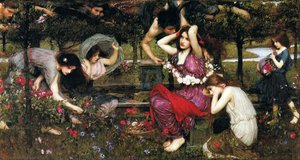
John William Waterhouse's 1894 painting, *Ophelia*, is more than just an image; it’s a carefully constructed meditation on grief, beauty, and the tragic fate of Shakespeare’s most poignant character. This oil-on-canvas masterpiece, measuring 73 x 124 cm, captures a moment suspended between life and death, a scene that continues to resonate with viewers over a century later. Waterhouse's interpretation isn’t merely a depiction of *Hamlet*; it’s an exploration of the inherent vulnerability within feminine beauty and the inescapable pull of nature’s power.
- Romanticism at its Finest: The painting firmly establishes itself within the Romantic movement, prioritizing emotional intensity and subjective experience. Waterhouse's approach aligns with the Pre-Raphaelite Brotherhood’s emphasis on meticulous detail and a return to medieval artistic ideals – a desire for sincerity and beauty over academic convention.
- Technical Mastery: Noticeable is Waterhouse’s masterful use of color, particularly the stark contrast between Ophelia’s white dress and the surrounding greens and blues of the water and foliage. The delicate rendering of fabric, hair, and flower petals speaks to his dedication to realism within a highly stylized framework.
The Symbolism of Sorrow
*Ophelia* is saturated with symbolic meaning, drawing heavily from Shakespeare’s play and broader artistic traditions. The setting itself – a tranquil pond bordered by weeping willows – immediately evokes themes of mourning and loss. Lily pads float serenely on the water's surface, mirroring Ophelia’s passive acceptance of her fate. Scattered around her are wildflowers: violets representing faithfulness, pansies symbolizing thoughts, and roses hinting at lost love—each bloom a poignant reminder of her shattered world. The single red poppy atop her head is particularly striking, a symbol of remembrance and mortality.
- The Willow Tree: A recurring motif in art associated with mourning and sorrow, the willow tree’s drooping branches mirror Ophelia's despair and foreshadow her drowning.
- Color Palette: The predominantly cool tones – blues, greens, and whites – contribute to the painting’s melancholic atmosphere, reflecting the emotional weight of the scene.
A Legacy of Interpretation
Waterhouse's *Ophelia* wasn't conceived in a vacuum; it stands as a significant contribution within a lineage of artistic interpretations of Shakespeare’s tragedy. He builds upon the work of his predecessors, including Dante Gabriel Rossetti and John Everett Millais, who had previously depicted Ophelia in similar settings. However, Waterhouse imbues the scene with a uniquely serene beauty, prioritizing emotional resonance over literal representation. The painting's enduring appeal lies not only in its technical skill but also in its ability to tap into universal themes of love, loss, and the fragility of human existence.
Size: 73 x 124 cm Date: 1894Bringing *Ophelia* Home
A hand-painted reproduction of John William Waterhouse’s *Ophelia* offers a unique opportunity to bring this iconic artwork into your home or office. Each reproduction is meticulously crafted by skilled artisans, ensuring the highest level of detail and color accuracy. Whether you are an admirer of Pre-Raphaelite art, a collector seeking a significant piece for your collection, or an interior designer looking to evoke a sense of timeless beauty and melancholy, this stunning artwork will undoubtedly become a focal point of conversation and admiration. Invest in a legacy – invest in *Ophelia*.
Veelgestelde vragen
Welk gevoel roepen de kleuren van "Ophelia" door John William Waterhouse op?
In "Ophelia" versterken Earthy kleuren een Melancholic gevoel.
Waar kan ik kunstwerken vinden die lijken op "Ophelia" door John William Waterhouse?
Op de Vergelijkbare werken-pagina van dit kunstwerk vindt u vergelijkbare werken als "Ophelia" door John William Waterhouse.
Tot welke stijl behoort "Ophelia"?
"Ophelia" is een werk uit de Pre-Raphaelite Romanticism. De stroming geeft de artistieke traditie aan waartoe het werk behoort.
 Voorvertoning
 Verstuur
 Delen
Delen
 Details bekijken
 Gids
Gids

 Download
 Vergelijkbare items
 Röntgenonderzoek
 Diavoorstelling
 Vraag & antwoord
 Statistieken