
 Voorvertoning
 Verstuur
 Delen
Delen
 Details bekijken
 Gids
Gids

 Download
 Vergelijkbare items
 Röntgenonderzoek
 Diavoorstelling
 Vraag & antwoord
 Statistieken
Alexander Hamilton

- 78.0 x 63.0 cm


 Lees meer
Giclée / Kunstafdrukken
Giclée- of canvasafdruk van museumkwaliteit met een snelle productie en flexibele afwerkingsmogelijkheden. ( Bestel handgeschilderde reproductie Schakel over naar digitale afbeeldingen)




































Kies uit onze vooraf ingestelde maten die overeenkomen met de originele verhoudingen van het kunstwerk.

Voer de gewenste breedte en hoogte in, passend bij uw lijst of muur. Een afdruk kan alleen worden ingekort en nooit groter worden gemaakt dan het origineel; een formaat met andere verhoudingen zal daarom een deel van de afbeelding verliezen. Wij sturen u een digitaal mockup ter goedkeuring voordat we tot drukwerk overgaan. De afbeelding op deze pagina toont niet de werkelijke uitsnede — dit is alleen te zien op het mockup.
Wereldwijde levering () binnen 2 weken in plaats van de standaard 4/5 weken. (10 november)

Gratis wereldwijde expressverzending

Hoogwaardig linnen canvas

Volledige verzendverzekering

Garantie op terugbetaling van invoerrechten

Garantie op exacte kleurweergave

Retourbeleid van 100 dagen (alleen bij defecten)

100% Geld-terug-garantie

Korting bij meerdere afnames
 De optie voor glas is alleen beschikbaar bij een formaat kleiner dan 110 cm.

Alexander Hamilton
Giclée / Kunstafdrukken
Afmetingen reproductie
-


Eindtotaal
€ 73
A Gaze Through Time: The Enduring Presence of Alexander Hamilton
In the quiet intensity of John Trumbull’s 1804 portrait, we encounter more than just a mere likeness; we meet the very essence of an era. Alexander Hamilton, a man whose intellect and ambition helped forge the foundations of a nation, stares back at us with a profound, unwavering seriousness. The canvas holds an arresting gaze—one that seems to pierce through the centuries to engage the modern viewer in a silent dialogue. Trumbull, a painter who lived through the American Revolution, brings a unique, eyewitness authority to this work, imbuing the portrait with a sense of historical weight and psychological depth. Every brushstroke serves to capture not just the face of a statesman, but the spirit of America's nascent republic.Mastery of Neoclassical Technique and Light
Trumbull’s technical execution is a masterclass in the Neoclassical style, prioritizing idealized form and a balanced, harmonious composition. The artist employs chiaroscuro—the dramatic interplay of light and shadow—to sculpt Hamilton's features, imbuing the portrait with a three-dimensional presence that feels almost tactile. This manipulation of light serves to highlight the subject's intellectual fervor, drawing the eye to the subtle musculature of his face and the meticulous rendering of his attire. The palette is intentionally subdued, dominated by earthy browns, creams, and deep blacks, which creates a sophisticated contrast against the subject's white hair and formal clothing. This restrained color scheme directs all emotional energy toward Hamilton’s expression, emphasizing a sense of gravity and contemplative strength.A Legacy Captured in Oil
Beyond its aesthetic brilliance, the painting is steeped in the turbulent history of the early United States. Painted shortly after Hamilton’s tragic death in a duel with Aaron Burr, the portrait reflects the profound anxieties surrounding political rivalries and the fragility of republican ideals during that period. Trumbull captures Hamilton at a moment of significant intellectual engagement, portraying him as a man actively shaping the nation's financial future. For the collector or interior designer, this piece offers more than just decoration; it provides a window into the soul of American history. The portrait’s ability to distill complex historical narratives into an emotionally resonant visual representation makes it a timeless addition to any curated collection, offering a sense of dignity, permanence, and scholarly elegance to any space.Veelgestelde vragen
Hoe harmonieus zijn de kleuren van "Alexander Hamilton" door John Trumbull?
De kleuren van "Alexander Hamilton" door John Trumbull vertonen een Unified Palette harmonie. Harmonie beschrijft de onderlinge relatie tussen de kleuren.
Wat is de dominante kleur van "Alexander Hamilton" door John Trumbull?
De kleur die het meest opvalt in "Alexander Hamilton" is Phthalo Green (#221914). De dominante kleur is handig bij het afstemmen van een kunstwerk op een interieur.
Wat zijn de techniek en de datum van "Alexander Hamilton" door John Trumbull?
De techniek van "Alexander Hamilton" door John Trumbull is Oil On Canvas, en het werk dateert uit 1804.
Biografie kunstenaar
A Life Etched in Revolution: The World of John Trumbull
John Trumbull, a name synonymous with the visual narrative of America’s birth, was more than just a painter; he was a witness, a soldier, and a chronicler of a nation forging its identity. Born in Lebanon, Connecticut, in 1756, into a family steeped in patriotic fervor – his father, Jonathan Trumbull, served as governor throughout the Revolutionary War – young John’s destiny seemed intertwined with the unfolding drama of independence. A childhood accident tragically cost him the use of one eye, yet this perceived limitation may have paradoxically sharpened his observational skills, contributing to the meticulous detail that would become a hallmark of his artistic style. His early education at Harvard College further cultivated a mind primed for both intellectual rigor and creative expression. Even before fully embracing his calling as an artist, Trumbull’s life was already imbued with a sense of duty and service, sketching fortifications during the Siege of Boston – a foreshadowing of his future role in immortalizing the Revolution on canvas.From Battlefield to Brushstroke: Artistic Formation and Influences
The path to becoming “the Painter of the Revolution” wasn’t immediate. Financial constraints initially led Trumbull down various avenues, but the pull towards art proved irresistible. In 1780, he embarked on a journey to London, seeking tutelage under the esteemed Benjamin West, an American expatriate who had achieved prominence as a history painter. West recognized Trumbull’s potential and encouraged him to focus on scenes from the War of Independence, suggesting smaller-scale works and miniature portraits – a practical approach that allowed Trumbull to hone his skills while establishing a clientele. Over the course of his career, he produced approximately 250 miniatures, demonstrating remarkable versatility and precision. However, West’s influence extended beyond technique; he instilled in Trumbull an appreciation for classical history painting, inspiring him to imbue his work with dramatic composition and allegorical depth. This fusion of historical accuracy and artistic grandeur would define Trumbull's mature style. The experience wasn’t without hardship; a brief but alarming arrest on suspicion of espionage – retaliation for the execution of Major André – forced a temporary retreat from British society, yet ultimately solidified his commitment to portraying the American cause.Immortalizing Independence: Masterpieces and Historical Significance
Trumbull’s most enduring legacy lies in his monumental historical paintings, particularly those that now grace the Capitol Rotunda. The Declaration of Independence, perhaps his most iconic work, is a carefully constructed tableau depicting the momentous occasion with remarkable fidelity. It's not merely a record of who was present but an attempt to capture the gravity and solemnity of the event. Famously, this painting found its way onto the reverse of the two-dollar bill, cementing its place in American iconography. Other significant works include The Surrender of Cornwallis at Yorktown, The Surrender of General Burgoyne, and George Washington before the Battle of Trenton. These paintings weren’t simply artistic endeavors; they were acts of national commemoration, designed to inspire patriotism and solidify a shared historical narrative. Trumbull meticulously researched each scene, consulting with veterans and studying contemporary accounts to ensure accuracy. His preparatory sketches, like the Study for Surrender of Cornwallis at Yorktown, reveal his painstaking planning process and dedication to detail. In an era devoid of photographic documentation, Trumbull’s paintings served as invaluable visual records, shaping public understanding of the Revolution and its key figures. His meticulous attention to detail—evident in every brushstroke—transformed ordinary events into powerful symbols of liberty and resilience. He wasn't simply documenting history; he was actively participating in its creation, ensuring that future generations would remember the sacrifices made by those who fought for independence. Trumbull’s unwavering belief in the ideals of republicanism permeated his artistic vision, informing his compositions and elevating his paintings to levels of profound emotional resonance.A Lasting Legacy: Collections and Enduring Influence
John Trumbull's contributions extend beyond his celebrated canvases. He was a staunch advocate for the arts in America, serving as president of the American Academy of Fine Arts from 1816 to 1835, tirelessly working to foster a vibrant artistic community within the young nation. His paintings are now held in prestigious institutions across the country, including Yale University Art Gallery, the Smithsonian American Art Museum, and the Virginia Museum of Fine Arts, ensuring their accessibility for generations to come. The prominent display of his works within the United States Capitol serves as a lasting tribute to his dedication to both art and history.- His paintings continue to inspire artists and historians alike.
- They offer invaluable insights into the aesthetics and ideals of the early American republic.
- Trumbull’s commitment to historical accuracy set a precedent for future generations of American historical painters.

John Trumbull
1756 - 1843 , Verenigd Koninkrijk
Belangrijkste feiten
- Artistic Movement Or Style: Historische schilderkunst
- Artists Who Influenced This Artist: ['Benjamin West']
- Date Of Birth: 6 juni 1756
- Full Name: John Trumbull
- Nationality: Amerikaans
- Notable Artworks:
- Verkondiging van Onafhankelijkheid
- Overgave van Cornwallis bij Yorktown
- Place Of Birth: Lebanon, USA
Gerelateerde artikelen
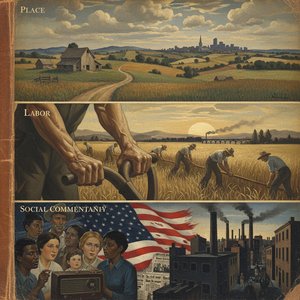
American Regionalism: A Crucible of Identity – Exploring Themes of Place, Labor & Social Commentary
Explore American Regionalism's powerful depiction of the American heartland during the Great Depression. Discover Grant Wood, Thomas Hart Benton & more. Expert analysis & high-quality art reproductions at OriginalUniqueArt.

Top 10 Meesterwerken van het Amerikaans Realisme | Kunst & Decoratie
Ontdek de 10 meest iconische meesterwerken van het Amerikaans Realisme! Van Edward Hopper tot Andrew Wyeth, leer over de kunstenaars en hun tijdloze schilderijen. Vind museumkwaliteit reproducties & decoratie op OriginalUniqueArt.com.

Grant Wood & American Regionalism: Identity, Myth & the Rural Landscape
Explore the world of Grant Wood & American Regionalism with OriginalUniqueArt. Discover the symbolism behind 'American Gothic', recurring themes, and the movement's lasting impact on art history. High-quality reproductions available.

John Singer Sargent's Top 25 Meesterwerken: Portretten & Schilderijen voor uw Interieur | OriginalUniqueArt
Ontdek de 25 mooiste meesterwerken van John Singer Sargent! Van elegante portretten tot impressionistische schilderijen – leer over zijn leven, techniek & impact. Museumkwaliteit reproducties voor uw interieur op OriginalUniqueArt.com.

John Constable's Top 25 Meesterwerken: Landschappen die de Ziel Raaken | OriginalUniqueArt
Ontdek de 25 mooiste schilderijen van John Constable, meester van de Engelse Romantiek. Van idyllische landschappen tot iconische Hay Wain – bewonder zijn techniek en emotie. Museumkwaliteit reproducties & decoratie op OriginalUniqueArt.com.