
 Voorvertoning
 Verstuur
 Delen
Delen
 Details bekijken
 Gids
Gids

 Download
 Vergelijkbare items
 Röntgenonderzoek
 Diavoorstelling
 Vraag & antwoord
 Statistieken
Arab School


 Lees meer
Giclée / Kunstafdrukken
Giclée- of canvasafdruk van museumkwaliteit met een snelle productie en flexibele afwerkingsmogelijkheden. ( Bestel handgeschilderde reproductie Schakel over naar digitale afbeeldingen)




P118B €10

P118H €10

P118W €10

P438Z €10

P508JH €12

P508YH €12

P805H €10

P805Z €10

P919BZ €10

P919G €10

P919XJ €10

P959ZH €10

P968JZ €12

W106C €8

W218G €10

W218JH €8

W218Y €10

W307PJ €10

W316G €10

W316PJ €8

W316Y €10

W398PJ €8

W4111J €10

W500HY €15

W500JH €15

W692G €12

W849H €8

W940BG €15

W953PJ €8




Kies uit onze vooraf ingestelde maten die overeenkomen met de originele verhoudingen van het kunstwerk.

Voer de gewenste breedte en hoogte in, passend bij uw lijst of muur. Een afdruk kan alleen worden ingekort en nooit groter worden gemaakt dan het origineel; een formaat met andere verhoudingen zal daarom een deel van de afbeelding verliezen. Wij sturen u een digitaal mockup ter goedkeuring voordat we tot drukwerk overgaan. De afbeelding op deze pagina toont niet de werkelijke uitsnede — dit is alleen te zien op het mockup.
Wereldwijde levering () binnen 2 weken in plaats van de standaard 4/5 weken. (16 november)

Gratis wereldwijde expressverzending

Hoogwaardig linnen canvas

Volledige verzendverzekering

Garantie op terugbetaling van invoerrechten

Garantie op exacte kleurweergave

Retourbeleid van 100 dagen (alleen bij defecten)

100% Geld-terug-garantie

Korting bij meerdere afnames
 De optie voor glas is alleen beschikbaar bij een formaat kleiner dan 110 cm.

Arab School
Giclée / Kunstafdrukken
Afmetingen reproductie
-


Eindtotaal
€ 72
A Window Into a World of Grace: John Frederick Lewis’s “Arab School”
John Frederick Lewis's "Arab School," painted circa 1841-51, isn’t merely a depiction of a classroom; it’s a meticulously crafted portal into the heart of 19th-century Ottoman society. This watercolor and gouache masterpiece, now housed within the Metropolitan Museum of Art in New York City, offers a rare glimpse beyond the often sensationalized portrayals of the Middle East prevalent at the time, revealing instead a scene of quiet learning, dignified respect, and subtle social dynamics. Lewis, an English Orientalist painter who spent over a decade immersed in Cairo’s vibrant culture, possessed a remarkable ability to capture not just the outward appearance but also the underlying atmosphere of his subjects – a skill evident in every brushstroke of “Arab School.”
The painting immediately draws the eye toward the central figure: a man distinguished by his flowing white beard and traditional attire. He’s not a flamboyant scholar, nor is he presented as an exotic spectacle; rather, he embodies authority and wisdom – a respected teacher guiding a young student. His posture, upright and attentive, suggests a dedication to his role, while the boy's focused gaze speaks volumes about the value placed on education within this community. To his right, another individual, seated on the floor, demonstrates a profound respect for the teacher’s words, mirroring the reverence of the central figure. The composition isn’t static; it pulses with an unspoken conversation, a shared moment of intellectual engagement.
Orientalism and the Pursuit of Authenticity
Lewis's work firmly resides within the realm of Orientalist painting – a genre that flourished during the 19th century, fueled by European fascination with the East. However, unlike many of his contemporaries who often relied on stereotypes and romanticized depictions, Lewis sought to portray Middle Eastern life with a remarkable degree of accuracy and sensitivity. His extended sojourn in Cairo allowed him to observe local customs firsthand, master Arabic script, and adopt traditional dress – elements that profoundly influenced his artistic approach. He meticulously documented the architecture, furnishings, and clothing of the region, striving for an authentic representation that moved beyond superficial exoticism.
The inclusion of Arabic calligraphy on the walls of the schoolhouse is a crucial detail, underscoring the importance of literacy and religious learning within this setting. These intricate inscriptions aren’t merely decorative; they serve as a constant reminder of the cultural heritage being imparted to the students. The simple yet elegant design of the room – the worn wooden benches, the muted color palette, the single window framed by dark bars – speaks volumes about the practical realities of life in an Ottoman schoolhouse. It's a scene stripped of grandiosity, focusing instead on the quiet dignity of everyday learning.
Symbolism and Emotional Resonance
Beyond its realistic depiction of daily life, “Arab School” is rich with symbolic meaning. The window, framed by dark bars, subtly hints at the constraints imposed upon Ottoman society – a reminder of the political realities that shaped the lives of its inhabitants. Yet, within this seemingly restrictive environment, there’s an undeniable sense of hope and potential embodied in the faces of the students and teacher. The painting evokes a feeling of serenity and intellectual curiosity, suggesting a space where knowledge is valued and nurtured.
Lewis's masterful use of watercolor – its delicate washes, subtle gradations of color, and luminous effects – perfectly captures the atmosphere of the scene. The light filtering through the window creates a soft, diffused glow, illuminating the faces of the individuals within the room. This careful attention to detail, combined with Lewis’s profound understanding of his subject matter, results in a work that is both visually stunning and emotionally resonant. “Arab School” isn't just a painting; it’s a testament to the power of observation, empathy, and artistic skill – a timeless reminder of the enduring value of education and human connection.
Collecting a Legacy: Reproductions and Beyond
Reproductions of "Arab School" are available through various reputable art dealers and online platforms. When selecting a reproduction, consider the medium (canvas or print) and framing options to ensure it complements your interior design aesthetic. The original’s delicate watercolor technique is best replicated with high-quality archival materials that preserve color accuracy and prevent fading over time. Investing in a faithful reproduction allows you to bring this remarkable work of art into your home, celebrating Lewis's legacy and the rich cultural heritage he so beautifully captured.
Veelgestelde vragen
Welke kunstenaar en welke stijl staan achter "Arab School"?
"Arab School" is het werk van John Frederick Lewis en behoort tot de Orientalist Painting-stroming.
Hoe kan ik een print van "Arab School" door John Frederick Lewis verkrijgen?
Een print van "Arab School" door John Frederick Lewis kan rechtstreeks worden besteld op de Fine Art Print-pagina: een fine art print op katoenen canvas of archiefwaardig canvaspapier.
Hoe wordt het kleurenpalet van "Arab School" door John Frederick Lewis beschreven?
Het kleurenpalet van "Arab School" door John Frederick Lewis wordt beschreven als Earthy. Het is een beknopte beschrijving van de kleuren in het werk.
Biografie kunstenaar
John Frederick Lewis: Een Leven in Oriëntaalst Schilderkunst
John Frederick Lewis, een vooraanstaande Engelse oriëntalist schilder, werd geboren op 14 juli 1804 in Londen. Hij was de zoon van Frederick Christian Lewis, een graveerder en landschapsschilder. Deze artistieke achtergrond binnen de familie heeft ongetwijfeld invloed gehad op zijn vroege ontwikkeling. Zijn formele opleiding begon onder toezicht van Sir Thomas Lawrence, waar hij zijn vaardigheden verder ontwikkelde naast andere kunstenaars zoals Edwin Landseer. Deze beginperiode legde een sterke basis in techniek en compositie.
Artistieke Carrière & Ontwikkeling
Lewis’s artistieke carrière ontvouwde zich in verschillende fasen, elk gekenmerkt door evoluerende stijlen en thematische focus. Eerst en vooral begon hij met uitgebreide reizen door de Middellandse Zee, waarbij hij het karakter van deze regio minutieus vastlegde in gedetailleerde waterverf- en olieverfschilderingen. Hij herhaalde vaak composities, waardoor ze in verschillende media werden gerealiseerd. Een cruciale reis naar Spanje en Marokko tussen 1832 en 1834 leverde een aanzienlijk aantal lithografieën op, die later werden gepubliceerd als “Sketches and Drawings of the Alhambra” (1835) en “Lewis’s Sketches of Spain and Spanish Character” (1836). Zijn verblijf in Cairo tussen 1841 en 1851 was zonder twijfel zijn meest productieve periode. Hier perfectioneerde hij zijn oriëntalistische stijl, waarbij hij zowel gedetailleerde genrebeelden als idealistische beelden van de Egyptische bovenklasse creëerde. Zijn huis werd een perfect decor voor zijn werk, en hij werd regelmatig bezocht door eminente figuren zoals William Makepeace Thackeray.
Bekende Werken
Lewis schiep een aanzienlijke hoeveelheid kunstwerken die bekend staan om hun minutieuze detail en evocatieve sfeer. Enkele van zijn meest herkenbare werken zijn:
- A Bedouin (Yale Center for British Art, New Haven) – Een waterverf die zijn oriëntalistische stijl illustreert.
- The Ramesseum at Thebes (Yale Center for British Art, New Haven) – Toont zijn opmerkelijke aandacht voor architectonisch detail.
- A Young Turkish Woman (Yale Center for British Art, New Haven) – Een ander opvallend voorbeeld van zijn oriëntalistische werk.
- Harem Life in Constantinople - Een gedetailleerde olieverf die Ottomaanse huiselijke leefwerkelijkheid weergeeft.
Invloeden en Artistieke Stijl
Lewis’s stijl werd gevormd door verschillende invloeden, met name de nadruk van Sir Thomas Lawrence op portretten en compositie. Echter, zijn directe observatie van Midden-Oosterse culturen stelde hem in staat om een unieke esthetiek te ontwikkelen gekenmerkt door:
- Minutieuze Detail: Een toewijding aan het nauwkeurig weergeven van texturen, patronen en architectonische elementen.
- Rijke Kleurenpalet: Het gebruik van levendige kleuren die geïnspireerd zijn door de landschappen en kostuums die hij tegenkwam.
- Genrebeelden & Interieurvues: De focus op alledaagse leven en intieme huiselijke omgevingen.
Historische Betekenis en Erfgoed
Lewis’s bijdrage aan de kunstwereld ligt in zijn significante rol bij het ontwikkelen van oriëntalistische schilderkunst. Zijn minutieuze weergaven van islamitische architectuur, meubilair en kostuums hebben nieuwe standaarden voor realisme binnen dit genre vastgelegd. Hij populariseerde een romantisch, maar gedetailleerd beeld van de Arabische wereld onder Westerse kijkers. Na zijn terugkeer naar Engeland in 1851 bleef hij schilderen tot aan zijn dood op 15 augustus 1876 in Walton-on-Thames. Zijn werk blijft bestudeerd en gewaardeerd vanwege zijn artistieke waarde en historische inzicht in de perceptie van het Oosten in de 19e eeuw.

John Frederick Lewis
1805 - 1876 , Verenigd Koninkrijk
Belangrijkste feiten
- Artistic Movement Or Style: Orientalisme
- Artists Or Movements Influenced By This Artist: ['Gérôme']
- Artists Who Influenced This Artist: Thomas Lawrence
- Date Of Birth: 14 juli 1804
- Date Of Death: 15 aug 1876
- Full Name: John Frederick Lewis
- Nationality: Engels
- Notable Artworks:
- A Bedouin
- Ramesseum Thebes
- Jonge Turkse vrouw
- Place Of Birth: Londen, Verenigd Koninkrijk
Gerelateerde artikelen
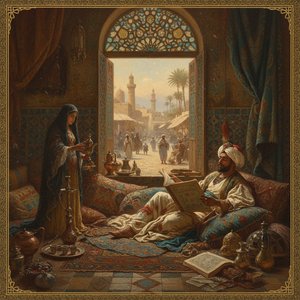
John Frederick Lewis: Orientalism, Detail & Genre Painting in 19th-Century British Art
Explore the captivating Orientalist paintings of John Frederick Lewis! Discover his mastery of detail, genre scenes & influence on 19th-century British art. Learn about his life, techniques & legacy at OriginalUniqueArt.
Top 10 Meesterwerken van het Academisch Realisme | OriginalUniqueArt
Ontdek de 10 meesterwerken van het Academisch Realisme! Van David tot Bouguereau, leer over iconische schilderijen en hun tijdloze schoonheid. Vind museumkwaliteit reproducties & decoratie-inspiratie op OriginalUniqueArt.com.

Top 10 Meesterwerken uit de 19e Eeuw: Kunstgeschiedenis voor uw Interieur
Ontdek de 10 meest iconische kunstwerken uit de 19e eeuw! Van romantiek tot impressionisme, leer het verhaal achter meesterwerken van Monet, Van Gogh & Delacroix. Vind museumkwaliteit reproducties en interieurinspiratie op OriginalUniqueArt.com.

Voorbij de Imitatie: Het Behoud van Kunsthistorisch Erfgoed door Geïnspireerde Reproducies in Hedendaagse Interieurs
Ontdek hoogwaardige kunstreproducties & op maat gemaakte schilderijen bij OriginalUniqueArt. Handgeschilderd of geprint, museumkwaliteit gegarandeerd! Gratis advies & wereldwijde verzending.

10 Iconic Orientalist Masterpieces That Defined an Era of Exoticism
Explore 19th-century Orientalism through Gérôme and more. Discover museum-quality masterpieces on OriginalUniqueArt.com.