

 Voorvertoning
 Verstuur
 Delen
Delen
 Details bekijken

 Download
 Vergelijkbare items
 Röntgenonderzoek
 Diavoorstelling
Klosterstrasse
 Oil On Canvas
- WallArt
- Romantic Urbanism
 1830
1830- 19th Century
 32.0 x 44.0 cm
 Nationalgalerie
 Lees meer
Giclée / Kunstafdrukken
Giclée- of canvasafdruk van museumkwaliteit met een snelle productie en flexibele afwerkingsmogelijkheden. ( Bestel handgeschilderde reproductie Koop afbeelding)




P118B $10

P118H $10

P118W $10

P438Z $10

P508JH $12

P508YH $12

P805H $10

P805Z $10

P919BZ $10

P919G $10

P919XJ $10

P959ZH $10

P968JZ $12

W106C $8

W218G $10

W218JH $8

W218Y $10

W307PJ $10

W316G $10

W316PJ $8

W316Y $10

W398PJ $8

W4111J $10

W500HY $15

W500JH $15

W692G $12

W849H $8

W940BG $15

W953PJ $8




Kies uit onze vooraf ingestelde maten die overeenkomen met de originele verhoudingen van het kunstwerk.

U kunt uw eigen afmetingen opgeven om in een specifieke lijst of ruimte te passen. Als de door u gekozen maat niet overeenkomt met de proporties van het originele kunstwerk, zullen wij de afbeelding bijsnijden of uitbreiden met een gespiegelde of effen rand. Een digitaal mockup wordt ter goedkeuring naar u verzonden voordat de productie begint.
Houd er rekening mee dat de preview op het scherm de werkelijke bijsneding of uitbreiding niet weergeeft. Alleen de mockup toont de uiteindelijke compositie nauwkeurig.
Hoewel aangepaste maten beschikbaar zijn, raden wij aan een afmeting uit de vooraf bepaalde lijst te kiezen om de originele proporties te behouden.
Wereldwijde levering () binnen 2 weken in plaats van de standaard 4/5 weken. (31 augustus)

Gratis wereldwijde expressverzending

Hoogwaardig linnen canvas

Volledige verzendverzekering

Garantie op terugbetaling van invoerrechten

Garantie op exacte kleurweergave

Retourbeleid van 60 dagen (alleen bij defecten)

100% Geld-terug-garantie

Korting bij meerdere afnames
 De optie voor glas is alleen beschikbaar bij een formaat kleiner dan 110 cm.

Klosterstrasse
Giclée / Kunstafdrukken
Afmetingen reproductie
-


Eindtotaal
$ 81
A Window Into Prussian Life: Johann Philipp Eduard Gaertner’s Klosterstrasse
The painting Klosterstrasse by Johann Philipp Eduard Gaertner stands as a testament to the meticulous observation of urban landscapes that characterized the Biedermeier era—a period marked by quiet introspection and an appreciation for the tangible beauty of everyday life in Prussia. Created in 1830, this oil on canvas masterpiece measuring 32 x 44 cm resides within the Nationalgalerie in Berlin, offering visitors a rare glimpse into a pivotal moment in German artistic history. As an art expert specializing in historical reproductions at OriginalUniqueArt.com, I can confidently assert that Klosterstrasse transcends mere depiction; it embodies a profound understanding of its time and place.- Subject Matter: Gaertner’s focus isn't on grand narratives or heroic figures but rather on the commonplace—a busy Berlin street scene bathed in diffused light. The composition skillfully captures the dynamism of urban activity, presenting pedestrians navigating cobblestone streets amidst towering buildings adorned with ornate facades. Notably, a prominent church steeple punctuates the skyline, symbolizing faith and civic pride – elements deeply ingrained within Prussian society at the time.
- Style & Technique: Gaertner’s approach aligns perfectly with Biedermeier aesthetics—characterized by realism tempered with subtle tonal harmonies. He employs meticulous brushwork to render textures convincingly, capturing the weathered stone of buildings and the folds of clothing with remarkable accuracy. The subdued lighting contributes significantly to the painting's atmosphere, casting shadows that deepen the sense of depth and creating a contemplative mood.
- Historical Context: Klosterstrasse emerged during a period of significant social and political transformation in Prussia—the aftermath of Napoleon’s defeat and the burgeoning industrial revolution. Gaertner’s depiction reflects the anxieties and aspirations of his contemporaries, capturing both the grandeur of Prussian architecture and the everyday realities of urban life. It serves as invaluable documentation for historians studying the visual culture of 1830s Berlin.
- Symbolism: Beyond its realistic portrayal, Klosterstrasse carries symbolic weight. The church steeple represents spiritual solace amidst the bustle of the city—a common motif in Biedermeier art reflecting a desire for moral grounding and stability. Furthermore, the architectural details convey Prussia’s ambition to modernize while preserving its heritage.
- Emotional Impact: Viewing Klosterstrasse evokes a feeling of quiet contemplation—drawing the viewer into a scene frozen in time. The artist's masterful use of light and color creates an immersive experience that transports us back to 19th-century Berlin, prompting reflection on themes of urban life, faith, and artistic precision.
Biografie van de kunstenaar
A Chronicler of Prussian Grandeur: The Life and Art of Johann Philipp Eduard Gaertner
Johann Philipp Eduard Gaertner, born in Berlin in 1801, occupies a unique and remarkably important niche within the artistic landscape of 19th-century Germany. He wasn’t driven by the grand narratives often associated with historical painting—nor did he embrace the romanticized landscapes so popular at the time. Instead, Gaertner possessed an almost architectural precision, a deep affection for his urban surroundings, and a remarkable ability to document the evolving cityscape of Prussia through meticulously detailed depictions. His name might not immediately resonate with the same level of recognition as some of his contemporaries, yet Gaertner’s paintings offer invaluable visual documentation of a pivotal era—a bridge between the Biedermeier style and the burgeoning modern world. His journey began modestly enough; after an early relocation to Kassel with his mother in 1806, where he received initial drawing instruction, Gaertner returned to Berlin in 1813 and embarked on a six-year apprenticeship at the Royal Porcelain Factory. While this provided foundational skills in craftsmanship and design, he found its constraints stifling, supplementing them with formal studies at the prestigious Academy of Arts. This early experience instilled within him an unwavering attention to detail—a hallmark that would become instantly recognizable in his mature work.From Decorative Painter to Vedutist: A Parisian Awakening
Gaertner’s artistic trajectory took a decisive turn in 1821 when he secured a position as a decorative painter within the studios of Carl Wilhelm Gropius, the royal court theater painter. This role proved unexpectedly transformative; it allowed him not only to hone his technical skills but also to observe firsthand the interplay of light and shadow—essential elements for any aspiring architectural painter. Crucially, it was during this period that he became captivated by the magnificent vistas of medieval buildings encountered during a pivotal sale of a portrait of King Friedrich Wilhelm III to the royal family. This event provided the financial means for a transformative study trip to Paris – a city brimming with artistic innovation and historical grandeur. Immersed in the Parisian art scene, Gaertner was utterly captivated by the *vedute* tradition—a genre dedicated to capturing detailed cityscapes, celebrating architectural magnificence and urban life. He absorbed techniques from leading artists of the time, learning to manipulate light, atmosphere, and perspective with unprecedented skill. The influence of these masters is evident in his later works, particularly in their masterful use of color and composition. Upon his return to Berlin in 1828, Gaertner dedicated himself almost entirely to painting these evocative urban scenes, establishing himself as a freelance artist and beginning a family—eventually fathering twelve children.Documenting a Changing Berlin: Patronage and Panoramic Visions
The following decade witnessed Gaertner diligently documenting the Biedermeier-style buildings of Berlin – a period marked by rapid growth and significant architectural changes. He catered to the tastes of wealthy patrons, producing stunning depictions of castles in Bellevue, Charlottenburg, and Glienicke, each reflecting the grandeur and power of Prussian society. In 1833, his dedication was formally recognized with admission to the Academy as a “Perspective Painter,” signifying his mastery of spatial representation. However, it was the commission for a monumental six-panel panorama of Berlin in 1834 that truly cemented his reputation—a project that showcased his exceptional skill and ambition. Painted from the rooftop of the Friedrichswerder Church – a location offering unparalleled panoramic views of the city – this ambitious undertaking captured the essence of Berlin’s skyline with remarkable precision and artistry. Both King Friedrich Wilhelm III and his daughter, Tsarina Alexandra Feodorovna, acquired versions of the panorama, demonstrating the immense prestige and demand for Gaertner's work. This period represents the zenith of his career—fueled by royal patronage and a growing appreciation for his ability to capture not just the physical structures but also their emotional resonance within the urban landscape. It is widely believed that he utilized a camera obscura – a device projecting an image through a small hole onto a surface – to aid in accurately sketching the layouts and perspectives of his paintings, a testament to his meticulous approach and commitment to realism.Shifting Fortunes and Enduring Legacy
The death of King Friedrich Wilhelm III in 1840 marked a significant turning point in Gaertner’s career. His successor, Friedrich Wilhelm IV, favored Italianate landscapes over the architectural depictions that had previously garnered royal favor, leading to a decline in commissions and financial difficulties for the artist. Adapting to this changing landscape, Gaertner shifted his focus towards more romantic scenes featuring steep cliffs, gypsies, ruins, and oak trees – though these later works are generally considered less successful than his earlier architectural paintings. Despite this shift, he continued to work diligently, documenting historical sites and creating watercolor sketches for sale—a means of supplementing his income. As photography emerged as a rival medium in the latter half of the 19th century, Gaertner sought respite from Berlin’s bustling atmosphere, settling in Flecken Zechlin near Rheinsberg in 1870, where he died in 1877. His work largely faded into obscurity until its rediscovery at the “Deutschen Jahrhundert-Ausstellung” (German Century Exhibition) of 1906—an event that brought renewed attention to his artistic achievements. Subsequent exhibitions in 1968, 1977, and 2001 have further solidified Gaertner’s legacy as a significant figure in German art history. His paintings are not merely representations of buildings; they are evocative portraits of a transforming era—offering a unique and invaluable glimpse into the heart of 19th-century Prussia through the discerning eye of a dedicated and meticulous artist.Influences and Techniques
- Medieval Architecture: Gaertner’s fascination with medieval buildings, particularly those encountered during his time in Paris, profoundly influenced his artistic direction.
- Parisian Vedute Painting: The tradition of detailed cityscapes, exemplified by French *vedutisti*, provided a crucial framework for his approach to architectural representation.
- Camera Obscura: It is widely believed that Gaertner utilized this device to aid in accurately sketching the layouts and perspectives of his paintings.
- Meticulous Detail: His training at the Royal Porcelain Factory instilled an unwavering commitment to precision and accuracy that permeated his work.
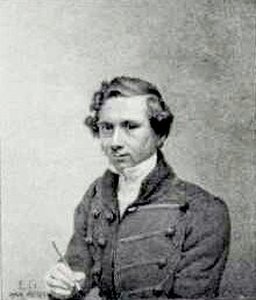
Johann Philipp Eduard Gaertner
1801 - 1877 , Duitsland
Belangrijkste feiten
- Artistic Movement Or Style: Biedermeier, Vedute
- Artists Who Influenced This Artist:
- Middeleeuwse architectuur
- Parisische vedute schilderkunst
- Date Of Birth: 2 juni 1801
- Date Of Death: 22 februari 1877
- Full Name: Johann Philipp Eduard Gaertner
- Nationality: Duits
- Notable Artworks:
- De Neue Wache in Berlijn
- Klosterstrasse
- Belvedere op Havel landschap
- Place Of Birth: Berlijn, Duitsland
Gerelateerde artikelen

The Enduring Legacy of Oil on Canvas: Technique, History & Aesthetic Impact
Explore the rich history & techniques of oil painting – from Renaissance masters to Impressionism. Discover pigments, layering methods, and why this timeless medium endures. Expert insights for artists & art enthusiasts.

Oil on Canvas: A Historical & Technical Exploration of a Timeless Artistic Medium
Explore the rich history & enduring techniques of oil painting on canvas. Discover the science behind its longevity, conservation practices, and contemporary relevance. Expert insights for art enthusiasts.

De Blijvende Erfenis van Olieverf op Doek: Techniek, Geschiedenis en Hedendaagse Praktijk
Ontdek de rijke geschiedenis en technieken van olieverfschilderen. Van Renaissance meesterwerken tot moderne toepassingen, leer over pigmenten, glazuur en conservering.
The Soul of Impressionism: Why Oil on Canvas Captures Eternal Light and Timeless Emotion
Discover the enchanting alchemy of Impressionism. Explore how the mastery of oil on canvas, through glazing and impasto, captures eternal light and emotion. Perfect for lovers of Monet and Van Gogh seeking the profound depth of hand-painted fine art.
Top 10 Meesterwerken Olieverf die de Kunst voorgoed Veranderden | OriginalUniqueArt.nl
Ontdek de 10 meest legendarische olieverf meesterwerken die kunstgeschiedenis schreven! Van Van Gogh tot Rembrandt, leer over iconische technieken & emotionele impact. Vind museumkwaliteit reproducties en woondecoratie inspiratie op OriginalUniqueArt.com.

