Voorvertoning
 Verstuur
 Delen
Delen
 Details bekijken

 Download
 Vergelijkbare items
 Röntgenonderzoek
 Diavoorstelling
Zelfportret II


 Lees meer
Giclée / Kunstafdrukken
Giclée- of canvasafdruk van museumkwaliteit met een snelle productie en flexibele afwerkingsmogelijkheden. ( Bestel handgeschilderde reproductie Koop afbeelding)




P118B $10

P118H $10

P118W $10

P438Z $10

P508JH $12

P508YH $12

P805H $10

P805Z $10

P919BZ $10

P919G $10

P919XJ $10

P959ZH $10

P968JZ $12

W106C $8

W218G $10

W218JH $8

W218Y $10

W307PJ $10

W316G $10

W316PJ $8

W316Y $10

W398PJ $8

W4111J $10

W500HY $15

W500JH $15

W692G $12

W849H $8

W940BG $15

W953PJ $8




Kies uit onze vooraf ingestelde maten die overeenkomen met de originele verhoudingen van het kunstwerk.

U kunt uw eigen afmetingen opgeven om in een specifieke lijst of ruimte te passen. Als de door u gekozen maat niet overeenkomt met de proporties van het originele kunstwerk, zullen wij de afbeelding bijsnijden of uitbreiden met een gespiegelde of effen rand. Een digitaal mockup wordt ter goedkeuring naar u verzonden voordat de productie begint.
Houd er rekening mee dat de preview op het scherm de werkelijke bijsneding of uitbreiding niet weergeeft. Alleen de mockup toont de uiteindelijke compositie nauwkeurig.
Hoewel aangepaste maten beschikbaar zijn, raden wij aan een afmeting uit de vooraf bepaalde lijst te kiezen om de originele proporties te behouden.
Wereldwijde levering () binnen 2 weken in plaats van de standaard 4/5 weken. (24 augustus)

Gratis wereldwijde expressverzending

Hoogwaardig linnen canvas

Volledige verzendverzekering

Garantie op terugbetaling van invoerrechten

Garantie op exacte kleurweergave

Retourbeleid van 60 dagen (alleen bij defecten)

100% Geld-terug-garantie

Korting bij meerdere afnames
 De optie voor glas is alleen beschikbaar bij een formaat kleiner dan 110 cm.

Zelfportret II
Giclée / Kunstafdrukken
Afmetingen reproductie
-


Eindtotaal
$ 81
Beschrijving verzamelobject
Een venster naar het onderbewustzijn
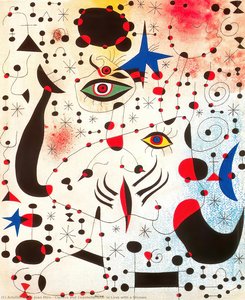
Joan Miró’s Zelfportret II, vervaardigd tussen 1967 en 1968, is veel meer dan een loutere weergave van de fysieke gelijkenis van de kunstenaar; het is een diepgaande uitnodiging tot een privaat, verbeeldingsrijk universum. Tijdens deze vruchtbare periode in zijn carrière week Miró af van de grenzen van representatieve nauwkeurigheid en omarmde hij een stijl die bekend staat als surrealistisch expressionisme. In dit werk lost de herkenbare wereld op in een levendige dans van abstractie, die de complexe en vaak turbulente lagen van de menselijke psyche weerspiegelt. Het aanschouwen van dit canvas is getuige zijn van de afwijzing van de starre realiteit door de kunstenaar, ten gunste van een droomachtig landschap waarin vorm en kleur dienen als de primaire talen van de ziel.De alchemie van textuur en toon
De technische beheersing binnen dit werk schuilt in de bewuste, tactiele energie ervan. Miró maakt gebruik van losse, expressieve penseelstreken, vaak aangebracht in een dikke impasto die het oppervlak een pulserende, sculpturale kwaliteit geeft. Het palet is opvallend gedurfd, verankerd door een diep en krachtig samenspel tussen kanariegeel en middernachtelijk zwart. Deze primaire tonen worden onderbroken door plotselinge, elektrische spatten van karmijnrood en turquoise, wat een aangrijpende visuele spanning creëert die het oog over het canvas leidt. Deze texturele benadering is niet louter decoratief; het is een emotionele noodzaak, bedoeld om de rauwe, onderbewuste impulsen te vangen die Miró van zijn innerlijke visie naar het fysieke vlak wilde vertalen.Hemelse symbolen en oerkrachten
Binnen deze complexe compositie ontvouwt zich een hemels narratief door middel van zorgvuldig geplaatste symbolen. Een stralende zon neemt het linker bovenkwadrant in beslag en fungeert als een baken van licht en een symbool van transcendentie en spirituele aspiratie. Verspreid over de uitgestrektheid bevinden zich sterren die een oneindige, kosmische reikwijdte suggereren, terwijl organische vormen—waaronder twee duidelijke vogels aan de randen—de abstractie verankeren in de natuurlijke wereld. Deze verbintenis tussen geometrische precisie en organische vloeiendheid weerspiegelt Miró’s diepe connectie met het Catalaanse landschap en zijn fascinatie voor de oerkrachten van het leven. Het schilderij functioneert als een visueel gedicht, waarin elke vorm een fragment van een droom is en elke kleur een echo van een herinnering.Een icoon voor de hedendaagse verzamelaar
Voor de kritische verzamelaar of interieurontwerper biedt Zelfportret II een ongekende kans om een gevoel van dynamische beweging en intellectuele diepgang in een ruimte te brengen. Het hoog-contrastrijke palet en de imposante aanwezigheid maken het tot een transformerend middelpunt voor moderne omgevingen, in staat om gesprekken aan te wakkeren en een gevoel van verwondering op te roepen. Of het nu wordt geplaatst in een minimalistische galerijsetting of in een rijk getextureerde leefruimte, deze reproductie brengt de blijvende erfenis van een van de grootste visionairs van de 20e eeuw de woning binnen, en biedt een permanent venster naar de grenzeloze reikwijdte van de menselijke verbeelding.Biografie van de kunstenaar
A Catalan Visionary: The Life and Art of Joan Miró
Joan Miró i Ferrà, born in Barcelona in 1893, stands as one of the most significant figures in 20th-century art. His journey was not merely a progression through styles but an exploration of inner worlds, translating dreams, memories, and Catalan identity onto canvas with a uniquely poetic visual language. From humble beginnings marked by illness and initial parental reservations about his artistic pursuits, Miró persevered, driven by an innate need to express the intangible—the emotions, sensations, and subconscious currents that lie beneath the surface of reality. His early life was steeped in the traditions of Barcelona, a city brimming with architectural marvels thanks to Antoni Gaudí, whose organic forms would subtly influence Miró’s later abstractions. The goldsmithing profession of his father instilled an appreciation for meticulous craftsmanship, while the rugged Catalan landscape became a recurring motif and source of inspiration throughout his career.Early Influences and the Path to Surrealism
Miró's formal artistic training began at La Llotja in Barcelona, where he honed his skills in traditional techniques. However, it was exposure to the avant-garde movements sweeping through Paris that truly ignited his creative evolution. The vibrant colors of Fauvism and the fragmented forms of Cubism resonated deeply, prompting him to move to Paris in 1920. This period proved pivotal as he encountered artists like Pablo Picasso and began experimenting with increasingly abstract compositions. Yet, Miró didn’t simply adopt these styles; he synthesized them, forging a path toward his own distinctive aesthetic. He sought to distill forms to their essence, stripping away representational details in favor of symbolic shapes and evocative colors. This exploration led him to the Surrealist group in 1924, aligning him with artists such as Max Ernst and Salvador Dalí. While embracing the Surrealist interest in the subconscious, Miró maintained a unique sensibility—his work was less about shocking imagery or Freudian symbolism than it was about creating a world of playful forms and poetic suggestion.The Language of Symbols: Key Works and Artistic Innovations
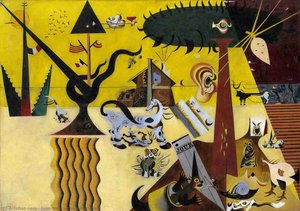
Throughout the 1920s and 30s, Miró developed his signature visual vocabulary—a universe populated by biomorphic shapes, floating forms, and vibrant colors. The Farm (1922), often considered a cornerstone of his oeuvre, exemplifies this transition. It’s not merely a depiction of rural life but an evocation of Catalan identity and a symbolic representation of the natural world. His collaborative spirit led to innovative techniques like *grattage*, pioneered with Max Ernst in 1926 for designs intended for Sergei Diaghilev's ballet, where textures were revealed by scraping paint across canvas. The Dutch Interiors (1928) series demonstrated his ability to reinterpret the Old Masters through a distinctly modern lens, transforming domestic scenes into dreamlike abstractions. Painting (1933), with its bold colors and simplified forms, encapsulates Miró’s exploration of the subconscious and his rejection of conventional artistic boundaries. Beyond painting, Miró fearlessly experimented with sculpture, ceramics, and printmaking, expanding his creative horizons and demonstrating a remarkable versatility.Legacy and Enduring Influence
Joan Miró's impact on 20th-century art is undeniable. He wasn’t simply a painter; he was a visionary who challenged the very definition of artistic expression. His work paved the way for abstract expressionism and continues to inspire artists across disciplines. He established two foundations—the Fundació Joan Miró in Barcelona (1975) and the Fundació Pilar i Joan Miró in Palma de Mallorca (1981)—ensuring that his legacy would endure, providing spaces for artistic exploration and education. Throughout his long career, he remained committed to pushing boundaries, questioning conventions, and exploring the depths of human imagination. Miró’s art is a testament to the power of abstraction, symbolism, and poetic expression—a vibrant celebration of life, dreams, and the enduring spirit of Catalan culture. His work continues to resonate with audiences worldwide, inviting us to enter a world where anything is possible and the boundaries between reality and fantasy blur into a captivating dance of color and form.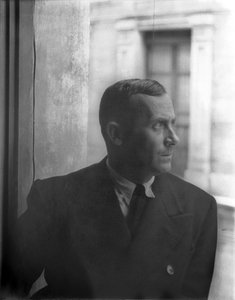
Joan Miró
1893 - 1983 , Spanje
Belangrijkste feiten
- Artistic Movement Or Style: Surrealisme, Abstract Art
- Artists Who Influenced This Artist:
- Pablo Picasso
- Sergei Diaghilev
- Date Of Birth: 20 april 1893
- Full Name: Joan Miró i Ferrà
- Nationality: Spanish
- Notable Artworks:
- The Farm
- Dutch Interiors
- Painting
- Place Of Birth: Barcelona, Spain
Gerelateerde artikelen
Joan Miró's Top 25 Meesterwerken: Kleurrijke Dromen voor Je Interieur | OriginalUniqueArt
Ontdek de top 25 kunstwerken van Joan Miró! Duik in zijn kleurrijke wereld vol surrealisme & abstractie. Leer over zijn techniek en vind museumkwaliteit reproducties voor jouw interieur op OriginalUniqueArt.com.
Top 10 Surrealistische Meesterwerken: Kunst die de Realiteit Uitdaagt | OriginalUniqueArt
Ontdek de 10 meest iconische surrealistische schilderijen van Dalí, Magritte & Miró. Duik in de droomwereld en onbewuste kunst met OriginalUniqueArt's collectie hoogwaardige reproducties. Vind jouw perfecte wandkunst! Explore the full collection online.

Surrealist Expressionism: A Definitive Guide to the Intersection of Dream Logic and Raw Emotion
Explore the profound history of Surrealist Expressionism. Discover how artists blended dream logic with raw emotion to navigate post-war trauma through masterful, evocative imagery and psychological depth.
Top 10 Surrealistische Meesterwerken: Kunst die de Realiteit Uitdaagt | OriginalUniqueArt
Ontdek de 10 meest iconische surrealistische meesterwerken van Dalí, Magritte & Miró. Duik in hun droomwerelden en laat je inspireren door deze baanbrekende kunst. Museumkwaliteit reproducties op OriginalUniqueArt.com – Kunst voor elke wand!
Beyond Reality: The Dreamlike Power of Surrealist Expressionism and the Subconscious Mind
Explore the profound depths of Surrealist Expressionism. Discover how masters like Dalí used dream logic and subconscious imagery to redefine reality through emotionally resonant, museum-quality art.