
 Voorvertoning
 Verstuur
 Delen
Delen
 Details bekijken
 Gids
Gids

 Download
 Vergelijkbare items
 Röntgenonderzoek
 Diavoorstelling
 Q&A
Q&A Statistieken
Mujer delante del sol


 Lees meer
Ontvang een bestand dat klaar is voor drukwerk en de kwaliteit van het online voorbeeld ver overstijgt. Elke digitale afbeelding die wij verkopen, is afkomstig van een high-resolution master uit onze database — meestal tussen de 5.000 en 15.000 pixels breed — zodat u met vertrouwen groot kunt afdrukken, nauwkeurig kunt bijsnijden of fijne details kunt reproduceren.
Geen enkel bestand verlaat ons atelier onbewerkt. Een digitaal expert controleert de kleuren aan de hand van het originele schilderij en corrigeert deze indien nodig, om vervolgens de helderheid en details te verbeteren met professionele retoucheertechnieken — waarbij de penseelstreek en stijl van de kunstenaar altijd strikt worden gerespecteerd. Het resultaat is een afbeelding die oogt als het schilderij zelf, en niet als een gescande foto met een filter.
U keurt de afbeelding goed voordat de bestelling wordt afgerond: onze expert stuurt u binnen 72 uur een e-mail ter beoordeling. Niet tevreden? Vraag om aanpassingen of correcties, of vraag een terugbetaling aan als de kwaliteit niet aan de verwachtingen voldoet.
Dit is de kwaliteit waarop uitgevers, designstudio's, galeries en drukkerijen vertrouwen.
Digitale afbeeldingen
Download een bestand met hoge resolutie voor persoonlijke weergave, afdrukken en creatieve projecten. ( Schakel over naar print Bestel handgeschilderde reproductie)
Inbegrepen bij elke bestelling van een digitale afbeelding
Professionele digitale levering, gegarandeerd
Wanneer u kiest voor OriginalUniqueArt.com, ontvangt u niet alleen een afbeelding – u krijgt een professioneel verbeterd digitaal kunstwerk, met precisie vervaardigd en voorzien van een tevredenheidsgarantie. Dit is alles wat automatisch bij uw bestelling is inbegrepen:

Snelle levering per e-mail
Uw hoogwaardige digitale afbeeldingsbestand wordt binnen 72 uur na bestelling naar u gemaild – klaar voor direct gebruik.

AI-verbeterd digitaal bestand
Uw kunstwerk wordt professioneel geoptimaliseerd met behulp van geavanceerde AI-tools en handmatige bewerkingen, waardoor maximale details, helderheid en kleurnauwkeurigheid worden gegarandeerd.

Gratis levenslange herlevering van digitale bestanden
Je bestand per ongeluk verwijderd of kwijtgeraakt? Geen zorgen – we sturen het u op elk gewenst moment gratis opnieuw toe.

Geen invoerkosten – nooit
Geniet direct van uw kunstwerk zonder invoerrechten, belastingen of verzendkosten – digitale downloads zijn altijd belastingvrij.

Garantie op kleurgetrouwheid
Met behulp van professionele hulpmiddelen en kleurbeheer zorgen wij ervoor dat uw digitale afbeelding de originele kleuren zo nauwkeurig mogelijk weergeeft.

100 dagen tevredenheidsgarantie
Mocht u niet tevreden zijn met uw digitale afbeelding, dan passen wij deze aan of storten wij 100% terug binnen 100 dagen – zonder vragen te stellen.

100% Geld-terug-garantie
Niet tevreden? Ontvang een volledige terugbetaling binnen 100 dagen na ontvangst van uw digitale bestand – zonder vragen te stellen.

Korting bij grote bestellingen
Koop 3 afbeeldingen, bespaar 10% - Koop 5, bespaar 15% - Koop 10+, bespaar 20%. Ideaal voor creatieve projecten, galerieën en bureaus.
A Symphony of Dreams and Catalan Identity
In the profound visual language of Joan Miró, certain works emerge not merely as paintings, but as portals into the subconscious. Mujer delante del sol (“Woman Before the Sun”), executed in 1962, stands as a breathtaking testament to this ability. This striking black and white abstract masterpiece transcends mere representation, offering instead a poetic exploration of the inner mind and a poignant emblem of Catalan cultural heritage. At its heart, the composition presents a woman positioned before a radiant sun, yet this seemingly simple tableau is far from static. It is a living, breathing universe populated by a constellation of figures—stylified human forms, geometric shapes, and vibrant red balls that swirl around the central figure in a rhythmic dance of light and shadow.
The painting’s power lies in its deliberate use of contrast and symbolic weight. As the woman holds two red balls in her hands, she becomes a vessel for fertility and vitality, mirroring the sun’s own energy to illuminate the surrounding space. This interplay between the monochromatic depth of the background and the sudden, visceral impact of the red elements creates a sense of profound intrigue. For the discerning collector or interior designer, this piece offers a captivating focal point that balances the starkness of abstraction with a deeply human emotional core.
Surrealist Technique and Symbolic Resonance
Miró’s approach in Mujer delante del sol exemplifies his role as a pioneer of Surrealism. Eschewing the rigid constraints of academic convention, the artist employs spontaneous brushstrokes and fragmented forms to disrupt rational thought and invite contemplation. The meticulous attention to detail is revealed through subtle gradations of tone achieved via layering paint, resulting in a textured surface that feels almost tactile. This technique allows the viewer to embark on an emotional journey, navigating a landscape where the boundaries between memory, dream, and reality begin to dissolve.
Beyond its formal brilliance, the work is laden with symbolic significance that speaks to the very soul of Catalonia. The woman serves as a representation of feminine strength and resilience—a figure often interpreted as embodying the enduring Catalan spirit—while the sun symbolizes enlightenment and renewal. The red balls, echoing the fiery hues of the Catalan landscape, represent passion and life force. In an era of uncertainty, these symbols coalesce to convey a message of hope and affirmation. To possess a reproduction of such a work is to bring into one's space a piece of history that celebrates the boundless power of imagination and the enduring strength of cultural identity.
Veelgestelde vragen
Is "Mujer delante del sol" door Joan Miró eerder licht of donker van kleur?
Over het algemeen wordt "Mujer delante del sol" geregistreerd als deep_shadow. De waargenomen helderheid beschrijft hoe licht of donker het werk oogt.
Behoort "Mujer delante del sol" van Joan Miró tot het publiek domein, en zo ja, waarom?
"Mujer delante del sol" door Joan Miró is nog steeds auteursrechtelijk beschermd. De auteursrechtelijke bescherming loopt vanaf het overlijden van de kunstenaar, dat plaatsvond in 1983.
Wat is de dominante kleur van "Mujer delante del sol"?
"Mujer delante del sol" neigt naar een Golden Yellow Range tint.
Kunstenaarsbiografie
A Catalan Visionary: The Life and Art of Joan Miró
Joan Miró i Ferrà, born in Barcelona in 1893, stands as one of the most significant figures in 20th-century art. His journey was not merely a progression through styles but an exploration of inner worlds, translating dreams, memories, and Catalan identity onto canvas with a uniquely poetic visual language. From humble beginnings marked by illness and initial parental reservations about his artistic pursuits, Miró persevered, driven by an innate need to express the intangible—the emotions, sensations, and subconscious currents that lie beneath the surface of reality. His early life was steeped in the traditions of Barcelona, a city brimming with architectural marvels thanks to Antoni Gaudí, whose organic forms would subtly influence Miró’s later abstractions. The goldsmithing profession of his father instilled an appreciation for meticulous craftsmanship, while the rugged Catalan landscape became a recurring motif and source of inspiration throughout his career.Early Influences and the Path to Surrealism
Miró's formal artistic training began at La Llotja in Barcelona, where he honed his skills in traditional techniques. However, it was exposure to the avant-garde movements sweeping through Paris that truly ignited his creative evolution. The vibrant colors of Fauvism and the fragmented forms of Cubism resonated deeply, prompting him to move to Paris in 1920. This period proved pivotal as he encountered artists like Pablo Picasso and began experimenting with increasingly abstract compositions. Yet, Miró didn’t simply adopt these styles; he synthesized them, forging a path toward his own distinctive aesthetic. He sought to distill forms to their essence, stripping away representational details in favor of symbolic shapes and evocative colors. This exploration led him to the Surrealist group in 1924, aligning him with artists such as Max Ernst and Salvador Dalí. While embracing the Surrealist interest in the subconscious, Miró maintained a unique sensibility—his work was less about shocking imagery or Freudian symbolism than it was about creating a world of playful forms and poetic suggestion.The Language of Symbols: Key Works and Artistic Innovations
Throughout the 1920s and 30s, Miró developed his signature visual vocabulary—a universe populated by biomorphic shapes, floating forms, and vibrant colors. The Farm (1922), often considered a cornerstone of his oeuvre, exemplifies this transition. It’s not merely a depiction of rural life but an evocation of Catalan identity and a symbolic representation of the natural world. His collaborative spirit led to innovative techniques like *grattage*, pioneered with Max Ernst in 1926 for designs intended for Sergei Diaghilev's ballet, where textures were revealed by scraping paint across canvas. The Dutch Interiors (1928) series demonstrated his ability to reinterpret the Old Masters through a distinctly modern lens, transforming domestic scenes into dreamlike abstractions. Painting (1933), with its bold colors and simplified forms, encapsulates Miró’s exploration of the subconscious and his rejection of conventional artistic boundaries. Beyond painting, Miró fearlessly experimented with sculpture, ceramics, and printmaking, expanding his creative horizons and demonstrating a remarkable versatility.Legacy and Enduring Influence
Joan Miró's impact on 20th-century art is undeniable. He wasn’t simply a painter; he was a visionary who challenged the very definition of artistic expression. His work paved the way for abstract expressionism and continues to inspire artists across disciplines. He established two foundations—the Fundació Joan Miró in Barcelona (1975) and the Fundació Pilar i Joan Miró in Palma de Mallorca (1981)—ensuring that his legacy would endure, providing spaces for artistic exploration and education. Throughout his long career, he remained committed to pushing boundaries, questioning conventions, and exploring the depths of human imagination. Miró’s art is a testament to the power of abstraction, symbolism, and poetic expression—a vibrant celebration of life, dreams, and the enduring spirit of Catalan culture. His work continues to resonate with audiences worldwide, inviting us to enter a world where anything is possible and the boundaries between reality and fantasy blur into a captivating dance of color and form.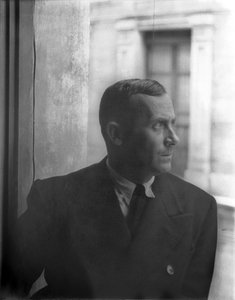
Joan Miró
1893 - 1983 , Spanje
Belangrijkste feiten
- Artistic Movement Or Style: Surrealisme, Abstract Art
- Artists Who Influenced This Artist:
- Pablo Picasso
- Sergei Diaghilev
- Date Of Birth: 20 april 1893
- Full Name: Joan Miró i Ferrà
- Nationality: Spanish
- Notable Artworks:
- The Farm
- Dutch Interiors
- Painting
- Place Of Birth: Barcelona, Spain