Text size

() ·

A painting made for you, by hand

Circus Horse

Handgemaakte olieverfreproductie

Met de hand geschilderd in olieverf op canvas in uw gewenste maat en lijst, op bestelling gemaakt door onze kunstenaars. ( Schakel over naar print Schakel over naar digitale afbeeldingen)

Beschrijving verzamelobject

Experience Miró's 'Circus Horse' (1927), a vibrant Surrealist masterpiece blending dreamlike imagery with Klee-inspired geometry. A captivating oil painting!

Biografie kunstenaar

Ontdek Joan Miró's prachtige surrealistische kunst! Een icoon van de Spaanse avantgarde met kleurrijke vormen & symbolische kleuren. Bekijk zijn werken op OriginalUniqueArt!

from ·

Chapter 1

How large should it be?

Slide to change the size; the picture on the left shows the frame at its real width. The proportions of the original are kept.

Standaardformaat
op maat gemaakt
CM
INCH

Kies uit onze vooraf ingestelde maten die overeenkomen met de originele verhoudingen van het kunstwerk.

breedte
hoogte

Voer de breedte en hoogte in die u nodig heeft, passend bij uw lijst of uw muur. Omdat dit handgeschilderd is, kan de kunstenaar bij een afmeting met een andere beeldverhouding iets meer rondom het schilderij schilderen of juist iets meer weglaten — u kiest zelf. Wij sturen u een digitaal mockup ter goedkeuring voordat het schilderwerk begint. De afbeelding die op deze pagina wordt getoond, is niet het uiteindelijke resultaat — alleen de mockup geeft dit weer.


Chapter 2

How should it arrive?

Choose the edges of the stretched canvas

Choose your frame

Corner sample of the WhiteWrap canvas edge finish, stretched on massief hout bars
White €1
Corner sample of the BlurSideWrap canvas edge finish, stretched on massief hout bars
Blurside €1
Corner sample of the ExtendedWrap canvas edge finish, stretched on massief hout bars
Extended €1
Corner sample of the P118B picture frame: gegoten polystyreen, 5 cm wide and 3 cm thick
P118B €10
Corner sample of the P118H picture frame: gegoten polystyreen, 5 cm wide and 3 cm thick
P118H €10
Corner sample of the P118W picture frame: gegoten polystyreen, 5 cm wide and 3 cm thick
P118W €10
Corner sample of the P438Z picture frame: gegoten polystyreen, 5.5 cm wide and 3.5 cm thick
P438Z €10
Corner sample of the P508JH picture frame: gegoten polystyreen, 7 cm wide and 3.5 cm thick
P508JH €12
Corner sample of the P508YH picture frame: gegoten polystyreen, 7 cm wide and 3.5 cm thick
P508YH €12
Corner sample of the P805H picture frame: gegoten polystyreen, 5 cm wide and 3.5 cm thick
P805H €10
Corner sample of the P805Z picture frame: gegoten polystyreen, 5 cm wide and 3.5 cm thick
P805Z €10
Corner sample of the P919BZ picture frame: gegoten polystyreen, 7 cm wide and 3.5 cm thick
P919BZ €10
Corner sample of the P919G picture frame: gegoten polystyreen, 7 cm wide and 3.5 cm thick
P919G €10
Corner sample of the P919XJ picture frame: gegoten polystyreen, 7 cm wide and 3.5 cm thick
P919XJ €10
Corner sample of the P959ZH picture frame: gegoten polystyreen, 5 cm wide and 3 cm thick
P959ZH €10
Corner sample of the P968JZ picture frame: gegoten polystyreen, 6 cm wide and 4 cm thick
P968JZ €12
Corner sample of the W106C picture frame: massief hout, 5 cm wide and 3 cm thick
W106C €8
Corner sample of the W218G picture frame: massief hout, 5 cm wide and 3 cm thick
W218G €10
Corner sample of the W218JH picture frame: massief hout, 5 cm wide and 3 cm thick
W218JH €8
Corner sample of the W218Y picture frame: massief hout, 5 cm wide and 3 cm thick
W218Y €10
Corner sample of the W307PJ picture frame: massief hout, 6 cm wide and 3 cm thick
W307PJ €10
Corner sample of the W316G picture frame: massief hout, 6 cm wide and 3 cm thick
W316G €10
Corner sample of the W316PJ picture frame: massief hout, 6 cm wide and 3 cm thick
W316PJ €8
Corner sample of the W316Y picture frame: massief hout, 6 cm wide and 3 cm thick
W316Y €10
Corner sample of the W398PJ picture frame: massief hout, 5 cm wide and 3 cm thick
W398PJ €8
Corner sample of the W4111J picture frame: massief hout, 6.5 cm wide and 3.5 cm thick
W4111J €10
Corner sample of the W500HY picture frame: massief hout, 7 cm wide and 5 cm thick
W500HY €15
Corner sample of the W500JH picture frame: massief hout, 7 cm wide and 5 cm thick
W500JH €15
Corner sample of the W692G picture frame: massief hout, 8 cm wide and 4 cm thick
W692G €12
Corner sample of the W849H picture frame: massief hout, 5 cm wide and 3 cm thick
W849H €8
Corner sample of the W940BG picture frame: massief hout, 7.5 cm wide and 4.5 cm thick
W940BG €15
Corner sample of the W953PJ picture frame: massief hout, 6 cm wide and 3.5 cm thick
W953PJ €8
Corner sample of the H24-GOLD picture frame: gesneden hout met gesso, 10 cm wide and 6 cm thick
H24-GOLD €30
Corner sample of the H24-SILVER picture frame: gesneden hout met gesso, 10 cm wide and 6 cm thick
H24-SILVER €30
Corner sample of the H36-GOLD picture frame: gesneden hout met gesso, 15 cm wide and 6.5 cm thick
H36-GOLD €45
Corner sample of the H36-SILVER picture frame: gesneden hout met gesso, 15 cm wide and 6.5 cm thick
H36-SILVER €45
Lijstvoorbeeld
Ingelijst

Moulding: . Overall size with the frame: .

Chapter 3

Who paints it, and should anything change?

Examples of what can be changed: Replace face with customer photo; Add pet (e.g., replace cat with dog); Include hidden message in background; Change background landscape or elements.
After order, OriginalUniqueArt.com team will email client for instructions and provide a mockup preview

Wereldwijde levering () binnen 3 tot 4 weken in plaats van de standaard 5 weken. (2 november). Zonder concessies aan de kwaliteit.

Chapter 4

The finishing touches

A nameplate, as in a museum?

Details van de gegraveerde bronzen plaat

This elegant plaque features the artist's name and the title of the artwork, finely engraved for a timeless presentation.

It is made from bronze with a refined, elegant finish. The text is precisely laser-engraved for a sharp and permanent result. Measuring 9x2 cm, the plaque is compact yet easy to read. It's built to be durable and scratch-resistant, offering a professional, museum-quality look. Mounting is simple thanks to the included adhesive backing.

Details transparante acrylplaat

The plaque includes essential engraved details such as the artist's name, the title of the artwork, the date it was created, the type of media used-like oil on canvas or watercolor-a brief description of the piece, and a QR code that links to the complete artwork information.

It is crafted from clear acrylic, offering a sleek, modern appearance. The text is UV-engraved in black to ensure strong visual contrast. With a size of 10x15 cm, it ensures optimal readability. It comes equipped with two metal hooks for secure wall mounting. The plaque is designed to be weather-resistant, making it suitable for various environments, and it includes interactive features that work seamlessly with smartphone scanning.

Details zwarte acrylplaat

This elegant plaque includes engraved information such as the artist's name, the title of the artwork, the date it was created, the type of media used (like oil on canvas or watercolor), a short description of the artwork, and a QR code for quick access to more information.

The plaque itself is made from refined black acrylic with a premium finish. The text is laser-engraved in white for high contrast and readability. Its size is 10x15 cm, designed to be easy to read. It comes with two metal hooks for professional mounting. The design is sleek and fits any interior style. It is also weather-resistant and durable, with built-in digital integration for mobile compatibility.

A protective varnish?

When do you need it?

Chapter 5

Your painting, as you ordered it

Circus Horse

Druktechniek

Afmetingen reproductie

-

Geselecteerde topkunstenaars

Meer detail, verfijning en extra productietijd

-

Lijst voor reproductie

-

-

Voor kunstwerken of reproducties die aan één zijde groter zijn dan 105 cm (ongeveer 41 inch), wordt de lijst als een losse set verzonden. Deze methode garandeert een veilige levering en voorkomt schade tijdens het transport.

Professionele montage vereist - dit is geen doe-het-zelfproduct.
De set moet worden gemonteerd en het canvas moet worden gespannen door een ervaren professionele lijstenmaker, met gebruik van houtlijm (niet inbegrepen), een doekspanter en klemmen om de sponningen recht te houden terwijl de lijm droogt. Onjuiste montage of een ongelijkmatige spanning op het canvas kan het kunstwerk permanent beschadigen en wordt niet gedekt door onze garantie.

  • Alle massief houten onderdelen zijn inbegrepen, nauwkeurig op maat gesneden voor montage.

  • Te monteren met de meegeleverde schroeven, plus houtlijm voor de hoekverbindingen, die niet wordt meegeleverd en door uw lijstenmaker moet worden aangeschaft.

  • Professioneel gereedschap is vereist en niet inbegrepen: een spanner voor canvas en klemmen om de latten recht te houden terwijl de lijm droogt.

Belangrijk:
De hoekverbindingen vereisen houtlijm, de latten moeten met lijmklemmen worden vastgehouden tot de lijm volledig is opgedroogd, en het spannen van het canvas op het samengestelde frame vereist een doekspanter. Geen van deze artikelen is inbegrepen in de set. Wij adviseren u om een ervaren professionele lijstenmaker te raadplegen voordat u deze maat bestelt.

Naamplaatje

-

-

Beschermende vernislaag

Glanzende vernis (versterkt de kleuren en biedt bescherming tegen licht en vocht)

-

Mijn kunstwerk aanpassen

Voorbeelden van aanpassingen: vervang het gezicht door een eigen foto; voeg een huisdier toe (bijv. vervang de kat door een hond); verwerk een verborgen boodschap in de achtergrond; wijzig het landschap of andere elementen op de achtergrond.

-

Spoedlevering

Wereldwijde levering () binnen 3 tot 4 weken in plaats van de standaard 5 weken. (2 november). Geen concessies aan de kwaliteit.

-

Spoedlevering

Wereldwijde levering naar binnen 5 weken. (9 november).

Inbegrepen

Eindtotaal

€ 267

Totaalprijs € 267

De optie voor glas is alleen beschikbaar bij een formaat kleiner dan 110 cm.

Included with every order

  • Gratis wereldwijde expressverzending
  • Hoogwaardig linnen canvas
  • Volledige verzendverzekering
  • Garantie op terugbetaling van invoerrechten
  • Garantie op exacte kleurweergave
  • Retourbeleid van 100 dagen (alleen bij defecten)
  • 100% Geld-terug-garantie
  • Korting bij meerdere afnames

Joan Miró's "Circus Horse": A Dreamlike Exploration of Form and Color

Joan Miró’s “Circus Horse,” painted in 1927, is a captivating example of his signature dreamlike style, belonging to a suite of approximately seventy works created during that year. This oil painting transports viewers into a whimsical world where familiar forms are abstracted and reimagined, reflecting the influence of both Surrealism and Paul Klee’s narrative geometry. The artwork offers a glimpse into Miró's artistic exploration of the subconscious and his unique approach to composition.

Subject and Composition: A Whimsical Circus Scene

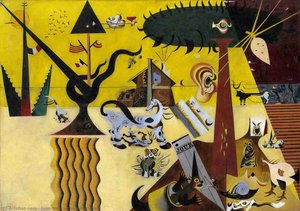
The painting depicts a vibrant circus scene, though far from a realistic portrayal. A bright blue ground serves as the arena, providing a striking backdrop for the central elements. The focal point is a stylized horse, seemingly in motion, rendered with simplified forms and bold colors. Above it, elongated shapes resembling wings or limbs extend upwards, creating a sense of dynamism and flight. A central figure, potentially representing a ringmaster, is suggested by a yellow whip that crisscrosses the canvas in an energetic, meandering line. The composition, while seemingly chaotic at first glance, possesses a remarkable balance, with overlapping elements contributing to a feeling of depth and visual interest. The strong vertical emphasis created by the upward thrust of the wing-like shapes adds to the painting's overall energy.

Style and Technique: Surrealism Meets Narrative Geometry

“Circus Horse” exemplifies Miró’s unique blend of Surrealist aesthetics and Klee-inspired geometric principles. The work is characterized by its abstraction, simplification of forms, and use of symbolic imagery. Miró's technique involves a smooth application of oil paint, likely achieved through brushwork or glazing techniques, resulting in a polished surface. The color palette is dominated by cool tones—deep blues and grays—which contrast with the lighter gray hues of the secondary shapes and the vibrant yellow of the whip. This interplay of colors enhances the painting's visual impact and contributes to its dreamlike quality. As critics noted in 1928, Miró seemed to operate "in the world of magic," a testament to his ability to evoke wonder and imagination through his art.

Historical Context: The Rise of Surrealism and Miró’s Artistic Development

Painted in 1927, “Circus Horse” emerged during a pivotal period in modern art history. The Surrealist movement was gaining momentum, challenging traditional artistic conventions and exploring the realm of dreams and the subconscious. Miró, deeply influenced by this movement, began to develop his own distinctive style, characterized by playful forms, vibrant colors, and symbolic imagery. His earlier influences included Vincent van Gogh and Paul Cézanne, whose expressive use of color and form resonated with Miró’s artistic sensibilities. The "dream" pictures created in 1927 represent a significant phase in Miró's development, showcasing his ability to create whimsical, dreamlike compositions that captivated audiences.

Symbolism and Emotional Impact: A Journey into the Subconscious

The symbolism within “Circus Horse” is open to interpretation, inviting viewers to engage with the artwork on a personal level. The horse, often associated with freedom and movement, takes on an abstracted form, suggesting a sense of liberation from conventional constraints. The whip, while potentially representing control, is rendered in a fluid, meandering line, implying a more playful and imaginative interaction. The bright blue background evokes a sense of vastness and possibility, creating a stage for the unfolding dreamlike narrative. Ultimately, “Circus Horse” invites viewers to embark on a journey into the subconscious, where imagination reigns supreme and familiar forms are transformed into something extraordinary.

Veelgestelde vragen

Is "Circus Horse" gebleven in het geboorteland van de kunstenaar?

Nee - het kunstwerk wordt in het buitenland bewaard. Joan Miró werd geboren in Spanje, en het originele werk "Circus Horse" wordt bewaard in een museum in United States of America.

Wanneer is "Circus Horse" door Joan Miró gemaakt en bij welke stroming behoort het?

"Circus Horse" werd gemaakt in 1927, binnen de Surrealism-stroming.

Onder welke andere namen is Joan Miró bekend?

Joan Miró staat ook bekend als Jo de Miró.

More about this painting

Voorvertoning Bekijk in AR Schakel over naar print Schakel over naar digitale afbeeldingen Verstuur
Details bekijken Gids Toevoegen aan favorieten Download Vergelijkbare items Röntgenonderzoek Diavoorstelling Q&A Statistieken

In numbers

  • 1927the year it was painted
  • 29frames to choose from
  • standard sizes, in its own proportions
  • 5weeks to paint and deliver it

About the original

Afmetingen
131.0 x 97.0 cm
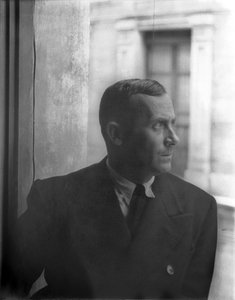
Joan Miró

Joan Miró

1893 - 1983, Spanje

Quick facts about Joan Miró

  • Artistic Movement Or Style: Surrealisme, Abstract Art
  • Artists Who Influenced This Artist:
    • Pablo Picasso
    • Sergei Diaghilev
  • Date Of Birth: 20 april 1893
  • Full Name: Joan Miró i Ferrà
  • Nationality: Spanish
  • Notable Artworks:
    • The Farm
    • Dutch Interiors
    • Painting
  • Place Of Birth: Barcelona, Spain

Biografie kunstenaar

A Catalan Visionary: The Life and Art of Joan Miró

Joan Miró i Ferrà, born in Barcelona in 1893, stands as one of the most significant figures in 20th-century art. His journey was not merely a progression through styles but an exploration of inner worlds, translating dreams, memories, and Catalan identity onto canvas with a uniquely poetic visual language. From humble beginnings marked by illness and initial parental reservations about his artistic pursuits, Miró persevered, driven by an innate need to express the intangible—the emotions, sensations, and subconscious currents that lie beneath the surface of reality. His early life was steeped in the traditions of Barcelona, a city brimming with architectural marvels thanks to Antoni Gaudí, whose organic forms would subtly influence Miró’s later abstractions. The goldsmithing profession of his father instilled an appreciation for meticulous craftsmanship, while the rugged Catalan landscape became a recurring motif and source of inspiration throughout his career.

Early Influences and the Path to Surrealism

Miró's formal artistic training began at La Llotja in Barcelona, where he honed his skills in traditional techniques. However, it was exposure to the avant-garde movements sweeping through Paris that truly ignited his creative evolution. The vibrant colors of Fauvism and the fragmented forms of Cubism resonated deeply, prompting him to move to Paris in 1920. This period proved pivotal as he encountered artists like Pablo Picasso and began experimenting with increasingly abstract compositions. Yet, Miró didn’t simply adopt these styles; he synthesized them, forging a path toward his own distinctive aesthetic. He sought to distill forms to their essence, stripping away representational details in favor of symbolic shapes and evocative colors. This exploration led him to the Surrealist group in 1924, aligning him with artists such as Max Ernst and Salvador Dalí. While embracing the Surrealist interest in the subconscious, Miró maintained a unique sensibility—his work was less about shocking imagery or Freudian symbolism than it was about creating a world of playful forms and poetic suggestion.

The Language of Symbols: Key Works and Artistic Innovations

Throughout the 1920s and 30s, Miró developed his signature visual vocabulary—a universe populated by biomorphic shapes, floating forms, and vibrant colors. The Farm (1922), often considered a cornerstone of his oeuvre, exemplifies this transition. It’s not merely a depiction of rural life but an evocation of Catalan identity and a symbolic representation of the natural world. His collaborative spirit led to innovative techniques like *grattage*, pioneered with Max Ernst in 1926 for designs intended for Sergei Diaghilev's ballet, where textures were revealed by scraping paint across canvas. The Dutch Interiors (1928) series demonstrated his ability to reinterpret the Old Masters through a distinctly modern lens, transforming domestic scenes into dreamlike abstractions. Painting (1933), with its bold colors and simplified forms, encapsulates Miró’s exploration of the subconscious and his rejection of conventional artistic boundaries. Beyond painting, Miró fearlessly experimented with sculpture, ceramics, and printmaking, expanding his creative horizons and demonstrating a remarkable versatility.

Legacy and Enduring Influence

Joan Miró's impact on 20th-century art is undeniable. He wasn’t simply a painter; he was a visionary who challenged the very definition of artistic expression. His work paved the way for abstract expressionism and continues to inspire artists across disciplines. He established two foundations—the Fundació Joan Miró in Barcelona (1975) and the Fundació Pilar i Joan Miró in Palma de Mallorca (1981)—ensuring that his legacy would endure, providing spaces for artistic exploration and education. Throughout his long career, he remained committed to pushing boundaries, questioning conventions, and exploring the depths of human imagination. Miró’s art is a testament to the power of abstraction, symbolism, and poetic expression—a vibrant celebration of life, dreams, and the enduring spirit of Catalan culture. His work continues to resonate with audiences worldwide, inviting us to enter a world where anything is possible and the boundaries between reality and fantasy blur into a captivating dance of color and form.