Bekijk op ware grootte
 Verstuur
 Delen
Delen
 Details bekijken
 Gids voor studentenkunstwerken

 Download
 Vergelijkbare items
 Röntgenonderzoek
 Diavoorstelling
 Statistieken
Blauw II
 Acryl op canvas
- Wanddecoratie
- Abstract Surrealism
 1961
1961- Moderne tijd
 270.0 x 355.0 cm
 Lees meer
De kunstwerken die op deze pagina worden weergegeven, zijn beschermd door de auteursrechtwetgeving, wat betekent dat het ons wettelijk niet is toegestaan om identieke reproducties te maken of te verkopen. Deze bescherming wordt gehandhaafd onder internationale overeenkomsten zoals de Conventie van Bern en door nationale wetgeving, waaronder de bepalingen van de Amerikaanse auteurswet - Titel 17. Alle rechten voorbehouden. Reproduceren of distribueren van afbeeldingen is niet toegestaan zonder uitdrukkelijke schriftelijke toestemming van WahooArt.com en de rechthebbenden.
Als een respectvol en legaal alternatief bieden wij op maat gemaakte, handgeschilderde kunstwerken aan die geïnspireerd zijn op het origineel. Onze bekwame en professionele kunstenaars bestuderen zorgvuldig de stijl, sfeer en artistieke essentie van het origineel om een nieuw, uniek werk te creëren dat dezelfde emotie oproept – terwijl het een op zichzelf staande, originele creatie blijft.
Deze methode voldoet volledig aan de auteursrechtwetgeving, omdat het niet gaat om het kopiëren of dupliceren van het beschermde kunstwerk. In plaats daarvan is er sprake van een creatieve herinterpretatie — een nieuw schilderij dat door het origineel wordt geïnspireerd, maar er niet identiek aan is.
Handgemaakte olieverfreproductie
Met de hand geschilderd in olieverf op canvas in uw gewenste maat en lijst, op bestelling gemaakt door onze kunstenaars. ( Schakel over naar print Schakel over naar digitale afbeeldingen)




P118B €10

P118H €10

P118W €10

P438Z €10

P508JH €12

P508YH €12

P805H €10

P805Z €10

P919BZ €10

P919G €10

P919XJ €10

P959ZH €10

P968JZ €12

W106C €8

W218G €10

W218JH €8

W218Y €10

W307PJ €10

W316G €10

W316PJ €8

W316Y €10

W398PJ €8

W4111J €10

W500HY €15

W500JH €15

W692G €12

W849H €8

W940BG €15

W953PJ €8




Kies uit onze vooraf ingestelde maten die overeenkomen met de originele verhoudingen van het kunstwerk.

Voer de breedte en de hoogte in die u nodig heeft, passend bij uw lijst of uw muur. Dit is handgeschilderd, dus bij een afmeting met een andere vormverhouding kan de kunstenaar iets meer rondom het schilderij schilderen of juist iets meer weglaten — u kiest zelf. Wij sturen u een digitaal mockup ter goedkeuring voordat het schilderwerk begint. De afbeelding die op deze pagina wordt getoond, is niet het uiteindelijke resultaat — alleen de mockup geeft dit weer.
Na de bestelling zal het team van OriginalUniqueArt.com per e-mail contact opnemen met de klant voor instructies en een mockup-voorbeeld sturen.
Wereldwijde levering () binnen 3 tot 4 weken in plaats van de standaard 5 weken. (21 oktober). Zonder concessies aan de kwaliteit.

Gratis wereldwijde expressverzending

Hoogwaardig linnen canvas

Volledige verzendverzekering

Garantie op terugbetaling van invoerrechten

Garantie op exacte kleurweergave

Retourbeleid van 100 dagen (alleen bij defecten)

100% Geld-terug-garantie

Korting bij meerdere afnames
 De optie voor glas is alleen beschikbaar bij een formaat kleiner dan 110 cm.

Blauw II
Reproductiemethode
Formaat reproductie
-


Totaalprijs
€ 262
De Mystieke Diepte van Blauw II: Een Reis door de Werken van Joan Miró
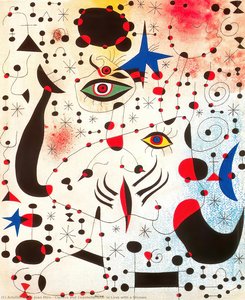
Joan Miró’s “Blue II”, een schilderij uit 1961, is meer dan slechts een visueel kunstwerk; het is een portaal naar een onderbewuste wereld, een symfonie van kleur en vorm die de essentie van abstract surrealisme belichaamt. Deze indrukwekkende compositie (270 x 355 cm) toont Miró’s unieke vermogen om eenvoud te combineren met diepe symboliek, waardoor het een begeerd stuk wordt voor kunstliefhebbers en verzamelaars over de hele wereld. De schilderij ademt een serene rust, doch verborgen onder deze kalmte broeit een intense energie, een echo van Miró’s persoonlijke ervaringen en zijn fascinatie met dromen en het onbewuste.Een Minimalistische Harmonie in Blauw en Contrast
Het hart van “Blue II” is een overweldigend blauw veld, een kleur die Miró vaak gebruikte om de ruimte en de oneindigheid van de kosmos te representeren. Tegen deze achtergrond stroomt een lange, roodachtige vlag links in het beeld, een explosie van energie die contrasteert met de koele tinten van de blauwe hemel. Een reeks zwarte cirkels, verspreid over het doek, voegen een extra laag complexiteit toe, alsof ze de sterrenhemel of misschien wel geheimen uit de diepten van het onderbewustzijn vertegenwoordigen. Deze scherpe contrasten – blauw, rood en zwart – creëren een dynamische spanning, een visuele dans die de kijker in Miró’s dromerige wereld trekt. De gebruikte texturen zijn glad en vlak, wat bijdraagt aan het minimalistische karakter van het werk.Psychic Automatisme: Het Pad naar het Onderbewustzijn
Miró’s techniek, bekend als “psychic automatism,” was een cruciale factor in de creatie van “Blue II”. Hij liet zijn onderbewuste de vrije loop, waarbij hij intuïtief penseelstreeken aanbracht zonder voorafgaand ontwerp. Dit resulteerde in een schilderij dat lijkt te ontstaan uit een droom, vol met onduidelijke vormen en symbolen. De schone lijnen en vlakke texturen versterken dit effect, waardoor het werk een gevoel van spontaniteit en directheid uitstraalt. Het is alsof Miró de geheimen van zijn ziel heeft vastgelegd op het canvas, zonder enige vorm van censuur of controle. De schilder gebruikte primair primaire kleuren, wat kenmerkend was voor zijn latere werk.Symboliek en Emotionele Resonantie: Een Kosmische Zoektocht
De rode vlag in “Blue II” is vaak geïnterpreteerd als een symbool van energie, passie of zelfs emotionele intensiteit. De zwarte cirkels kunnen verwijzen naar de hemel, sterren, of misschien wel de vervaging van het bewustzijn. De enorme, lege ruimte rondom deze elementen roept een gevoel van kosmische isolatie en introspectie op. Miró’s kunst is niet bedoeld om concrete antwoorden te geven, maar eerder om de kijker uit te nodigen om zijn eigen interpretaties te vormen. Het schilderij is een uitnodiging tot contemplatie, een reis door de diepten van het menselijk bewustzijn. De werken in deze serie, waartoe “Blue II” behoort, werden gezien als een samenvatting van Miró’s artistieke ontwikkeling tot aan 1961.Historische Context en Erfgoed: Een Katalana Visie
“Blue II” is onderdeel van de Triptych Bleu-serie, die Miró beschouwde als een reflectie van zijn hele artistieke carrière. In deze periode was Miró een gevestigde naam in de internationale kunstwereld, en zijn stijl had zich ontwikkeld van vroege landschappen en portretten naar abstracte schilderijen met grote, lege ruimtes en heldere kleuren. De invloed van Antoni Gaudí, wiens organische architectuur Miró bewonderde, is subtiel aanwezig in de vormen en composities van zijn werk. De Fundació Joan Miró in Barcelona biedt een waardevolle bron van informatie over het leven en de kunst van deze baanbrekende katalane kunstenaar.Vragen & Antwoorden
Hoe wordt het kleurenpalet van "Blauw II" door Joan Miró beschreven?
"Blauw II" door Joan Miró maakt gebruik van een Donkere tinten kleurenpalet. Het palet vat het algemene kleurkarakter van het werk samen.
Wat is de dominante kleur van "Blauw II" door Joan Miró?
De kleur die het meest opvalt in "Blauw II" is Diep hemelblauw (#1591e4). De dominante kleur is handig bij het afstemmen van een kunstwerk op een interieur.
Hoeveel mensen bekijken "Blauw II"?
Er bestaat een Statistieken-pagina voor "Blauw II". Deze brengt de maandelijkse bezoeken aan het kunstwerk en andere werken van de kunstenaar in kaart, met uitsplitsingen naar land en taal.
Biografie van de kunstenaar
A Catalan Visionary: The Life and Art of Joan Miró
Joan Miró i Ferrà, born in Barcelona in 1893, stands as one of the most significant figures in 20th-century art. His journey was not merely a progression through styles but an exploration of inner worlds, translating dreams, memories, and Catalan identity onto canvas with a uniquely poetic visual language. From humble beginnings marked by illness and initial parental reservations about his artistic pursuits, Miró persevered, driven by an innate need to express the intangible—the emotions, sensations, and subconscious currents that lie beneath the surface of reality. His early life was steeped in the traditions of Barcelona, a city brimming with architectural marvels thanks to Antoni Gaudí, whose organic forms would subtly influence Miró’s later abstractions. The goldsmithing profession of his father instilled an appreciation for meticulous craftsmanship, while the rugged Catalan landscape became a recurring motif and source of inspiration throughout his career.Early Influences and the Path to Surrealism
Miró's formal artistic training began at La Llotja in Barcelona, where he honed his skills in traditional techniques. However, it was exposure to the avant-garde movements sweeping through Paris that truly ignited his creative evolution. The vibrant colors of Fauvism and the fragmented forms of Cubism resonated deeply, prompting him to move to Paris in 1920. This period proved pivotal as he encountered artists like Pablo Picasso and began experimenting with increasingly abstract compositions. Yet, Miró didn’t simply adopt these styles; he synthesized them, forging a path toward his own distinctive aesthetic. He sought to distill forms to their essence, stripping away representational details in favor of symbolic shapes and evocative colors. This exploration led him to the Surrealist group in 1924, aligning him with artists such as Max Ernst and Salvador Dalí. While embracing the Surrealist interest in the subconscious, Miró maintained a unique sensibility—his work was less about shocking imagery or Freudian symbolism than it was about creating a world of playful forms and poetic suggestion.The Language of Symbols: Key Works and Artistic Innovations
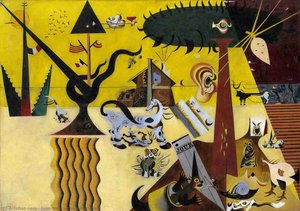
Throughout the 1920s and 30s, Miró developed his signature visual vocabulary—a universe populated by biomorphic shapes, floating forms, and vibrant colors. The Farm (1922), often considered a cornerstone of his oeuvre, exemplifies this transition. It’s not merely a depiction of rural life but an evocation of Catalan identity and a symbolic representation of the natural world. His collaborative spirit led to innovative techniques like *grattage*, pioneered with Max Ernst in 1926 for designs intended for Sergei Diaghilev's ballet, where textures were revealed by scraping paint across canvas. The Dutch Interiors (1928) series demonstrated his ability to reinterpret the Old Masters through a distinctly modern lens, transforming domestic scenes into dreamlike abstractions. Painting (1933), with its bold colors and simplified forms, encapsulates Miró’s exploration of the subconscious and his rejection of conventional artistic boundaries. Beyond painting, Miró fearlessly experimented with sculpture, ceramics, and printmaking, expanding his creative horizons and demonstrating a remarkable versatility.Legacy and Enduring Influence
Joan Miró's impact on 20th-century art is undeniable. He wasn’t simply a painter; he was a visionary who challenged the very definition of artistic expression. His work paved the way for abstract expressionism and continues to inspire artists across disciplines. He established two foundations—the Fundació Joan Miró in Barcelona (1975) and the Fundació Pilar i Joan Miró in Palma de Mallorca (1981)—ensuring that his legacy would endure, providing spaces for artistic exploration and education. Throughout his long career, he remained committed to pushing boundaries, questioning conventions, and exploring the depths of human imagination. Miró’s art is a testament to the power of abstraction, symbolism, and poetic expression—a vibrant celebration of life, dreams, and the enduring spirit of Catalan culture. His work continues to resonate with audiences worldwide, inviting us to enter a world where anything is possible and the boundaries between reality and fantasy blur into a captivating dance of color and form.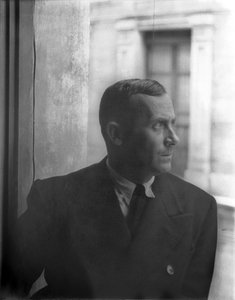
Joan Miró
1893 - 1983 , Spanje
Snelle feiten
- Artistic Movement Or Style: Surrealisme, Abstract Art
- Artists Who Influenced This Artist:
- Pablo Picasso
- Sergei Diaghilev
- Date Of Birth: 20 april 1893
- Full Name: Joan Miró i Ferrà
- Nationality: Spanish
- Notable Artworks:
- The Farm
- Dutch Interiors
- Painting
- Place Of Birth: Barcelona, Spain
Gerelateerde artikelen
Joan Miró's Top 25 Meesterwerken: Kleurrijke Dromen voor Je Interieur | OriginalUniqueArt
Ontdek de top 25 kunstwerken van Joan Miró! Duik in zijn kleurrijke wereld vol surrealisme & abstractie. Leer over zijn techniek en vind museumkwaliteit reproducties voor jouw interieur op OriginalUniqueArt.com.

Kandinsky's Meesterwerken: 25 Abstracte Kunstparels voor uw Interieur | OriginalUniqueArt
Ontdek de 25 meest iconische werken van Wassily Kandinsky! Duik in zijn abstracte wereld vol kleur, expressionisme & spirituele diepgang. Vind museumkwaliteit reproducties en interieurinspiratie op OriginalUniqueArt.com.

Top 10 Meesterwerken van de Geometrische Abstractie | OriginalUniqueArt.nl
Ontdek de 10 meest invloedrijke meesterwerken van de geometrische abstractie! Van Mondriaan tot Malevich, leer over kunstenaars, technieken & kleuren. Museumkwaliteit reproducties op OriginalUniqueArt.com – voor een unieke interieurstijl.

Top 10 Meesterwerken gedomineerd door 'Slate Blue': Kunst voor uw interieur
Ontdek 10 beroemde schilderijen gedomineerd door de prachtige tint 'Slate Blue'. Van Monet tot Van Gogh, leer over kunstgeschiedenis & techniek. Museumkwaliteit reproducties voor uw interieur op OriginalUniqueArt.com! Ontdek de collectie online.

Top 10 Abstract Expressionisme Meesterwerken: Kunst voor uw Interieur | OriginalUniqueArt.com
Ontdek de 10 meest invloedrijke werken van Abstract Expressionisme! Leer over Jackson Pollock, Mark Rothko & meer. Museumkwaliteit kunst reproducties voor uw interieur. Bekijk de collectie op OriginalUniqueArt.com.