

 Bekijk op ware grootte
 Verstuur
 Delen
Delen
 Details bekijken
 Gids voor studentenkunstwerken

 Download
 Vergelijkbare items
 Röntgenonderzoek
 Diavoorstelling
 Statistieken
The Four Elements: Air
 Oil On Canvas
- WallArt
- Dutch Golden Age
 1570
1570 157.0 x 214.0 cm
 National Gallery
 Lees meer
Handgemaakte olieverfreproductie
Met de hand geschilderd in olieverf op canvas in uw gewenste maat en lijst, op bestelling gemaakt door onze kunstenaars. ( Schakel over naar print Schakel over naar digitale afbeeldingen)




P118B €10

P118H €10

P118W €10

P438Z €10

P508JH €12

P508YH €12

P805H €10

P805Z €10

P919BZ €10

P919G €10

P919XJ €10

P959ZH €10

P968JZ €12

W106C €8

W218G €10

W218JH €8

W218Y €10

W307PJ €10

W316G €10

W316PJ €8

W316Y €10

W398PJ €8

W4111J €10

W500HY €15

W500JH €15

W692G €12

W849H €8

W940BG €15

W953PJ €8




Kies uit onze vooraf ingestelde maten die overeenkomen met de originele verhoudingen van het kunstwerk.

Voer de breedte en de hoogte in die u nodig heeft, passend bij uw lijst of uw muur. Dit is handgeschilderd, dus bij een afmeting met een andere vormverhouding kan de kunstenaar iets meer rondom het schilderij schilderen of juist iets meer weglaten — u kiest zelf. Wij sturen u een digitaal mockup ter goedkeuring voordat het schilderwerk begint. De afbeelding die op deze pagina wordt getoond, is niet het uiteindelijke resultaat — alleen de mockup geeft dit weer.
Na de bestelling zal het team van OriginalUniqueArt.com per e-mail contact opnemen met de klant voor instructies en een mockup-voorbeeld sturen.
Wereldwijde levering () binnen 3 tot 4 weken in plaats van de standaard 5 weken. (22 oktober). Zonder concessies aan de kwaliteit.

Gratis wereldwijde expressverzending

Hoogwaardig linnen canvas

Volledige verzendverzekering

Garantie op terugbetaling van invoerrechten

Garantie op exacte kleurweergave

Retourbeleid van 100 dagen (alleen bij defecten)

100% Geld-terug-garantie

Korting bij meerdere afnames
 De optie voor glas is alleen beschikbaar bij een formaat kleiner dan 110 cm.

The Four Elements: Air
Reproductiemethode
Formaat reproductie
-


Totaalprijs
€ 262
The Four Elements: Air – A Window into 16th-Century Dutch Life
Joachim Beuckelaer’s “The Four Elements: Air,” painted in Antwerp around 1570, is more than just a depiction of a bustling marketplace; it's a vibrant snapshot of daily life, subtly interwoven with religious allegory and masterful artistic technique. This remarkable painting offers a captivating glimpse into the heart of the Dutch Golden Age, revealing not only the economic activity of a thriving town but also the prevailing worldview of its inhabitants. The scene unfolds within a stage-like composition, flattened perspective drawing the viewer into a dynamic tableau of merchants, shoppers, and the bounty of nature itself. The meticulous detail—from the folds of clothing to the textures of wooden stalls and overflowing baskets—is characteristic of Beuckelaer’s style, reflecting a deep engagement with the tangible world.
At first glance, the painting presents a familiar scene: a lively market square filled with activity. However, closer observation reveals layers of meaning. The profusion of food – birds, fruits, vegetables, and an abundance of fish – isn’t merely decorative; it's symbolic. Each element represents one of the four classical elements—earth, water, air, and fire—a concept deeply rooted in Renaissance thought. The air itself is embodied by the poultry market, dominated by a merchant skillfully handling chickens and other fowl. This focus on air subtly connects to the painting’s title and suggests a celebration of breath, vitality, and perhaps even freedom – qualities associated with this element.
A Biblical Backdrop and Subtle Symbolism
Adding another layer of complexity is the inclusion of a biblical scene in the background: the Prodigal Son. This narrative, drawn from Luke’s Gospel, serves as a potent moral counterpoint to the earthly pleasures depicted in the foreground. The young man, identifiable by his red trousers, is shown indulging in lavish living – a stark contrast to the virtuous return of the repentant son. Beuckelaer masterfully integrates this religious tale into the everyday scene, suggesting that worldly pursuits should be tempered with spiritual reflection and a recognition of divine guidance.
Beyond the biblical reference, numerous other symbolic details enrich the painting’s meaning. The careful arrangement of goods—the vibrant colors, the varied textures—evokes prosperity and abundance. The presence of animals, particularly birds, often symbolized hope and renewal in 16th-century art. Even seemingly mundane objects – a wooden coop, a basket overflowing with produce – are rendered with such precision that they become imbued with significance. The artist’s attention to detail isn't simply about realism; it’s about creating a world rich in visual and symbolic resonance.
Technique and the Legacy of Beuckelaer
“The Four Elements: Air” is executed in oil on canvas, utilizing a technique characterized by meticulous brushwork and layered colors to create depth and texture. The artist skillfully employs chiaroscuro – the contrast between light and shadow – to model forms and enhance the sense of volume. Lines are predominantly curved and flowing, mirroring the movement of people and goods within the scene, contributing to its dynamic feel. Beuckelaer’s work stands as a pivotal moment in art history, marking a shift towards celebrating everyday life and elevating commonplace subjects to artistic prominence.
Joachim Beuckelaer's influence extended beyond his own paintings; he was known for incorporating elements from the works of his predecessors, particularly Pieter Aertsen. This practice—known as ‘staffage’—involved adding figures or garments to existing compositions, a technique that further solidified his position as a key figure in the development of still life painting and market scenes. His legacy continues to inspire artists today, demonstrating the power of observation, symbolism, and technical mastery.
Bringing “The Four Elements: Air” Home
OriginalUniqueArt offers exquisite hand-painted reproductions of Joachim Beuckelaer’s “The Four Elements: Air,” allowing you to bring this captivating masterpiece into your home or office. Our skilled artists meticulously recreate the painting's intricate details, vibrant colors, and atmospheric depth, ensuring a faithful representation of Beuckelaer’s original vision. Whether you are an art enthusiast, a collector, or simply seeking a stunning piece of decorative art, our reproduction provides a beautiful and authentic way to experience this remarkable work of art.
Explore the full artwork details and dimensions on our website: The Four Elements: Air.
Vragen & Antwoorden
Welke kleurharmonie vertoont "The Four Elements: Air" door Joachim Beuckelaer?
De kleuren van "The Four Elements: Air" door Joachim Beuckelaer vertonen een Strong Color Unity harmonie. Harmonie beschrijft de onderlinge relatie tussen de kleuren.
Welk gevoel roepen de kleuren van "The Four Elements: Air" door Joachim Beuckelaer op?
In "The Four Elements: Air" begeleiden Earthy kleuren een Nostalgic gevoel.
Hoe kan ik de afbeelding van "The Four Elements: Air" door Joachim Beuckelaer downloaden?
De afbeelding van "The Four Elements: Air" door Joachim Beuckelaer kan worden gedownload via de Downloaden pagina van het kunstwerk: een download van een digitale afbeelding in hoge resolutie.
Biografie van de kunstenaar
Joachim Beuckelaer: Een Meester van het Alledaagse en de Opkomst van het Stilleven
Joachim Beuckelaer, een naam die wellicht niet direct herkenbaar is in vergelijking met zijn tijdgenoten, bekleedt een cruciale positie in de geschiedenis van de Vlaamse schilderkunst. Geboren rond 1533 te Antwerpen, een stad toen doordrenkt van artistieke innovatie, ontvouwde hij zich als een meester in het weergeven van de bruisende wereld van markten en keukens. Deze waren niet louter afbeeldingen van dagelijks leven; ze waren zorgvuldig opgebouwde verhalen, vaak subtiel verweven met religieuze symboliek, die een verschuiving in artistieke focus aankondigden – een beweging naar het observeren en vieren van de tastbare realiteit naast traditionele spirituele thema’s. Beuckelaer schilderde niet slechts wat hij zag; hij verhefde het alledaagse tot een niveau dat waardig was voor artistieke aandacht, legde daarmee essentiële fundamenten voor de ontwikkeling van het stilleven als onafhankelijk genre. Zijn familieachtergrond, diep geworteld in de kunst – zijn vader, Mattheus Beuckeleer, en zijn oom, Pieter Aertsen, waren beiden gevestigde schilders – bood hem een vroege blootstelling en training. Het was binnen de werkplaats van zijn oom dat hij waarschijnlijk zijn vaardigheden aanscherpte, Aertsens baanbrekende aanpak van markten absorberend voordat hij hem uiteindelijk overtrof in technische bekwaamheid en genuanceerd verhaalvertellen.De Antwerpse Werkplaats en Artistieke Ontwikkeling
Antwerpen in de 16e eeuw was een bruisend knooppunt van handel en cultuur, en Beuckelaers kunst weerspiegelt deze energie. Hij werd in 1560 een onafhankelijke meester binnen het Sint-Lucasgilde, waarmee hij zijn plaats binnen de artistieke gemeenschap consolideerde. Hij repliceerde echter niet simpelweg Aertsens stijl; hij verfijnde die, voegde lagen van complexiteit en detail toe. Terwijl Aertsen vaak een enigszins chaotische overvloed presenteerde, bracht Beuckelaer een groter gevoel van orde en helderheid in zijn composities. Zijn scènes zijn zorgvuldig gerangschikt, met elk object weergegeven met opmerkelijke precisie – de glinsterende schubben van vis, de volheid van fruit, de glans van zilveren bekers. Deze toewijding aan realisme was niet louter een kwestie van technische vaardigheid; het ging erom deze alledaagse objecten een gevoel van aanwezigheid en betekenis te geven. De Vier Elementen-serie staat als getuigenis van deze benadering – een reeks schilderijen die de elementen vieren en tegelijkertijd subtiel alluderen op bijbelse verhalen, waarbij twaalf soorten vis de twaalf apostelen vertegenwoordigen en Christus’ wonder van de broden en vissen zich in de achtergrond ontvouwt. Dit vermogen om het seculiere en het spirituele naadloos te combineren werd een kenmerk van zijn werk.Keukens als Doeken: Symboliek en Vertelling
Naast markten excelleerde Beuckelaer ook in het weergeven van keukens – ruimtes vol activiteit en symbolische potentie. Zijn Keukenbeeld met Christus in Emmaüs is een bijzonder treffend voorbeeld van zijn innovatieve aanpak. Hij stelt de bijbelse verhaallijn niet louter als een afzonderlijke scène voor; hij integreert die direct in de bruisende omgeving van een keuken, waar de voorbereidingen voor een maaltijd gaande zijn. Deze juxtapositie creëert een krachtig gevoel van nabijheid en nodigt kijkers uit om te mediteren over de spirituele betekenis van alledaagse handelingen. De overvloed aan voedsel in deze scènes was niet louter decoratief; het droeg vaak symbolische gewichten – representaties van voorspoed, vruchtbaarheid of zelfs verleiding. Beuckelaers vaardigheid lag in zijn vermogen om deze schijnbaar alledaagse omgevingen met lagen van betekenis te doordringen en ze te transformeren in boeiende visuele vertellingen. Hij waagde zich ook aan pure stillevenscomposities, zoals Stilleven van een Karkas (1563), dat wordt beschouwd als een van de vroegste gedateerde voorbeelden van dit onderwerp en daarmee zijn meesterschap in detail en realisme verder aantoont en artistieke conventies verlegt.Erfgoed en Invloed: Een Brug naar Nieuwe Artistieke Horizonten
Joachim Beuckelaers invloed reikte veel verder dan zijn eigen levenstijd. Zijn gedetailleerde weergaven van het dagelijks leven legden de basis voor een nieuwe generatie kunstenaars die de mogelijkheden van het stilleven verder zouden verkennen. Kunstenaars als Frans Snyders, bekend om zijn weelderige en uitgebreide displays van voedsel, bouwden direct voort op de fundamenten die Beuckelaer had gelegd. Zijn impact was niet beperkt tot Noord-Europa; zijn werk resoneerde ook met Italiaanse schilders zoals Vincenzo Campi, wat de brede aantrekkingskracht van zijn innovatieve aanpak aantoont. Door de focus te verleggen van primair religieuze thema’s naar meer seculiere onderwerpen – terwijl hij toch een subtiele spirituele ondertoon behield – speelde Beuckelaer een cruciale rol in het transformeren van de Vlaamse kunst en het anticiperen op de artistieke trends die de eeuwen zouden definiëren. Hij stierf rond 1573, achterlatend een oeuvre dat blijft fascineren en inspireren, ons eraan herinnerend hoe schoonheid en betekenis verborgen liggen in de gewone momenten van het leven.
Joachim Beuckelaer
1533 - 1573 , België
Snelle feiten
- Artistic Movement Or Style: Renaissance kunst
- Artists Or Movements Influenced By This Artist:
- Frans Snyders
- Vincenzo Campi
- Artists Who Influenced This Artist: ['Pieter Aertsen']
- Date Of Birth: ca. 1533
- Date Of Death: ca. 1574
- Full Name: Joachim Beuckelaer
- Nationality: Vlaams
- Notable Artworks:
- Four Elements serie
- Keuken met Christus
- Stilleven van een karkas
- Place Of Birth: Antwerpen, België
Gerelateerde artikelen
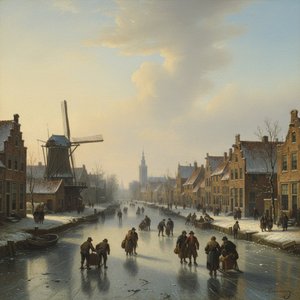
Charles Leickert: Capturing the Dutch Golden Age Light – A Comprehensive Study of Technique, Context, and Legacy
Explore the captivating winter landscapes of Charles Leickert, a master of Dutch Golden Age light & atmosphere. Discover his techniques, symbolism, and lasting legacy – a comprehensive study for art enthusiasts and collectors.

Illuminating Innovation: Exploring the Dutch Golden Age of Painting
Explore the Dutch Golden Age of painting with OriginalUniqueArt. Discover Rembrandt, Vermeer & other Masters. Learn about key characteristics, iconic artworks, and lasting influence. Expert insights for collectors & enthusiasts.

Top 10 Meesterwerken van de Gouden Eeuw: Kunst voor uw interieur | OriginalUniqueArt.nl
Ontdek de 10 meesterwerken van de Gouden Eeuw! Leer over Rembrandt, Vermeer & andere Hollandse schilders. Prachtige kunst reproducties voor uw interieur. Museumkwaliteit prints op OriginalUniqueArt.com.

Golden Age Reflections: Dutch Baroque Painting & Cultural Innovation
Explore the Dutch Golden Age of painting! Discover key artists like Vermeer & ter Borch, their innovative techniques, and the rich cultural context behind these Baroque masterpieces. Learn about collecting & appreciating this iconic art period.
Illuminating Realism: Exploring the Dutch Golden Age of Painting (1600-1700)
Explore the Dutch Golden Age of painting (1600-1700) with OriginalUniqueArt. Discover Rembrandt, Vermeer & other masters. Learn about techniques, history & find museum-quality reproductions.

