- Home

- Op canvas afdrukken
- Jean-Pierre Dantan
- Paganini

 Preview
 Bestel schilderij Koop afbeelding in hoge resolutie
 Verstuur
 Delen
Delen
 Details bekijken
 Toevoegen aan favorieten

 Download
 Vergelijkbare werken
 Röntgenonderzoek
 Diavoorstelling
Paganini


 Lees meer
Giclée / Kunstafdruk
Giclée- of canvasafdruk van museumkwaliteit met snelle productie en flexibele afwerkingsopties.




































Kies uit onze vooraf ingestelde maten die overeenkomen met de originele verhoudingen van het kunstwerk.

U kunt uw eigen afmetingen opgeven om in een specifieke lijst of ruimte te passen. Als de door u gekozen maat niet overeenkomt met de proporties van het originele kunstwerk, zullen wij de afbeelding bijsnijden of uitbreiden met een gespiegelde of effen rand. Een digitaal mockup wordt ter goedkeuring naar u verzonden voordat de productie begint.
Houd er rekening mee dat de preview op het scherm de werkelijke bijsneding of uitbreiding niet weergeeft. Alleen de mockup toont de uiteindelijke compositie nauwkeurig.
Hoewel aangepaste maten beschikbaar zijn, raden wij aan een afmeting uit de vooraf bepaalde lijst te kiezen om de originele proporties te behouden.
Wereldwijde levering () binnen 2 weken in plaats van de standaard 4/5 weken. (27 juli)

Gratis wereldwijde expressverzending

Hoogwaardig linnen canvas

Volledige verzendverzekering

Garantie op terugbetaling van invoerrechten

Garantie op exacte kleurweergave

60 dagen retourbeleid (alleen bij defecten)

100% Geld-terug-garantie

Korting bij meerdere afnames
 De optie voor glas is alleen beschikbaar bij een formaat kleiner dan 110 cm.

Paganini
Giclée / Kunstafdruk
Afmetingen reproductie
-


Eindtotaal
-
Beschrijving verzamelobject
Jean-Pierre Dantan’s “Paganini”: A Portrait of Passion and Virtuosity
The sculpture "Paganini," executed by Jean-Pierre Dantan in 1832, is more than a mere likeness; it's a vibrant distillation of the violinist’s legendary persona – a man simultaneously captivating audiences with his extraordinary skill and shrouded in an aura of intense, almost unsettling, magnetism. This remarkable bronze bust, now housed within the Musée Carnavalet in Paris, offers a rare glimpse into the Romantic era’s fascination with both musical genius and the darker aspects of human emotion. Dantan, a master of caricature and portraiture, skillfully captures not just Paganini's physical features but also the very essence of his celebrated performance style – a blend of theatricality, technical brilliance, and an undeniable sense of dramatic intensity.
Dantan’s approach to this commission reveals a deliberate departure from the rigid formality often associated with official portraiture. He eschews a purely academic rendering, instead opting for a dynamic pose that immediately draws the viewer in. Paganini is not presented as a static subject; rather, he leans forward intently, his head tilted downwards towards the violin as if lost within its music. His posture exudes a palpable sense of urgency and concentration, suggesting an almost obsessive dedication to his craft. The slight bend of his legs further contributes to this feeling of movement and energy, mirroring the frenetic pace of Paganini’s performances.
A Study in Form and Texture
The sculpture's technical execution is both meticulous and expressive. Dantan demonstrates a remarkable command of bronze, skillfully rendering the intricate details of Paganini’s face – the furrowed brow, the intense gaze, the subtle lines etched around his eyes. The artist employs a masterful use of hatching and cross-hatching to build up volume and texture, particularly in the depiction of hair and clothing folds. These techniques not only create a sense of realism but also subtly enhance the sculpture’s three-dimensionality, inviting viewers to explore its surface and appreciate the artist's meticulous attention to detail.
The choice of bronze itself is significant. Bronze, with its inherent durability and ability to capture fine details, was the material of choice for portrait sculptures during this period, lending an air of permanence and authority to the subject. The patina – the natural oxidation that develops on bronze over time – adds another layer of richness and depth to the sculpture’s appearance, subtly altering its color and texture with each passing year.
Symbolism and the Romantic Spirit
“Paganini” is deeply rooted in the artistic and intellectual currents of the Romantic era. The figure embodies many of the key themes associated with this movement – passion, emotion, individualism, and a fascination with the exotic and the sublime. Paganini’s reputation as a virtuoso performer was inextricably linked to tales of his extraordinary abilities, including claims of supernatural talent and even demonic possession. Dantan cleverly taps into these myths, imbuing the sculpture with an air of mystery and intrigue.
The pose itself is laden with symbolic meaning. Paganini’s downward gaze suggests a deep immersion in his music, while his outstretched hand gripping the violin symbolizes both mastery and vulnerability. The overall effect is one of intense concentration and emotional engagement – a portrait not just of a musician but of a man consumed by his art.
A Legacy of Artistic Influence
Jean-Pierre Dantan’s “Paganini” stands as a testament to the sculptor's remarkable talent and his ability to capture the spirit of his subject. It is a work that continues to resonate with viewers today, offering a compelling glimpse into the world of Romantic music and the enduring allure of artistic genius. The sculpture’s influence can be seen in subsequent portraiture, particularly in its emphasis on capturing not just physical likeness but also the inner life and emotional intensity of the subject. Reproductions of this iconic piece offer an accessible way to appreciate Dantan's skill and the captivating story of Niccolò Paganini.
Biografie van de kunstenaar
Early Life and Family Background
- Jean-Pierre Dantan, known as Dantan the Younger, was born on December 28, 1800, in Paris, France.
- He came from a family of sculptors; his father was a wood carver who provided his initial training.
- Antoine-Laurent Dantan, his elder brother (known as Dantan the Elder), was also a sculptor and entered the École nationale supérieure des beaux-arts in Paris before Jean-Pierre.
- Both brothers studied under François-Joseph Bosio at the prestigious art school, beginning their formal artistic education in 1823.
- A later generation saw his nephew, Édouard Joseph Dantan (1848–1897), achieve some recognition as a painter, though he is now considered a minor artist.
Artistic Development and Style
- While Antoine-Laurent focused on large-scale academic sculpture and won the Prix de Rome in 1828, Jean-Pierre developed a unique style centered around portraiture and caricature.
- He began exploring this distinctive approach early in his career, gaining attention for his bust of the painter César Ducornet depicted as an “accursed poet.”
- Dantan’s talent lay in capturing expressive emotion within his portraits, blending Neoclassical training with emerging Romantic sensibilities.
- He is often credited with inventing the sculptural caricature, a form that allowed him to satirize and comment on contemporary society.
- His work was influenced by theories of phrenology and Romanticism’s emphasis on expressiveness. He aimed to depict not just physical likeness but also the inner essence of his subjects.
Major Works and Recognition
- Dantan's most celebrated works are his caricature busts and smaller statuettes portraying prominent figures from politics, music, literature, and the arts.
- He created portraits of individuals such as Victor Hugo, Paganini, Liszt, Berlioz, Talleyrand, and William Douglas-Hamilton.
- His busts often included a rebus on the base, adding an element of intellectual playfulness and identifying the subject in a coded manner. For example, his bust of Victor Hugo incorporated symbols representing the letters of his name.
- He exhibited at the Salons, receiving a second-class medal in 1831.
- His connection to figures like Pierre-Luc-Charles Cicéri and Princess Belgiojoso exposed him to influential circles of artists, writers, and political radicals, leading to numerous commissions.
Influence and Historical Significance
- Although he received less official recognition than his brother during his lifetime, Jean-Pierre Dantan’s work gained a following among the intelligentsia and is now considered more influential.
- He significantly inspired Honoré Daumier, a renowned caricaturist and sculptor himself.
- Dantan's sculptures provide valuable insights into 19th-century French society, capturing the personalities and cultural trends of his time.
- His ability to blend portraiture with caricature established him as a unique voice in the art world, bridging the gap between traditional sculpture and modern satire.
- Both brothers are buried together in Père Lachaise Cemetery, their tomb adorned with relief medallions created by each of them, symbolizing their artistic partnership and familial bond.

Jean-Pierre Dantan
1800 - 1869 , France
Belangrijkste feiten
- Artistic Movement Or Style: Romanticism, Caricature
- Artists Or Movements Influenced By This Artist: ['Honoré Daumier']
- Date Of Birth: December 28, 1800
- Date Of Death: September 6, 1869
- Full Name: Jean-Pierre Dantan
- Nationality: French
- Notable Artworks:
- Liszt Playing the Piano
- Victor Hugo
- Paganini
- Portrait of Tamburini
- Place Of Birth: Paris, France
Gerelateerde artikelen

The Enduring Legacy of Bronze Sculpture: Technique, Symbolism & Cultural Impact
Explore the rich history & enduring appeal of bronze sculpture with expert insights for collectors. Learn about casting techniques, iconic artists, collecting tips & contemporary interpretations at OriginalUniqueArt.
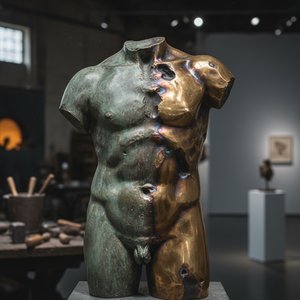
Het Duurzame Erfgoed van Bronzen Beeldhouwkunst: Geschiedenis, Technieken en Hedendaagse Interpretaties
Ontdek de rijke geschiedenis en het duurzame erfgoed van bronzen beeldhouwkunst. Van klassieke technieken tot hedendaagse interpretaties, een gids voor verzamelaars en kunstliefhebbers.
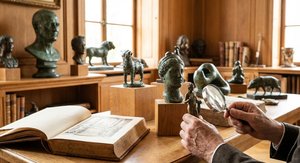
The Enduring Legacy of Bronze Sculpture: A Collector's Guide to Form & Cultural Significance
Explore the rich history & enduring appeal of bronze sculpture with expert insights for collectors at OriginalUniqueArt. Learn about casting techniques, iconic artists, and collecting tips to build a discerning art collection.

Daniel Maclise: Historical Narratives & Romantic Ideals in 19th-Century British Art
Explore the life & works of Daniel Maclise, a leading Victorian historical painter. Discover his captivating murals, Shakespearean scenes, and portraits at OriginalUniqueArt.com – handmade oil paintings & museum-quality prints.

Richard Westall: Romantic Visions & the Rise of British Landscape & Portraiture
Explore the life & art of Richard Westall (1765-1836), a key figure in British Romanticism. Discover his iconic portraits, literary illustrations, and landscapes – plus collecting insights.

