Menu
GRATIS KUNSTADVIES
Bekijk op ware grootteBekijk op ware grootte Bekijk in ARBekijk in AR Bestel een print Bestel een printNaar afbeelding wisselen Naar afbeelding wisselen VerstuurVerstuur
Details bekijkenDetails bekijken Toevoegen aan favorieten Toevoegen aan favorieten DownloadDownload Vergelijkbare werkenVergelijkbare werken RöntgenonderzoekRöntgenonderzoek DiavoorstellingDiavoorstelling

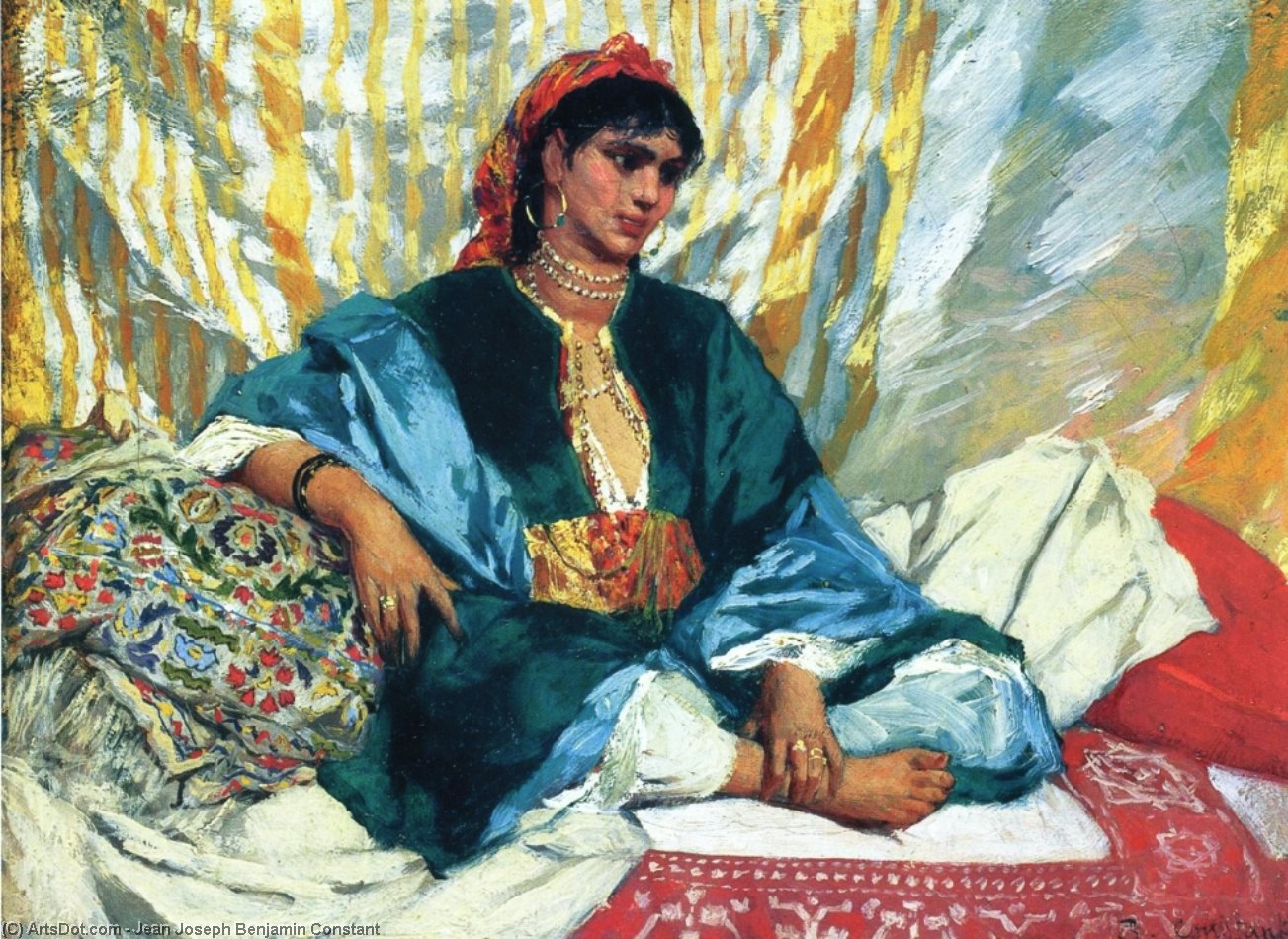
Odalisque

Experience Jean-Joseph Benjamin-Constant’s ‘Odalisque,’ a captivating 1880 Orientalist painting featuring a reclining woman in opulent blue and red. This Romantic masterpiece, inspired by Morocco, offers an exquisite glimpse into a world of sensual beauty – discover or own this timeless artwork.

Jean-Joseph Benjamin-Constant (1845-1902): een Franse schilder die bekend staat om zijn romantische en gedetailleerde Orientalistische kunstwerken, waaronder indrukwekkende muurschilderingen en portretten van koninklijke figuren.

Handgemaakte olieverfreproductie

Met de hand geschilderd in olieverf op canvas in uw gewenste maat en lijst, op bestelling gemaakt door onze kunstenaars. (Bestel een print Bestel een printNaar afbeelding wisselen Naar afbeelding wisselen)

P118B $10
P118H $10
P118W $10
P438Z $10
P508JH $12
P508YH $12
P805H $10
P805Z $10
P919BZ $10
P919G $10
P919XJ $10
P959ZH $10
P968JZ $12
W106C $8
W218G $10
W218JH $8
W218Y $10
W307PJ $10
W316G $10
W316PJ $8
W316Y $10
W398PJ $8
W4111J $10
W500HY $15
W500JH $15
W692G $12
W849H $8
W940BG $15
W953PJ $8

Standard
custom
CM
INCH

Kies uit onze vooraf ingestelde maten die overeenkomen met de originele verhoudingen van het kunstwerk.

breedte
hoogte

U kunt uw eigen afmetingen invoeren om in een specifieke lijst of ruimte te passen. Als de door u gekozen maat niet overeenkomt met de verhoudingen van het originele beeld, zullen we het kunstwerk bijsnijden of het schilderij uitbreiden met extra handgeschilderde elementen. Een digitale mockup wordt ter goedkeuring naar u verzonden voordat de productie begint.
Houd er rekening mee dat de preview op het scherm niet de werkelijke uitsnede of uitbreiding weergeeft. Alleen de mockup toont de uiteindelijke compositie nauwkeurig.
Hoewel aangepaste afmetingen mogelijk zijn, raden we aan een maat uit de vooraf gedefinieerde lijst te selecteren om de originele verhoudingen te behouden.

Voorbeelden van wat aangepast kan worden: Vervang het gezicht met een eigen foto; Voeg een huisdier toe (bijv. vervang de kat door een hond); Verwerk een verborgen boodschap in de achtergrond; Wijzig het landschap of andere elementen in de achtergrond.
Na de bestelling zal het team van OriginalUniqueArt.com per e-mail contact opnemen met de klant voor instructies en een mockup-voorbeeld sturen.

Wereldwijde levering () binnen 3 tot 4 weken in plaats van de standaard 5 weken. (5 augustus). Zonder concessies aan de kwaliteit.

why_choose_icon
Gratis wereldwijde expressverzending
why_choose_icon
Hoogwaardig linnen canvas
why_choose_icon
Volledige verzendverzekering
why_choose_icon
Garantie op terugbetaling van invoerrechten
why_choose_icon
Garantie op exacte kleurweergave
why_choose_icon
60 dagen retourbeleid (alleen bij defecten)
why_choose_icon
100% Geld-terug-garantie
why_choose_icon
Korting bij meerdere afnames

Totaalprijs

$ 300

reproduction

Odalisque

Medium reproductie

Formaat reproductie

-

Totaalprijs

$ 300

Belangrijkste kenmerken

  • Subject or theme: Female nude
  • Artist: Jean-Joseph Benjamin-Constant
  • Year: 1880
  • Medium: Oil on Canvas
  • Influences: Classical Painting
  • Notable elements or techniques: Detailed rendering, Color blending
  • Title: Odalisque

Kunstquiz

Er is slechts één goed antwoord op elke vraag.

Vraag 1:
What artistic style is prominently used in the reproduction of "Odalisque"?
Vraag 2:
Where is Jean-Joseph Benjamin Constant's "Odalisque" currently housed?
Vraag 3:
What nationality was Jean-Joseph Benjamin Constant?
Vraag 4:
The painting depicts a woman in what attire?
Vraag 5:
What is the primary focus of Jean-Joseph Benjamin Constant's artistic vision as reflected in "Odalisque"?

Beschrijving kunstwerk

A Vision of Exotic Grace: Jean-Joseph Benjamin Constant’s Odalisque

The painting “Odalisque” by Jean-Joseph Benjamin-Constant stands as a quintessential emblem of Orientalism—a movement that captivated European artists and intellectuals throughout the late 19th century. More than just a depiction of beauty, it embodies a complex interplay of artistic convention and Romantic fascination with the sensual allure of Ottoman culture. Created in 1880, this masterpiece resides within the Baltimore Museum of Art’s collection, offering visitors an opportunity to immerse themselves in Constant's masterful execution and profound artistic vision.
  • Artist’s Background: Jean-Joseph Benjamin-Constant (1845–1902) emerged from the École des Beaux-Arts in Toulouse, where he honed his skills under Alexandre Cabanel—a lineage steeped in classical tradition. However, Constant's artistic trajectory took an extraordinary turn during his voyage to Morocco in 1872, sparking a lifelong devotion to capturing the exotic splendor of the Orient.
  • Style and Technique: Employing oil on canvas, Constant skillfully blended academic precision with Romantic sensibilities. His brushstrokes are deliberate yet fluid, conveying both textural detail and an ethereal quality that elevates the scene beyond mere representation. The artist’s meticulous attention to light and shadow creates a palpable atmosphere of intimacy and contemplation.
  • Subject Matter: At its core, “Odalisque” portrays a woman reclining gracefully on a bed or couch—a motif prevalent in Orientalist art. This pose harkens back to depictions of Venus and Aphrodite in classical sculpture, symbolizing feminine beauty and idealized repose. The woman is adorned in a sumptuous blue dress accented by a vibrant red scarf, reflecting the opulent fabrics favored in Ottoman harems.
  • Symbolism: Beyond its aesthetic appeal, “Odalisque” carries symbolic weight. The gold necklace encircling her neck represents wealth and status—a visual shorthand for the privileged lifestyle enjoyed by women within the harem. Furthermore, the subtle gaze of the woman suggests a quiet confidence and awareness, hinting at themes of desire and contemplation.
  • Historical Context: Produced during a period of intense European interest in Ottoman culture, “Odalisque” reflects broader anxieties about sexuality and exoticism. It exemplifies the Romantic movement’s preoccupation with emotion and imagination—transforming historical observation into evocative artistic expression.

OriginalUniqueArt.’s Reproduction Expertise

Recognizing the enduring allure of Constant's “Odalisque,” OriginalUniqueArt.com specializes in crafting exceptional handmade oil paintings that faithfully reproduce this iconic artwork. Utilizing premium pigments and meticulous techniques—inherited from a tradition spanning centuries—our artisans meticulously recreate the painting’s luminous colors and intricate details, ensuring that collectors and enthusiasts alike experience its original splendor.

Discover More About Jean-Joseph Benjamin Constant

To delve deeper into the life and artistic legacy of Jean-Joseph Benjamin-Constant, visit OriginalUniqueArt.com. Explore his broader oeuvre—spanning portraits, landscapes, and genre scenes—to appreciate the breadth of his creative vision. Furthermore, explore the Baltimore Museum of Art’s collection on OriginalUniqueArt.com to gain invaluable insight into “Odalisque” within its artistic context.

A Timeless Masterpiece

“Odalisque” transcends mere visual representation; it embodies a profound exploration of beauty, desire, and the transformative power of art. Its captivating composition—combined with Constant’s masterful command of technique—continues to inspire admiration and provoke contemplation decades after its creation. Experience the artistry of Jean-Joseph Benjamin Constant through OriginalUniqueArt.’s exquisite reproductions—a testament to enduring artistic excellence.

Biografie van de kunstenaar

Jean-Joseph Benjamin-Constant: A Master of Exotic Visions

Jean-Joseph Benjamin-Constant, a name synonymous with the allure of the Orient and the precision of academic training, stands as a pivotal figure in 19th-century French art. Born in Paris in 1845, his artistic journey began within the hallowed halls of the École des Beaux-Arts in Toulouse, where he honed his skills under the tutelage of Alexandre Cabanel – an experience that instilled within him a profound respect for classical techniques and a meticulous attention to detail. Early works reflected this foundational influence, showcasing an aptitude for dramatic composition rooted in historical painting, yet it was a transformative voyage to Morocco in 1872 that irrevocably altered the course of his artistic vision, igniting a lifelong passion for the exotic and setting him on the path toward becoming one of the most celebrated Orientalist painters of his time. This journey wasn’t merely a change of scenery; it was an immersion into a world brimming with vibrant colors, unfamiliar customs, and captivating light – elements that would forever shape his artistic expression.

The Allure of the Orient: Capturing Moroccan Life

Upon returning to Paris, Benjamin-Constant immediately began translating the sensory richness of Morocco onto canvas. His paintings weren’t simply depictions of a foreign land; they were evocative interpretations—capturing not just what he saw but how it *felt* to be enveloped by this new world. Paintings like “Last Rebels,” “Justice in the Harem,” and “Moroccan Prisoners” quickly garnered attention, showcasing his remarkable talent for atmospheric detail and a profound fascination with exotic locales. He possessed an uncanny ability to distill the essence of Morocco onto canvas – the scent of spices hanging heavy in the air, the warmth of the sun on skin, the intricate patterns woven into textiles, all came alive under his brush. Beyond these intimate scenes of daily life, Benjamin-Constant also demonstrated a remarkable capacity for grand historical narratives, as evidenced by his monumental painting “The Entrance of Mahomet II into Constantinople,” a work that secured him recognition within the Parisian art world and solidified his reputation. His Orientalist works weren’t merely about portraying a different culture; they were explorations of themes – power, justice, human drama – set against a backdrop of breathtaking beauty and mystery. He sought to capture not just the outward appearance but also the spirit and soul of these distant lands.

A Synthesis of Tradition and Innovation

Benjamin-Constant’s artistic development was characterized by a fascinating synthesis of tradition and innovation. While deeply influenced by the academic principles instilled at the École des Beaux-Arts, he wasn't content to simply replicate classical styles. He absorbed the lessons of masters like Delacroix, Rubens, and Watteau – particularly their use of color and dramatic lighting – but infused them with a distinctly personal vision. This is most evident in his early works, which retain a formal elegance while hinting at the romanticism that would soon dominate his oeuvre. However, it was his experiences in Morocco that truly liberated him, allowing him to break free from traditional historical painting and embrace a more subjective approach to representation. He meticulously studied the light, color palettes, and customs of North Africa, incorporating these observations into his paintings with remarkable accuracy and sensitivity.

Beyond the Exotic: Portraits and Monumental Decoration

Around 1880, Benjamin-Constant’s artistic focus underwent a significant shift. While his Orientalist paintings had established him as a rising star, he began to dedicate himself increasingly to portraiture and monumental decoration – demonstrating an impressive versatility and adaptability. This transition wasn't a departure from his artistic principles but rather an expansion of them. He brought the same meticulous attention to detail and dramatic flair that characterized his earlier work to these new endeavors. His large-scale paintings, such as “Paris Convening the World” exhibited at the Musée de la Ville, showcased his skill in depicting complex scenes with numerous figures, creating dynamic compositions that drew viewers into a world of bustling activity and civic pride. This ability to handle grand scale and intricate detail led to commissions from some of the most prominent figures of the era – including Pope Leo XIII, Queen Alexandra of the United Kingdom, and Lord John Lumley-Savile – further cementing his reputation as a skilled portraitist capable of capturing not just physical likeness but also the essence of his subjects’ personalities.

Recognition and Legacy: A Lasting Impression

Throughout his career, Benjamin-Constant received numerous accolades for his artistic achievements. He was awarded a medal of honor at the Salon in 1896 for “Mons Fils André,” a testament to his enduring skill and innovation. His election to the Institute in 1893 and subsequent appointment as a Commander of the Legion d’Honneur further underscored his standing within the French art establishment. Today, his work is represented in prestigious collections worldwide – including the Metropolitan Museum of Art, the Musée des Augustins in Toulouse, and the U.S. National Gallery of Art in Washington D.C. – ensuring that his artistic vision continues to inspire and captivate audiences for generations to come. Benjamin-Constant’s legacy lies not only in his technical mastery but also in his ability to synthesize academic training with a romantic sensibility. He created compelling works that captured both the grandeur of historical narratives and the alluring mystique of distant lands, establishing himself as an important figure in 19th-century French art. **He remains celebrated for his evocative depictions of Orientalist themes and his remarkable versatility as an artist.**
Jean-Joseph Benjamin-Constant

Jean-Joseph Benjamin-Constant

1845 - 1902 , Frankrijk

Snelle feiten

  • Artistic Movement Or Style:
    • Orientalisme
    • Academie
  • Artists Or Movements Influenced By This Artist: ['Impressionisme']
  • Artists Who Influenced This Artist:
    • Delacroix
    • Rubens
    • Watteau
  • Date Of Birth: 10 juni 1845
  • Date Of Death: 26 mei 1902
  • Full Name: Jean-Joseph Benjamin-Constant
  • Nationality: Frans
  • Notable Artworks:
    • Laatste rebellen
    • De rechtbank in het harem
    • Marokkanen gevangen
  • Place Of Birth: Parijs, Frankrijk
Ontdek kunstwerken georganiseerd op thema, stijl en kenmerk.