
 Voorvertoning
 Verstuur
 Delen
Delen
 Details bekijken
 Gids
Gids

 Download
 Vergelijkbare items
 Röntgenonderzoek
 Diavoorstelling
 Q&A
Q&A Statistieken
Diana badend

- 80.0 x 101.0 cm


 Lees meer
Giclée / Kunstafdrukken
Giclée- of canvasafdruk van museumkwaliteit met een snelle productie en flexibele afwerkingsmogelijkheden. ( Bestel handgeschilderde reproductie Schakel over naar digitale afbeeldingen)




P118B €10

P118H €10

P118W €10

P438Z €10

P508JH €12

P508YH €12

P805H €10

P805Z €10

P919BZ €10

P919G €10

P919XJ €10

P959ZH €10

P968JZ €12

W106C €8

W218G €10

W218JH €8

W218Y €10

W307PJ €10

W316G €10

W316PJ €8

W316Y €10

W398PJ €8

W4111J €10

W500HY €15

W500JH €15

W692G €12

W849H €8

W940BG €15

W953PJ €8




Kies uit onze vooraf ingestelde maten die overeenkomen met de originele verhoudingen van het kunstwerk.

Voer de gewenste breedte en hoogte in, passend bij uw lijst of muur. Een afdruk kan alleen worden ingekort en nooit groter worden gemaakt dan het origineel; een formaat met andere verhoudingen zal daarom een deel van de afbeelding verliezen. Wij sturen u een digitaal mockup ter goedkeuring voordat we tot drukwerk overgaan. De afbeelding op deze pagina toont niet de werkelijke uitsnede — dit is alleen te zien op het mockup.
Wereldwijde levering () binnen 2 weken in plaats van de standaard 4/5 weken. (2 november)

Gratis wereldwijde expressverzending

Hoogwaardig linnen canvas

Volledige verzendverzekering

Garantie op terugbetaling van invoerrechten

Garantie op exacte kleurweergave

Retourbeleid van 100 dagen (alleen bij defecten)

100% Geld-terug-garantie

Korting bij meerdere afnames
 De optie voor glas is alleen beschikbaar bij een formaat kleiner dan 110 cm.

Diana badend
Giclée / Kunstafdrukken
Afmetingen reproductie
-


Eindtotaal
€ 72
Een Pastorale Droom: Het Onthullen van Watteaus *Diana Badend*
Jean-Antoine Watteaus *Diana Badend*, geschilderd in 1721, is veel meer dan slechts een weergave van mythologische thema's; het is een voortreffelijke belichaming van de Rococo-geest – een viering van ontspanning, schoonheid en verfijnde gevoeligheid. Dit olieverfwerk op doek (80 x 101 cm), dat momenteel ondergebracht is in het prestigieuze Musée du Louvre, nodigt de kijker uit tot een wereld van serene elegantie en subtiele sensualiteit.De Scène: Mythe & Idyllische Droom
Het schilderij portretteert Diana, de Romeinse godin van de jacht, die ogenschijnlijk is vastgelegd in een moment van private rust. Ze zit gracieus op een bemoste rots naast een glinsterend wateroppervlak, haar naakte vorm weergegeven met delicate kunstzinnigheid. Watteau wijkt hier echter af van de traditionele heroïsche afbeeldingen van Diana. Hier wordt zij niet gepresenteerd als een actieve jachtster, maar eerder als een figuur verloren in contemplatie, schijnbaar ongestoord door de aanwezigheid van speelse putti en waakzame vogels die tussen het weelderige gebladerte fladderen. Het omringende landschap – een groen tapijt van bomen en struiken – omhult haar in een afgelegen toevluchtsoord, wat het gevoel van intimiteit en vredige eenzaamheid versterkt.Een Meesterklasse in Rococo-techniek
Watteaus technische genialiteit is direct zichtbaar. Hij hanteert een karakteristiek losse en schilderkunstige penseelstreek, waardoor een oppervlak ontstaat dat schittert van licht en atmosfeer. De kleuren zijn zacht en harmonieus, gedomineerd door pasteltinten en subtiele kleurnuances. Deze techniek draait niet om nauwkeurig realisme; het gaat om het vangen van het *gevoel* van een moment – de warmte van de zon, de koelte van het water, het zachte briesje dat door de bladeren ritselt. Het gebruik van olieverf maakt rijke gelaagdheid en glazuren mogelijk, wat bijdraagt aan de lumineuze kwaliteit van het schilderij.Historische Context: De Fête Galante & het Aristocratisch Leven
*Diana Badend* is een treffend voorbeeld van Watteaus gevierde *fête galante*-genre – schilderijen die elegante buitenbijeenkomsten en ontspannende bezigheden van de Franse aristocratie uitbeelden. Deze werken waren niet simpelweg portretten; het waren geïdealiseerde visies op het aristocratische leven, die een samenleving weerspiegelden die waarde hechtte aan plezier, verfijning en artistelijk mecenaat. Watteau revolutioneerde de Franse schilderkunst met deze stijl, waarbij hij zich bewoog van de grandeur van de Barok naar een meer intieme en emotioneel resonerende esthetiek. Zijn korte carrière (hij stierf op slechts 36-jarige leeftijd) had een diepgaande invloed op de ontwikkeling van de achttiende-eeuwse kunst.Symboliek & Interpretatie
Hoewel het werk op het eerste gezicht eenvoudig lijkt, is *Diana Badend* rijk aan symbolische ondertonen. Water staat traditioneel voor zuiverheid en vernieuwing, terwijl de omringende natuur de ongetemde wildernis en vrijheid symboliseert. Diana zelf belichaamt zowel kuisheid als een verbondenheid met de natuurlijke wereld. Watteaus interpretatie is echter genuanceerd. De ontspannen houding en de zachte atmosfeer suggereren een meer vermenselijkte weergave van de godin – een weergave die schoonheid en sensualiteit benadrukt in plaats van strikte naleving van mythologische conventies. De aanwezigheid van de putti voegt een element van speelse onschuld toe en versterkt het idyllische karakter van de scène.Emotionele Resonantie & Blijvende Charme
*Diana Badend* roept een gevoel van rust, sereniteit en weemoedige hunkering op. Het is een schilderij dat uitnodigt tot bezinning en de kijker de mogelijkheid biedt om te ontsnappen naar een wereld van schoonheid en gratie. De blijvende aantrekkingskracht van het werk ligt in het vermogen om een vluchtig moment van perfecte harmonie vast te leggen – een getuigenis van Watteaus uitzonderlijke talent om emotie over te brengen via kleur, licht en compositie.Een Stukje Geschiedenis Bezitten
OriginalUniqueArt biedt zorgvuldig vervaardigde, handgemaakte olieverfreproducties van Diana Badend aan, waardoor kunstliefhebbers en verzamelaars de schoonheid van dit meesterwerk in hun eigen huis kunnen ervaren. Onze bekwame kunstenaars recreëren getrouw Watteaus delicate penseelwerk en levendige kleurenpalet, waardoor een reproductie ontstaat die de artistieke integriteit van het origineel eert.Ontdek meer van Jean-Antoine Watteau:
-
<
- De Franse Komedie <
- Diana bij haar Bad
- Studies van Vrouwenhoofden
Veelgestelde vragen
Is er een gids beschikbaar voor "Diana badend" door Jean-Antoine Watteau?
De gids voor "Diana badend" is de Informatieblad-pagina van het kunstwerk – een printbaar informatieblad waarop het kunstwerk wordt getoond met het bijschrift, de bronvermelding en de identificatietabel (kunstenaar, data, medium, originele afmetingen, collectie).
Is "Diana badend" door Jean-Antoine Watteau een bekend kunstwerk?
"Diana badend" wordt geclassificeerd als Iconisch.
Hoe groot is het contrast in "Diana badend" door Jean-Antoine Watteau?
"Diana badend" door Jean-Antoine Watteau vertoont een Verklaring contrast tussen de lichte en donkere partijen.
Biografie kunstenaar
A Delicate Brushstroke: The Life and Art of Jean-Antoine Watteau
Jean-Antoine Watteau, a name synonymous with the blossoming Rococo style, emerged from the northern French city of Valenciennes in 1684. His brief but incandescent career irrevocably altered the course of eighteenth-century painting, shifting its focus from the grandeur and drama of the Baroque to an intimate world of elegance, leisure, and subtle emotion. Unlike many artists who followed a clearly defined path, Watteau’s journey was marked by initial struggles for recognition within the established art institutions of Paris. Born into a family of modest means—his father a master roofer—young Jean-Antoine displayed an early aptitude for drawing, initially sketching the colorful characters and bustling scenes of his hometown streets. This formative experience instilled in him a keen eye for observation and a fascination with everyday life, themes that would permeate his later work. His initial training under local artists Jacques-Albert Gérin and Julien provided a foundation, but it was his move to Paris around 1702 that truly ignited his artistic development.From Theatrical Scenes to *Fêtes Galantes*
In the vibrant heart of Paris, Watteau entered the workshop of Claude Gillot, a painter specializing in theatrical designs and the popular genre of *fêtes galantes*—depictions of aristocratic outdoor entertainments. This apprenticeship proved pivotal. Gillot’s influence exposed Watteau to the world of commedia dell'arte, with its masked characters and playful narratives, which would become a recurring motif throughout his oeuvre. However, Watteau’s artistic sensibilities didn’t neatly align with the rigid categories favored by the Académie Royale de Peinture et de Sculpture. His genre paintings were deemed unsuitable for official recognition, leading to initial rejection when he attempted to compete for the prestigious Prix de Rome. Undeterred, and demonstrating a remarkable resilience, Watteau persevered, eventually gaining acceptance as a *maître amateur* in 1717—a status that allowed him to exhibit his work independently. This period marked a crucial turning point, allowing him to fully develop his unique style characterized by luminous colors, delicate brushwork, and an air of wistful melancholy. He began to move away from direct theatrical representation towards more poetic and evocative scenes, inventing the *fête galante* as a distinct genre—idyllic gatherings in park-like settings where aristocratic figures engaged in flirtatious pursuits and refined pastimes.The Essence of Rococo: Style and Masterpieces
Watteau’s paintings are instantly recognizable for their distinctive qualities. He possessed an unparalleled ability to capture the elegance and refinement of aristocratic life, not through bombastic displays of power or wealth, but through subtle gestures, nuanced expressions, and a masterful use of light and color. His figures exude a poetic grace and a delicate emotional depth that sets them apart from the more formal portraits of his predecessors. The Country Dance (1718-1721), perhaps one of his most celebrated works, exemplifies this perfectly—a vibrant scene depicting carefree rustic life with exquisite detail and an underlying sense of longing. Other masterpieces such as Ceres (Summer) (1705) demonstrate his skill in portraying the beauty of nature and the human form, while The Embarkation for Cythera (1717) and its companion piece, Pilgrimage to Cythera, are iconic depictions of mythological journeys to the island of love, imbued with a sense of mystery and romantic yearning. Even his theatrical portraits, like Gilles (1719), possess an enigmatic quality that invites contemplation. Watteau’s technique was equally innovative; he employed a feathery brushstroke and a delicate layering of colors to create a shimmering effect, capturing the fleeting beauty of light and atmosphere.Influences and Development
Watteau's artistic lineage is complex, drawing inspiration from diverse sources. He deeply admired Venetian Renaissance masters like Titian and Veronese, particularly their rich color palettes and dynamic compositions. The influence of Flemish artists such as Rubens is also evident in his energetic brushwork and sensuous figures. However, Watteau didn’t simply imitate these predecessors; he synthesized their influences into something entirely new and uniquely his own—a style that became the hallmark of Rococo painting. His early training under Jacques-Albert Gérin exposed him to the theatrical world, while his time with Claude Gillot fostered a fascination with *fêtes galantes*. He was also influenced by the works of artists like Nicolas Poussin, whose use of light and color he adopted for his own compositions. Despite facing initial rejection from the Académie Royale de Peinture et de Sculpture, Watteau continued to develop his style independently, experimenting with different techniques and subject matter until his acceptance as a *maître amateur* in 1717 provided him with the freedom to fully express his artistic vision.Legacy and Enduring Influence
Watteau's artistic lineage is complex, drawing inspiration from diverse sources. He deeply admired Venetian Renaissance masters like Titian and Veronese, particularly their rich color palettes and dynamic compositions. The influence of Flemish artists such as Rubens is also evident in his energetic brushwork and sensuous figures. However, Watteau didn’t simply imitate these predecessors; he synthesized their influences into something entirely new and uniquely his own—a style that became the hallmark of Rococo painting. Despite a tragically short life—he succumbed to tuberculosis in 1721 at the age of just thirty-seven—Watteau left an indelible mark on art history. His work profoundly influenced generations of artists, including Fragonard and Boucher, who further developed the themes and techniques he pioneered. He redefined genre painting, elevating it to a level of artistic sophistication previously reserved for historical or religious subjects. Today, his paintings are treasured in major museums worldwide—from the National Gallery of Art in Washington D.C. to the Museo del Prado in Madrid—continuing to captivate audiences with their beauty, grace, and enduring appeal, solidifying his place as one of the most important and beloved artists of the Rococo period.
Jean-Antoine Watteau
1684 - 1721 , Frankrijk
Belangrijkste feiten
- Artistic Movement Or Style: Rocococo
- Artists Or Movements Influenced By This Artist:
- Fragonard
- Boucher
- Artists Who Influenced This Artist:
- Titian
- Veronese
- Rubens
- Date Of Birth: 1684
- Date Of Death: 1721
- Full Name: Jean-Antoine Watteau
- Nationality: Frans
- Notable Artworks:
- Het Dansfeest
- Ceres (Zomer)
- De Huwelijksovereenkomst
- Place Of Birth: Valenciennes, Frankrijk
Gerelateerde artikelen

The Enduring Legacy of Oil on Canvas: Technique, History & Aesthetic Impact
Explore the rich history & techniques of oil painting – from Renaissance masters to Impressionism. Discover pigments, layering methods, and why this timeless medium endures. Expert insights for artists & art enthusiasts.

The Rococo Aesthetic: Opulence, Rebellion & the Pursuit of Pleasure in 18th-Century Art
Explore the opulent world of Rococo art! Discover its origins, key artists like Watteau & Boucher, and lasting influence on design. Expert insights for collectors & enthusiasts.
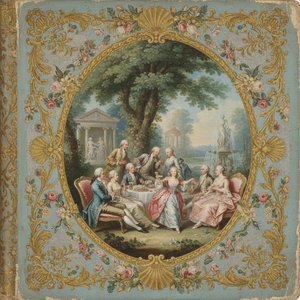
The Rococo Style: Aristocratic Leisure & the Pursuit of Delight in 18th-Century Art
Explore the opulent world of Rococo art! Discover Watteau, Boucher & Nattier's masterpieces. Expert insights for collectors seeking museum-quality reproductions and custom portraits at OriginalUniqueArt.

Top 10 Rococo Meesterwerken: Kunstgeschiedenis voor uw Interieur | OriginalUniqueArt.com
Ontdek de 10 meest iconische Rococo meesterwerken! Duik in de wereld van Fragonard, Boucher & Watteau. Leer over lieflijkheid, pastelkleuren en aristocratie. Museumkwaliteit kunst reproducties op OriginalUniqueArt.com.

The Allure of Elegance in Art: A Historical & Aesthetic Exploration of Refinement & Grace
Explore the exquisite world of Rococo art! Discover its history, masters (Watteau, Boucher & more), and defining elegance. Expert insights for collectors seeking museum-quality reproductions & custom portraits.


