() ·

A painting made for you, by hand

De Blunder

Handgemaakte olieverfreproductie

Met de hand geschilderd in olieverf op canvas in uw gewenste maat en lijst, op bestelling gemaakt door onze kunstenaars. ( Schakel over naar print Schakel over naar digitale afbeeldingen)

Beschrijving verzamelobject

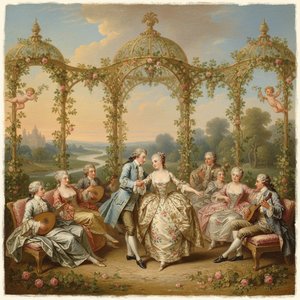
Bewonder 'De Blunder' van Jean-Antoine Watteau – een Rococo-meesterwerk met een intieme scène van hofmakerij en vluchtige schoonheid. Ontdek de symboliek en leer meer over deze iconische Franse kunstenaar.

Biografie kunstenaar

Ontdek Jean-Antoine Watteau (1684-1721), de Franse Rococo meester! Bewonder zijn idyllische 'fêtes galantes', theatrale scènes & invloed op 18e-eeuwse kunst. Bekijk meesterwerken zoals 'Het Dansfeest' & leer over zijn erfenis.

from ·

Chapter 1

How large should it be?

Slide to change the size; the picture on the left shows the frame at its real width. The proportions of the original are kept.

Standaardformaat
op maat gemaakt
CM
INCH

Kies uit onze vooraf ingestelde maten die overeenkomen met de originele verhoudingen van het kunstwerk.

breedte
hoogte

Voer de breedte en hoogte in die u nodig heeft, passend bij uw lijst of uw muur. Omdat dit handgeschilderd is, kan de kunstenaar bij een afmeting met een andere beeldverhouding iets meer rondom het schilderij schilderen of juist iets meer weglaten — u kiest zelf. Wij sturen u een digitaal mockup ter goedkeuring voordat het schilderwerk begint. De afbeelding die op deze pagina wordt getoond, is niet het uiteindelijke resultaat — alleen de mockup geeft dit weer.


Chapter 2

How should it arrive?

Choose the edges of the stretched canvas

Choose your frame

Corner sample of the WhiteWrap canvas edge finish, stretched on massief hout bars
White €1
Corner sample of the BlurSideWrap canvas edge finish, stretched on massief hout bars
Blurside €1
Corner sample of the ExtendedWrap canvas edge finish, stretched on massief hout bars
Extended €1
Corner sample of the P118B picture frame: gegoten polystyreen, 5 cm wide and 3 cm thick
P118B €10
Corner sample of the P118H picture frame: gegoten polystyreen, 5 cm wide and 3 cm thick
P118H €10
Corner sample of the P118W picture frame: gegoten polystyreen, 5 cm wide and 3 cm thick
P118W €10
Corner sample of the P438Z picture frame: gegoten polystyreen, 5.5 cm wide and 3.5 cm thick
P438Z €10
Corner sample of the P508JH picture frame: gegoten polystyreen, 7 cm wide and 3.5 cm thick
P508JH €12
Corner sample of the P508YH picture frame: gegoten polystyreen, 7 cm wide and 3.5 cm thick
P508YH €12
Corner sample of the P805H picture frame: gegoten polystyreen, 5 cm wide and 3.5 cm thick
P805H €10
Corner sample of the P805Z picture frame: gegoten polystyreen, 5 cm wide and 3.5 cm thick
P805Z €10
Corner sample of the P919BZ picture frame: gegoten polystyreen, 7 cm wide and 3.5 cm thick
P919BZ €10
Corner sample of the P919G picture frame: gegoten polystyreen, 7 cm wide and 3.5 cm thick
P919G €10
Corner sample of the P919XJ picture frame: gegoten polystyreen, 7 cm wide and 3.5 cm thick
P919XJ €10
Corner sample of the P959ZH picture frame: gegoten polystyreen, 5 cm wide and 3 cm thick
P959ZH €10
Corner sample of the P968JZ picture frame: gegoten polystyreen, 6 cm wide and 4 cm thick
P968JZ €12
Corner sample of the W106C picture frame: massief hout, 5 cm wide and 3 cm thick
W106C €8
Corner sample of the W218G picture frame: massief hout, 5 cm wide and 3 cm thick
W218G €10
Corner sample of the W218JH picture frame: massief hout, 5 cm wide and 3 cm thick
W218JH €8
Corner sample of the W218Y picture frame: massief hout, 5 cm wide and 3 cm thick
W218Y €10
Corner sample of the W307PJ picture frame: massief hout, 6 cm wide and 3 cm thick
W307PJ €10
Corner sample of the W316G picture frame: massief hout, 6 cm wide and 3 cm thick
W316G €10
Corner sample of the W316PJ picture frame: massief hout, 6 cm wide and 3 cm thick
W316PJ €8
Corner sample of the W316Y picture frame: massief hout, 6 cm wide and 3 cm thick
W316Y €10
Corner sample of the W398PJ picture frame: massief hout, 5 cm wide and 3 cm thick
W398PJ €8
Corner sample of the W4111J picture frame: massief hout, 6.5 cm wide and 3.5 cm thick
W4111J €10
Corner sample of the W500HY picture frame: massief hout, 7 cm wide and 5 cm thick
W500HY €15
Corner sample of the W500JH picture frame: massief hout, 7 cm wide and 5 cm thick
W500JH €15
Corner sample of the W692G picture frame: massief hout, 8 cm wide and 4 cm thick
W692G €12
Corner sample of the W849H picture frame: massief hout, 5 cm wide and 3 cm thick
W849H €8
Corner sample of the W940BG picture frame: massief hout, 7.5 cm wide and 4.5 cm thick
W940BG €15
Corner sample of the W953PJ picture frame: massief hout, 6 cm wide and 3.5 cm thick
W953PJ €8
Corner sample of the H24-GOLD picture frame: gesneden hout met gesso, 10 cm wide and 6 cm thick
H24-GOLD €30
Corner sample of the H24-SILVER picture frame: gesneden hout met gesso, 10 cm wide and 6 cm thick
H24-SILVER €30
Corner sample of the H36-GOLD picture frame: gesneden hout met gesso, 15 cm wide and 6.5 cm thick
H36-GOLD €45
Corner sample of the H36-SILVER picture frame: gesneden hout met gesso, 15 cm wide and 6.5 cm thick
H36-SILVER €45
Lijstvoorbeeld
Ingelijst

Moulding: . Overall size with the frame: .

Chapter 3

Who paints it, and should anything change?

Examples of what can be changed: Replace face with customer photo; Add pet (e.g., replace cat with dog); Include hidden message in background; Change background landscape or elements.
After order, OriginalUniqueArt.com team will email client for instructions and provide a mockup preview

Wereldwijde levering () binnen 3 tot 4 weken in plaats van de standaard 5 weken. (1 november). Zonder concessies aan de kwaliteit.

Chapter 4

The finishing touches

A nameplate, as in a museum?

Details van de gegraveerde bronzen plaat

This elegant plaque features the artist's name and the title of the artwork, finely engraved for a timeless presentation.

It is made from bronze with a refined, elegant finish. The text is precisely laser-engraved for a sharp and permanent result. Measuring 9x2 cm, the plaque is compact yet easy to read. It's built to be durable and scratch-resistant, offering a professional, museum-quality look. Mounting is simple thanks to the included adhesive backing.

Details transparante acrylplaat

The plaque includes essential engraved details such as the artist's name, the title of the artwork, the date it was created, the type of media used-like oil on canvas or watercolor-a brief description of the piece, and a QR code that links to the complete artwork information.

It is crafted from clear acrylic, offering a sleek, modern appearance. The text is UV-engraved in black to ensure strong visual contrast. With a size of 10x15 cm, it ensures optimal readability. It comes equipped with two metal hooks for secure wall mounting. The plaque is designed to be weather-resistant, making it suitable for various environments, and it includes interactive features that work seamlessly with smartphone scanning.

Details zwarte acrylplaat

This elegant plaque includes engraved information such as the artist's name, the title of the artwork, the date it was created, the type of media used (like oil on canvas or watercolor), a short description of the artwork, and a QR code for quick access to more information.

The plaque itself is made from refined black acrylic with a premium finish. The text is laser-engraved in white for high contrast and readability. Its size is 10x15 cm, designed to be easy to read. It comes with two metal hooks for professional mounting. The design is sleek and fits any interior style. It is also weather-resistant and durable, with built-in digital integration for mobile compatibility.

A protective varnish?

When do you need it?

Chapter 5

Your painting, as you ordered it

De Blunder

Druktechniek

Afmetingen reproductie

-

Geselecteerde topkunstenaars

Meer detail, verfijning en extra productietijd

-

Lijst voor reproductie

-

-

Voor kunstwerken of reproducties die aan één zijde groter zijn dan 105 cm (ongeveer 41 inch), wordt de lijst als een losse set verzonden. Deze methode garandeert een veilige levering en voorkomt schade tijdens het transport.

Professionele montage vereist - dit is geen doe-het-zelfproduct.
De set moet worden gemonteerd en het canvas moet worden gespannen door een ervaren professionele lijstenmaker, met gebruik van houtlijm (niet inbegrepen), een doekspanter en klemmen om de sponningen recht te houden terwijl de lijm droogt. Onjuiste montage of een ongelijkmatige spanning op het canvas kan het kunstwerk permanent beschadigen en wordt niet gedekt door onze garantie.

  • Alle massief houten onderdelen zijn inbegrepen, nauwkeurig op maat gesneden voor montage.

  • Te monteren met de meegeleverde schroeven, plus houtlijm voor de hoekverbindingen, die niet wordt meegeleverd en door uw lijstenmaker moet worden aangeschaft.

  • Professioneel gereedschap is vereist en niet inbegrepen: een spanner voor canvas en klemmen om de latten recht te houden terwijl de lijm droogt.

Belangrijk:
De hoekverbindingen vereisen houtlijm, de latten moeten met lijmklemmen worden vastgehouden tot de lijm volledig is opgedroogd, en het spannen van het canvas op het samengestelde frame vereist een doekspanter. Geen van deze artikelen is inbegrepen in de set. Wij adviseren u om een ervaren professionele lijstenmaker te raadplegen voordat u deze maat bestelt.

Naamplaatje

-

-

Beschermende vernislaag

Glanzende vernis (versterkt de kleuren en biedt bescherming tegen licht en vocht)

-

Mijn kunstwerk aanpassen

Voorbeelden van aanpassingen: vervang het gezicht door een eigen foto; voeg een huisdier toe (bijv. vervang de kat door een hond); verwerk een verborgen boodschap in de achtergrond; wijzig het landschap of andere elementen op de achtergrond.

-

Spoedlevering

Wereldwijde levering () binnen 3 tot 4 weken in plaats van de standaard 5 weken. (1 november). Geen concessies aan de kwaliteit.

-

Spoedlevering

Wereldwijde levering naar binnen 5 weken. (8 november).

Inbegrepen

Eindtotaal

€ 267

Totaalprijs € 267

De optie voor glas is alleen beschikbaar bij een formaat kleiner dan 110 cm.

Included with every order

  • Gratis wereldwijde expressverzending
  • Hoogwaardig linnen canvas
  • Volledige verzendverzekering
  • Garantie op terugbetaling van invoerrechten
  • Garantie op exacte kleurweergave
  • Retourbeleid van 100 dagen (alleen bij defecten)
  • 100% Geld-terug-garantie
  • Korting bij meerdere afnames

Een delicate penseelstreek: Jean-Antoine Watteau en de geboorte van de Fête Galante

Jean-Antoine Watteau (1684–1721), een naam die resoneert met de etherische schoonheid van het Rococo-tijdperk, was niet louter een schilder; hij was een architect van het gevoel. Geboren in Valenciennes, Frankrijk, kweekten zijn vroege jaren een diep ontzag voor observatie – een fascinatie voor de alledaagse wereld, weergegeven met een buitengewone subtiliteit en gratie – die de hoeksteen van zijn artistieke visie zou vormen. In tegenstelling tot veel kunstenaars uit zijn tijd, die vasthielden aan rigide academische conventies, koos Watteau een pad dat werd gekenmerende door experiment en innovatie, waarmee hij uiteindelijk het landschap van de achttiende-eeuwse kunst hertekende. Zijn aanvankelijke strijd om erkenning binnen de Parijsche artistieke kringen voedde zijn vastberadenheid en dreef hem naar baanbrekende prestaties die tot op de dag van vandaag een publiek weten te betoveren.
  • Vroege invloeden: De vormende jaren van Watteau werden doorgebracht in de levendige atmosfeer van Valenciennes – een stad bruisend van ambachtslieden en vaklieden – waar hij zijn tekenvaardigheid verfijnde te midden van drukke markten en schilderachtige straten.
  • Opleiding onder lokale meesters: Hij ontving instructie van gewaardeerde kunstenaars uit Valenciennes, wat bijdroeg aan een gedisciplineerde benadering van techniek, terwijl hij tegelijkertijd een aangeboren gevoeligheid voor kleur en compositie ontwikkelde.
  • Parijse ambities: Ondanks vroege tegenslagen zette Watteau zijn ambities in Parijs onvermoeibaar voort, wetende dat de stad het epicentrum was van artistiek mecenaat en intellectuele dialoog.

De uitvinding van de Fête Galante: een genre gedefinieerd door illusie

Watteaus unieke bijdrage aan de kunstgeschiedenis ligt in zijn creatie van de fête galantes, een genre dat de perceptie van de schilderkunst voorgoed zou veranderen. Deze idyllische scènes – vaak voorstellende bijeenkomsten van elegant geklede aristocraten te midden van pastorale landschappen – waren doordrenkt met theatraal flair en een onweerstaanbare allure. Watteau manipuleerde op meesterlijke wijze perspectief, kleurenpaletten en lichteffecten om illusies van ruimte en atmosfeer op te roepen, waardoor de kijker werd meegezogen naar werelden van fantasie en romantiek. In tegenstelling tot de grootschalige verhalen die door barokschilders werden geprefereerd, gaven fêtes galantes de voorkeur aan emotie en suggestie boven expliciete vertelling, waarbij vluchtige momenten van schoonheid en genot met ongekende finesse werden gevangen.
  • Techniek: De beheersing van Watteau reikte verder dan compositorische innovatie; hij hanteerde een kenmerkende techniek van losse penseelstreken – een bewuste breuk met de minutieuze precisie die de barokke esthetiek vereiste – waardoor texturen ontstonden die glansden van licht en een indruk van beweging wekten.
  • Kleurenpalet: Zijn palet gaf de voorkeur aan pastelkleuren – bleekroze, blauw, groen – die de sereniteit van de lente opriepen en de etherische kwaliteit van zijn landschappen versterkten.
  • Lichteffecten: Watteau maakte kundig gebruik van chiaroscuro – het samenspel van licht en schaduw – om vormen te boetseren en de dramatische impact te vergroten, wat de theatrale sfeer van zijn scènes versterkte.
  • “The Blunder”: Symboliek en emotionele resonantie

    “The Blunder”, geschilderd in 1716, is een schoolvoorbeeld van Watteaus artistieke ethos: een meesterlijke versmelting van observatie, verbeelding en psychologisch inzicht. De weergave van twee figuren – een man die zich over een vrouw buigt – legt een moment van kwetsbaarheid en onuitgesproken verlangen vast. Hoewel de compositie op het eerste gezicht eenvoudig lijkt, resoneert het schilderij met een diepe symbolische betekenis. De houding van de vrouw straalt ongemak uit, wat hint naar de mogelijke verstoring veroorzaakt door de avances van de man – een subtiele commentaar op sociale conventies en romantische angsten. Historische context: Het werk van Watteau ontstond tijdens een periode van significante culturele transformatie in Frankrijk, waarin de aristocratische samenleving genot en verfijnde gevoeligheden omarmde. Het genre van de fête galante weerspiegelde deze verschuiving naar hedonistische streven en geïdealiseerde opvattingen van schoonheid – een reactie tegen de plechtige grandeur van de Barok.
  • Emotionele impact: De schilderijen van Watteau roepen een tastbaar gevoel van melancholie en verlangen op, waarbij de vergankelijkheid van de menselijke ervaring met uiterste tederheid wordt gevangen. Hij nodigt de kijker uit om na te denken over thema's als liefde, verlies en desillusie – onderwerpen die met opmerkelijke gevoeligheid en nuance worden verkend.
  • Een nalatenschap die voortleeft door reproductie

    Momenteel ondergebracht in het Musée du Louvre in Parijs, staat “The Blunder” als een monument voor de artistieke genialiteit van Watteau – een meesterwerk dat kunstenaars en verzamelaars nog steeds inspireert. Gelukkig zijn hoogwaardige reproducties van dit iconische kunstwerk gemakkelijk verkrijgbaar, waardoor liefhebbers wereldwijd de schoonheid ervan kunnen ervaren en de blijvende betekenis ervan kunnen overpeinzen. Het verwelkomen van de visie van Watteau in uw eigen huis biedt de kans om uzelf te onderdompelen in de elegantie en verfijning van de Rococo-stijl – een viering van vluchtige momenten en diepe emotioneerde resonantie.

    Veelgestelde vragen

    Kan ik "De Blunder" door Jean-Antoine Watteau onder ander licht bekijken?

    "De Blunder" kan laag voor laag worden onderzocht op de Röntgenanalyse pagina van het kunstwerk, een interactieve viewer geïnspireerd op de lichttafel van een restaurator met elf optische lagen van de afbeelding.

    Welk kleurenpalet wordt gebruikt in "De Blunder"?

    "De Blunder" door Jean-Antoine Watteau maakt gebruik van een Aardse tinten kleurenpalet. Dit palet vat het algemene kleurkarakter van het werk samen.

    Is "De Blunder" gebleven in het geboorteland van de kunstenaar?

    Nee - het kunstwerk wordt in het buitenland bewaard. Jean-Antoine Watteau werd geboren in Frankrijk, en het originele werk "De Blunder" wordt bewaard in een museum in France.

    More about this painting

    Voorvertoning Bekijk in AR Schakel over naar print Schakel over naar digitale afbeeldingen Verstuur
    Details bekijken Gids Toevoegen aan favorieten Download Vergelijkbare items Röntgenonderzoek Diavoorstelling Q&A Statistieken

    In numbers

    • 1716the year it was painted
    • 29frames to choose from
    • standard sizes, in its own proportions
    • 5weeks to paint and deliver it
    Jean-Antoine Watteau

    Jean-Antoine Watteau

    1684 - 1721, Frankrijk

    Quick facts about Jean-Antoine Watteau

    • Artistic Movement Or Style: Rocococo
    • Artists Or Movements Influenced By This Artist:
      • Fragonard
      • Boucher
    • Artists Who Influenced This Artist:
      • Titian
      • Veronese
      • Rubens
    • Date Of Birth: 1684
    • Date Of Death: 1721
    • Full Name: Jean-Antoine Watteau
    • Nationality: Frans
    • Notable Artworks:
      • Het Dansfeest
      • Ceres (Zomer)
      • De Huwelijksovereenkomst
    • Place Of Birth: Valenciennes, Frankrijk

    Biografie kunstenaar

    A Delicate Brushstroke: The Life and Art of Jean-Antoine Watteau

    Jean-Antoine Watteau, a name synonymous with the blossoming Rococo style, emerged from the northern French city of Valenciennes in 1684. His brief but incandescent career irrevocably altered the course of eighteenth-century painting, shifting its focus from the grandeur and drama of the Baroque to an intimate world of elegance, leisure, and subtle emotion. Unlike many artists who followed a clearly defined path, Watteau’s journey was marked by initial struggles for recognition within the established art institutions of Paris. Born into a family of modest means—his father a master roofer—young Jean-Antoine displayed an early aptitude for drawing, initially sketching the colorful characters and bustling scenes of his hometown streets. This formative experience instilled in him a keen eye for observation and a fascination with everyday life, themes that would permeate his later work. His initial training under local artists Jacques-Albert Gérin and Julien provided a foundation, but it was his move to Paris around 1702 that truly ignited his artistic development.

    From Theatrical Scenes to *Fêtes Galantes*

    In the vibrant heart of Paris, Watteau entered the workshop of Claude Gillot, a painter specializing in theatrical designs and the popular genre of *fêtes galantes*—depictions of aristocratic outdoor entertainments. This apprenticeship proved pivotal. Gillot’s influence exposed Watteau to the world of commedia dell'arte, with its masked characters and playful narratives, which would become a recurring motif throughout his oeuvre. However, Watteau’s artistic sensibilities didn’t neatly align with the rigid categories favored by the Académie Royale de Peinture et de Sculpture. His genre paintings were deemed unsuitable for official recognition, leading to initial rejection when he attempted to compete for the prestigious Prix de Rome. Undeterred, and demonstrating a remarkable resilience, Watteau persevered, eventually gaining acceptance as a *maître amateur* in 1717—a status that allowed him to exhibit his work independently. This period marked a crucial turning point, allowing him to fully develop his unique style characterized by luminous colors, delicate brushwork, and an air of wistful melancholy. He began to move away from direct theatrical representation towards more poetic and evocative scenes, inventing the *fête galante* as a distinct genre—idyllic gatherings in park-like settings where aristocratic figures engaged in flirtatious pursuits and refined pastimes.

    The Essence of Rococo: Style and Masterpieces

    Watteau’s paintings are instantly recognizable for their distinctive qualities. He possessed an unparalleled ability to capture the elegance and refinement of aristocratic life, not through bombastic displays of power or wealth, but through subtle gestures, nuanced expressions, and a masterful use of light and color. His figures exude a poetic grace and a delicate emotional depth that sets them apart from the more formal portraits of his predecessors. The Country Dance (1718-1721), perhaps one of his most celebrated works, exemplifies this perfectly—a vibrant scene depicting carefree rustic life with exquisite detail and an underlying sense of longing. Other masterpieces such as Ceres (Summer) (1705) demonstrate his skill in portraying the beauty of nature and the human form, while The Embarkation for Cythera (1717) and its companion piece, Pilgrimage to Cythera, are iconic depictions of mythological journeys to the island of love, imbued with a sense of mystery and romantic yearning. Even his theatrical portraits, like Gilles (1719), possess an enigmatic quality that invites contemplation. Watteau’s technique was equally innovative; he employed a feathery brushstroke and a delicate layering of colors to create a shimmering effect, capturing the fleeting beauty of light and atmosphere.

    Influences and Development

    Watteau's artistic lineage is complex, drawing inspiration from diverse sources. He deeply admired Venetian Renaissance masters like Titian and Veronese, particularly their rich color palettes and dynamic compositions. The influence of Flemish artists such as Rubens is also evident in his energetic brushwork and sensuous figures. However, Watteau didn’t simply imitate these predecessors; he synthesized their influences into something entirely new and uniquely his own—a style that became the hallmark of Rococo painting. His early training under Jacques-Albert Gérin exposed him to the theatrical world, while his time with Claude Gillot fostered a fascination with *fêtes galantes*. He was also influenced by the works of artists like Nicolas Poussin, whose use of light and color he adopted for his own compositions. Despite facing initial rejection from the Académie Royale de Peinture et de Sculpture, Watteau continued to develop his style independently, experimenting with different techniques and subject matter until his acceptance as a *maître amateur* in 1717 provided him with the freedom to fully express his artistic vision.

    Legacy and Enduring Influence

    Watteau's artistic lineage is complex, drawing inspiration from diverse sources. He deeply admired Venetian Renaissance masters like Titian and Veronese, particularly their rich color palettes and dynamic compositions. The influence of Flemish artists such as Rubens is also evident in his energetic brushwork and sensuous figures. However, Watteau didn’t simply imitate these predecessors; he synthesized their influences into something entirely new and uniquely his own—a style that became the hallmark of Rococo painting. Despite a tragically short life—he succumbed to tuberculosis in 1721 at the age of just thirty-seven—Watteau left an indelible mark on art history. His work profoundly influenced generations of artists, including Fragonard and Boucher, who further developed the themes and techniques he pioneered. He redefined genre painting, elevating it to a level of artistic sophistication previously reserved for historical or religious subjects. Today, his paintings are treasured in major museums worldwide—from the National Gallery of Art in Washington D.C. to the Museo del Prado in Madrid—continuing to captivate audiences with their beauty, grace, and enduring appeal, solidifying his place as one of the most important and beloved artists of the Rococo period.

    Snelle feiten

    • Onderwerp of thema: Romantische pastorale scène
    • Invloeden:
      • Correggio
      • Rubens
    • Afmetingen: 40 x 31 cm
    • Titel: The Blunder
    • Jaar: 1716
    • Medium: Olieverf op canvas

    Kunstquiz

    Er is slechts één goed antwoord op elke vraag.

    Vraag 1:
    Met welke kunststijl wordt ‘The Blunder’ van Jean Antoine Watteau voornamelijk geassocieerd?
    Vraag 2:
    Waar bevindt ‘The Blunder’ zich momenteel?
    Vraag 3:
    Welk genre belichaamt het schilderij van Watteau?
    Vraag 4:
    Wanneer werd ‘The Blunder’ ongeveer gemaakt?
    Vraag 5:
    Wat is de voornaamste emotie die wordt overgebracht in Watteaus weergave van de figuren?