
 Voorvertoning
 Verstuur
 Delen
Delen
 Details bekijken

 Download
 Vergelijkbare items
 Röntgenonderzoek
 Diavoorstelling
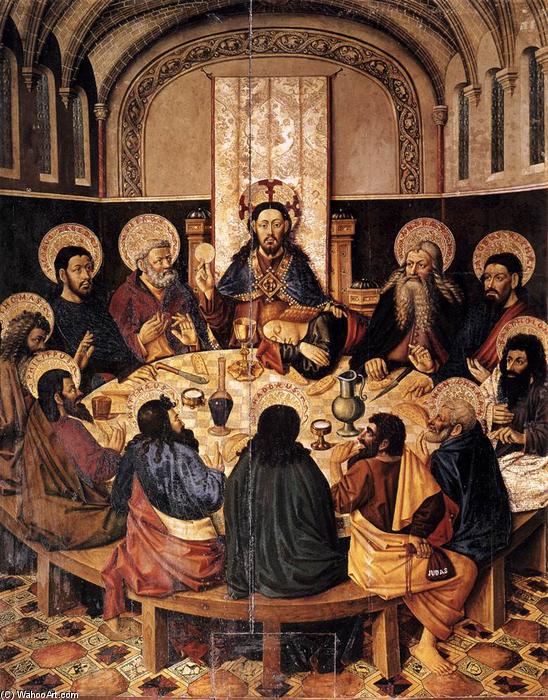
The Last Supper


 Lees meer
Giclée / Kunstafdrukken
Giclée- of canvasafdruk van museumkwaliteit met een snelle productie en flexibele afwerkingsmogelijkheden. ( Bestel handgeschilderde reproductie Koop afbeelding)




































Kies uit onze vooraf ingestelde maten die overeenkomen met de originele verhoudingen van het kunstwerk.

U kunt uw eigen afmetingen opgeven om in een specifieke lijst of ruimte te passen. Als de door u gekozen maat niet overeenkomt met de proporties van het originele kunstwerk, zullen wij de afbeelding bijsnijden of uitbreiden met een gespiegelde of effen rand. Een digitaal mockup wordt ter goedkeuring naar u verzonden voordat de productie begint.
Houd er rekening mee dat de preview op het scherm de werkelijke bijsneding of uitbreiding niet weergeeft. Alleen de mockup toont de uiteindelijke compositie nauwkeurig.
Hoewel aangepaste maten beschikbaar zijn, raden wij aan een afmeting uit de vooraf bepaalde lijst te kiezen om de originele proporties te behouden.
Wereldwijde levering () binnen 2 weken in plaats van de standaard 4/5 weken. (16 augustus)

Gratis wereldwijde expressverzending

Hoogwaardig linnen canvas

Volledige verzendverzekering

Garantie op terugbetaling van invoerrechten

Garantie op exacte kleurweergave

Retourbeleid van 60 dagen (alleen bij defecten)

100% Geld-terug-garantie

Korting bij meerdere afnames
 De optie voor glas is alleen beschikbaar bij een formaat kleiner dan 110 cm.

The Last Supper
Giclée / Kunstafdrukken
Afmetingen reproductie
-


Eindtotaal
$ 81
Biografie van de kunstenaar
Jaume Baco Jacomart: A Valencian Master Bridging Gothic and Renaissance
Jaume Baçó, also spelled Jaume Baco or Jacomart (c. 1410–1461), was a Spanish painter from Valencia whose life remains shrouded in relative obscurity, leaving much of his artistic output to speculation and scholarly reconstruction. Despite the paucity of biographical details, his distinctive style—characterized by an unwavering commitment to early Netherlandish traditions while simultaneously absorbing subtle echoes of Italian Renaissance aesthetics—solidifies his position as a pivotal figure within Valencian art history and a testament to the dynamism of fifteenth-century European painting.
Born around 1410 in Valencia, Baçó’s origins are traced back to a family of artisans, suggesting an upbringing steeped in craftsmanship. Precise information regarding his formative years is scarce; however, he began his artistic career in Valencia itself, honing his skills amidst the flourishing Gothic art scene of the time. By 1442, he accepted a commission from Alfonso V of Aragon, embarking on a journey to Naples where he encountered the burgeoning Renaissance fervor emanating from the papal court.
Naples proved to be a crucible for Baçó’s artistic evolution. The influence of Lorenzo Monaco and other Florentine masters became palpable in his palette and compositional choices—a deliberate departure from the austere formalism of Valencian Gothic, yet firmly rooted in established stylistic precedents. This period witnessed him producing significant works, notably altarpieces that showcased his burgeoning mastery of perspective and color theory.
Returning to Valencia in 1445, Baçó continued to serve as court painter for John II, furthering his artistic endeavors and establishing himself as a respected artist within the region. His subsequent travels to Rome and Tivoli in 1451 cemented his connection with papal patronage and exposed him to the intellectual currents shaping European culture. He returned to Valencia permanently in 1451 and remained there until his death in 1461.
Baçó’s artistic legacy rests primarily on two monumental achievements: the Retable of Saint Anne, now tragically lost, and the Borgia Triptych housed in the Collegiate Church of Xàtiva. These paintings exemplify Baçó's stylistic synthesis—a masterful blend of Netherlandish realism and Italian humanist ideals. Furthermore, his contribution to the Cathedral of Valencia’s decoration – specifically the panels depicting Saint Benedict and Saint Ildephonsus – represents a cornerstone of Valencian artistic heritage.
While Baçó’s oeuvre remains relatively limited compared to contemporaries like Colantonio or Juan Rexach, his influence extended far beyond his immediate productions. He served as mentor to younger artists, shaping the stylistic trajectory of the Valencian school and ensuring that the traditions of early Netherlandish painting persisted in a period increasingly dominated by Renaissance innovation. Jaume Baçó Jacomart’s enduring artistic vision continues to inspire admiration for its expressive power and technical sophistication—a testament to his singular contribution to the visual arts of the fifteenth century.

jaume baço jacomart
1410 - 1461 , Spain
Belangrijkste feiten
- Artistic Movement Or Style: Early Netherlandish Painting
- Artists Or Movements Influenced By This Artist: ['Italian Renaissance']
- Artists Who Influenced This Artist: ['Colantonio']
- Date Of Birth: c. 1410
- Date Of Death: 1461
- Full Name: Jaume Baçó Jacomart
- Nationality: Spanish
- Notable Artworks:
- Retable of Catì
- Borgia Triptych
- Place Of Birth: Valencia, Spain

