
 Verstuur
 Delen
Delen
 Details bekijken
 Gids voor studentenkunstwerken

 Download
 Vergelijkbare items
 Diavoorstelling
 Statistieken
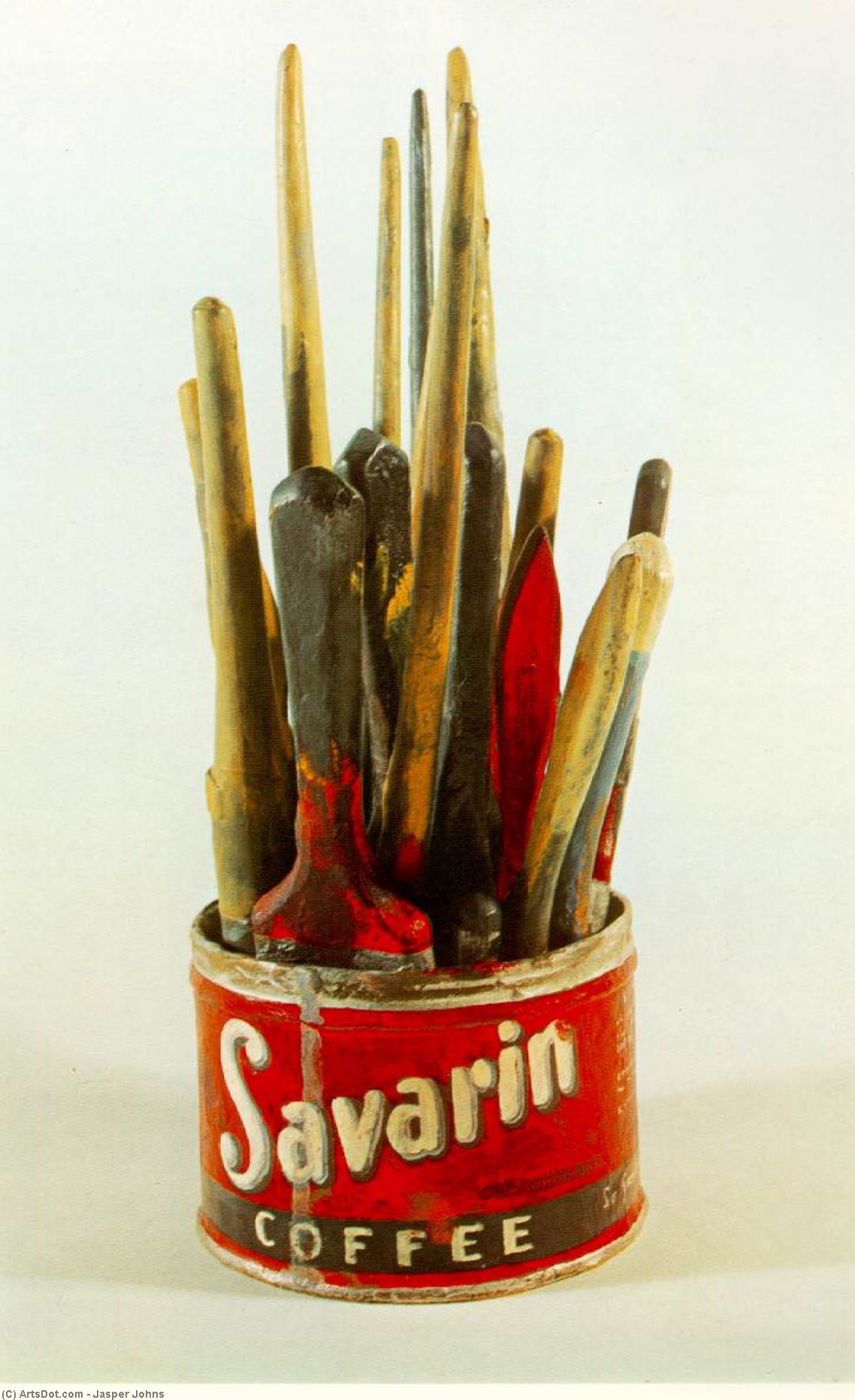
Painted Bronze

 Lees meer
Koop een digitale afbeelding in hoge resolutie met verbeterde kwaliteit, die veel superieur is aan de online voorvertoning.
Elk bestand wordt met uiterste precisie voorbereid door onze interne specialisten, met behulp van geavanceerde tools en deskundige handmatige retouche. Wij garanderen dat elke afbeelding een uitzonderlijke helderheid, nauwkeurige kleurweergave en verfijnde details bezit.
Het uiteindelijke bestand wordt binnen 72 uur per e-mail geleverd, geoptimaliseerd voor direct gebruik in professionele, redactionele en printomgevingen. Dit is dezelfde kwaliteit waarop vooraanstaande designstudio's, uitgevers en galerieën vertrouwen.
Digitale afbeeldingen
Download een bestand met hoge resolutie voor persoonlijke weergave, afdrukken en creatieve projecten. ( Schakel over naar print Koop handgeschilderd kunstwerk)
Inbegrepen bij elke bestelling van een digitale afbeelding
Professionele digitale levering, gegarandeerd
Wanneer u kiest voor OriginalUniqueArt.com, ontvangt u niet alleen een afbeelding – u krijgt een professioneel verbeterd digitaal kunstwerk, met precisie vervaardigd en voorzien van een tevredenheidsgarantie. Dit is alles wat automatisch bij uw bestelling is inbegrepen:

Directe levering per e-mail
Uw hoogwaardige digitale afbeeldingsbestand wordt binnen 72 uur na bestelling naar u gemaild – klaar voor direct gebruik.

AI-geoptimaliseerd digitaal bestand
Uw kunstwerk wordt professioneel geoptimaliseerd met behulp van geavanceerde AI-tools en handmatige bewerkingen, waardoor maximale details, helderheid en kleurnauwkeurigheid worden gegarandeerd.

Gratis levenslange herlevering
Je bestand per ongeluk verwijderd of kwijtgeraakt? Geen zorgen – we sturen het u op elk gewenst moment gratis opnieuw toe.

Geen invoerkosten – nooit
Geniet direct van uw kunstwerk zonder invoerrechten, belastingen of verzendkosten – digitale downloads zijn altijd belastingvrij.

Garantie op kleurgetrouwheid
Met behulp van professionele hulpmiddelen en kleurbeheer zorgen wij ervoor dat uw digitale afbeelding de originele kleuren zo nauwkeurig mogelijk weergeeft.

100 dagen tevredenheidsgarantie
Als u niet tevreden bent met uw digitale afbeelding, passen wij deze aan of storten wij 100% terug binnen 100 dagen - zonder vragen te stellen.

100% Geld-terug-garantie
Niet tevreden? Ontvang een volledige terugbetaling binnen 100 dagen na ontvangst van uw digitale bestand – zonder vragen te stellen.

Korting bij grote bestellingen
Koop 3 afbeeldingen, bespaar 10% - Koop 5, bespaar 15% - Koop 10+, bespaar 20%. Ideaal voor creatieve projecten, galerieën en bureaus.
The Genesis of a Simple Object
Jasper Johns' Painted Bronze, created in 1960 but cast and painted the following year, is deceptively simple. At first glance, it presents as two unassuming twelve-ounce beer cans – rendered in bronze and meticulously painted to mimic their metallic counterparts – resting upon a stark, rectangular base. Yet, this apparent banality belies a profound engagement with American iconography, artistic tradition, and the very nature of representation. The genesis of this work is famously attributed to a seemingly offhand remark from Willem de Kooning, a fellow Abstract Expressionist, who reportedly suggested Johns “give that son-of-a-bitch two beer cans” – an observation that highlighted the burgeoning commercialization of art and the potential for transforming everyday objects into compelling subjects.
The anecdote, though perhaps embellished, underscores a key element of Johns’s artistic strategy: his ability to elevate the mundane to the level of significance. He wasn't interested in grand narratives or abstract explorations; instead, he sought to distill meaning from the familiar – the commonplace objects that populate our daily lives. This approach aligns with a broader shift within American art during the 1960s, moving away from the emotionally charged landscapes and figures of Abstract Expressionism towards a more direct engagement with recognizable imagery.
Technique and Materiality: A Dialogue Between Paint and Metal
The technical execution of Painted Bronze is remarkably precise. Johns meticulously cast the beer cans in bronze, ensuring their form was faithfully replicated. However, rather than leaving them to their inherent materiality, he then applied a layer of paint – a muted gold-brown hue – that deliberately obscures and distorts the metallic surface. This act of painting isn’t merely decorative; it's a deliberate disruption of the material’s natural appearance, creating a fascinating dialogue between the cold solidity of bronze and the ephemeral qualities of paint.
The choice of bronze itself is significant. Bronze, historically associated with antiquity and permanence, lends an air of gravitas to the seemingly trivial subject matter. It elevates the beer cans from mere consumer goods to objects imbued with a sense of historical weight and symbolic resonance. The uneven application of paint further emphasizes this tension – suggesting a process of deliberate imperfection, mirroring the artist’s own approach to representation.
Symbolism and American Identity
Beyond its technical merits, Painted Bronze is deeply rooted in American iconography. Beer cans, ubiquitous symbols of post-war prosperity and consumer culture, immediately evoke a specific historical context. The reference to “ale” – a term associated with a more refined and established social class – adds another layer of meaning, subtly referencing the hierarchies and distinctions that defined American society at the time.
Furthermore, Johns’s decision to depict beer cans rather than, say, flags or maps—other recurring motifs in his work—is particularly revealing. Flags and maps are inherently symbolic, representing national identity and geopolitical power. Beer cans, on the other hand, represent a more intimate and personal experience – a shared ritual of consumption that connects individuals across diverse social groups. In this way, Johns transforms an everyday object into a potent symbol of American culture and its complex relationship with commerce and consumerism.
Emotional Resonance and Artistic Legacy
Despite its seemingly simple composition, Painted Bronze possesses a remarkable emotional resonance. The work invites contemplation on the nature of representation, the blurring of boundaries between art and life, and the enduring power of everyday objects to evoke profound meaning. It’s a testament to Johns's ability to distill complex ideas into deceptively straightforward forms, leaving the viewer with a lingering sense of ambiguity and wonder.
Painted Bronze stands as a pivotal work in Jasper Johns’s oeuvre, exemplifying his innovative approach to subject matter and technique. It remains a compelling example of American art's engagement with contemporary culture and its exploration of the symbolic potential within the mundane.
Vragen & Antwoorden
Heeft "Painted Bronze" een augmented reality-preview?
"Painted Bronze" heeft een augmented reality-preview: de AR-voorvertoning-pagina van het kunstwerk toont het in uw eigen ruimte op een compatibel apparaat.
Is er een gids voor "Painted Bronze" door Jasper Johns?
De gids voor "Painted Bronze" is de Gids-pagina van het kunstwerk – een printbaar informatieblad waarop het kunstwerk wordt getoond met het bijschrift, de bronvermelding en de identificatietabel (kunstenaar, data, medium, originele afmetingen, collectie).
Welke onderliggende kleur loopt er door "Painted Bronze" door Jasper Johns?
Een Ochre to Sepia tint loopt door "Painted Bronze" door Jasper Johns.
Biografie van de kunstenaar
A Life Painted in Symbols: The World of Jasper Johns
Jasper Johns emerged as a pivotal figure in the landscape of American art, bridging the emotive intensity of Abstract Expressionism with the burgeoning Pop Art movement that would soon redefine artistic boundaries. Born in Augusta, Georgia, in 1930, his early life was marked by a sense of displacement following his parents’ divorce, an experience that perhaps subtly informed his later explorations of identity and belonging within the context of American iconography. His formative years unfolded across various schools before he briefly attended the University of South Carolina, but it wasn't until his move to New York City in 1949 that Johns truly began to forge his artistic path. A period of service during the Korean War further shaped his perspective, exposing him to a world far removed from the burgeoning art scene he was eager to embrace upon his return.Breaking with Abstraction: The Dawn of a New Visual Language
The post-war American art world was dominated by Abstract Expressionism—a style characterized by spontaneous gesture and deeply personal emotional expression. While initially influenced by this movement, Johns felt compelled to move beyond its purely non-representational approach. He sought a new visual language, one that incorporated recognizable imagery not as illustrations but as vehicles for deeper contemplation. This wasn’t simply about *depicting* the world; it was about questioning how we perceive and interpret symbols within it. Key influences guided his departure: Marcel Duchamp's radical readymades challenged conventional notions of art-making, demonstrating that everyday objects could be elevated to the status of art through their presentation, while the emphasis on materiality in Abstract Expressionism informed Johns’ early techniques. However, it was the everyday objects and potent symbols of American culture—flags, targets, maps, numbers—that truly became central to his artistic vocabulary. He wasn’t interested in escaping representation; he wanted to dissect it, layer it with meaning, and ultimately reveal its inherent ambiguities. The influence of Robert Rauschenberg, a close friend and collaborator, was also crucial during this period, fostering a spirit of experimentation and pushing the boundaries of artistic practice through collaborative projects and shared ideas.Iconic Images: Flags, Targets, and the Language of Symbols
Johns’ breakthrough works arrived in the mid-1950s, instantly establishing him as a force to be reckoned with. His paintings of flags, most notably *Flag* (1954–55), were not patriotic declarations but rather investigations into the very nature of representation. Rendered in a semi-abstract style, using encaustic—pigment mixed with hot wax—and collage techniques, these flags weren’t simply images; they were textured surfaces laden with symbolic weight. The image of the flag, initially inspired by a childhood memory of his father pointing to a statue of William Jasper in Savannah, became a recurring motif, prompting questions about national identity, history, and the complexities of visual communication. The target series, beginning in 1958, further explored this fascination with recognizable forms, questioning perception and meaning through the seemingly straightforward image of a bullseye. *Map* (1961), with its fragmented and layered depictions of the United States, delved into themes of geography, identity, and the complexities of national representation. Works like *False Start* (1959) demonstrated his experimentation with language and visual codes, creating complex compositions that challenged viewers to decipher their underlying meanings. Even *White Flag* (1955), a seemingly simple monochrome canvas, prompted profound questions about absence, surrender, and the very act of seeing. Johns’ use of repetition, layering, and subtle shifts in perspective created works that demanded prolonged engagement and invited multiple interpretations.Technique and Materials: A Layered Approach
Jasper Johns' artistic process was characterized by a meticulous attention to detail and a deliberate manipulation of materials. He frequently employed encaustic—a mixture of beeswax and pigments—to build up layers of color and texture, creating surfaces that were both visually rich and physically complex. This technique allowed him to achieve a sense of depth and luminosity rarely seen in traditional painting. Collage elements, often incorporating newspaper clippings, maps, and other found objects, were integrated into his compositions, adding another layer of meaning and challenging the boundaries between representation and abstraction. Johns also experimented with various drawing techniques, including pen and ink, graphite, and charcoal, often using these methods to prepare surfaces for painting or to create preliminary sketches. His work is a testament to his mastery of materials and his willingness to push the limits of traditional artistic practices. The deliberate roughness and tactile quality of his surfaces further emphasized the physicality of the artwork and invited viewers to engage with it on a sensory level.Recognition and Enduring Impact
Jasper Johns’ impact on the trajectory of modern art is undeniable. He played a crucial role in the transition from Abstract Expressionism to Pop Art, challenging the prevailing aesthetic norms and opening up new avenues for artistic exploration. By embracing recognizable imagery, he paved the way for artists like Andy Warhol and Roy Lichtenstein, who would further blur the lines between high art and popular culture. His close collaboration with Robert Rauschenberg was also profoundly influential, fostering a spirit of experimentation and pushing the boundaries of artistic practice. Johns’ work continues to resonate today, inspiring generations of artists to question assumptions, challenge conventions, and explore the power of symbols in shaping our understanding of the world. He remains an active artist, constantly evolving his approach and solidifying his position as one of the most important figures in 20th and 21st-century art. His legacy is secured through numerous awards—including the Presidential Medal of Freedom in 2011—and a vast collection of works housed in major museums around the globe, ensuring that his innovative spirit continues to inspire and challenge viewers for years to come.
Jasper Johns
1930 - , Verenigde Staten van Amerika
Kerngegevens
- Artistic Movement Or Style: Pop & Abstract Exp.
- Artists Or Movements Influenced By This Artist:
- Warhol
- Lichtenstein
- Artists Who Influenced This Artist: ['Duchamp']
- Date Of Birth: 15 mei 1930
- Full Name: Jasper Johns
- Nationality: Amerikaans
- Notable Artworks:
- Flag
- Target
- Map
- Place Of Birth: Augusta, USA