

 Voorvertoning
 Verstuur
 Delen
Delen
 Details bekijken
 Gids
Gids

 Download
 Vergelijkbare items
 Röntgenonderzoek
 Diavoorstelling
 Statistieken
Order and Disorder


 Lees meer
De kunstwerken die op deze pagina worden weergegeven, zijn beschermd door de auteursrechtwetgeving, wat betekent dat het ons wettelijk niet is toegestaan om identieke reproducties te maken of te verkopen. Deze bescherming wordt gehandhaafd onder internationale overeenkomsten zoals de Conventie van Bern en door nationale wetgeving, waaronder de bepalingen van de Amerikaanse auteurswet - Titel 17. Alle rechten voorbehouden. Reproduceren of distribueren van afbeeldingen is niet toegestaan zonder uitdrukkelijke schriftelijke toestemming van WahooArt.com en de rechthebbenden.
Als een respectvol en legaal alternatief bieden wij op maat gemaakte, handgeschilderde kunstwerken aan die geïnspireerd zijn op het origineel. Onze bekwame en professionele kunstenaars bestuderen zorgvuldig de stijl, sfeer en artistieke essentie van het origineel om een nieuw, uniek werk te creëren dat dezelfde emotie oproept – terwijl het een op zichzelf staande, originele creatie blijft.
Deze methode voldoet volledig aan de auteursrechtwetgeving, omdat het niet gaat om het kopiëren of dupliceren van het beschermde kunstwerk. In plaats daarvan is er sprake van een creatieve herinterpretatie — een nieuw schilderij dat door het origineel wordt geïnspireerd, maar er niet identiek aan is.
Handgemaakte olieverfreproductie
Met de hand geschilderd in olieverf op canvas in uw gewenste maat en lijst, op bestelling gemaakt door onze kunstenaars. ( Schakel over naar print Schakel over naar digitale afbeeldingen)




P118B €10

P118H €10

P118W €10

P438Z €10

P508JH €12

P508YH €12

P805H €10

P805Z €10

P919BZ €10

P919G €10

P919XJ €10

P959ZH €10

P968JZ €12

W106C €8

W218G €10

W218JH €8

W218Y €10

W307PJ €10

W316G €10

W316PJ €8

W316Y €10

W398PJ €8

W4111J €10

W500HY €15

W500JH €15

W692G €12

W849H €8

W940BG €15

W953PJ €8




Kies uit onze vooraf ingestelde maten die overeenkomen met de originele verhoudingen van het kunstwerk.

Voer de breedte en hoogte in die u nodig heeft, passend bij uw lijst of uw muur. Omdat dit handgeschilderd is, kan de kunstenaar bij een afmeting met een andere beeldverhouding iets meer rondom het schilderij schilderen of juist iets meer weglaten — u kiest zelf. Wij sturen u een digitaal mockup ter goedkeuring voordat het schilderwerk begint. De afbeelding die op deze pagina wordt getoond, is niet het uiteindelijke resultaat — alleen de mockup geeft dit weer.
Na de bestelling zal het team van OriginalUniqueArt.com per e-mail contact opnemen met de klant voor instructies en een mockup-voorbeeld sturen.
Wereldwijde levering () binnen 3 tot 4 weken in plaats van de standaard 5 weken. (27 oktober). Zonder concessies aan de kwaliteit.

Gratis wereldwijde expressverzending

Hoogwaardig linnen canvas

Volledige verzendverzekering

Garantie op terugbetaling van invoerrechten

Garantie op exacte kleurweergave

Retourbeleid van 100 dagen (alleen bij defecten)

100% Geld-terug-garantie

Korting bij meerdere afnames
 De optie voor glas is alleen beschikbaar bij een formaat kleiner dan 110 cm.

Order and Disorder
Druktechniek
Afmetingen reproductie
-


Eindtotaal
€ 263
A Symphony of Chaos: Decoding Jasper Johns’ ‘Order and Disorder’
Jasper Johns's ‘Order and Disorder’ is not merely a painting; it is a visual puzzle box, a playful yet profound meditation on the very foundations of language and perception. Executed with his characteristic meticulousness, the artwork presents the alphabet and numerals arranged in seemingly haphazard rows, each letter and number rendered in a vibrant, almost childlike palette of reds, yellows, greens, blues, and oranges. But beneath this initial impression of cheerful disarray lies a complex exploration of structure and its dissolution—a tension that defines much of Johns’s groundbreaking oeuvre. To gaze upon this piece is to enter a space where the familiar becomes strange, inviting the viewer to participate in the act of reconstruction.
Emerging in the 1960s, ‘Order and Disorder’ stands as a pivotal work bridging the emotive intensity of Abstract Expressionism and the burgeoning iconographic language of Pop Art. Johns had already begun to challenge prevailing artistic norms by elevating everyday objects—flags, targets, maps—to the status of high art. He was not interested in expressing raw emotion like his predecessors; instead, he sought to investigate how we see, how meaning is constructed, and how symbols function within our cultural consciousness. The alphabet, as a fundamental building block of communication, becomes an ideal subject for this inquiry. By disrupting its conventional sequence and presenting it in a fragmented manner, Johns forces us to actively decode the canvas, mirroring the cognitive processes involved in deciphering any visual or linguistic code.
Mastery of Surface and Texture
Technically, ‘Order and Disorder’ showcases Johns's masterful manipulation of paint and surface, offering a tactile richness that makes it a centerpiece for any sophisticated collection. While the composition may appear straightforward at first glance, the application is far from simple. He employs layers of oil paint, often incorporating encaustic—a technique involving melted beeswax combined with pigment—to create a textured, almost palimpsestic effect. This layering adds a physical depth to the work, hinting at hidden meanings buried beneath the visible forms and creating a surface that catches the light in unexpected ways.
The deliberate flatness of the picture plane, reminiscent of his earlier explorations, is balanced by this incredible textural complexity. For the interior designer or collector, this duality offers immense versatility; the painting possesses a graphic clarity that complements modern, minimalist spaces, yet its rich, physical presence provides a soulful warmth to more traditional or eclectic settings. It is a work that demands close inspection, rewarding the observer with new details of color and depth upon every encounter.
An Invitation to Visual Discovery
Beyond its technical brilliance, ‘Order and Disorder’ carries an emotional resonance that speaks to the universal human experience of seeking meaning within uncertainty. The vibrant colors—the sun-drenched yellows, deep blues, and energetic oranges—evoke a sense of joy and vitality, yet the fragmented arrangement of the characters introduces a subtle intellectual tension. It is a celebration of the intellect and the senses intertwined.
For those seeking to adorn their homes or galleries with a piece that stimulates conversation and thought, this reproduction offers an unparalleled opportunity. It serves as more than decoration; it is an intellectual anchor, a window into the transformative era of American modernism, and a constant reminder of the beautiful complexity found in the balance between chaos and structure.
Veelgestelde vragen
Voor welke ruimte en welk gebruik wordt "Order and Disorder" aanbevolen?
"Order and Disorder" door Jasper Johns wordt aanbevolen voor Accent, bij voorkeur in een Living Room. Gebruik en ruimte bepalen samen waar een reproductie het beste tot zijn recht komt.
Wat is de dominante kleur van "Order and Disorder"?
De dominante kleur van "Order and Disorder" door Jasper Johns is Amber to Saffron. Deze kleur vormt de onderliggende toon van het palet.
Onder welke pseudoniemen of andere namen is Jasper Johns bekend?
Jasper Johns staat ook bekend als Augusta Hance Johns.
Biografie kunstenaar
A Life Painted in Symbols: The World of Jasper Johns
Jasper Johns emerged as a pivotal figure in the landscape of American art, bridging the emotive intensity of Abstract Expressionism with the burgeoning Pop Art movement that would soon redefine artistic boundaries. Born in Augusta, Georgia, in 1930, his early life was marked by a sense of displacement following his parents’ divorce, an experience that perhaps subtly informed his later explorations of identity and belonging within the context of American iconography. His formative years unfolded across various schools before he briefly attended the University of South Carolina, but it wasn't until his move to New York City in 1949 that Johns truly began to forge his artistic path. A period of service during the Korean War further shaped his perspective, exposing him to a world far removed from the burgeoning art scene he was eager to embrace upon his return.Breaking with Abstraction: The Dawn of a New Visual Language
The post-war American art world was dominated by Abstract Expressionism—a style characterized by spontaneous gesture and deeply personal emotional expression. While initially influenced by this movement, Johns felt compelled to move beyond its purely non-representational approach. He sought a new visual language, one that incorporated recognizable imagery not as illustrations but as vehicles for deeper contemplation. This wasn’t simply about *depicting* the world; it was about questioning how we perceive and interpret symbols within it. Key influences guided his departure: Marcel Duchamp's radical readymades challenged conventional notions of art-making, demonstrating that everyday objects could be elevated to the status of art through their presentation, while the emphasis on materiality in Abstract Expressionism informed Johns’ early techniques. However, it was the everyday objects and potent symbols of American culture—flags, targets, maps, numbers—that truly became central to his artistic vocabulary. He wasn’t interested in escaping representation; he wanted to dissect it, layer it with meaning, and ultimately reveal its inherent ambiguities. The influence of Robert Rauschenberg, a close friend and collaborator, was also crucial during this period, fostering a spirit of experimentation and pushing the boundaries of artistic practice through collaborative projects and shared ideas.Iconic Images: Flags, Targets, and the Language of Symbols
Johns’ breakthrough works arrived in the mid-1950s, instantly establishing him as a force to be reckoned with. His paintings of flags, most notably *Flag* (1954–55), were not patriotic declarations but rather investigations into the very nature of representation. Rendered in a semi-abstract style, using encaustic—pigment mixed with hot wax—and collage techniques, these flags weren’t simply images; they were textured surfaces laden with symbolic weight. The image of the flag, initially inspired by a childhood memory of his father pointing to a statue of William Jasper in Savannah, became a recurring motif, prompting questions about national identity, history, and the complexities of visual communication. The target series, beginning in 1958, further explored this fascination with recognizable forms, questioning perception and meaning through the seemingly straightforward image of a bullseye. *Map* (1961), with its fragmented and layered depictions of the United States, delved into themes of geography, identity, and the complexities of national representation. Works like *False Start* (1959) demonstrated his experimentation with language and visual codes, creating complex compositions that challenged viewers to decipher their underlying meanings. Even *White Flag* (1955), a seemingly simple monochrome canvas, prompted profound questions about absence, surrender, and the very act of seeing. Johns’ use of repetition, layering, and subtle shifts in perspective created works that demanded prolonged engagement and invited multiple interpretations.Technique and Materials: A Layered Approach
Jasper Johns' artistic process was characterized by a meticulous attention to detail and a deliberate manipulation of materials. He frequently employed encaustic—a mixture of beeswax and pigments—to build up layers of color and texture, creating surfaces that were both visually rich and physically complex. This technique allowed him to achieve a sense of depth and luminosity rarely seen in traditional painting. Collage elements, often incorporating newspaper clippings, maps, and other found objects, were integrated into his compositions, adding another layer of meaning and challenging the boundaries between representation and abstraction. Johns also experimented with various drawing techniques, including pen and ink, graphite, and charcoal, often using these methods to prepare surfaces for painting or to create preliminary sketches. His work is a testament to his mastery of materials and his willingness to push the limits of traditional artistic practices. The deliberate roughness and tactile quality of his surfaces further emphasized the physicality of the artwork and invited viewers to engage with it on a sensory level.Recognition and Enduring Impact
Jasper Johns’ impact on the trajectory of modern art is undeniable. He played a crucial role in the transition from Abstract Expressionism to Pop Art, challenging the prevailing aesthetic norms and opening up new avenues for artistic exploration. By embracing recognizable imagery, he paved the way for artists like Andy Warhol and Roy Lichtenstein, who would further blur the lines between high art and popular culture. His close collaboration with Robert Rauschenberg was also profoundly influential, fostering a spirit of experimentation and pushing the boundaries of artistic practice. Johns’ work continues to resonate today, inspiring generations of artists to question assumptions, challenge conventions, and explore the power of symbols in shaping our understanding of the world. He remains an active artist, constantly evolving his approach and solidifying his position as one of the most important figures in 20th and 21st-century art. His legacy is secured through numerous awards—including the Presidential Medal of Freedom in 2011—and a vast collection of works housed in major museums around the globe, ensuring that his innovative spirit continues to inspire and challenge viewers for years to come.
Jasper Johns
1930 - , Verenigde Staten van Amerika
Belangrijkste feiten
- Artistic Movement Or Style: Pop & Abstract Exp.
- Artists Or Movements Influenced By This Artist:
- Warhol
- Lichtenstein
- Artists Who Influenced This Artist: ['Duchamp']
- Date Of Birth: 15 mei 1930
- Full Name: Jasper Johns
- Nationality: Amerikaans
- Notable Artworks:
- Flag
- Target
- Map
- Place Of Birth: Augusta, USA
Gerelateerde artikelen

John Constable's Top 25 Meesterwerken: Landschappen die de Ziel Raaken | OriginalUniqueArt
Ontdek de 25 mooiste schilderijen van John Constable, meester van de Engelse Romantiek. Van idyllische landschappen tot iconische Hay Wain – bewonder zijn techniek en emotie. Museumkwaliteit reproducties & decoratie op OriginalUniqueArt.com.

John Singer Sargent's Top 25 Meesterwerken: Portretten & Schilderijen voor uw Interieur | OriginalUniqueArt
Ontdek de 25 mooiste meesterwerken van John Singer Sargent! Van elegante portretten tot impressionistische schilderijen – leer over zijn leven, techniek & impact. Museumkwaliteit reproducties voor uw interieur op OriginalUniqueArt.com.
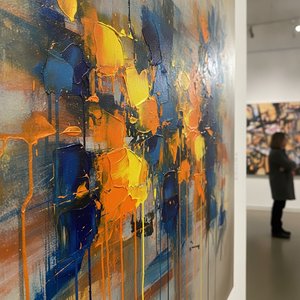
Beyond the Lines: Mastering the High-Impact World of Contemporary Abstraction
Master the high-impact world of contemporary abstraction. Discover how bold colors, textures, and modern movements like Abstract Expressionism can transform your space with premium, high-energy art curated for the design-conscious professional.

Top 10 Abstract Expressionisme Meesterwerken: Kunst voor uw Interieur | OriginalUniqueArt.com
Ontdek de 10 meest invloedrijke werken van Abstract Expressionisme! Leer over Jackson Pollock, Mark Rothko & meer. Museumkwaliteit kunst reproducties voor uw interieur. Bekijk de collectie op OriginalUniqueArt.com.
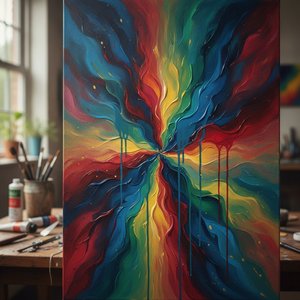
Lyrical Abstraction: The Emotional Power of Color and Form in Modern Art History
Explore the profound emotional depth of Lyrical Abstraction. Discover how masters like Raymond Parker used color and form to bridge Impressionism and Abstract Expressionism. Learn about this pivotal movement through our expert-led art history guide.


