
 Voorvertoning
 Verstuur
 Delen
Delen
 Details bekijken
 Gids
Gids

 Download
 Vergelijkbare items
 Röntgenonderzoek
 Diavoorstelling
 Q&A
Q&A Statistieken
Gamepiece with a Dead Heron

- 134.0 x 111.0 cm


 Lees meer
Giclée / Kunstafdrukken
Giclée- of canvasafdruk van museumkwaliteit met een snelle productie en flexibele afwerkingsmogelijkheden. ( Bestel handgeschilderde reproductie Schakel over naar digitale afbeeldingen)




P118B €10

P118H €10

P118W €10

P438Z €10

P508JH €12

P508YH €12

P805H €10

P805Z €10

P919BZ €10

P919G €10

P919XJ €10

P959ZH €10

P968JZ €12

W106C €8

W218G €10

W218JH €8

W218Y €10

W307PJ €10

W316G €10

W316PJ €8

W316Y €10

W398PJ €8

W4111J €10

W500HY €15

W500JH €15

W692G €12

W849H €8

W940BG €15

W953PJ €8




Kies uit onze vooraf ingestelde maten die overeenkomen met de originele verhoudingen van het kunstwerk.

Voer de gewenste breedte en hoogte in, passend bij uw lijst of muur. Een afdruk kan alleen worden ingekort en nooit groter worden gemaakt dan het origineel; een formaat met andere verhoudingen zal daarom een deel van de afbeelding verliezen. Wij sturen u een digitaal mockup ter goedkeuring voordat we tot drukwerk overgaan. De afbeelding op deze pagina toont niet de werkelijke uitsnede — dit is alleen te zien op het mockup.
Wereldwijde levering () binnen 2 weken in plaats van de standaard 4/5 weken. (31 oktober)

Gratis wereldwijde expressverzending

Hoogwaardig linnen canvas

Volledige verzendverzekering

Garantie op terugbetaling van invoerrechten

Garantie op exacte kleurweergave

Retourbeleid van 100 dagen (alleen bij defecten)

100% Geld-terug-garantie

Korting bij meerdere afnames
 De optie voor glas is alleen beschikbaar bij een formaat kleiner dan 110 cm.

Gamepiece with a Dead Heron
Giclée / Kunstafdrukken
Afmetingen reproductie
-


Eindtotaal
€ 72
A Study in Mortality and Courtly Grace: Jan Weenix’s “Gamepiece with a Dead Heron”
Jan Weenix's "Gamepiece with a Dead Heron," painted in 1695, is more than just a still life; it’s a meticulously crafted tableau of aristocratic leisure intertwined with the poignant beauty of death. This remarkable canvas, now housed within The Metropolitan Museum of Art, offers a captivating glimpse into the Dutch Golden Age, revealing not only the artist's exceptional technical skill but also his astute understanding of social dynamics and the evolving aesthetics of the time. The painting immediately draws the eye to its central subject: a heron lying prone on a bed of moss, its elegant neck outstretched in a gesture both vulnerable and dignified. Around it, a carefully arranged collection of game – rabbits, partridges, and other birds – contributes to the composition’s rich tapestry of textures and colors. Yet, it's not merely a display of hunting trophies; Weenix masterfully integrates these elements into a broader scene, suggesting a sophisticated courtly setting.The Anatomy of a Hunting Trophy: Technique and Detail
Weenix was renowned for his ability to render the textures of animal hides with astonishing realism – a skill honed through years of observation and practice. Notice the subtle variations in color and sheen across the heron’s feathers, meticulously captured with delicate brushstrokes. The artist's use of chiaroscuro—the dramatic interplay of light and shadow—further enhances the sense of depth and volume, imbuing each animal with a palpable presence. Beyond the individual animals, Weenix demonstrates an impressive command of composition, arranging the trophies in a way that feels both natural and deliberately staged. The inclusion of a large neoclassical urn, partially obscured by the fallen birds, adds a layer of formality to the scene, hinting at the wealth and status of its intended patron – likely a member of the European aristocracy. The painting’s palette is rich and earthy, dominated by browns, greens, and ochres, creating a sense of groundedness and realism that was characteristic of Dutch still life painting during this period.Symbolism and Social Commentary: Beyond the Hunt
While ostensibly depicting a successful hunt, “Gamepiece with a Dead Heron” carries deeper symbolic weight. The presence of dead animals speaks to the transient nature of beauty and the inevitability of death – a recurring theme in Dutch Golden Age art. However, Weenix doesn’t present this mortality as morbid; instead, he frames it within the context of aristocratic leisure, suggesting that even amidst the pursuit of pleasure, death is an unavoidable aspect of life. The inclusion of figures strolling in the background—likely members of the noble class—further reinforces this idea, implying a detachment from the realities of everyday existence. The urn itself can be interpreted as a symbol of wealth and status, while its partially obscured position suggests a subtle critique of excessive materialism. It’s a delicate balancing act – celebrating the opulence of the court while simultaneously acknowledging its inherent fragility.A Legacy of Dutch Realism: Jan Weenix and His Artistic Circle
Jan Weenix's work is inextricably linked to his father, Jan Baptist Weenix, with whom he shared a workshop and artistic vision. Both artists were masters of depicting hunting scenes and still lifes of game, but Jan Weenix developed a distinctive style characterized by greater detail, richer colors, and a more sophisticated understanding of composition. He was part of a vibrant artistic circle in Antwerp, alongside figures like Frans Snyders and Peter Paul Rubens, all of whom contributed to the flourishing of Flemish Baroque painting. His work reflects both the influence of his father’s legacy and his own innovative approach to rendering natural forms. The painting's provenance—having been seized by the Nazis during World War II and subsequently restituted to its rightful owner—adds another layer of historical significance, reminding us of the enduring power of art to transcend political boundaries. Today, reproductions of “Gamepiece with a Dead Heron” continue to captivate viewers, offering a timeless meditation on beauty, mortality, and the complexities of aristocratic life.Veelgestelde vragen
Wie is de kunstenaar achter "Gamepiece with a Dead Heron"?
De kunstenaar achter "Gamepiece with a Dead Heron" is Jan Weenix. Het werk is gecatalogiseerd onder de naam van Jan Weenix.
Hoe verhoudt de stijl van "Gamepiece with a Dead Heron" zich tot het tijdperk van de maker?
"Gamepiece with a Dead Heron" behoort tot de Dutch Golden Age-stroming en de maker ervan was werkzaam in het Vroegmoderne tijd-tijdperk.
Wat stelt "Gamepiece with a Dead Heron" door Jan Weenix voor, en welke stemming straalt het uit?
"Gamepiece with a Dead Heron" toont hunting, gamepiece, heron, dutchart, weenix, trophy, stilllife, baroque en de vastgelegde stemming is Elegant.
Biografie kunstenaar
Een Erfenis van Nederlands Realisme: Het Leven en de Kunst van Jan Weenix
Jan Weenix, geboren in Amsterdam in 1641, kwam voort uit een bloedlijn die diep geworteld was in de artistieke traditie. Hij erfde een passie voor de schilderkunst van zijn vader, de gerespecteerde Jan Baptist Weenix. Hoewel de exacte details van zijn vroege jaren enigszins mysterieus blijven, is het duidelijk dat de jonge Jan zijn fundamentele training ontving in de werkplaats van zijn vader. Daar absorbeerde hij technieken die cruciaal waren voor het afbeelden van zowel stillevens als dierlijke onderwerpen—een kenmerkend aspect van de kunst uit de Nederlandse Gouden Eeuw. Deze familiale invloed was niet louter technisch; het plantte een diep ontzag voor de minutieuze observatie van de natuur en een toewijding aan het weergeven van haar schoonheid met een opvallend realisme. De artistieke reis van de oudere Weenix, inclusief zijn verblijven in Italië die zijn werk voorzagen van een Italiaanse gevoeligheid, vormde ongetwijfeld ook de ontwikkelende esthetiek van Jan. Hoewel hij aanvankelijk werd overschaduwd door de reputatie van zijn vader, wist Jan zichzelf snel te onderscheiden en smeedde hij een uniek pad binnen het levendige landschap van de 17e-eeuwse Nederlandse schilderkunst.De Bloei van een Barokke Stijl
De artistieke stijl van Weenix bloeide op tijdens het hoogtepunt van de Barokperiode en weerspiegelt de neiging van dat tijdperk tot drama, rijke details en dynamische composities. Hij werkte niet in isolement; invloeden van tijdgenoten zoals Hendrick Cornelisz Vroom, beroemd om zijn marineschilderkunst, en mogelijk andere specialisten in dierfiguren zoals Melchior de Hondecoeter en Gillis Claesz d'Hondecoeter, gaven subtiele kleur aan zijn benadering. Weenix slaagde er echter in deze inspiraties te synthetiseren tot een stijl die uniek voor hem was. Zijn doeken worden gekenmerkt door een bijna fotografische precisie in de weergave van texturen—de glans van veren, de zachtheid van bont, de delicate transparantie van fruit—alles bereikt door meesterlijk penseelwerk en een scherp begrip van licht en schaduw. Chiaroscuro, het dramatische samenspel tussen licht en donker, wordt ingezet om diepte en visuele interesse te creëren, waardoor de kijker met overtuigend realisme in de scène wordt getrokken. Een levendig kleurenpalet verlevendigt zijn onderwerpen verder en geeft ze een gevoel van onmiddellijkheid en vitaliteit. Hij bezat een uitzonderlijk talent voor het arrangeren van elementen binnen het kader, waardoor gebalanceerde en harmonieuze composities ontstonden die zowel visueel aantrekkelijk als narratief boeiend waren.Meesterwerken en Mecenaat
Gedurende zijn carrière produceerde Jan Weenix een aanzienlijk oeuvre dat wordt gevierd om zijn technische briljantie en boeiende onderwerpen. Schilderijen zoals Jacht- en fruitstilleven naast een tuinvaas (1714) illustreren zijn vermogen om diverse elementen—wild watervogels, weelderig fruit, architecturale details—naadloos te integreren in een complexe en visueel verbluffende compositie. Stilleven met een haas en ander wild (1697) toont zijn meesterschap in dierlijke anatomie en textuur, waarbij hij de levendige kwaliteit van zijn onderwerpen met opmerkelijke nauwkeurigheid vastlegt. Zelfs kleinere werken, zoals Een zittende aap (vóór 1685), onthullen zijn talent om dieren te voorzien van persoonlijkheid en een expressief karakter. Deze vaardigheid bleef niet onopgemerkt door vooraanstaande beschermheren. In 1702 ontving Weenix een uitnodiging aan het hof van Johann Wilhelm, de Keurvorst van de Palts, waar hij samen met andere beroemde kunstenaars werkte aan grootschalige jachtscènes voor Schloss Bensberg—een bewijs van zijn groeiende reputatie en artistieke kracht. Deze opdrachten boden hem zowel financiële zekerheid als de kans om zijn vaardigheden verder te verfijnen.Een Blijvende Invloed op de Nederlandse Kunst
Jan Weenix speelde een cruciale rol in het populariseren van jachtstillevens en wildschilderkunst tijdens de Barokperiode, waarbij hij deze genres verhief boven louter decoratie. Zijn werken waren zeer gewild bij verzamelaars, wat significant bijdroeg aan de ontwikkeling van Nederlandse artistieke tradities. Hij kopieerde de natuur niet simpelweg; hij interpreteerde haar door zijn eigen unieke lens, waardoor zijn schilderijen een gevoel van realisme, drama en esthetische schoonheid kregen die diep resoneerde bij het publiek van zijn tijd. Zijn nalatenschap reikt verder dan zijn eigen creaties; zijn dochter, Maria Weenix, zette de familietraditie voort als een bekwame bloemenschilderes, waardoor de naam Weenix generaties lang synoniem bleef met artistieke excellentie. Vandaag de dag worden de schilderijen van Jan Weenix gekoesterd in musea en privécollecties over de hele wereld, waar ze kunstenaars blijven inspireren en het publiek blijven betoveren met hun meesterlijke afbeeldingen van de natuurlijke wereld—een getuigenis van zijn blijvende bijdrage aan het rijke weefsel van de Nederlandse kunstgeschiedenis.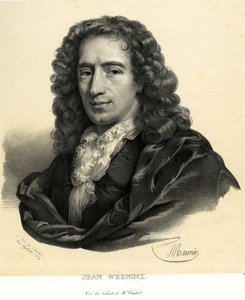
Jan Weenix
1641 - 1719 , Nederland
Belangrijkste feiten
- Artistic Movement Or Style: Nederlandse Barok
- Artists Or Movements Influenced By This Artist: ['Maria Weenix']
- Artists Who Influenced This Artist:
- Jan Baptist Weenix
- Hendrick Vroom
- Date Of Birth: 1641
- Date Of Death: 1719
- Full Name: Jan Weenix
- Nationality: Nederlands
- Notable Artworks:
- Stilleven met jachtpartij en fruit
- Stilleven met een haas
- Een zittende aap
- De witte pauw
- Place Of Birth: Amsterdam, Nederland
Gerelateerde artikelen

Top 10 Meesterwerken van de Gouden Eeuw: Kunst voor uw interieur | OriginalUniqueArt.nl
Ontdek de 10 meesterwerken van de Gouden Eeuw! Leer over Rembrandt, Vermeer & andere Hollandse schilders. Prachtige kunst reproducties voor uw interieur. Museumkwaliteit prints op OriginalUniqueArt.com.

Jan Jansz Wijnants: A Study in Dutch Golden Age Still Life & Floral Transience
Explore the captivating world of Jan Wijnants and Dutch Golden Age still life painting. Discover symbolism, masterful techniques & lasting influence on floral art history. Learn more!

Silent Narratives: Exploring the Enduring Appeal of Still Life Painting Across Centuries
Explore the rich history of still life painting with OriginalUniqueArt. Discover Dutch Masters, decode vanitas symbolism & learn about collecting timeless art. Expert insights and museum-quality reproductions.
Jan Steen: A Master of Dutch Genre Painting & the Golden Age
Explore the life & art of Jan Steen, a leading Dutch Golden Age painter renowned for his humorous genre scenes & insightful social commentary. Discover his techniques, legacy, and collecting tips.
Abraham Hendricksz van Beyeren: Pioneering Dutch Still Life & the Banquet Tradition
Explore the captivating world of Dutch Golden Age still life with Abraham van Beyeren. Discover his innovative techniques, symbolic banquet scenes & lasting influence on art history. Learn about collecting these masterpieces.

