

 Voorvertoning
 Verstuur
 Delen
Delen
 Details bekijken
 Gids
Gids

 Download
 Vergelijkbare items
 Röntgenonderzoek
 Diavoorstelling
 Statistieken
Fruit and Flowers
 Oil On Canvas
- WallArt
- Dutch Golden Age
 1720
1720- Late Medieval
 81.0 x 60.0 cm
 De Walles Collectie
 Lees meer
Giclée / Kunstafdrukken
Giclée- of canvasafdruk van museumkwaliteit met een snelle productie en flexibele afwerkingsmogelijkheden. ( Bestel handgeschilderde reproductie Schakel over naar digitale afbeeldingen)




P118B €10

P118H €10

P118W €10

P438Z €10

P508JH €12

P508YH €12

P805H €10

P805Z €10

P919BZ €10

P919G €10

P919XJ €10

P959ZH €10

P968JZ €12

W106C €8

W218G €10

W218JH €8

W218Y €10

W307PJ €10

W316G €10

W316PJ €8

W316Y €10

W398PJ €8

W4111J €10

W500HY €15

W500JH €15

W692G €12

W849H €8

W940BG €15

W953PJ €8




Kies uit onze vooraf ingestelde maten die overeenkomen met de originele verhoudingen van het kunstwerk.

Voer de gewenste breedte en hoogte in, passend bij uw lijst of muur. Een afdruk kan alleen worden ingekort en nooit groter worden gemaakt dan het origineel; een formaat met andere verhoudingen zal daarom een deel van de afbeelding verliezen. Wij sturen u een digitaal mockup ter goedkeuring voordat we tot drukwerk overgaan. De afbeelding op deze pagina toont niet de werkelijke uitsnede — dit is alleen te zien op het mockup.
Wereldwijde levering () binnen 2 weken in plaats van de standaard 4/5 weken. (27 oktober)

Gratis wereldwijde expressverzending

Hoogwaardig linnen canvas

Volledige verzendverzekering

Garantie op terugbetaling van invoerrechten

Garantie op exacte kleurweergave

Retourbeleid van 100 dagen (alleen bij defecten)

100% Geld-terug-garantie

Korting bij meerdere afnames
 De optie voor glas is alleen beschikbaar bij een formaat kleiner dan 110 cm.

Fruit and Flowers
Giclée / Kunstafdrukken
Afmetingen reproductie
-


Eindtotaal
€ 71
A Window Into Dutch Golden Age Brilliance: Jan van Huysum’s “Fruit and Flowers”
The world of still life painting often evokes images of meticulously arranged tables laden with delicacies – a testament to the opulence and abundance of 17th-century Dutch society. Yet, within this genre lies a profound depth, a subtle poetry in capturing the fleeting beauty of nature’s bounty. Jan van Huysum's “Fruit and Flowers,” painted around 1720, isn’t merely a depiction of a collection; it’s an immersive experience, a meticulously crafted illusion that invites the viewer to step into a world brimming with color, texture, and symbolic resonance. This particular piece, housed within the Wallace Collection in London, stands as a remarkable example of the artist's mastery – a testament to his dedication to realism and his profound understanding of light, form, and the very essence of beauty.
The Art of Illusion: Technique and Style
Van Huysum’s technique is nothing short of astonishing. He employed a masterful layering of thin glazes of oil paint, building up color and luminosity with painstaking precision. This approach, characteristic of the Dutch Golden Age, allowed him to achieve an unparalleled level of detail – from the velvety skin of a peach to the delicate veins of a leaf. Notice how he renders the textures: the smooth sheen of polished surfaces like the peaches contrasts sharply with the rougher bark of branches and the intricate details of foliage. The use of directional lighting, originating from an unseen source above and slightly to the left, dramatically enhances the three-dimensionality of the objects, casting deep shadows that add depth and realism. The composition itself is a carefully orchestrated dance of overlapping elements, creating a sense of overflowing richness and inviting the eye to explore every corner of the arrangement.
A Symphony of Symbolism: Fruit, Flowers, and Cherubs
Beyond its technical brilliance, “Fruit and Flowers” is rich in symbolic meaning. The abundance of fruit – grapes, peaches, pumpkins – speaks directly to themes of prosperity, fertility, and the bounty of nature. The inclusion of flowers like poppies and lilies further amplifies this symbolism, each carrying its own specific associations: poppies representing beauty and passion, lilies symbolizing purity and innocence. But perhaps the most intriguing element is the subtle presence of a small cherub figure nestled amongst the arrangement. This detail, a nod to classical allusion, adds a layer of narrative complexity, hinting at themes of grace, harmony, and the connection between humanity and the natural world. The butterflies fluttering around the composition contribute to the overall sense of movement and vitality, suggesting the ephemeral nature of beauty itself.
A Legacy of Blossoms: Context and Artistic Influence
Jan van Huysum’s artistic lineage is deeply rooted in his family's legacy. His father, Justus van Huysum the Elder, was a respected flower painter, and his brothers, Jacob and Michiel, followed suit, establishing a tradition of botanical illustration that flourished within the Dutch Golden Age. Van Huysum himself wasn’t initially drawn to floral subjects; he experimented with landscapes early in his career. However, he quickly discovered his true calling in still life, mastering the art of rendering nature with breathtaking realism and an almost obsessive attention to detail. His work reflects a deep appreciation for the natural world, combined with a sophisticated understanding of artistic technique – a potent combination that cemented his place as one of the most celebrated flower painters of his time. The influence of artists like Caravaggio, known for his dramatic use of light and shadow, is subtly evident in Van Huysum’s compositions, adding to the overall sense of drama and intensity.
Today, reproductions of “Fruit and Flowers” offer a remarkable opportunity to bring this exquisite masterpiece into your home or office. Each hand-painted rendition captures the essence of Van Huysum's original work, faithfully recreating his meticulous detail, vibrant colors, and evocative atmosphere. It’s more than just a painting; it’s a window into a bygone era – a celebration of beauty, abundance, and the enduring power of art.
Veelgestelde vragen
Wat is de dominante kleur van "Fruit and Flowers" door Jan Van Huijsum?
Espresso (#63574a) is de dominante kleur van "Fruit and Flowers" door Jan Van Huijsum.
Welk gevoel roepen de kleuren van "Fruit and Flowers" door Jan Van Huijsum op?
Het Earthy palet van "Fruit and Flowers" door Jan Van Huijsum vloeit prachtig samen met de Reflective emotionele toon. Kleur is een van de manieren waarop een kunstwerk gevoel overbrengt.
Tot welke periode in de carrière van Jan Van Huijsum behoort "Fruit and Flowers"?
Binnen de carrière van Jan Van Huijsum valt "Fruit and Flowers" in de Mature Period. Deze fase helpt om het werk te vergelijken met andere werken van de kunstenaar.
Biografie kunstenaar
Een Bloemrijk Testament: Het Leven en Werk van Jan van Huysum
Jan van Huysum, een naam die synoniem staat voor de verfijnde bloemenstillevens van de Nederlandse Gouden Eeuw, werd geboren in Amsterdam op 15 april 1682. Hij was niet slechts een schilder van bloemen; hij was een meester van de illusie, in staat om bloembladeren en druppels met zo’n adembenemend realisme weer te geven dat kijkers bijna hun geur konden ruiken. Geboren in een kunstzinnig nest – zijn vader, Justus van Huysum de Oudere, was eveneens een gerespecteerd bloemschilder en zijn broers Jacob en Michiel volgden hetzelfde pad – leek Jans lot al bepaald. Toch werd hij niet onmiddellijk aangetrokken tot florale onderwerpen. In het begin van zijn carrière experimenteerde hij met landschappen, beschreven als “conventioneel en arcadisch”, maar het was binnen de delicate wereld van stillevens dat zijn ware genialiteit bloeide.
De basis voor Van Huysums artistieke vorming werd gelegd door zijn vader, een cruciale ervaring die hem niet alleen technische vaardigheid, maar ook een begrip van de kunstmarkt meegeefde. Amsterdam floreerde in die periode als centrum van handel en cultuur, wat een vraag creëerde naar luxueuze en decoratieve schilderijen zoals afbeeldingen van weelderige bloemenarrangementen. Deze omgeving vormde Van Huysums aanpak; hij repliceerde niet simpelweg de natuur, maar creëerde geïdealiseerde visies van schoonheid die bedoeld waren om te bekoren en indruk te maken. Zijn vroegste gedateerde werk, voltooid in 1717 en thans gehuisvest in het Louvre, onthult reeds een opmerkelijke rijpheid en aandacht voor detail, als een voorspelling van de meesterschap dat zou komen.
De Kunst van Detail: Techniek en Stijl
Wat Van Huysum werkelijk onderscheidt, is zijn ongeëvenaarde techniek. Hij gebruikte gladde, glanzende penseelstreken, waarbij hij lagen verf opbouwde om een bijna emailachtige oppervlakte te creëren die de rijkdom en levendigheid van zijn kleuren versterkte. Maar het ging niet alleen om kleur; het was ook om licht – hoe het speelde over bloemblaadjes, waterdruppels aan bladeren verlichtte en een gevoel van diepte en volume creëerde. Hij bezat een buitengewoon oog voor detail, waarbij hij de texturen van elke bloem, vrucht en blad met verbazingwekkende precisie vastlegde. Er gingen geruchten dat hij details zoals mieren en dauwdruppels zo realistisch kon schilderen dat ze zonder vergrootglas zichtbaar waren – een bewijs van zijn toewijding en vaardigheid.
Van Huysums composities worden gekenmerkt door een verfijnde elegantie en balans. In tegenstelling tot sommige van zijn tijdgenoten die de voorkeur gaven aan drukke, overvolle arrangementen, vermeed hij consequent onevenwichtigheid of overcompositie. Zijn latere werken werden zeker uitgebreider, maar behielden altijd een gevoel van harmonie en gratie. Hij verwerkte vaak elementen van fantasie in zijn werk, met name in zijn landschappen die denkbeeldige scènes bevatten met klassieke architectonische details en bewegingsloze bomen. Dit waren geen pogingen tot topografische nauwkeurigheid, maar evocatieve settings ontworpen om de schoonheid van de bloemen te laten schitteren die ze bevatten.
Een Bloeiende Reputatie: Belangrijke Werken en Erfgoed
Gedurende zijn leven genoot Jan van Huysum aanzienlijke bekendheid en financieel succes. Zijn schilderijen waren zeer gewild bij verzamelaars, en hij eiste hoge prijzen voor zijn werk. Vandaag de dag kunnen zijn meesterwerken worden gevonden in prestigieuze musea over de hele wereld, waaronder het Louvre in Parijs, de National Gallery in Londen en collecties in Berlijn en Amsterdam. Tot zijn meest gevierde werken behoren Terracotta Vaas met Bloemen en Vruchten, een verbluffende weergave van kleur en textuur; Bloemen en Vruchten, die zijn meesterschap in compositie toont; en Boeket Bloemen in een Urn, een bewijs van zijn vermogen om de vluchtige schoonheid van de natuur vast te leggen.
Van Huysums invloed strekte zich uit over zijn eigen tijd heen en inspireerde generaties kunstenaars. Schilders als Jan van Os en Johannes de Bosch laten duidelijk zijn impact zien op latere bloemenstillevens tradities. Hij vertegenwoordigt het hoogtepunt van de Nederlandse Gouden Eeuw bloemschilderkunst, een periode die werd gedefinieerd door zijn nauwkeurige observatie van de natuur en zijn viering van schoonheid. Zijn nalatenschap gaat niet alleen over de vele schilderijen die hij creëerde, maar ook over de blijvende aantrekkingskracht van zijn stijl – een stijl die vandaag de dag kunstenaars blijft inspireren en kijkers betovert. Zijn werk blijft een krachtige herinnering aan de artistieke vaardigheid en het vakmanschap dat nodig is om vluchtige momenten van natuurlijke schoonheid te transformeren in tijdloze kunstwerken.
Familiebanden & Artistiek Afstamming
- Justus van Huysum de Oudere (1659–1716): Jans vader, een productieve schilder van bloemstukken en decoratieve schema's.
- Jacob van Huysum (1688–1740): Jan’s broer, eveneens een opmerkelijke kunstenaar gespecialiseerd in botanische illustraties.
- Justus van Huysum de Jongere (1685-1707): Een andere van Jans broers die het schilderen nastreefde maar jong overleed.
- Michiel van Huysum (1703–1777): Een halfbroer, eveneens een bloemschilder.
- Francina Margaretha van Huysum: Jan’s dochter, die hem bij zijn werk hielp en zelf een bekwame bloemschilderes was.
De Van Huysum-familie vertegenwoordigt een opmerkelijke artistieke afstamming, die aanzienlijk heeft bijgedragen aan de rijke tapijt van de Nederlandse Gouden Eeuw schilderkunst. Jan onderscheidt zich echter als het meest gevierde lid en laat met zijn verfijnde en blijvende bloemmeesterwerken een onuitwisbare stempel achter op de kunstgeschiedenis.

Jan Van Huijsum
1682 - 1749 , Nederland
Belangrijkste feiten
- Artistieke Beweging: Gouden Eeuw, Stillevens
- Bekende Werken:
- Terracotta Vaas met Bloemen
- Bloemen en Vruchten
- Boeket in een Urn
- Beïnvloede Kunstenaars:
- Jan van Os
- Johannes de Bosch
- Geboortedatum: 15 april 1682
- Invloedrijke Kunstenaars: ['Justus van Huysum']
- Nationaliteit: Nederlands
- Overlijdensdatum: 8 februari 1749
- Plaats Van Geboorte: Amsterdam, Nederland
- Volledige Naam: Jan van Huysum
Gerelateerde artikelen

Top 10 Meesterwerken van de Gouden Eeuw: Kunst voor uw interieur | OriginalUniqueArt.nl
Ontdek de 10 meesterwerken van de Gouden Eeuw! Leer over Rembrandt, Vermeer & andere Hollandse schilders. Prachtige kunst reproducties voor uw interieur. Museumkwaliteit prints op OriginalUniqueArt.com.

Golden Light & Dutch Skies: The Timeless Magic of Dutch Golden Age Landscapes
Discover the breathtaking beauty of Dutch Golden Age landscapes. Explore the mastery of light, chiaroscuro, and 17th-century realism through an expert art history lens, celebrating the enduring legacy of the Dutch Masters for discerning collectors and art lovers.
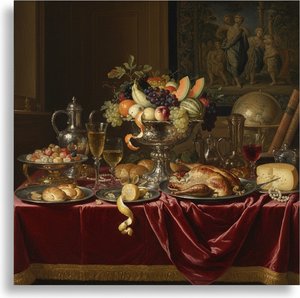
Abraham Hendricksz van Beyeren: Pioneering Dutch Still Life & the Banquet Tradition
Explore the captivating world of Dutch Golden Age still life with Abraham van Beyeren. Discover his innovative techniques, symbolic banquet scenes & lasting influence on art history. Learn about collecting these masterpieces.

Rembrandt's Meesterwerken: De Top 25 – Kunst voor uw Interieur | OriginalUniqueArt
Ontdek de 25 meest iconische schilderijen van Rembrandt van Rijn! Duik in de Gouden Eeuw, bewonder zijn portretten & zelfportretten. Museumkwaliteit reproducties voor uw interieur op OriginalUniqueArt.com. Bekijk de collectie!

Jan Jansz Wijnants: A Study in Dutch Golden Age Still Life & Floral Transience
Explore the captivating world of Jan Wijnants and Dutch Golden Age still life painting. Discover symbolism, masterful techniques & lasting influence on floral art history. Learn more!
