
 Voorvertoning
 Verstuur
 Delen
Delen
 Details bekijken

 Download
 Vergelijkbare items
 Röntgenonderzoek
 Diavoorstelling
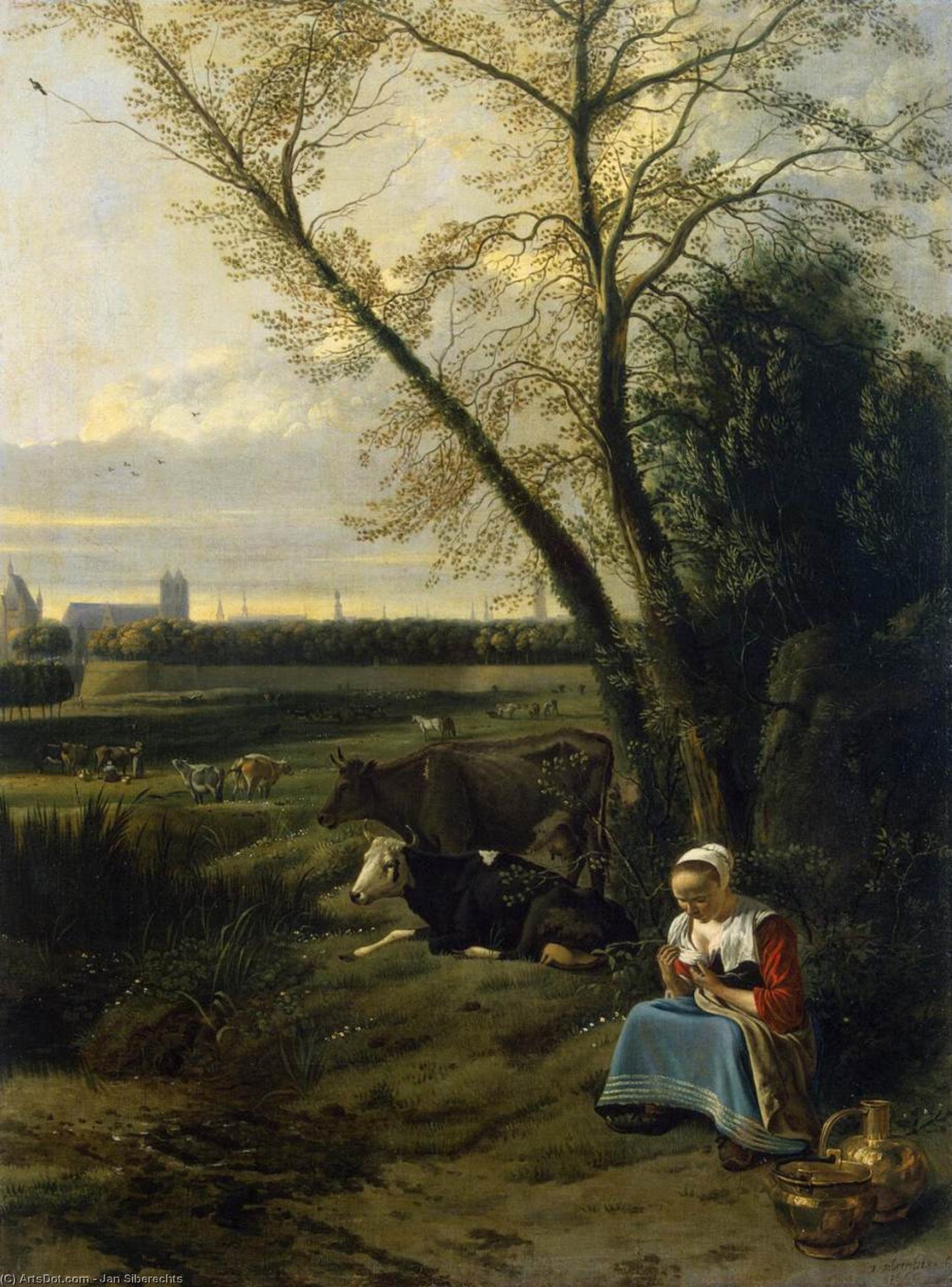
Shepherdess
 Oil On Canvas
- WallArt
- Baroque Landscape
 1660
1660 104.0 x 78.0 cm
 Hermitage Museum
 Lees meer
Koop een digitale afbeelding in hoge resolutie met verbeterde kwaliteit, die veel superieur is aan de online voorvertoning.
Elk bestand wordt met uiterste precisie voorbereid door onze interne specialisten, met behulp van geavanceerde tools en deskundige handmatige retouche. Wij garanderen dat elke afbeelding een uitzonderlijke helderheid, nauwkeurige kleurweergave en verfijnde details bezit.
Het uiteindelijke bestand wordt binnen 72 uur per e-mail geleverd, geoptimaliseerd voor direct gebruik in professionele, redactionele en printomgevingen. Dit is dezelfde kwaliteit waarop vooraanstaande designstudio's, uitgevers en galerieën vertrouwen.
Digitale afbeeldingen
Download een bestand met hoge resolutie voor persoonlijke weergave, afdrukken en creatieve projecten. ( Bestel print Bestel handgeschilderde reproductie)
Inbegrepen bij elke bestelling van een digitale afbeelding
Professionele digitale levering, gegarandeerd
Wanneer u kiest voor OriginalUniqueArt.com, ontvangt u niet alleen een afbeelding – u krijgt een professioneel verbeterd digitaal kunstwerk, met precisie vervaardigd en voorzien van een tevredenheidsgarantie. Dit is alles wat automatisch bij uw bestelling is inbegrepen:

Snelle levering per e-mail
Uw hoogwaardige digitale afbeeldingsbestand wordt binnen 72 uur na bestelling naar u gemaild – klaar voor direct gebruik.

AI-verbeterd digitaal bestand
Uw kunstwerk wordt professioneel geoptimaliseerd met behulp van geavanceerde AI-tools en handmatige bewerkingen, waardoor maximale details, helderheid en kleurnauwkeurigheid worden gegarandeerd.

Gratis levenslange herlevering van digitale afbeeldingen
Je bestand per ongeluk verwijderd of kwijtgeraakt? Geen zorgen – we sturen het u op elk gewenst moment gratis opnieuw toe.

Geen invoerkosten – nooit
Geniet direct van uw kunstwerk zonder invoerrechten, belastingen of verzendkosten – digitale downloads zijn altijd belastingvrij.

Garantie op kleurgetrouwheid
Met behulp van professionele hulpmiddelen en kleurbeheer zorgen wij ervoor dat uw digitale afbeelding de originele kleuren zo nauwkeurig mogelijk weergeeft.

60 dagen tevredenheidsgarantie
Als u niet tevreden bent met uw digitale afbeelding, passen wij deze aan of storten wij 100% terug binnen 60 dagen – zonder vragen gesteld.

100% Geld-terug-garantie
Niet tevreden? Ontvang binnen 60 dagen na ontvangst van uw digitale bestand uw volledige aankoopbedrag terug – zonder vragen te stellen.

Korting bij grote bestellingen
Koop 3 afbeeldingen, bespaar 10% - Koop 5, bespaar 15% - Koop 10+, bespaar 20%. Ideaal voor creatieve projecten, galerieën en bureaus.
Beschrijving verzamelobject
A Pastoral Vision: Jan Siberechts’ “Shepherdess”
Jan Siberechts' "Shepherdess," painted around 1660, isn’t merely a depiction of rural life; it’s a carefully constructed tableau brimming with quiet dignity and an almost palpable sense of serenity. This oil on canvas, currently residing in the Hermitage Museum in St. Petersburg, Russia, offers a glimpse into a world where humanity exists in harmonious balance with nature – a rare and profoundly affecting vision for its time. The painting immediately draws the eye to the central figure, a young shepherdess seated beneath a gnarled, skeletal tree, her posture relaxed yet imbued with an understated grace. She’s not actively engaged in labor; instead, she seems lost in contemplation, holding a small bird – a symbol of innocence and connection to the natural world – gently in her hands.
Siberechts, a Flemish artist working during a period of transition between the Dutch Golden Age and the rise of English landscape painting, skillfully blends influences. His early works, like this one, reveal a clear debt to the Dutch Italianates—artists who had embraced the idealized landscapes of Italy—noting their emphasis on golden light and tranquil scenes. However, Siberechts quickly developed his own distinct style, characterized by meticulous detail and an almost photographic realism, particularly evident in the rendering of textures – from the rough bark of the tree to the soft fur of the cow grazing nearby.
The Language of Light and Color
The painting’s power lies not just in its subject matter but also in Siberechts' masterful use of light and color. The palette is dominated by earthy tones—ochres, browns, and greens—creating a sense of groundedness and connection to the land. Yet, these muted hues are punctuated by vibrant accents – the red bodice of the shepherdess, the blue of her skirt, and the yellow of the bird – which draw the eye and inject a subtle energy into the scene. The light filtering through the branches of the tree casts dappled shadows across the landscape, adding depth and dimension to the composition.
Notably, Siberechts employed a technique known as *chiaroscuro*, skillfully contrasting areas of light and shadow to create a dramatic effect. This is particularly evident in the way he illuminates the shepherdess’s face, highlighting her features and drawing attention to her serene expression. The use of atmospheric perspective—where distant objects appear paler and less distinct—further enhances the sense of depth and space.
Symbolism and Context
Beyond its aesthetic beauty, “Shepherdess” is rich in symbolic meaning. The shepherdess herself represents innocence, purity, and a connection to the natural world – values highly prized during the 17th century. The bird she holds symbolizes hope, freedom, and the fleeting nature of life. The presence of the cow reinforces this pastoral theme, evoking images of abundance and fertility. Considering Siberechts’ later work in England, it's fascinating to note how he retained these core Flemish elements while adapting his style to suit a new audience.
Painted during a period of significant social and political upheaval in Europe, “Shepherdess” offers a respite from the turmoil of the time. It’s a reminder of a simpler way of life—a world where humans lived in harmony with nature and found contentment in the rhythms of rural existence. The painting's enduring appeal lies in its ability to transport us to this idyllic realm, inviting us to pause and reflect on our own relationship with the natural world.
A Legacy of Landscape Painting
Jan Siberechts’ “Shepherdess” holds a significant place in art history as one of the earliest examples of English landscape painting. His meticulous attention to detail, his masterful use of light and color, and his ability to capture the essence of rural life paved the way for future generations of British artists. His work influenced figures like William-Adolphe Bouguereau, whose own depictions of shepherdesses—such as “The Little Shepherdess”—demonstrate a clear debt to Siberechts’ pioneering vision.
Today, "Shepherdess" continues to captivate viewers with its timeless beauty and profound emotional resonance. It stands as a testament to the enduring power of art to transport us to other worlds and remind us of the values that matter most—peace, harmony, and connection to nature.
Kunstenaarsbiografie
A Flemish Vision in England: The Life and Art of Jan Siberechts
Jan Siberechts, born in Antwerp in 1627, occupies a fascinating position in the history of European art—a bridge between the vibrant traditions of Flemish painting and the burgeoning landscape tradition of England. His story is one of artistic development, fortunate patronage, and ultimately, pioneering influence. The son of a sculptor also named Jan Siberechts, he received his initial training within the family workshop, absorbing the skills and aesthetic sensibilities that would form the foundation of his career. By 1648, he had achieved master status in the prestigious Guild of Saint Luke in Antwerp, signaling his recognition as a skilled craftsman. While concrete evidence remains elusive, art historians speculate about a possible sojourn to Italy during the late 1640s or early 1650s. Though unconfirmed, this potential exposure to Italianate landscape painting—with its emphasis on classical compositions and atmospheric perspective—undoubtedly left an imprint on his evolving style, visible in the early works that showcase a delicate balance between Flemish realism and Italianate ideals.Early Training and Artistic Foundations
Siberechts’ formative years were steeped in the artistic heritage of Antwerp, a city renowned for its sculptural tradition and vibrant guild system. His father instilled in him a deep appreciation for craftsmanship and meticulous observation—skills that would prove invaluable throughout his life’s artistic journey. The Guild of Saint Luke provided him with formal training and established standards of excellence, ensuring he mastered the techniques necessary to excel as a painter. Although biographical details remain sparse, scholarly research suggests Siberechts may have traveled briefly to Italy during this period, immersing himself in the stylistic innovations emerging from Rome. This encounter would undoubtedly broaden his artistic horizons and introduce him to influential figures like Nicolaes Berchem and Karel Dujardin—masters of pastoral landscapes who skillfully blended Flemish realism with Italianate ideals. Their works served as a crucial springboard for Siberechts’ own developing style, shaping his approach to composition, color palette, and atmospheric rendering.The Influence of Dutch Masters
Siberechts' artistic sensibilities were profoundly shaped by the prevailing artistic currents of the Netherlands during his early career. Nicolaes Berchem and Karel Dujardin—artists who had achieved considerable renown in Rome—were particularly admired for their depictions of idyllic rural scenes bathed in soft, diffused light. Siberechts meticulously studied their techniques, absorbing their mastery of chiaroscuro (the interplay of light and shadow) and their ability to convey a sense of tranquility and beauty. These Dutch masters championed the use of atmospheric perspective—a technique that simulates the effects of distance by blurring colors and reducing detail—creating depth and realism within their canvases. Siberechts adopted this approach, elevating his landscapes beyond mere topographical representations into immersive experiences for the viewer.From Flemish Countryside to English Estates
The 1660s marked a pivotal moment in Siberechts’ artistic trajectory. He decisively turned his gaze towards the landscapes of Flanders—a region characterized by rolling hills, fertile farmland, and picturesque villages—capturing their essence with remarkable precision. However, Siberechts didn't merely reproduce what he saw; he imbued his paintings with an emotional resonance that transcended mere visual accuracy. He populated his canvases with robust figures—often women engaged in everyday tasks—dressed in brilliantly colored clothing that punctuated the verdant scenes. These figures weren’t simply decorative elements; they served as conduits for conveying human emotion and embodying the rhythms of rural life. Siberechts skillfully manipulated water reflections, creating visual echoes and adding depth to his compositions. This technique mirrored the stylistic innovations championed by Berchem and Dujardin—artists who had mastered the art of capturing atmospheric effects with breathtaking subtlety.A Pioneer in English Landscape Painting
Siberechts’ artistic journey took an unexpected turn when he accepted an invitation from George Villiers, the Second Duke of Buckingham, to decorate Cliveden House—a lavish estate nestled on the banks of the Thames River. This commission presented him with a unique opportunity to experiment with new approaches to landscape painting and establish himself as a leader in this burgeoning genre. He skillfully employed a technique known as “aerial perspective,” simulating the effects of distance by blurring colors and reducing detail—a method that distinguished his work from earlier Dutch landscapes. Siberechts’ meticulous attention to detail—combined with his masterful use of color and light—created canvases that captured not only the physical appearance of Cliveden but also its spirit and grandeur. His subsequent commissions for aristocratic patrons solidified his reputation as a visionary artist who understood how to convey emotion and elevate landscape painting beyond mere topographical representation. He became recognized as the “father of British landscape,” profoundly influencing generations of artists who followed. ## Legacy and Artistic Significance Jan Siberechts’ contribution to art history is undeniable. His pioneering exploration of aerial perspective—a technique that would become synonymous with English landscape painting—transformed artistic conventions and elevated visual storytelling. Approximately one hundred works attributed to Siberechts have survived, offering invaluable insight into his stylistic evolution and artistic vision. He skillfully blended Flemish realism with Italianate ideals—a synthesis that reflected the broader cultural currents shaping Europe during the Baroque period. His landscapes continue to inspire admiration for their beauty and technical brilliance, serving as enduring reminders of a pivotal moment in artistic history. Siberechts’ legacy extends beyond his individual paintings; he established a precedent for documenting English estates with sensitivity and artistry—a tradition that continues to resonate with viewers today.
Jan Siberechts
1627 - 1703 , België
Belangrijkste feiten
- Artistic Movement Or Style: Landschapsschilderkunst
- Artists Or Movements Influenced By This Artist: ['David Teniers de Jeune']
- Artists Who Influenced This Artist:
- Nicolaes Berchem
- Karel Dujardin
- Date Of Birth: 1627
- Date Of Death: 1703
- Full Name: Jan Siberechts
- Nationality: Nederlands
- Notable Artworks:
- Het Ford
- PAYSAGE AVEC FIGURES
- Belsize Estate
- Place Of Birth: Antwerpen, België

