
 Voorvertoning
 Verstuur
 Delen
Delen
 Details bekijken
 Gids
Gids

 Download
 Vergelijkbare items
 Röntgenonderzoek
 Diavoorstelling
 Vraag & antwoord
 Statistieken
LE MENDIANT


 Lees meer
Ontvang een bestand dat klaar is voor drukwerk en de kwaliteit van het online voorbeeld ver overstijgt. Elke digitale afbeelding die wij verkopen, is afkomstig van een high-resolution master uit onze database — meestal tussen de 5.000 en 15.000 pixels breed — zodat u met vertrouwen groot kunt afdrukken, nauwkeurig kunt bijsnijden of fijne details kunt reproduceren.
Geen enkel bestand verlaat ons atelier onbewerkt. Een digitaal expert controleert de kleuren aan de hand van het originele schilderij en corrigeert deze indien nodig, om vervolgens de helderheid en details te verbeteren met professionele retoucheertechnieken — waarbij de penseelstreek en stijl van de kunstenaar altijd strikt worden gerespecteerd. Het resultaat is een afbeelding die oogt als het schilderij zelf, en niet als een gescande foto met een filter.
U keurt de afbeelding goed voordat de bestelling wordt afgerond: onze expert stuurt u binnen 72 uur een e-mail ter beoordeling. Niet tevreden? Vraag om aanpassingen of correcties, of vraag een terugbetaling aan als de kwaliteit niet aan de verwachtingen voldoet.
Dit is de kwaliteit waarop uitgevers, designstudio's, galeries en drukkerijen vertrouwen.
Digitale afbeeldingen
Download een bestand met hoge resolutie voor persoonlijke weergave, afdrukken en creatieve projecten. ( Schakel over naar print Bestel handgeschilderde reproductie)
Inbegrepen bij elke bestelling van een digitale afbeelding
Professionele digitale levering, gegarandeerd
Wanneer u kiest voor OriginalUniqueArt.com, ontvangt u niet alleen een afbeelding – u krijgt een professioneel verbeterd digitaal kunstwerk, met precisie vervaardigd en voorzien van een tevredenheidsgarantie. Dit is alles wat automatisch bij uw bestelling is inbegrepen:

Snelle levering per e-mail
Uw hoogwaardige digitale afbeeldingsbestand wordt binnen 72 uur na bestelling naar u gemaild – klaar voor direct gebruik.

AI-verbeterd digitaal bestand
Uw kunstwerk wordt professioneel geoptimaliseerd met behulp van geavanceerde AI-tools en handmatige bewerkingen, waardoor maximale details, helderheid en kleurnauwkeurigheid worden gegarandeerd.

Gratis levenslange herlevering van digitale bestanden
Je bestand per ongeluk verwijderd of kwijtgeraakt? Geen zorgen – we sturen het u op elk gewenst moment gratis opnieuw toe.

Geen invoerkosten – nooit
Geniet direct van uw kunstwerk zonder invoerrechten, belastingen of verzendkosten – digitale downloads zijn altijd belastingvrij.

Garantie op kleurgetrouwheid
Met behulp van professionele hulpmiddelen en kleurbeheer zorgen wij ervoor dat uw digitale afbeelding de originele kleuren zo nauwkeurig mogelijk weergeeft.

100 dagen tevredenheidsgarantie
Mocht u niet tevreden zijn met uw digitale afbeelding, dan passen wij deze aan of storten wij 100% terug binnen 100 dagen – zonder vragen te stellen.

100% Geld-terug-garantie
Niet tevreden? Ontvang een volledige terugbetaling binnen 100 dagen na ontvangst van uw digitale bestand – zonder vragen te stellen.

Korting bij grote bestellingen
Koop 3 afbeeldingen, bespaar 10% - Koop 5, bespaar 15% - Koop 10+, bespaar 20%. Ideaal voor creatieve projecten, galerieën en bureaus.
Jan Miel’s “Le Mendiant”: A Window Into Baroque Dignity Amidst Poverty
The artwork "Le Mendiant," attributed to Jan Miel (1599 – 1663), stands as a poignant testament to the artistic spirit of the Dutch Golden Age and its engagement with broader humanist concerns. Painted circa 1630, this genre scene—a hallmark of Miel’s oeuvre during his formative years in Rome—captures a moment of quiet contemplation within a bustling tavern interior, offering viewers an arresting glimpse into both social realities and artistic sophistication.Composition and Style: Baroque Restraint Within Classical Framework
Miel's stylistic approach skillfully blends influences from Flemish masters like Anthony van Dyck with the burgeoning grandeur of Italian Baroque aesthetics. The horizontal orientation of the canvas immediately establishes a sense of stability, mirroring the formal balance characteristic of Baroque compositions. However, unlike the opulent theatricality often associated with Rome at the time, Miel employs subtle tonal gradations and muted colors—primarily grayscale—to convey an atmosphere of understated dignity. This deliberate restraint serves to heighten the emotional impact of the depicted scene: a beggar humbly requesting alms amidst a group of patrons engaged in conversation. The artist’s meticulous attention to detail—evident in the rendering of textures, particularly on the tavern table and the livestock visible in the background—underscores Miel's commitment to realism while simultaneously grounding the image within a broader artistic tradition.Detailed Examination: Technique and Materials
The painting utilizes oil paint on canvas with considerable skill. Brushstrokes are perceptible but carefully blended, creating a smooth surface that enhances the illusion of depth and luminosity despite the absence of vibrant hues. Layers of tonal variation—a technique favored by Miel—are skillfully applied to sculpt form and delineate contours, capturing the nuances of light and shadow within the tavern setting. The artist’s meticulous observation of natural forms—reflected in the depiction of the cows and sheep—demonstrates a profound understanding of classical principles of perspective and anatomical accuracy.Historical Context: Rome and Beyond – Miel's Artistic Journey
Jan Miel’s artistic development unfolded primarily in Rome during the 1630s, where he honed his craft under the patronage of Charles Emanuel II, Duke of Savoy—a connection that cemented his reputation as a court artist. This period witnessed a significant shift towards classicizing tendencies within Miel's oeuvre, mirroring the broader cultural revival occurring across Europe. The artwork’s subject matter – depicting poverty alongside social interaction – speaks to the humanist ideals prevalent during the Baroque era, reflecting an interest in portraying human experience with compassion and intellectual rigor.Symbolism: Dignity Amidst Adversity
“Le Mendiant” transcends mere visual representation; it embodies a deeper symbolic resonance. The beggar’s posture—characterized by humility and supplication—serves as a poignant reminder of the vulnerability inherent within the human condition. Simultaneously, the gathering of people around the table symbolizes communal life and social responsibility. The inclusion of livestock reinforces the artwork's connection to rural existence and underscores its engagement with themes of moral contemplation. Ultimately, Miel’s masterpiece invites viewers to consider not only the aesthetic beauty of the scene but also its profound ethical implications—a testament to the enduring power of art to illuminate both the grandeur and fragility of human experience.- Artist: Jan Miel
- Birth Year: 1599
- Death Year: 1663
- Birth City: Beveren
- Birth Country: Belgium
Additional Resources:
LE MENDIANT – Louvre site des collections 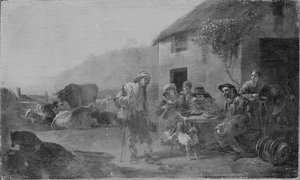
jan josef horemans the elder – Belgian painter (1682-1759) known for detailed interiors & anatomical precision.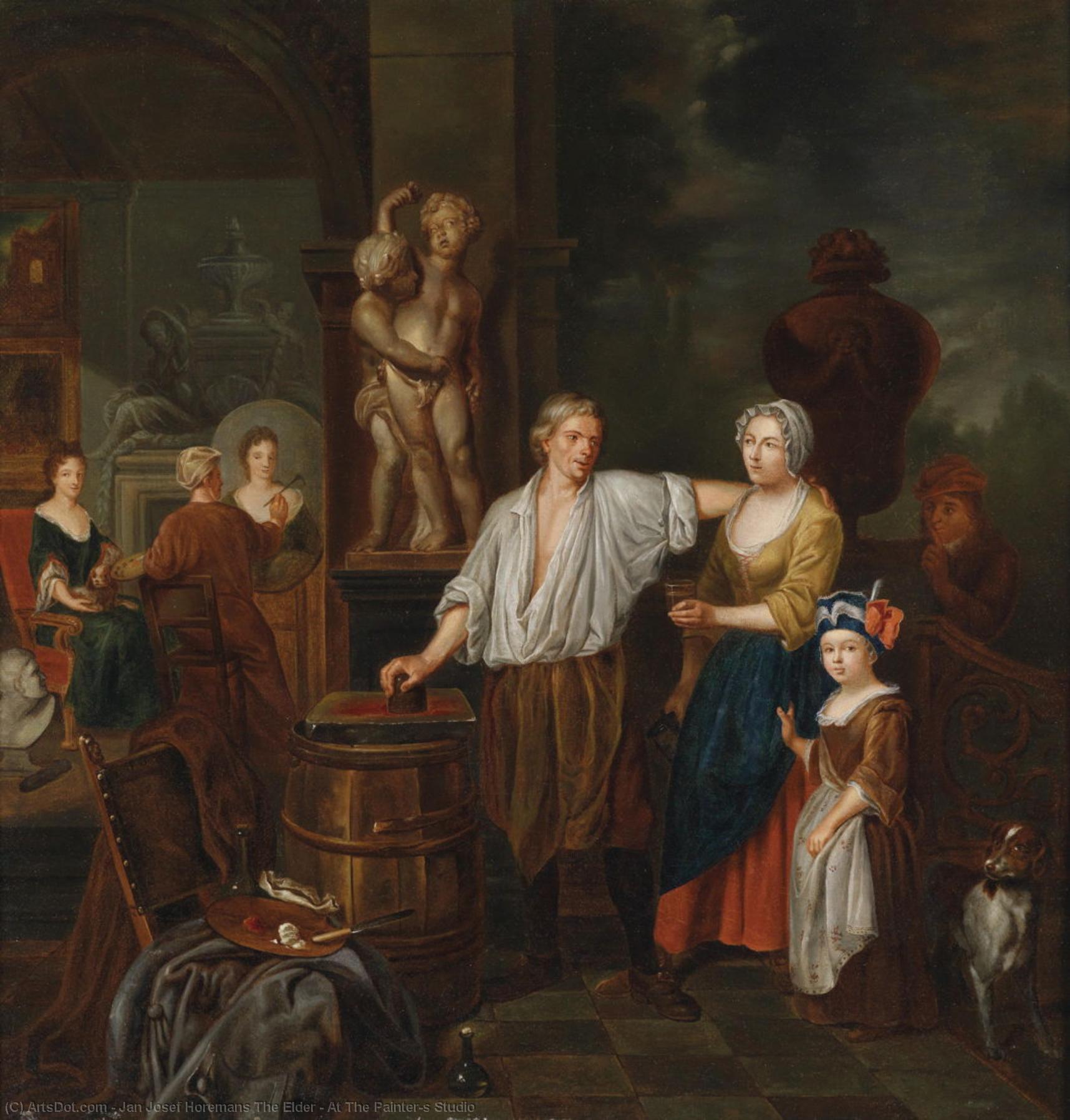
jan le ducq – Explore the captivating landscapes & animal paintings of Jan Le Ducq, a Dutch master known for his dog portraits.
Jan Miel – Cavaliere della Vita, (Anvers, 1599 - Turin, 1663) Court artist to Charles Emanuel II, Duke of Savoy.
Louvre, Paris, France – INV 1447 and MR 816 ( )
)

File:Jan Miel - The beggar.JPG – Wikimedia Commons 
Louvre Cartel – Foucart, Jacques, Catalogue des peintures flamandes et hollandaises du musée du Louvre, Gallimard / Louvre éditions, 2009, p. 182, ill. n&bCatalogue des peintures flamandes et hollandaises
Veelgestelde vragen
Hoe verhoudt de stijl van "LE MENDIANT" zich tot het tijdperk van de maker?
"LE MENDIANT" door Jan Miel behoort tot de Dutch Golden Age Painting-stroming, uit de Vroegmoderne tijd-periode van de maker.
Waarom heeft het kunstwerk "LE MENDIANT" deze auteursrechtelijke status?
De auteursrechtstatus van "LE MENDIANT" - bevindt zich in het publiek domein - de auteursrechten zijn verlopen - is gebaseerd op het overlijden van de kunstenaar in 1663.
Zijn de kleuren van "LE MENDIANT" door Jan Miel levendig of juist gedempt?
"LE MENDIANT" door Jan Miel is vastgelegd met een Muted verzadiging en een Monochromatic intensiteit.
Kunstenaarsbiografie
Jan Miel: De brug tussen Nederlands realisme en barokke grandeur
Jan Miel (1599–1663) staat te boek als een spilfiguur in het artistieke landschap van de zeventiende eeuw, waarbij hij de fascinerende samensmelting van de Vlaamse traditie en Italiaanse innovatie belichaamde. Geboren in Beveren, België—hoewel Antwerpen en 's-Hertogenbosch eveneens als geboorteplaats in aanmerking komen—blijft het vroege leven van Miel gehuld in relatieve obscuriteit, waardoor biografische details schaars zijn. Wat echter naar voren komt uit wetenschappelijk onderzoek, is een bewonderenswaardige artistieke reis, gekenmerkt door stilistische evolutie en samenwerkingen die zijn plaats verstevigden binnen het levendige culturele milieu van Rome en Turijn.
Zijn vormende jaren bracht hij door met het verfijnen van zijn vakmanschap, voornamelijk in Antwerpen, waar hij de invloeden van prominente Vlaamse meesters zoals Anthony van Dyck in zich opnam. Hoewel de exacte omvang van zijn opleiding moeilijk te achterhalen is, heeft deze ongetwijfeld een waardering voor minutieuze observatie en verfijnde techniek in hem geworteld—kwaliteiten die een groot deel van zijn latere oeuvre zouden kenmerken. Deze fundamentele basis in klassieke tekenkunst en portrettering bood de essentiële gereedschapskist voor een carrière die uiteindelijk regionale grenzen zou overstijgen.
De Romeinse transformatie en de geest van de Bamboccianti
Miels aankomst in Rome rond 1636 markeerde een transformatief moment in zijn artistieke traject. Hij sloot zich snel aan bij de Bentvueghels, een invloedrijke vereniging van Nederlandse en Vlaamse kunstenaars die in de Eeuwige Stad verbleven. Binnen deze broederschap nam hij de memorabele bijnaam ‘bieco’ aan, een moniker die verwees naar zijn kenmerkende scheelzien—een eigenschap die synoniem zou worden met zijn artistieke persona. Deze verbondenheid legde de basis voor diepe connecties binnen een bredere kunstgemeenschap die sterk werd beïloed door de Bamboccianti-stijl van Pieter van Laer.
Deze beweging wijdde zich aan het afbeelden van scènes uit het dagelijks leven van de lagere klassen in Rome en omstreken, waarbij de geïdealiseerde grandeur van de Hoogrenaissance werd vermeden ten gunste van iets veel rauwer en directer. Miel omarmde deze trend met hart en ziel en produceerde meeslepende genrestukken die de geest van het stedelijke bestaan vastlegden met een opmerkelijk realisme en gevoeligheid. Zijn werken bevatten vaak:
- Levendige straatscènes bevolkt door reizigers, kooplieden en arbeiders.
- Een meesterlijk gebruik van licht om de stoffige, zonovergoten atmosfeer van Romeinse steegjes op te roepen.
- Het subtiele samenspel van menselijke emotie binnen drukke, chaotische omgevingen.
- Een minutieuze aandacht voor de texturen van stof, steen en aarde.
Evolutie naar classicisme en hofgrootheid
Naarmate zijn carrière vorderde, onderging Miels artistieke visie een significante metamorfose. Hoewel hij een meester bleef in de genrestukken, begon hij zich weg te bewegen van het rauwe realisme van de Bamboccianti richting meer classicistische historiestukken. Deze verschuiving weerspiegelde een bredere trend in de Europese kunst, waarbij de ongebreidelde energie van de Barok steeds meer werd getemperd door een verlangen naar orde, adel en klassieke allegorie.
Deze evolutie leidde hem uiteindelijk naar prestigieuze aanstellingen, waarvan de meest opmerkelijke die als hofschilder van Charles Emanuel II, Hertog van Savoye, was. In dienst van het hof van Turijn kreeg het werk van Miel een formeler en monumentaler karakter. De intimiteit van zijn eerdere Romeinse scènes maakte plaats voor composities van grotere schaal en complexiteit, ontworpen om de macht en prestige van zijn koninklijke beschermheer te weerspiegelen. Deze periode vertegenwoordigt het hoogtepunt van zijn professionele prestaties, waarin zijn Vlaamse oog voor detail samensmolt met de grootschalige, meeslepende verhalen die de Europese aristocratie vereiste.
De historische betekenis van Jan Miel ligt in zijn vermogen om deze uiteenlopende werelden te navigeren. Hij was een kunstenaar die schoonheid kon vinden in de nederige strijd van een Romeinse straatjongen en waardigheid in de epische verhalen uit de oudheid. Door de kloof te overbruggen tussen het minutieuze realisme van het Noorden en het dramatische classicisme van het Zuiden, liet Miel een onuitwisbare stempel achter op de canon van de zeventiende eeuw, waarmee hij zijn nalatenschap als een ware kosmopoliet van het baroktijdperk veiligstelde.
Jan Miel
1599 - 1663 , België
Belangrijkste feiten
- Artistic Movement Or Style: Bamboccianti, Classiciserend
- Artists Or Movements Influenced By This Artist: ['Pieter van Laer']
- Artists Who Influenced This Artist: ['Anthony van Dyck']
- Date Of Birth: 1599 Beveren België
- Date Of Death: 1663
- Full Name: Jan Miel
- Nationality: Vlaams
- Notable Artworks:
- Landschap met een strijd tussen twee rammen
- Romeinse kalkoven met boeren die gokken
- Place Of Birth: Beveren België