
 Bekijk op ware grootte
 Verstuur
 Delen
Delen
 Details bekijken

 Download
 Vergelijkbare werken
 Röntgenonderzoek
 Diavoorstelling
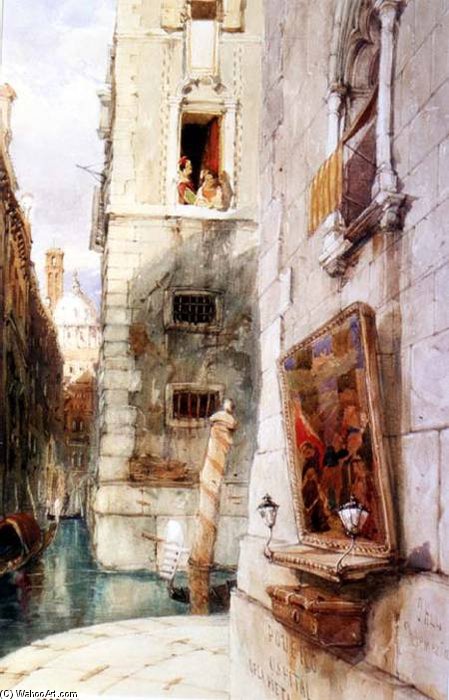
Venice

 Lees meer
Koop een digitale afbeelding in hoge resolutie met verbeterde kwaliteit, die veel superieur is aan de online voorvertoning.
Elk bestand wordt met uiterste precisie voorbereid door onze interne specialisten, met behulp van geavanceerde tools en deskundige handmatige retouche. Wij garanderen dat elke afbeelding een uitzonderlijke helderheid, nauwkeurige kleurweergave en verfijnde details bezit.
Het uiteindelijke bestand wordt binnen 72 uur per e-mail geleverd, geoptimaliseerd voor direct gebruik in professionele, redactionele en printomgevingen. Dit is dezelfde kwaliteit waarop topontwerpstudio's, uitgevers en galerieën vertrouwen.
Digitale afbeeldingen
Download een bestand met hoge resolutie voor persoonlijke weergave, afdrukken en creatieve projecten. ( Bestel een print Bestel een handgeschilderde reproductie van dit verzamelobject)
Inbegrepen bij elke bestelling van een digitale afbeelding
Professionele digitale levering, gegarandeerd
Wanneer u kiest voor OriginalUniqueArt.com, ontvangt u niet alleen een afbeelding – u krijgt een professioneel verbeterd digitaal kunstwerk, met precisie vervaardigd en voorzien van een tevredenheidsgarantie. Dit is alles wat automatisch bij uw bestelling is inbegrepen:

Direct per e-mail ontvangen
Uw hoogwaardige digitale afbeeldingsbestand wordt binnen 72 uur na bestelling naar u gemaild – klaar voor direct gebruik.

Met AI verbeterd digitaal bestand
Uw kunstwerk wordt professioneel geoptimaliseerd met behulp van geavanceerde AI-tools en handmatige bewerkingen, waardoor maximale details, helderheid en kleurnauwkeurigheid worden gegarandeerd.

Gratis levenslange herlevering
Je bestand per ongeluk verwijderd of kwijtgeraakt? Geen zorgen – we sturen het u op elk gewenst moment gratis opnieuw toe.

Geen invoerkosten – nooit
Geniet direct van uw kunstwerk zonder invoerrechten, belastingen of verzendkosten – digitale downloads zijn altijd belastingvrij.

Garantie op kleurgetrouwheid
Met behulp van professionele hulpmiddelen en kleurbeheer zorgen wij ervoor dat uw digitale afbeelding de originele kleuren zo nauwkeurig mogelijk weergeeft.

60 dagen tevredenheidsgarantie
Als u niet tevreden bent met uw digitale afbeelding, passen wij deze aan of storten wij 100% terug binnen 60 dagen – zonder vragen gesteld.

100% Geld-terug-garantie
Niet tevreden? Ontvang binnen 60 dagen na ontvangst van uw digitale bestand uw volledige aankoopbedrag terug – zonder vragen te stellen.

Korting bij grote bestellingen
Koop 3 afbeeldingen, bespaar 10% - Koop 5, bespaar 15% - Koop 10+, bespaar 20%. Ideaal voor creatieve projecten, galerieën en bureaus.
Biografie van de kunstenaar
Edward Calvert: A Quiet Master of the Early 19th Century
The name Edward Calvert might not immediately resonate with art history enthusiasts, yet his contribution to British printmaking and painting during the early 1800s deserves recognition. Born in Greenlaw, Scotland, on September 20, 1799, into a family steeped in artistic tradition – his father, Charles Willson Peale, was a renowned naturalist and museum curator – Calvert’s life unfolded as a fascinating blend of scientific observation and artistic skill. Unlike the flamboyant figures often associated with the era, Calvert's legacy lies in his meticulous depictions of rural life, particularly scenes of cattle on the Scottish countryside, rendered with an understated elegance and remarkable detail.
Calvert’s early education likely involved exposure to his father’s museum, a hub for collecting and displaying specimens. This immersion in natural history undoubtedly shaped his artistic sensibilities, fostering a keen eye for observation and a deep appreciation for the beauty of the natural world. He formally studied at the Royal Academy in Edinburgh, a common path for aspiring artists of the time, honing his technical skills before embarking on his independent career.
A Life Dedicated to Printmaking
Calvert’s primary medium was watercolor and engraving, techniques he mastered with considerable skill. His most celebrated works depict scenes of rural Scotland, specifically cattle grazing in expansive landscapes. These aren't dramatic, heroic portrayals; rather, they are intimate studies of animals in their natural habitat, capturing the subtle shifts of light, texture, and mood. The compositions are often simple, focusing on the relationship between animal and environment, conveying a sense of tranquility and timelessness.
Unlike many artists of his era who sought fame through grand historical or mythological subjects, Calvert’s focus remained firmly rooted in the everyday. This dedication to depicting ordinary scenes—a farmer tending his flock, cattle browsing in a field—is what distinguishes his work and contributes to its enduring appeal. His prints were not intended for large-scale display; they were created for private collections and circulated amongst a discerning clientele who appreciated his quiet mastery.
Influences and Artistic Style
Calvert’s artistic style is often described as ‘rustic’ or ‘deliberately understated.’ He drew inspiration from the works of earlier landscape painters, particularly those associated with the Scottish School of Landscape painting. However, unlike some of his predecessors, Calvert avoided overtly romanticizing nature. Instead, he presented a more realistic and objective view, emphasizing the inherent beauty of the countryside without resorting to sentimental embellishments.
The influence of his father’s scientific pursuits is also evident in Calvert's work. His meticulous attention to detail—the texture of fur, the movement of hooves, the play of light on water—reflects a naturalist’s eye for observation and accuracy. This combination of artistic skill and scientific rigor is what elevates Calvert’s prints beyond mere depictions of scenery; they are carefully constructed studies of animal behavior and the natural world.
Later Years and Legacy
Edward Calvert continued to work as an artist throughout his life, producing a substantial body of prints and paintings. He remained largely unknown during his lifetime, but his work gradually gained recognition in the 20th century, particularly through the efforts of art historians who appreciated its quiet beauty and understated elegance.
Today, Edward Calvert is recognized as one of the most important printmakers of the early 19th century. His depictions of rural Scotland offer a valuable glimpse into a bygone era, capturing the essence of a landscape that has largely disappeared. His legacy lies not in grand gestures or dramatic scenes, but in his quiet mastery of watercolor and engraving—a testament to the enduring power of observation and artistic skill.
Notable Works
- Cattle on the Ridge of a Hill: Perhaps his most famous work, exemplifying his meticulous attention to detail and ability to capture the essence of rural life.
- Shoreham: A quintessential example of Calvert’s style, showcasing his skill in depicting animals within their natural environment.
- Various other pastoral scenes featuring cattle, sheep, and horses, demonstrating a consistent approach to subject matter and technique.
Calvert's work is held in collections at the Tate Gallery in London and other institutions, ensuring that his quiet contributions to British art continue to be appreciated by generations of viewers.

james holland
1799 - 1870
Kerngegevens
- Artistic Movement Or Style: Printmaker, Painter
- Date Of Birth: 20 September 1799
- Date Of Death: 14 July 1883
- Full Name: Edward Calvert
- Nationality: English
- Notable Artworks:
- Cattle on the Ridge of a Hill
- Shoreham / The Ancients
- Place Of Birth: England

