

 Voorvertoning
 Verstuur
 Delen
Delen
 Details bekijken

 Download
 Vergelijkbare items
 Röntgenonderzoek
 Diavoorstelling
 Statistieken
Landscape
 Impressionism
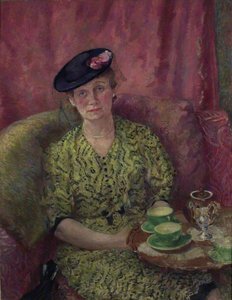
 34.0 x 44.0 cm
 Lees meer
Koop een digitale afbeelding in hoge resolutie met verbeterde kwaliteit, die veel superieur is aan de online voorvertoning.
Elk bestand wordt met uiterste precisie voorbereid door onze interne specialisten, met behulp van geavanceerde tools en deskundige handmatige retouche. Wij garanderen dat elke afbeelding een uitzonderlijke helderheid, nauwkeurige kleurweergave en verfijnde details bezit.
Het uiteindelijke bestand wordt binnen 72 uur per e-mail geleverd, geoptimaliseerd voor direct gebruik in professionele, redactionele en printomgevingen. Dit is dezelfde kwaliteit waarop vooraanstaande designstudio's, uitgevers en galerieën vertrouwen.
Digitale afbeeldingen
Download een bestand met hoge resolutie voor persoonlijke weergave, afdrukken en creatieve projecten. ( Schakel over naar print Bestel handgeschilderde reproductie)
Inbegrepen bij elke bestelling van een digitale afbeelding
Professionele digitale levering, gegarandeerd
Wanneer u kiest voor OriginalUniqueArt.com, ontvangt u niet alleen een afbeelding – u krijgt een professioneel verbeterd digitaal kunstwerk, met precisie vervaardigd en voorzien van een tevredenheidsgarantie. Dit is alles wat automatisch bij uw bestelling is inbegrepen:

Snelle levering per e-mail
Uw hoogwaardige digitale afbeeldingsbestand wordt binnen 72 uur na bestelling naar u gemaild – klaar voor direct gebruik.

AI-verbeterd digitaal bestand
Uw kunstwerk wordt professioneel geoptimaliseerd met behulp van geavanceerde AI-tools en handmatige bewerkingen, waardoor maximale details, helderheid en kleurnauwkeurigheid worden gegarandeerd.

Gratis levenslange herlevering van digitale afbeeldingen
Je bestand per ongeluk verwijderd of kwijtgeraakt? Geen zorgen – we sturen het u op elk gewenst moment gratis opnieuw toe.

Geen invoerkosten – nooit
Geniet direct van uw kunstwerk zonder invoerrechten, belastingen of verzendkosten – digitale downloads zijn altijd belastingvrij.

Garantie op kleurgetrouwheid
Met behulp van professionele hulpmiddelen en kleurbeheer zorgen wij ervoor dat uw digitale afbeelding de originele kleuren zo nauwkeurig mogelijk weergeeft.

100 dagen tevredenheidsgarantie
Als u niet tevreden bent met uw digitale afbeelding, passen wij deze aan of storten wij 100% terug binnen 100 dagen - zonder vragen te stellen.

100% Geld-terug-garantie
Niet tevreden? Ontvang een volledige terugbetaling binnen 100 dagen na ontvangst van uw digitale bestand - zonder vragen te stellen.

Korting bij grote bestellingen
Koop 3 afbeeldingen, bespaar 10% - Koop 5, bespaar 15% - Koop 10+, bespaar 20%. Ideaal voor creatieve projecten, galerieën en bureaus.
Kunstenaarsbiografie
A Life of Color and Conviction
The story of James Bolivar Manson is one of profound defiance and the relentless pursuit of aesthetic truth. Born in 1879 amidst the bustling streets of Brixton, London, Manson carried a name that whispered of revolutionary grandeur, being named after the liberator Simón Bolívar. Raised in a household where the written word reigned supreme—his father serving as a prominent literary editor—Manson was surrounded by the intellectual currents of the Victorian era. Yet, beneath the structured expectations of a scholarly lineage, there beat the heart of a painter. Despite his father’s deep-seated reservations regarding the stability of an artistic vocation, Manson refused to let his creative spirit be stifled by the mundane. His early years were marked by a struggle between duty and desire, as he navigated the uninspiring corridors of Newnes Publishing and the rigid atmosphere of a bank clerk, roles that felt like gilded cages to a man destined for the canvas.
It was through a disciplined commitment to his craft that Manson eventually broke free from his clerical shackles. Studying at the Heatherley School of Fine Art and the Lambeth School of Art, he sought to master the nuances of light and form. A pivotal influence during these formative years was Lilian Beatrice Laugher, a violinist whose connection to the European musical elite provided Manson with a window into broader artistic movements. In a moment of legendary cinematic flair in 1903, Manson symbolically discarded his professional hat upon a pole, signaling his irrevocable commitment to the life of an artist. This transition marked the beginning of a career defined by a delicate balance between administrative responsibility and painterly passion.
The Impressionist Bloom
As his technique matured, Manson became celebrated for his ability to breathe life into the ephemeral beauty of the natural world. He found his true calling in the realm of floral still lifes, where he could employ an Impressionist vocabulary to capture the fleeting essence of a blossom. His works are characterized by a vibrant use of color and a rhythmic, expressive brushstroke that suggests movement even within the stillness of a vase. Whether depicting the bold textures of tulips or the soft, layered petals of spring blooms, Manson possessed a rare ability to translate botanical detail into emotional resonance. His approach was not merely about botanical accuracy but about capturing the light that dances upon a petal and the atmosphere that surrounds a bouquet.
While his mastery of flowers brought him acclaim, his career was also shaped by his significant, albeit complex, tenure at the Tate Gallery. Serving as director from 1930 to 1938, Manson navigated a period of intense transition in the art world. He was a progressive force within the institution, championing Impressionism and pushing for more modern art policies than his predecessors. However, this period was also marked by personal struggle and professional tension. While he embraced the light-filled beauty of Impressionism, he remained somewhat resistant to the more radical shifts of Surrealism and German Expressionism, a stance that occasionally placed him at odds with the burgeoning avant-garde. This duality—the administrator of a great institution and the sensitive painter of flowers—defined the unique tension of his professional life.
Legacy of the Floral Visionary
In his later years, Manson returned to the purity of his original passion. Retiring from the administrative rigors of the Tate due to ill health, he retreated into the quiet, meditative world of flower painting. This period allowed him to refine his style, producing works that remained deeply rooted in the Impressionist tradition while achieving a profound sense of intimacy. His legacy is not found merely in the halls of museum administration, but in the enduring vitality of his canvases. To look upon a Manson still life is to witness a celebration of life’s most delicate moments, preserved through a lifetime of dedication.
The historical significance of James Bolivar Manson lies in his role as a bridge between eras. He stood at the intersection of Victorian tradition and modern sensibility, bringing a sense of grace and light to the British art scene. His life serves as a testament to the power of following one's true calling, even when faced with the weight of expectation. Through his eyes, we see:
- The Beauty of Impermanence: His ability to capture the transient glory of flowers through layered textures and light.
- Artistic Resilience: The courage to abandon a secure clerical life for the uncertain path of a creator.
- Institutional Evolution: His contribution to the Tate Gallery's shift toward embracing Impressionist aesthetics.
- A Harmonious Synthesis: The blending of meticulous detail with the loose, emotive brushwork of the Impressionist movement.
James Bolivar Manson
1879 - 1945
Belangrijkste feiten
- Artistic Movement Or Style: Impressionism
- Artists Or Movements Influenced By This Artist: ['Post-Impressionism']
- Artists Who Influenced This Artist: ['Joachim']
- Date Of Birth: 1879
- Date Of Death: 1945
- Full Name: James Bolivar Manson
- Nationality: British
- Notable Artworks:
- Flower Piece
- Still Life, Tulips in a Blue Jug
- Michaelmas Daisies
- Place Of Birth: Brixton, London