Menu

() ·

A painting made for you, by hand

Self-portrait

Handgemaakte olieverfreproductie

Met de hand geschilderd in olieverf op canvas in uw gewenste maat en lijst, op bestelling gemaakt door onze kunstenaars. ( Schakel over naar print Schakel over naar digitale afbeeldingen)

Beschrijving verzamelobject

Biografie kunstenaar

Ontdek James Whistler (1834-1903): een Amerikaanse kunstenaar die de esthetiek veroverde met 'art voor kunst's sake'. Bekijk zijn iconische nocturnes, portretten & het beroemde 'Whistler’s Mother'.

from ·

Chapter 1

How large should it be?

Slide to change the size; the picture on the left shows the frame at its real width. The proportions of the original are kept.

Standaardformaat
op maat gemaakt
CM
INCH

Kies uit onze vooraf ingestelde maten die overeenkomen met de originele verhoudingen van het kunstwerk.

breedte
hoogte

Voer de breedte en hoogte in die u nodig heeft, passend bij uw lijst of uw muur. Omdat dit handgeschilderd is, kan de kunstenaar bij een afmeting met een andere beeldverhouding iets meer rondom het schilderij schilderen of juist iets meer weglaten — u kiest zelf. Wij sturen u een digitaal mockup ter goedkeuring voordat het schilderwerk begint. De afbeelding die op deze pagina wordt getoond, is niet het uiteindelijke resultaat — alleen de mockup geeft dit weer.


Chapter 2

How should it arrive?

Choose the edges of the stretched canvas

Choose your frame

Corner sample of the WhiteWrap canvas edge finish, stretched on massief hout bars
White €1
Corner sample of the BlurSideWrap canvas edge finish, stretched on massief hout bars
Blurside €1
Corner sample of the ExtendedWrap canvas edge finish, stretched on massief hout bars
Extended €1
Corner sample of the P118B picture frame: gegoten polystyreen, 5 cm wide and 3 cm thick
P118B €10
Corner sample of the P118H picture frame: gegoten polystyreen, 5 cm wide and 3 cm thick
P118H €10
Corner sample of the P118W picture frame: gegoten polystyreen, 5 cm wide and 3 cm thick
P118W €10
Corner sample of the P438Z picture frame: gegoten polystyreen, 5.5 cm wide and 3.5 cm thick
P438Z €10
Corner sample of the P508JH picture frame: gegoten polystyreen, 7 cm wide and 3.5 cm thick
P508JH €12
Corner sample of the P508YH picture frame: gegoten polystyreen, 7 cm wide and 3.5 cm thick
P508YH €12
Corner sample of the P805H picture frame: gegoten polystyreen, 5 cm wide and 3.5 cm thick
P805H €10
Corner sample of the P805Z picture frame: gegoten polystyreen, 5 cm wide and 3.5 cm thick
P805Z €10
Corner sample of the P919BZ picture frame: gegoten polystyreen, 7 cm wide and 3.5 cm thick
P919BZ €10
Corner sample of the P919G picture frame: gegoten polystyreen, 7 cm wide and 3.5 cm thick
P919G €10
Corner sample of the P919XJ picture frame: gegoten polystyreen, 7 cm wide and 3.5 cm thick
P919XJ €10
Corner sample of the P959ZH picture frame: gegoten polystyreen, 5 cm wide and 3 cm thick
P959ZH €10
Corner sample of the P968JZ picture frame: gegoten polystyreen, 6 cm wide and 4 cm thick
P968JZ €12
Corner sample of the W106C picture frame: massief hout, 5 cm wide and 3 cm thick
W106C €8
Corner sample of the W218G picture frame: massief hout, 5 cm wide and 3 cm thick
W218G €10
Corner sample of the W218JH picture frame: massief hout, 5 cm wide and 3 cm thick
W218JH €8
Corner sample of the W218Y picture frame: massief hout, 5 cm wide and 3 cm thick
W218Y €10
Corner sample of the W307PJ picture frame: massief hout, 6 cm wide and 3 cm thick
W307PJ €10
Corner sample of the W316G picture frame: massief hout, 6 cm wide and 3 cm thick
W316G €10
Corner sample of the W316PJ picture frame: massief hout, 6 cm wide and 3 cm thick
W316PJ €8
Corner sample of the W316Y picture frame: massief hout, 6 cm wide and 3 cm thick
W316Y €10
Corner sample of the W398PJ picture frame: massief hout, 5 cm wide and 3 cm thick
W398PJ €8
Corner sample of the W4111J picture frame: massief hout, 6.5 cm wide and 3.5 cm thick
W4111J €10
Corner sample of the W500HY picture frame: massief hout, 7 cm wide and 5 cm thick
W500HY €15
Corner sample of the W500JH picture frame: massief hout, 7 cm wide and 5 cm thick
W500JH €15
Corner sample of the W692G picture frame: massief hout, 8 cm wide and 4 cm thick
W692G €12
Corner sample of the W849H picture frame: massief hout, 5 cm wide and 3 cm thick
W849H €8
Corner sample of the W940BG picture frame: massief hout, 7.5 cm wide and 4.5 cm thick
W940BG €15
Corner sample of the W953PJ picture frame: massief hout, 6 cm wide and 3.5 cm thick
W953PJ €8
Corner sample of the H24-GOLD picture frame: gesneden hout met gesso, 10 cm wide and 6 cm thick
H24-GOLD €30
Corner sample of the H24-SILVER picture frame: gesneden hout met gesso, 10 cm wide and 6 cm thick
H24-SILVER €30
Corner sample of the H36-GOLD picture frame: gesneden hout met gesso, 15 cm wide and 6.5 cm thick
H36-GOLD €45
Corner sample of the H36-SILVER picture frame: gesneden hout met gesso, 15 cm wide and 6.5 cm thick
H36-SILVER €45
Lijstvoorbeeld
Ingelijst

Moulding: . Overall size with the frame: .

Chapter 3

Who paints it, and should anything change?

Examples of what can be changed: Replace face with customer photo; Add pet (e.g., replace cat with dog); Include hidden message in background; Change background landscape or elements.
After order, OriginalUniqueArt.com team will email client for instructions and provide a mockup preview

Wereldwijde levering () binnen 3 tot 4 weken in plaats van de standaard 5 weken. (31 oktober). Zonder concessies aan de kwaliteit.

Chapter 4

The finishing touches

A nameplate, as in a museum?

Details van de gegraveerde bronzen plaat

This elegant plaque features the artist's name and the title of the artwork, finely engraved for a timeless presentation.

It is made from bronze with a refined, elegant finish. The text is precisely laser-engraved for a sharp and permanent result. Measuring 9x2 cm, the plaque is compact yet easy to read. It's built to be durable and scratch-resistant, offering a professional, museum-quality look. Mounting is simple thanks to the included adhesive backing.

Details transparante acrylplaat

The plaque includes essential engraved details such as the artist's name, the title of the artwork, the date it was created, the type of media used-like oil on canvas or watercolor-a brief description of the piece, and a QR code that links to the complete artwork information.

It is crafted from clear acrylic, offering a sleek, modern appearance. The text is UV-engraved in black to ensure strong visual contrast. With a size of 10x15 cm, it ensures optimal readability. It comes equipped with two metal hooks for secure wall mounting. The plaque is designed to be weather-resistant, making it suitable for various environments, and it includes interactive features that work seamlessly with smartphone scanning.

Details zwarte acrylplaat

This elegant plaque includes engraved information such as the artist's name, the title of the artwork, the date it was created, the type of media used (like oil on canvas or watercolor), a short description of the artwork, and a QR code for quick access to more information.

The plaque itself is made from refined black acrylic with a premium finish. The text is laser-engraved in white for high contrast and readability. Its size is 10x15 cm, designed to be easy to read. It comes with two metal hooks for professional mounting. The design is sleek and fits any interior style. It is also weather-resistant and durable, with built-in digital integration for mobile compatibility.

A protective varnish?

When do you need it?

Chapter 5

Your painting, as you ordered it

Self-portrait

Druktechniek

Afmetingen reproductie

-

Geselecteerde topkunstenaars

Meer detail, verfijning en extra productietijd

-

Lijst voor reproductie

-

-

Voor kunstwerken of reproducties die aan één zijde groter zijn dan 105 cm (ongeveer 41 inch), wordt de lijst als een losse set verzonden. Deze methode garandeert een veilige levering en voorkomt schade tijdens het transport.

Professionele montage vereist - dit is geen doe-het-zelfproduct.
De set moet worden gemonteerd en het canvas moet worden gespannen door een ervaren professionele lijstenmaker, met gebruik van houtlijm (niet inbegrepen), een doekspanter en klemmen om de sponningen recht te houden terwijl de lijm droogt. Onjuiste montage of een ongelijkmatige spanning op het canvas kan het kunstwerk permanent beschadigen en wordt niet gedekt door onze garantie.

  • Alle massief houten onderdelen zijn inbegrepen, nauwkeurig op maat gesneden voor montage.

  • Te monteren met de meegeleverde schroeven, plus houtlijm voor de hoekverbindingen, die niet wordt meegeleverd en door uw lijstenmaker moet worden aangeschaft.

  • Professioneel gereedschap is vereist en niet inbegrepen: een spanner voor canvas en klemmen om de latten recht te houden terwijl de lijm droogt.

Belangrijk:
De hoekverbindingen vereisen houtlijm, de latten moeten met lijmklemmen worden vastgehouden tot de lijm volledig is opgedroogd, en het spannen van het canvas op het samengestelde frame vereist een doekspanter. Geen van deze artikelen is inbegrepen in de set. Wij adviseren u om een ervaren professionele lijstenmaker te raadplegen voordat u deze maat bestelt.

Naamplaatje

-

-

Beschermende vernislaag

Glanzende vernis (versterkt de kleuren en biedt bescherming tegen licht en vocht)

-

Mijn kunstwerk aanpassen

Voorbeelden van aanpassingen: vervang het gezicht door een eigen foto; voeg een huisdier toe (bijv. vervang de kat door een hond); verwerk een verborgen boodschap in de achtergrond; wijzig het landschap of andere elementen op de achtergrond.

-

Spoedlevering

Wereldwijde levering () binnen 3 tot 4 weken in plaats van de standaard 5 weken. (31 oktober). Geen concessies aan de kwaliteit.

-

Spoedlevering

Wereldwijde levering naar binnen 5 weken. (7 november).

Inbegrepen

Eindtotaal

€ 266

Totaalprijs € 266

De optie voor glas is alleen beschikbaar bij een formaat kleiner dan 110 cm.

Included with every order

  • Gratis wereldwijde expressverzending
  • Hoogwaardig linnen canvas
  • Volledige verzendverzekering
  • Garantie op terugbetaling van invoerrechten
  • Garantie op exacte kleurweergave
  • Retourbeleid van 100 dagen (alleen bij defecten)
  • 100% Geld-terug-garantie
  • Korting bij meerdere afnames

A Study in Shadow and Silence: Whistler’s Self-Portrait of 1858

James Abbott McNeill Whistler's "Self-portrait," etched in 1858, isn’t merely a likeness; it’s a carefully constructed meditation on perception, light, and the very nature of artistic expression. This deceptively simple image, rendered in stark black and white, immediately draws the viewer into a world of quiet contemplation – a world that reflects Whistler's burgeoning aesthetic philosophy. The portrait depicts a man with short hair, gazing downward, his features etched with a subtle melancholy. A neatly trimmed mustache adds to an air of restrained formality, while the tie suggests a connection to the social conventions of the time, yet he subtly resists their full embrace.

  • The Etching Technique: Whistler was a pioneer in etching, meticulously controlling every line and tonal value. The delicate lines of this portrait demonstrate his mastery of the medium, creating an astonishingly detailed surface despite its monochrome palette. Notice how he uses hatching – closely spaced parallel lines – to build up areas of shadow, suggesting depth and volume with remarkable subtlety.
  • Compositional Restraint: The subject occupies a significant portion of the frame, anchoring the image while allowing ample negative space around him. This deliberate emptiness invites the viewer to focus entirely on the figure itself, fostering a sense of intimacy and solitude.

Echoes of Aestheticism

Whistler’s “Self-portrait” is deeply rooted in the aesthetic movement that was gaining momentum throughout Europe during this period. Rejecting the prevailing Victorian emphasis on moralistic narratives and historical subject matter, aesthetes like Whistler sought to elevate art to its purest form – an end in itself. They believed that art should be judged solely on its beauty and sensory impact, divorced from didactic or narrative content. This portrait embodies that philosophy perfectly; it’s not a story being told, but rather an experience of visual contemplation.

The year 1858 was pivotal for Whistler. He was beginning to establish his artistic identity, experimenting with tonal values and exploring the interplay between light and shadow – techniques he would later refine into his signature “Nocturnes.” This self-portrait can be seen as a preliminary study for these future works, a focused investigation of how color (represented here through value) could evoke mood and atmosphere.

Symbolism in Subtlety

While the portrait avoids overt symbolism, there are subtle clues that enrich its meaning. The downward gaze suggests introspection, perhaps even a degree of sadness or weariness. It’s not a triumphant or assertive pose; rather, it conveys a sense of quiet observation and self-awareness. The tie, while present, isn't overly emphasized – it hints at societal expectations without demanding adherence to them. Whistler was deliberately blurring the lines between art and life, suggesting that beauty could be found in the everyday, even in the act of simply looking.

Furthermore, consider the stark contrast between light and shadow. Whistler masterfully uses chiaroscuro – the dramatic interplay of light and dark – to sculpt the man’s face and create a sense of three-dimensionality. This technique not only enhances the visual impact but also contributes to the overall mood of quiet contemplation.

A Timeless Reflection

Whistler's "Self-portrait" of 1858 remains a powerfully evocative work, offering a glimpse into the mind of an artist grappling with his own identity and artistic vision. It’s a testament to Whistler’s innovative approach to etching and his commitment to aesthetic principles. A reproduction of this piece offers more than just a visual representation; it provides a window into a pivotal moment in art history – a moment when the pursuit of beauty was championed above all else. Its quiet intensity continues to resonate with viewers today, inviting us to pause, reflect, and appreciate the subtle power of a carefully crafted image.

Veelgestelde vragen

Zijn de kleuren van "Self-portrait" door James Abbott McNeill Whistler (James Whistler) verzadigd of gedempt?

"Self-portrait" door James Abbott McNeill Whistler (James Whistler) heeft een Muted verzadiging.

Onder welke andere namen is James Abbott McNeill Whistler (James Whistler) bekend?

James Abbott McNeill Whistler (James Whistler) staat ook bekend als James Whistler, Whistler.

Waar is "Self-portrait" door James Abbott McNeill Whistler (James Whistler) tegenwoordig te zien?

Het originele "Self-portrait" door James Abbott McNeill Whistler (James Whistler) wordt bewaard in Smithsonian’s National Museum of Asian Art, Washington, D.C., Verenigde Staten van Amerika. Een reproductie maakt het mogelijk om het werk thuis tentoon te stellen.

More about this painting

Voorvertoning Bekijk in AR Schakel over naar print Schakel over naar digitale afbeeldingen Verstuur
Details bekijken Gids Toevoegen aan favorieten Download Vergelijkbare items Röntgenonderzoek Diavoorstelling Q&A Statistieken

In numbers

  • 1858the year it was painted
  • 29frames to choose from
  • standard sizes, in its own proportions
  • 5weeks to paint and deliver it
James Abbott McNeill Whistler (James Whistler)

James Abbott McNeill Whistler (James Whistler)

1834 - 1903, Verenigde Staten van Amerika

Quick facts about James Abbott McNeill Whistler (James Whistler)

  • Artistic Movement Or Style: Tonalisme, Esthetiek
  • Artists Or Movements Influenced By This Artist:
    • Esthetiek
    • Modernisme
  • Artists Who Influenced This Artist:
    • Velázquez
    • Japanse prints
  • Date Of Birth: 10 juli 1834
  • Date Of Death: 17 juli 1903
  • Full Name: James Abbott McNeill Whistler
  • Nationality: Amerikaans
  • Notable Artworks:
    • Moeder Whistler
    • Nocturne Zilver & Blauw
  • Place Of Birth: Lowell, USA

Biografie kunstenaar

James Abbott McNeill Whistler: Een Leven Gedefinieerd door Esthetiek

James Abbott McNeill Whistler, geboren in Lowell, Massachusetts in 1834, was een figuur die voortdurend tegen conventies aanleunde – een schilder die “kunst voor kunst’s rekening” verdedigde tijdens een tijdperk dat bezeten was van moraliserende narratieven. Zijn vroege leven, gekenmerkt door frequente vertier vanwege zijn vader's spoorweg engineering carrière, stelde hem in staat om zich aan te passen en verschillende omgevingen te ervaren. Een kort, ongelukkig verblijf op West Point bleek ongeschikt voor zijn artistieke temperament, gevolgd door werk bij de Amerikaanse kust en geodesische survey dat, hoewel vertraging veroorzaakte, zijn groeiende passie voor kunst niet uitstikte. Deze vroege jaren waren gekenmerkt door een innige talent voor tekenen en een vastberaden wens om een ​​baan te vinden als professionele kunstenaar, een streven dat hem uiteindelijk leidde over de Atlantische Oceaan en in het hart van de Europese avant-garde. De zaden van Whistler’s artistieke opstandeling waren vroeg geplant, gevoed door een geest die conformiteit weerstond en esthetische verkenning boven alles prefereerde.

Parisiennes Beginningen en Cultivatie van Stijl

De cruciale gebeurtenis in Whistler's artistieke reis vond plaats met zijn overgang naar Parijs in 1855. Hier, onder de begeleiding van Sébastien Bouré, verdiepte hij zich in olieverftechniek, aquarel en gravure, opname van invloeden van Franse Realisme en de Barbizon School schilders. Whistler overtrof echter snel simpelweg imitatie, ontwikkelde een kenmerkende stijl gekenmerkt door tonale harmonieën en atmosferische effecten. Hij was niet geïnteresseerd in het reproduceren van realiteit; eerder zocht hij de *essentie*, de vluchtige stemmingen en subtiele nuances ervan vast te leggen. Deze periode markeerde een cruciale verschuiving van representatieve nauwkeurigheid naar een verkenning van zuiver esthetische vorm. Zijn vroege werken gaven al aan de delicate balans tussen observatie en abstractie die zijn volwassen stijl zou definiëren. Het was in Parijs dat Whistler begon om te articuleren dat kunst beoordeeld moest worden op basis van haar esthetische kwaliteiten, vrij van didactische of moraliserende beperkingen – een filosofie die de hoeksteen van zijn artistieke praktijk vormde en een kenmerkend aspect van de Esthetische beweging werd.

Nocturnes, Portretten en het Streven naar Harmonie

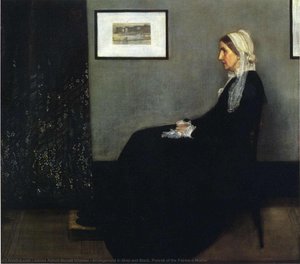
Whistler’s artistieke visie kwam tot uiting in verschillende sleutelthema's en stijlelementen. Hij verdedigde het concept van “kunst voor kunst’s rekening”, waarbij hij narratieven afwees die geladen waren met moraal of sociale commentaar. Zijn werk werd een oefening in het vastleggen van subtiele nuances van licht, kleur en atmosfeer – een streven dat leidde tot zijn iconische *Nocturnes*. Deze atmosferische schilderijen van schemeringscènes, vaak de Thames River bij nacht weergeven, waren niet bedoeld als letterlijke weergaven maar eerder als evocatieve impressies, studies in tonale harmonie en stemming. Hij gebruikte vaak beperkte paletten en delicate penseelstreken, waardoor een etherische schoonheid en rustige contemplatie ontstond. Portretten namen ook een centrale plaats in zijn praktijk in, hoewel hij ze met een unieke gevoeligheid benaderde. Whistler was niet geïnteresseerd in het vastleggen van perfecte gelijkenissen; eerder richtte hij zich op compositie en tonale relaties, waarbij hij zijn onderwerpen als elementen van een zorgvuldig geconstrueerde esthetische kader beschouwde. Werken zoals *Arrangement in Grey and Black No. 1* – beter bekend als *Whistler’s Mother* – illustreren dit benadering perfect, waardoor een gezinsportret wordt getransformeerd tot een iconisch beeld van Victoriaanse moederschap door middel van zijn meesterlijke gebruik van vorm en toon.

Controverse, Invloed en Erfgoed

Whistler’s carrière was niet zonder controverse. De beruchte rechtszaak tegen hem aangespannen door criticus John Ruskin in 1878, voortvloeiend uit *Nocturne in Black and Gold – The Falling Rocket*, werd een mijlpaal in kunstgeschiedenis. Whistler verdedigde succesvol zijn artistieke autonomie, waarbij hij stelde dat zijn schilderijen niet bedoeld waren als letterlijke weergaven maar eerder als esthetische arrangementen van kleur en vorm. Deze zaak verhoogde zijn profiel en ontketende belangrijke debatten over de aard van kunstkritiek en artistieke vrijheid. Naast deze rechtszaak had Whistler een grote invloed. Hij werd diep beïnvloed door Japanse prints (ukiyo-e), die zijn compositieprincipes en nadruk op decoratieve patronen vormden, evenals de tonale meesterschap van Spaanse schilders zoals Velázquez. Zijn pleidooi voor “kunst voor kunst’s rekening” had een diepgaande impact op de Esthetische beweging in Engeland en Amerika, waardoor de weg vrijkwam voor modernisme en conventionele ideeën over artistieke doelstellingen uitdaagde. Hij liet een onuitwisbare stempel achter op de Amerikaanse kunst, waardoor generaties kunstenaars geïnspireerd werden om formele benaderingen te omarmen en het expressieve potentieel van kleur en compositie te verkennen.
  • Bekende Werken: *The Forge* (1861), *Portret van Charles Lang Freer* (1873), *Brown and Gold: The Gold Girl—Connie Gilchrist* (1876-77), *Arrangement in Grey and Black No. 1 (Whistler’s Mother)* (1871), *Nocturne in Black and Gold – The Falling Rocket* (1875).
  • Invloeden: Japanse prints, Velázquez.

Snelle feiten

  • Artist: James Whistler
  • Medium: Etching
  • Title: Self-Portrait
  • Year: 1858
  • Artistic style: Symbolic, tonal

Kunstquiz

Er is slechts één goed antwoord op elke vraag.

Vraag 1:
James Abbott McNeill Whistler is most closely associated with which artistic movement?
Vraag 2:
The etching 'Self-Portrait' by Whistler primarily exemplifies what artistic philosophy?
Vraag 3:
What is a key characteristic of Whistler's etching technique as demonstrated in this work?
Vraag 4:
Considering Whistler's background, which of the following best describes his early career path?
Vraag 5:
The downward gaze of the subject in the etching suggests which possible interpretation?