

 Bekijk op ware grootte
 Verstuur
 Delen
Delen
 Details bekijken
 Gids voor studentenkunstwerken

 Download
 Vergelijkbare items
 Röntgenonderzoek
 Diavoorstelling
 Statistieken
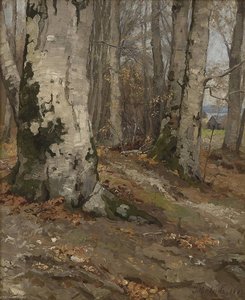
To sittende gutter
 1885
1885 43.0 x 31.0 cm
 Lees meer
Koop een digitale afbeelding in hoge resolutie met verbeterde kwaliteit, die veel superieur is aan de online voorvertoning.
Elk bestand wordt met uiterste precisie voorbereid door onze interne specialisten, met behulp van geavanceerde tools en deskundige handmatige retouche. Wij garanderen dat elke afbeelding een uitzonderlijke helderheid, nauwkeurige kleurweergave en verfijnde details bezit.
Het uiteindelijke bestand wordt binnen 72 uur per e-mail geleverd, geoptimaliseerd voor direct gebruik in professionele, redactionele en printomgevingen. Dit is dezelfde kwaliteit waarop vooraanstaande designstudio's, uitgevers en galerieën vertrouwen.
Digitale afbeeldingen
Download een bestand met hoge resolutie voor persoonlijke weergave, afdrukken en creatieve projecten. ( Schakel over naar print Koop handgeschilderd kunstwerk)
Inbegrepen bij elke bestelling van een digitale afbeelding
Professionele digitale levering, gegarandeerd
Wanneer u kiest voor OriginalUniqueArt.com, ontvangt u niet alleen een afbeelding – u krijgt een professioneel verbeterd digitaal kunstwerk, met precisie vervaardigd en voorzien van een tevredenheidsgarantie. Dit is alles wat automatisch bij uw bestelling is inbegrepen:

Directe levering per e-mail
Uw hoogwaardige digitale afbeeldingsbestand wordt binnen 72 uur na bestelling naar u gemaild – klaar voor direct gebruik.

AI-geoptimaliseerd digitaal bestand
Uw kunstwerk wordt professioneel geoptimaliseerd met behulp van geavanceerde AI-tools en handmatige bewerkingen, waardoor maximale details, helderheid en kleurnauwkeurigheid worden gegarandeerd.

Gratis levenslange herlevering
Je bestand per ongeluk verwijderd of kwijtgeraakt? Geen zorgen – we sturen het u op elk gewenst moment gratis opnieuw toe.

Geen invoerkosten – nooit
Geniet direct van uw kunstwerk zonder invoerrechten, belastingen of verzendkosten – digitale downloads zijn altijd belastingvrij.

Garantie op kleurgetrouwheid
Met behulp van professionele hulpmiddelen en kleurbeheer zorgen wij ervoor dat uw digitale afbeelding de originele kleuren zo nauwkeurig mogelijk weergeeft.

100 dagen tevredenheidsgarantie
Als u niet tevreden bent met uw digitale afbeelding, passen wij deze aan of storten wij 100% terug binnen 100 dagen - zonder vragen te stellen.

100% Geld-terug-garantie
Niet tevreden? Ontvang een volledige terugbetaling binnen 100 dagen na ontvangst van uw digitale bestand – zonder vragen te stellen.

Korting bij grote bestellingen
Koop 3 afbeeldingen, bespaar 10% - Koop 5, bespaar 15% - Koop 10+, bespaar 20%. Ideaal voor creatieve projecten, galerieën en bureaus.
Biografie van de kunstenaar
Jahn Ekenæs: A Painter of Norwegian Pastoral
Jahn Ekenæs, a name perhaps less familiar than some of his contemporaries in the late 19th and early 20th-century Scandinavian art scene, nevertheless represents a significant voice in capturing the essence of rural Norway. Born in 1847 in Åsgårdstrand, a coastal town renowned for its artistic community, Ekenæs’s life and work were inextricably linked to the landscapes and traditions of his homeland. He wasn't merely an observer; he was a deliberate interpreter, meticulously rendering scenes of everyday life—fishing expeditions, family gatherings, and the quiet dignity of farmstead existence—with a remarkable sensitivity to light, color, and the subtle nuances of human interaction.
Ekenæs’s artistic journey began with formal training in Munich, where he immersed himself in the works of German Realist painters like Frantz von Defreggers. This early exposure instilled in him a commitment to portraying life as it was lived, eschewing romanticized notions for a grounded and often melancholic depiction of rural existence. However, Ekenæs quickly returned to Norway, recognizing that his true inspiration lay within the familiar landscapes and customs of his native land. He established himself in Åsgårdstrand, transforming a modest dwelling into a studio where he could dedicate himself entirely to capturing the spirit of the region.
The Palette of the Fjords: Technique and Style
Ekenæs’s paintings are characterized by their meticulous detail and a remarkable ability to evoke atmosphere. He employed a technique that blended realism with an almost photographic precision, carefully observing and rendering every element—the weathered faces of fishermen, the textures of woolen clothing, the shimmering reflections on the water. His use of color was particularly noteworthy; he favored muted tones – blues, greens, browns, and greys – to create a sense of quietness and timelessness. The light in his paintings is often diffused, lending an ethereal quality to the scenes, as if viewed through a veil of mist or rain.
A key element of Ekenæs’s style was his incorporation of photographic elements into his work. He frequently used photographs he had taken himself – primarily of farmers and fishermen – as studies for his paintings. This practice allowed him to accurately capture the details of human expression and clothing, while simultaneously imbuing his paintings with a sense of immediacy and authenticity. His ability to seamlessly integrate these photographic references with traditional painting techniques is what truly sets his work apart.
Subjects of the Heart: Family, Tradition, and Landscape
Ekenæs’s oeuvre is dominated by scenes of rural Norwegian life. He frequently depicted families engaged in everyday activities—fishing, tending to livestock, preparing meals—often within the context of a stunning fjord landscape. His most celebrated works, such as “Peasants Fishing” and "To kvinner i bunader fra Flesberg i Numedal," are not simply depictions of rural life; they are poignant meditations on tradition, community, and the enduring connection between people and their land. The inclusion of the ‘bunader’ – traditional Norwegian folk costumes—is particularly significant, serving as a visual reminder of the region's rich cultural heritage.
The recurring motif of the fjord itself is central to Ekenæs’s work. He understood that the fjords were not merely geographical features but also powerful symbols of Norway’s identity and spirit. He skillfully captured their dramatic beauty, using light and shadow to create a sense of depth and movement. The water reflects the sky, mirroring the vastness of the Norwegian landscape and subtly hinting at the mysteries hidden beneath its surface.
Legacy and Historical Significance
While Ekenæs’s name may not be as widely recognized as some of his contemporaries—such as Adolph Tidemand or Sundt-Hansen—his contribution to Scandinavian art is undeniable. He stands as a key figure in the development of rural realism, capturing the essence of Norwegian life with remarkable sensitivity and detail. His paintings offer a valuable glimpse into a bygone era, preserving the traditions, customs, and landscapes of a region undergoing rapid change.
Ekenæs’s work continues to resonate today, evoking a sense of nostalgia for a simpler time and reminding us of the enduring beauty of the Norwegian countryside. His meticulous observation, coupled with his profound understanding of human nature and the landscape, solidifies his place as a significant voice in the history of Scandinavian art.
Kerngegevens
- Artistic Movement Or Style: Rural landscapes
- Artists Who Influenced This Artist:
- Adolph Tidemand
- Sundt-Hansen
- Date Of Death: 1920
- Full Name: Jahn Ekenæs
- Nationality: Norwegian
- Notable Artworks:
- Peasants Fishing
- To kvinner i bunader
- Place Of Birth: Åsgårdstrand, Norway