

 Voorvertoning
 Verstuur
 Delen
Delen
 Details bekijken
 Gids
Gids

 Download
 Vergelijkbare items
 Röntgenonderzoek
 Diavoorstelling
 Statistieken
Ten thousand martyrs
 Oil On Canvas
- WallArt
- Mannerist Expression
 1529
1529 65.0 x 73.0 cm
 Galleria degli Uffizi
 Lees meer
Giclée / Kunstafdrukken
Giclée- of canvasafdruk van museumkwaliteit met een snelle productie en flexibele afwerkingsmogelijkheden. ( Bestel handgeschilderde reproductie Schakel over naar digitale afbeeldingen)




P118B €10

P118H €10

P118W €10

P438Z €10

P508JH €12

P508YH €12

P805H €10

P805Z €10

P919BZ €10

P919G €10

P919XJ €10

P959ZH €10

P968JZ €12

W106C €8

W218G €10

W218JH €8

W218Y €10

W307PJ €10

W316G €10

W316PJ €8

W316Y €10

W398PJ €8

W4111J €10

W500HY €15

W500JH €15

W692G €12

W849H €8

W940BG €15

W953PJ €8




Kies uit onze vooraf ingestelde maten die overeenkomen met de originele verhoudingen van het kunstwerk.

Voer de gewenste breedte en hoogte in, passend bij uw lijst of muur. Een afdruk kan alleen worden ingekort en nooit groter worden gemaakt dan het origineel; een formaat met andere verhoudingen zal daarom een deel van de afbeelding verliezen. Wij sturen u een digitaal mockup ter goedkeuring voordat we tot drukwerk overgaan. De afbeelding op deze pagina toont niet de werkelijke uitsnede — dit is alleen te zien op het mockup.
Wereldwijde levering () binnen 2 weken in plaats van de standaard 4/5 weken. (26 oktober)

Gratis wereldwijde expressverzending

Hoogwaardig linnen canvas

Volledige verzendverzekering

Garantie op terugbetaling van invoerrechten

Garantie op exacte kleurweergave

Retourbeleid van 100 dagen (alleen bij defecten)

100% Geld-terug-garantie

Korting bij meerdere afnames
 De optie voor glas is alleen beschikbaar bij een formaat kleiner dan 110 cm.

Ten thousand martyrs
Giclée / Kunstafdrukken
Afmetingen reproductie
-


Eindtotaal
€ 71
The Harrowing Vision: Jacopo Pontormo’s “Ten Thousand Martyrs”
Jacopo Pontormo's "Ten Thousand Martyrs," painted in 1529, is not merely a depiction of historical suffering; it’s a visceral plunge into the heart of religious trauma and defiant resistance. This monumental fresco, now rendered in exquisite detail as a hand-painted reproduction by OriginalUniqueArt.com, captures a pivotal moment from early Christian history – the brutal execution of ten thousand soldiers who had converted to Christianity during the reign of Emperor Decius. Far removed from the idealized serenity often associated with Renaissance art, Pontormo’s masterpiece confronts us with an unsettling realism and a profound sense of human drama.
The scene unfolds outdoors, against a backdrop of a brooding sky and a distant, almost mournful hill. At the center stands a single figure – a martyr, identifiable by his flag held aloft in a gesture of unwavering defiance. This isn’t a heroic portrait; he is stripped bare, exposed to the elements and the impending violence. Around him, a vast crowd watches with varying expressions: some filled with horrified pity, others with detached curiosity, and a few with a chilling anticipation of the bloodshed to come. The inclusion of horses amongst the onlookers adds an element of primal chaos, reflecting the brutal nature of the event.
A Bridge Between Styles: Pontormo’s Mannerist Innovation
Born in Pontorme, Tuscany, around 1494, Jacopo Pontormo was a pivotal figure bridging the High Renaissance and the burgeoning Baroque era. Trained under the tutelage of masters like Domenico del Pollaiuolo and Michelangelo Buonarroti – artists known for their anatomical precision and sculptural forms – Pontormo deliberately pushed beyond these established conventions. He embraced emotional intensity and psychological complexity, prioritizing expressive distortion and unsettling perspectives over classical harmony and balance. This is most evident in “Ten Thousand Martyrs,” where figures are elongated, faces contorted with anguish, and spatial relationships deliberately skewed to heighten the dramatic effect.
Pontormo’s use of color is equally striking. He employs a palette dominated by somber browns, deep reds, and muted blues – colors that evoke both the darkness of death and the resilience of faith. The vibrant flag held by the martyr provides a crucial focal point, a symbol of hope and resistance against the overwhelming force of imperial power. The painting’s dynamism is further enhanced through his masterful manipulation of light and shadow, creating an atmosphere of palpable tension and impending doom.
Symbolism and Historical Context
The story depicted in “Ten Thousand Martyrs” draws upon a medieval legend – the tale of Roman soldiers who, after embracing Christianity, were crucified on Mount Ararat. While the historical accuracy of this event is debated, it served as a potent symbol of unwavering faith in the face of persecution. Pontormo’s painting powerfully conveys the emotional weight of this narrative, transforming a potentially dry historical account into a deeply moving meditation on sacrifice and endurance.
The flag itself holds significant symbolic weight. It represents not just individual defiance but also the collective spirit of resistance against tyranny. It's a visual declaration that even in the face of certain death, faith and conviction remain unyielding. The scene resonates with broader themes of religious persecution throughout history, offering a timeless reminder of the human cost of intolerance.
A Reproduction for the Soul
OriginalUniqueArt.com’s hand-painted reproduction captures the essence of Pontormo's original masterpiece with breathtaking fidelity. Every detail – from the tormented expressions on the faces to the dramatic lighting and unsettling spatial arrangements – is meticulously recreated, allowing you to experience the painting’s emotional power firsthand. This isn’t simply a print; it’s an immersive encounter with one of the most compelling works of the Italian Renaissance. Whether displayed in a grand salon or a smaller study, this reproduction will undoubtedly serve as a poignant reminder of human resilience and the enduring power of faith.
Explore the full detail and artistry of “Ten Thousand Martyrs” at https://en.OriginalUniqueArt.com/en/art/jacopo-carucci-ten-thousand-martyrs-dewjfc-en/ and bring this extraordinary work of art into your home.
Veelgestelde vragen
In welk jaar werd "Ten thousand martyrs" gemaakt?
"Ten thousand martyrs" door Jacopo Pontormo werd gemaakt in 1529.
Is "Ten thousand martyrs" te bekijken via een augmented reality-preview?
"Ten thousand martyrs" door Jacopo Pontormo kan via de AR-weergave-pagina van het kunstwerk op uw eigen muur worden geproefd met behulp van augmented reality op een compatibel apparaat.
Is "Ten thousand martyrs" een van de meest populaire werken van Jacopo Pontormo?
Het populariteitsniveau van "Ten thousand martyrs" door Jacopo Pontormo is Iconic.
Biografie kunstenaar
De Melancholische Visionair: Het Leven en de Nalatenschap van Jacopo Pontormo
Jacopo Carucci, door de geschiedenis bekend onder de evocatieve bijnaam Pontormo, was een kunstenaar wiens penseel de essentie van verandering wist te vangen. Geboren in het kleine Toscaanse dorpje Pontorme rond 1494, werd zijn vroege leven gekenmerkt door een diep gevoel van eenzaamheid en melancholie—eigenschappen die zijn doeken later zouden voorzien van een ongekende psychologische diepgang. Als jonge leerling in Florence bewoog hij zich door een wereld van verschuivende artistieke paradigma's, om uiteindelijk naar voren te treden als een centrale figuur binnen de Florentijnse maniëristische beweging. In tegenstelling tot de meesters van de Hoogrenaissance, die streefden naar perfectie door middel van evenwicht en wiskundige harmonie, keek Pontormo naar binnen; hij zocht naar een manier om de turbulente, vaak verontrustende complexiteit van de menselijke ziel uit te drukken. Zijn vormende jaren werden gevormd in de schaduw van reuzen. Onder de begeleiding van Domenico del Pollaiuolo en de monumentale invloed van Michelangelo Buonarroti, beheerste hij de anatomische precisie die van een meester uit de Renaissance werd verwacht, maar hij bezat ook een onweerstaanbare drang om diezelfde realiteit te vervormen voor een emotioneel effect. Hij putte inspiratie niet alleen uit het sculpturale gewicht van Michelangelo, maar ook uit de ingewikkelde, emotieve gravures van Albrecht Dürer. Deze unieke synthese van Italiaanse vorm en Noord-Europese expressieve details stelde hem in staat een stijl te pionieren waarin figuren hun verbinding met de zwaartekracht leken te verliezen, terwijl ze door ambigue, droomachtige ruimtes zweefden.De Architectuur van het Maniërisme: Stijl en Innovatie
Het aanschouwen van een schilderij van Pontormo is als het betreden van een rijk waar de vertrouwde wetten van de fysica en het perspectief zijn opgeschort. Zijn werk vertegenwoordigt een bewuste breuk met de serene, perspectivische regelmaat van zijn voorgangers. In meesterwerken zoals zijn "Visitation" of de aangrijpende "Deposition", ziet men de kenmerken van zijn revolutionaire maniëristische esthetiek: verlengde ledematen, kronkelende en onnatuurlijke houdingen, en een palet van levendige, bijna zure kleuren die botsen en schitteren met een buitenaards licht. Hij verving de stabiele, driehoekige composities van de Renaissance door kolkende, drukke arrangementen die een gevoel van rusteloze energie en spirituele onrust oproepen. De technische briljantie van Pontormo lag in zijn vermogen om kleur en vorm als psychologische instrumenten te gebruiken. Zijn figuren lijken vaak te zweven in onzekere omgevingen, onbelemmerd door gewicht, wat een gevoel van diepe instabiliteit creëert. Dit was geen loutere kunstmatigheid; het was een bewuste poging om de spirituele angsten van een tijdperk over te brengen dat gevangen zat tussen de zekerheden van de Renaissance en het naderende drama van de Barok. Of het nu via het dramatische licht in zijn "Supper at Emmaus" was of de rauwe, emotieve intensiteit in zijn studies van Christus, Pontormode gebruikte elke penseelstreek om thema's als verdriet, devotie en het goddelijke te verkennen.Een Blijvende Indruk op de Kunstgeschiedenis
De historische betekenis van Jacopo Pontormo kan niet worden overschat. Hij fungeerde als een vitale brug die de klassieke idealen van de 15e eeuw vertaalde naar de expressieve, theatrale taal die veel van de kunst uit de 16e eeuw zou definiëren. Zijn invloed resoneerde door de Florentijnse School, vormde het werk van opvolgers zoals Bronzino en zorgde ervoor dat de spanning tussen schoonheid en kunstmatigheid een centraal thema bleef in de Europese schilderkunst. Zijn oeuvre blijft een getuigenis van de kracht van individuele visie boven traditie. Door zijn portretten, zoals het vorstelijke "Cosimo I de' Medici," en zijn diep symbolische religieuze werken, bewees hij dat kunst meer kon zijn dan een spiegel van de realiteit; het kon een venster zijn naar het onderbewuste. Hoewel zijn leven vaak werd overschaduwd door persoonlijk verdriet, blijven de pracht van zijn kleurgebruik en de complexiteit van zijn composities de kijker betoveren, en nodigen ze iedereen uit om zichzelf te verliezen in de prachtige, vervormde en diep menselijke wereld van de Florentijnse meester.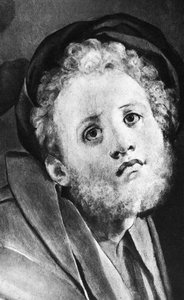
Jacopo Pontormo
1494 - 1557 , Italië
Belangrijkste feiten
- Artistic Movement Or Style: Manierisme
- Artists Or Movements Influenced By This Artist:
- Michelangelo
- Rosso Fiorentino
- Artists Who Influenced This Artist:
- Leonardo da Vinci
- Andrea del Sarto
- Date Of Birth: 1494
- Date Of Death: 1557/7
- Full Name: Jacopo Pontormo
- Nationality: Italiaans
- Notable Artworks:
- Visitatie
- Deposition
- Halberdiers
- Place Of Birth: Pontorme, Italië
Gerelateerde artikelen

Drama & Distortion: The High-Voltage Energy of Baroque Mannerism
Dive into the high-voltage world of Baroque Mannerism. Explore how artists traded Renaissance harmony for dramatic distortion, intense light, and pure visual energy. Discover the masters of tension and learn to bring this bold, cinematic aesthetic into your modern space.

Mannerism: Bridging Renaissance Harmony & Baroque Drama – A Study of Style & Affectation
Explore the fascinating world of Mannerism! Discover its key characteristics, pioneering artists like Pontormo & Bronzino, and its pivotal role in bridging Renaissance harmony to Baroque drama. A comprehensive guide for art enthusiasts.
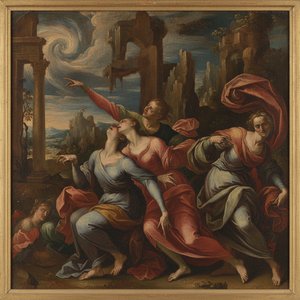
Drama & Distortion: A Journey Through the Captivating World of Baroque Mannerism
Explore the dramatic tension of Mannerism and the opulent grandeur of Baroque art. Discover how masters used light, shadow, and distortion to redefine European history through a captivating journey of emotional intensity and spiritual fervor.

Barokke Pracht: Kunst die Grootsheid in Huis Brengt
Ontdek de barokke pracht! Leer over de geschiedenis, kenmerken en toepassingen van deze weelderige kunststijl in uw interieur. Laat u inspireren door meesters en breng grootsheid in huis.

Drama and Distortion: A Definitive Guide to the Mastery of Mannerism and Baroque Art
Explore the dramatic evolution from Mannerist distortion to Baroque grandeur. Discover how light, shadow, and emotion redefined art history through a masterclass in technical mastery and religious fervor.


