

 Voorvertoning
 Verstuur
 Delen
Delen
 Details bekijken

 Download
 Vergelijkbare items
 Röntgenonderzoek
 Diavoorstelling
Flagellation
 Acrylic On Canvas
- WallArt
- Early Renaissance Italian
 1450
1450 426.0 x 286.0 cm
 Louvre
 Lees meer
Koop een digitale afbeelding in hoge resolutie met verbeterde kwaliteit, die veel superieur is aan de online voorvertoning.
Elk bestand wordt met uiterste precisie voorbereid door onze interne specialisten, met behulp van geavanceerde tools en deskundige handmatige retouche. Wij garanderen dat elke afbeelding een uitzonderlijke helderheid, nauwkeurige kleurweergave en verfijnde details bezit.
Het uiteindelijke bestand wordt binnen 72 uur per e-mail geleverd, geoptimaliseerd voor direct gebruik in professionele, redactionele en printomgevingen. Dit is dezelfde kwaliteit waarop vooraanstaande designstudio's, uitgevers en galerieën vertrouwen.
Digitale afbeeldingen
Download een bestand met hoge resolutie voor persoonlijke weergave, afdrukken en creatieve projecten. ( Bestel print Bestel handgeschilderde reproductie)
Inbegrepen bij elke bestelling van een digitale afbeelding
Professionele digitale levering, gegarandeerd
Wanneer u kiest voor OriginalUniqueArt.com, ontvangt u niet alleen een afbeelding – u krijgt een professioneel verbeterd digitaal kunstwerk, met precisie vervaardigd en voorzien van een tevredenheidsgarantie. Dit is alles wat automatisch bij uw bestelling is inbegrepen:

Snelle levering per e-mail
Uw hoogwaardige digitale afbeeldingsbestand wordt binnen 72 uur na bestelling naar u gemaild – klaar voor direct gebruik.

AI-verbeterd digitaal bestand
Uw kunstwerk wordt professioneel geoptimaliseerd met behulp van geavanceerde AI-tools en handmatige bewerkingen, waardoor maximale details, helderheid en kleurnauwkeurigheid worden gegarandeerd.

Gratis levenslange herlevering van digitale afbeeldingen
Je bestand per ongeluk verwijderd of kwijtgeraakt? Geen zorgen – we sturen het u op elk gewenst moment gratis opnieuw toe.

Geen invoerkosten – nooit
Geniet direct van uw kunstwerk zonder invoerrechten, belastingen of verzendkosten – digitale downloads zijn altijd belastingvrij.

Garantie op kleurgetrouwheid
Met behulp van professionele hulpmiddelen en kleurbeheer zorgen wij ervoor dat uw digitale afbeelding de originele kleuren zo nauwkeurig mogelijk weergeeft.

60 dagen tevredenheidsgarantie
Als u niet tevreden bent met uw digitale afbeelding, passen wij deze aan of storten wij 100% terug binnen 60 dagen – zonder vragen gesteld.

100% Geld-terug-garantie
Niet tevreden? Ontvang binnen 60 dagen na ontvangst van uw digitale bestand uw volledige aankoopbedrag terug – zonder vragen te stellen.

Korting bij grote bestellingen
Koop 3 afbeeldingen, bespaar 10% - Koop 5, bespaar 15% - Koop 10+, bespaar 20%. Ideaal voor creatieve projecten, galerieën en bureaus.
Beschrijving verzamelobject
A Study in Divine Order: Jacopo Bellini’s Flagellation
Jacopo Bellini's "Flagellation," painted circa 1450, isn’t merely a depiction of a biblical scene; it’s a profound meditation on human suffering, civic duty, and the nascent principles of Renaissance perspective. This remarkable drawing, now residing within the British Museum’s collection, offers a tantalizing glimpse into the mind of one of Venice's most influential artists – a man who was quietly revolutionizing how images were conceived and rendered in his time. Far removed from the grand, opulent frescoes that dominated Venetian art, Bellini’s preparatory sketch possesses an intimate quality, inviting us to witness the genesis of a masterpiece and contemplate the artist’s meticulous process.
The scene itself is both dramatic and restrained. A vast architectural complex dominates the composition – a towering structure of arches, balconies, and intricate detailing that speaks to the power and order of the Venetian Republic. Within this meticulously constructed space, figures are engaged in a brutal act: the scourging of Christ. The arrangement isn’t chaotic; rather, it adheres to a strict geometric logic, reflecting Bellini's deep understanding and application of linear perspective. The receding lines of the building create an illusion of depth, drawing the viewer into the scene while simultaneously emphasizing the figures’ vulnerability within this imposing framework. This careful orchestration of space is a hallmark of Renaissance art, signaling a shift away from the flattened perspectives of earlier periods.
Early Renaissance Innovation and Venetian Sensibility
Bellini's work stands as a crucial bridge between the Gothic traditions of his predecessors and the groundbreaking innovations of the High Renaissance. He inherited the rich color palettes and decorative tendencies of Venetian painting, but he also embraced the emerging principles of linear perspective championed by artists like Brunelleschi and Masaccio. Unlike many of his contemporaries who focused on grand narratives or religious iconography, Bellini’s preparatory sketches reveal a fascination with architectural studies – a testament to his belief that understanding form and structure was essential for creating compelling images. The drawing's focus isn’t on the emotional impact of Christ’s suffering, but rather on the precise rendering of the building itself, suggesting an underlying concern with civic order and the representation of power.
The monochrome palette – a carefully calibrated range of grays – contributes significantly to the artwork’s solemn mood. Bellini masterfully employs hatching and cross-hatching techniques to create subtle variations in tone and texture, lending a remarkable sense of volume and depth to the architectural elements. The delicate lines delineate every archway, column, and window frame with painstaking detail, demonstrating Bellini's exceptional draftsmanship. This meticulous approach reflects not only his artistic skill but also his deep respect for the subject matter – a reverence that is palpable in every stroke of the pen.
Symbolism and Historical Context
While the immediate narrative of "Flagellation" is rooted in the Passion of Christ, it’s important to consider the broader historical context within which Bellini was working. Venice during the mid-15th century was a thriving center of commerce, art, and political intrigue. The city's wealth and power were reflected in its magnificent architecture, and its citizens took great pride in their civic identity. Bellini’s drawing can be interpreted as an allegory for this civic ethos – a visual representation of the Republic’s strength, order, and commitment to justice. The act of scourging, though undeniably painful, is presented within a framework of architectural grandeur, suggesting that suffering is an inevitable part of the human experience but one that must be endured with dignity and fortitude.
Furthermore, the drawing's scale – measuring 426 x 286 cm – suggests its intended role as a preparatory study for a larger work, possibly a monumental fresco or tapestry. The level of detail evident in this sketch indicates Bellini’s meticulous planning and his commitment to achieving a truly immersive visual experience. It is a testament to the artist's vision that he could translate such complex ideas into a single drawing, demonstrating both technical mastery and artistic insight.
A Legacy of Precision and Vision
Jacopo Bellini’s “Flagellation” stands as a pivotal work in the development of Renaissance art. It exemplifies his innovative approach to perspective, his meticulous draftsmanship, and his deep understanding of Venetian culture. More than just a depiction of a biblical scene, it is a profound meditation on human suffering, civic duty, and the enduring power of artistic vision. Reproductions of this drawing offer a unique opportunity to appreciate Bellini’s genius and to connect with one of the most influential artists of the Renaissance.
Kunstenaarsbiografie
De Venetiaanse Pionier van de Renaissance-perspectief
Jacopo Bellini staat te boek als een cruciaal figuur binnen de opkomende renaissance-schilderstijl die floreerde in Venetië en Noord-Italië. Hij was niet louter een schilder; hij was een van de fundamentele vernieuwers van zijn tijd, die de artistieke gevoeligheid vormgaf door zijn minutieuze observatie van de natuur en zijn meesterlijke integratie van het lineair perspectief—een techniek die voorheen grotendeels ontbrak in de Venetiaanse kunst. Hoewel slechts enkele van Bellini's originele doeken vandaag de dag bewaard zijn gebleven om in hun volle glorie te worden bewonderd, leeft zijn diepgaande nalatenschap voornemente voort in zijn prachtige schetsboeken, zoals die in het British Museum en het Louvre. Deze tekeningen onthullen een diepe fascinatie voor weidse landschappen en complexe architectonische ontwerpen, en bieden een onschatbaar inzicht in een artistiek proces dat de stilistische revoluties van de daaropvolgende eeuwen al aankondigde.
Geboren in Venetië rond 1396, waren de vormende jaren van Jacopo doordrenkt van de rijke, decoratieve tradities van de late gotiek. Zijn vroege opleiding suggereert dat hij een leerling was van de gevierde Gentile da Fabriano, een kunstenaar wiens atelier enkele van de meest ambitieuze en rijk versierde fresco's van die tijd voortbracht. Deze prestigieuze associatie heeft bij Bellini ongetwijfeld een levenslange waardering voor ingewikkelde details, kleurharmonie en een zekere decoratieve complexiteit geïnstilleerd. In het begin van zijn carrière was hij tussen 1411 en 1412 actief in Foligno, waar hij samenwerkte aan de monumentale fresco's van het Palazzo Trinci, zij aan zij met de meesters die de internationale gotische stijl definieerden.
Een Reis door het Hart van de Renaissance
Een cruciaal keerpunt kwam toen Bellini rond 1423 naar Florence reisde. Deze reis plaatste hem in het epicentrum van een intense periode van artistieke experimenten, geleid door grootheden als Brunelleschi, Donatello en Masaccio. In Florence maakte hij kennis met de opkomende wetenschap van het lineair perspectief, een ontdekking die zijn benadering van ruimte en diepte fundamenteel zou veranderen. Door de lyrische, decoratieve elegantie van zijn Venetiaanse wortels te versmelten met de structurele strengheid en ruimtelijke helderheid van de Florentijnse vernieuwers, begon Bellini een unieke visuele taal te smeden. Deze synthese stelde hem in staat om voorbij de platte, symbolische vlakken van de middeleeuwen te bewegen naar een meer meeslepende, vensterachtige weergave van de wereld.
Naarmate zijn carrière vorderde, werd Bellini een centrale figuur bij het vestigen van een familiedynastie die de Venetiaanse kunst generaties lang zou domineren. Zijn invloed was niet enkel persoonlijk maar ook pedagogisch, aangezien hij zijn innovaties doorgaf aan zijn zonen, Gentile en Giovanni. Via hen ontkiemden de zaden van zijn experimenten met licht, landschap en perspectief tot de pracht van de hoogrenaissance die zo nauw verbonden is met de naam Bellini. Zijn werk diende als een brug tussen de ornamentale tradities uit het verleden en het humanistische realisme van de toekomst, waardoor hij een onmisbare schakel werd in de evolutie van de Italiaanse kunst.
Nalatenschap en Historisch Belang
De historische betekenis van Jacopo Bellini ligt in zijn rol als katalysator voor verandering. Hoewel een groot deel van zijn oeuvre gevangen blijft in het intieme medium van inkt en pen, dienen die schetsen als een blauwdruk voor de Venetiaanse Renaissance. Zijn vermogen om complexe, gelaagde landschappen en mathematisch coherente architecturen te visualiseren, legde de basis voor zijn opvolgers om de atmosferische schoonheid van de Venetiaanse lagune te verkennen. Het bestuderen van Bellini is getuigen van het exacte moment waarop het oog van de kunstenaar begon de illusie van diepte werkelijk te beheersen, wat de manier waarop de mensheid de geschilderde wereld waarneemt voorgoed heeft veranderd.
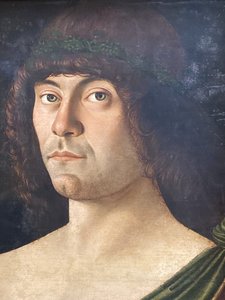
Jacopo Bellini
1396 - 1470 , Italië
Belangrijkste feiten
- Artistic Movement Or Style: Renaissance
- Artists Or Movements Influenced By This Artist: ['Masaccio']
- Artists Who Influenced This Artist: ['Gentile da Fabriano']
- Date Of Birth: Venetië, Italië (1396)
- Date Of Death: ca. 1470
- Full Name: Jacopo Bellini
- Nationality: Italiaans
- Notable Artworks:
- De Kruisiging in de kathedraal van Verona
- Madonna met Kind
- Place Of Birth: Venetië

