

 Bekijk op ware grootte
 Verstuur
 Delen
Delen
 Details bekijken
 Gids voor studentenkunstwerken

 Download
 Vergelijkbare items
 Röntgenonderzoek
 Diavoorstelling
 Statistieken
Wit Licht
 Olieverf op canvas
- Wanddecoratie
- Abstract Expressionism
 1954
1954- Modern
 122.0 x 97.0 cm
 Museum of Modern Art
 Lees meer
Handgemaakte olieverfreproductie
Met de hand geschilderd in olieverf op canvas in uw gewenste maat en lijst, op bestelling gemaakt door onze kunstenaars. ( Schakel over naar print Schakel over naar digitale afbeeldingen)




P118B €10

P118H €10

P118W €10

P438Z €10

P508JH €12

P508YH €12

P805H €10

P805Z €10

P919BZ €10

P919G €10

P919XJ €10

P959ZH €10

P968JZ €12

W106C €8

W218G €10

W218JH €8

W218Y €10

W307PJ €10

W316G €10

W316PJ €8

W316Y €10

W398PJ €8

W4111J €10

W500HY €15

W500JH €15

W692G €12

W849H €8

W940BG €15

W953PJ €8




Kies uit onze vooraf ingestelde maten die overeenkomen met de originele verhoudingen van het kunstwerk.

Voer de breedte en de hoogte in die u nodig heeft, passend bij uw lijst of uw muur. Dit is handgeschilderd, dus bij een afmeting met een andere vormverhouding kan de kunstenaar iets meer rondom het schilderij schilderen of juist iets meer weglaten — u kiest zelf. Wij sturen u een digitaal mockup ter goedkeuring voordat het schilderwerk begint. De afbeelding die op deze pagina wordt getoond, is niet het uiteindelijke resultaat — alleen de mockup geeft dit weer.
Na de bestelling zal het team van OriginalUniqueArt.com per e-mail contact opnemen met de klant voor instructies en een mockup-voorbeeld sturen.
Wereldwijde levering () binnen 3 tot 4 weken in plaats van de standaard 5 weken. (19 oktober). Zonder concessies aan de kwaliteit.

Gratis wereldwijde expressverzending

Hoogwaardig linnen canvas

Volledige verzendverzekering

Garantie op terugbetaling van invoerrechten

Garantie op exacte kleurweergave

Retourbeleid van 100 dagen (alleen bij defecten)

100% Geld-terug-garantie

Korting bij meerdere afnames
 De optie voor glas is alleen beschikbaar bij een formaat kleiner dan 110 cm.

Wit Licht
Reproductiemethode
Formaat reproductie
-


Totaalprijs
€ 261
De Ontstane van Chaos: White Light door Paul Jackson Pollock
“White Light” is meer dan een schilderij; het is een visuele explosie, een momentopname van intense emotie en creatieve energie. Dit werk, gecreëerd in 1954 door Paul Jackson Pollock, duikt diep in de kern van abstract expressionisme, een beweging die de traditionele grenzen van kunst radicaal veranderde. Het is een bewijs van Pollock’s onconventionele techniek en zijn zoektocht naar het uiten van innerlijke gevoelens zonder de beperkingen van representatie.
De compositie, een chaotisch maar tegelijkertijd harmonieus geheel, lijkt te ontstaan uit een spontane, bijna instinctieve impuls. Overlappende streken in een caleidoscoop van kleuren – intense roden, diepe blauwen, levendige gele tonen, en subtiele grijstinten – creëren een dynamische visuele ritme dat de kijker direct meesleurt. De texturen zijn rijk en complex, gecreëerd door een combinatie van dikke impasto lagen, zorgvuldig aangebrachte paletknippers en mogelijk zelfs strategisch verspreide spatten. Deze tactiele dimensie nodigt uit tot intensief onderzoek, waarbij de kijker wordt uitgenodigd om de verschillende lagen en texturen te ontdekken.
Techniek en Materialiteit: Een Spel van Beweging en Licht
Pollock’s benadering van het schilderen was revolutionair. Hij verliet de traditionele penseeltechnieken en experimenteerde met nieuwe methoden om zijn creatieve visie te realiseren. “White Light” is een perfect voorbeeld hiervan, waarbij hij de canvas direct gebruikte als een medium. De techniek, die vaak wordt omschreven als ‘action painting’, omvat het aanbrengen van verf met behulp van verschillende gereedschappen: zijn handen, stokken en paletknippers. Deze directe interactie met het materiaal creëert een unieke textuur en een gevoel van beweging dat de essentie van abstract expressionisme vastlegt.
De keuze voor materialen – voornamelijk olieverf, maar ook eventueel enamel en aluminium – draagt bij aan de schildering’s duurzaamheid en het vermogen om licht te reflecteren. De dikke impasto lagen vangen het licht op verschillende manieren, waardoor de compositie een levendige, dynamische kwaliteit krijgt. Het is alsof de schilderij zelf ademt, met beweging en energie die voortkomen uit de interactie tussen kleur, textuur en licht.
Historische Context en Symboliek
“White Light” werd gecreëerd in 1954, een cruciale periode voor Pollock en het abstract expressionisme. Na de Tweede Wereldoorlog zochten kunstenaars naar nieuwe manieren om hun innerlijke wereld te uiten, los van traditionele representatie. Pollock’s werk was een reactie op deze zoektocht, een poging om emoties en ervaringen direct over te brengen zonder het gebruik van figuratieve elementen. De schildering weerspiegelt de beweging’s focus op spontaniteit, intuïtie en het belang van het proces van creatie zelf.
De titel “White Light” suggereert een gevoel van zuiverheid, intensiteit en transformatie. Het kan verwijzen naar de zoektocht naar innerlijke helderheid of naar de explosieve energie die ontstaat wanneer emoties worden geuit. De combinatie van witte en donkere kleuren, evenals de chaotische compositie, creëert een spanningsveld dat de kijker uitdaagt om zijn eigen interpretaties te vormen.
Een Meesterwerk voor Moderne Interieurs
“White Light” is meer dan alleen een kunstwerk; het is een statement. De dynamische energie en intense emoties die in dit werk worden vastgelegd, maken het een ideale toevoeging aan moderne interieurs. Het stimuleert de verbeelding, creëert gesprekken en biedt een visueel boeiende focuspunt. Een handgeschilderde reproductie van “White Light” is een prachtige manier om deze iconische schildering in uw huis te brengen, waardoor u de kracht en schoonheid van abstract expressionisme kunt ervaren.
Vragen & Antwoorden
Is er een factsheet over "Wit Licht" door Jackson Pollock voor studenten?
Er is een Gids pagina beschikbaar voor "Wit Licht" door Jackson Pollock: een printbaar informatieblad over het kunstwerk, ontworpen voor studenten en gebruik in de klas.
Behoort "Wit Licht" van Jackson Pollock tot het publiek domein, en zo ja, waarom?
"Wit Licht" door Jackson Pollock is bevindt zich in het publiek domein - de auteursrechten zijn verlopen. De auteursrechtelijke bescherming loopt vanaf het overlijden van de kunstenaar, dat plaatsvond in 1956.
Welk gebruik en welke ruimte worden aanbevolen voor "Wit Licht" door Jackson Pollock?
"Wit Licht" wordt aanbevolen voor Kenmerkend kunstwerk, en de ideale ruimte hiervoor is een Woonkamer.
Biografie van de kunstenaar
Early Life and the Seeds of Innovation
Paul Jackson Pollock, born in Cody, Wyoming, in 1912, was a restless spirit from the outset. His early life was marked by frequent relocation as his father, LeRoy Pollock, pursued work as a land surveyor across the vast landscapes of the American West. This itinerant existence instilled in young Pollock a deep connection to the natural world and an exposure to diverse cultures, particularly through encounters with Native American art during those surveying trips – impressions that would subtly permeate his artistic vision later in life. Though he never explicitly imitated Indigenous styles, the raw energy and spiritual resonance of these early experiences undoubtedly left their mark. He was the fifth and youngest son in a struggling farming family, and his mother fostered artistic potential in each of her children. Pollock’s formal artistic training began at the Manual Arts High School in Los Angeles, followed by studies at the Art Students League of New York under the tutelage of Thomas Hart Benton. Benton, a prominent figure in the Regionalist movement, emphasized rhythmic composition and narrative themes rooted in American life. While Pollock initially absorbed these lessons, his inherent inclination leaned toward more abstract explorations. He was also profoundly impacted by Mexican muralists like José Clemente Orozco, whose powerful depictions of social struggle resonated deeply with him. These early influences laid a foundation, but it was the burgeoning world of Surrealism that truly unlocked Pollock’s artistic potential.The Birth of Action Painting and a Revolutionary Technique
The 1930s saw Pollock experimenting with various techniques, seeking alternatives to traditional brushwork. He began pouring paint, exploring its fluidity and unpredictable nature. However, it was around 1947 that his artistic trajectory underwent a radical transformation. Abandoning the easel altogether, Pollock laid canvases directly on the floor, initiating what would become known as his “drip technique.” He then proceeded to drip, splash, and fling paint onto the canvas from above, orchestrating a dynamic dance between artist, medium, and surface. This wasn’t merely about applying paint; it was about embodying the act of creation itself. Pollock's canvases became arenas for physical expression, capturing the immediacy of his gestures and emotions. The resulting paintings are characterized by their “all-over” composition – a lack of central focus that invites the viewer to explore the entire surface as a unified field of energy. Intricate networks of lines and colors intertwine, creating a visual complexity that is both captivating and challenging. He employed unconventional tools—sticks, knives, even syringes—to manipulate the paint in unpredictable ways, further emphasizing the spontaneous nature of his process. Pollock’s marriage to fellow artist Lee Krasner was also pivotal; she provided unwavering emotional support and actively encouraged his artistic development, recognizing the groundbreaking nature of his work. She became a crucial collaborator, not just as a wife but as an intellectual partner who understood and championed his vision.Iconic Works and Lasting Legacy
Pollock’s most celebrated works—such as Number 1, 1950 (Lavender Mist), One: Number 31, 1950, Blue Poles: Number 11, 1952, and *Convergence*—are testaments to his revolutionary technique. These paintings are not simply images; they are records of a performance, imbued with the artist’s physical presence and emotional intensity. The dynamic energy that emanates from these canvases is palpable, drawing viewers into a world of pure abstraction. The influence of Surrealism is evident in the dreamlike quality of many of his works, while simultaneously rejecting traditional representational forms. Pollock sought to capture not just what he *saw*, but what he *felt* – the underlying currents of emotion and subconscious experience that shaped his perception of the world. His work can be seen as a visual embodiment of the anxieties and uncertainties of the post-war era. His style transcends mere aesthetics; it's an exploration of process over product. Pollock sought to capture the immediacy of his actions and emotions on canvas, rejecting traditional notions of composition and representation. He delved into Jungian psychology, exploring archetypes and the subconscious in his art, seeking to tap into universal symbols and primal energies.Historical Significance
Pollock’s impact on the history of art is immeasurable. He fundamentally altered the way artists approached painting, breaking free from easel-based methods and embracing a more performative approach. His work helped solidify New York City's position as a global center for modern art, shifting the focus away from European dominance. He was initially met with skepticism and criticism, but his influence grew steadily after his untimely death in 1956 at the age of 44. Today, he is universally recognized as one of the most important and influential artists of the 20th century, a visionary who dared to challenge conventions and redefine the boundaries of artistic expression. His innovative techniques and expressive style continue to inspire and provoke, ensuring his enduring legacy for generations to come.
Jackson Pollock
1912 - 1956 , Verenigde Staten van Amerika
Snelle feiten
- Artistic Movement Or Style: Abstract Expressionisme
- Artists Or Movements Influenced By This Artist:
- Color Field painting
- Abstract Expressionisme
- Artists Who Influenced This Artist:
- Thomas Hart Benton
- José Clemente Orozco
- Date Of Birth: 28 januari 1912
- Date Of Death: 11 augustus 1956
- Full Name: Paul Jackson Pollock
- Nationality: Amerikaans
- Notable Artworks:
- Number 1, 1950
- Blue Poles
- Convergence
- Place Of Birth: Cody, Wyoming
Gerelateerde artikelen

Top 10 Abstract Expressionisme Meesterwerken: Kunst voor uw Interieur | OriginalUniqueArt.com
Ontdek de 10 meest invloedrijke werken van Abstract Expressionisme! Leer over Jackson Pollock, Mark Rothko & meer. Museumkwaliteit kunst reproducties voor uw interieur. Bekijk de collectie op OriginalUniqueArt.com.
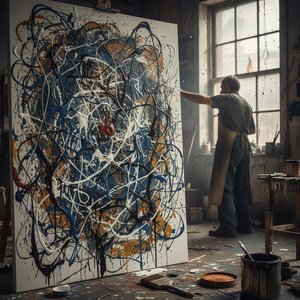
Paul Jackson Pollock: A Radical Departure – Exploring Abstract Expressionism's Pioneering Figure and His Enduring Legacy
Explore the revolutionary art of Jackson Pollock & Abstract Expressionism. Discover his iconic drip paintings, lasting impact, and considerations for collecting this pivotal American artist. Expert insights at OriginalUniqueArt.

Top 10 Witte Meesterwerken: Kunstgeschiedenis & Interieurinspiratie
Ontdek de top 10 witte meesterwerken uit de kunstgeschiedenis! Van Monet tot Mondriaan, bewonder abstracte vormen & serene kleuren. Vind museumkwaliteit reproducties en interieurinspiratie op OriginalUniqueArt.com.
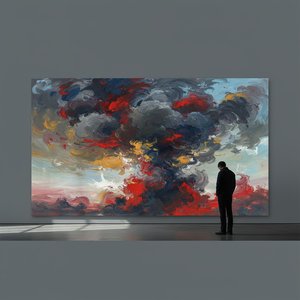
Beyond Representation: Exploring the Emotional Landscape of Abstract Expressionism
Explore the profound emotional world of Abstract Expressionism with OriginalUniqueArt. Discover key artists like Pollock & Rothko, learn about collecting, and find museum-quality reproductions to inspire your space.

Kandinsky's Meesterwerken: 25 Abstracte Kunstparels voor uw Interieur | OriginalUniqueArt
Ontdek de 25 meest iconische werken van Wassily Kandinsky! Duik in zijn abstracte wereld vol kleur, expressionisme & spirituele diepgang. Vind museumkwaliteit reproducties en interieurinspiratie op OriginalUniqueArt.com.


