

 Bekijk op ware grootte
 Verstuur
 Delen
Delen
 Details bekijken
 Gids voor studentenkunstwerken

 Download
 Vergelijkbare items
 Röntgenonderzoek
 Diavoorstelling
 Statistieken
Herfstritm No. 30


 Lees meer
Giclée / Kunstafdrukken
Giclée- of canvasafdruk van museumkwaliteit met een snelle productie en flexibele afwerkingsmogelijkheden. ( Koop handgeschilderd kunstwerk Schakel over naar digitale afbeeldingen)




P118B €10

P118H €10

P118W €10

P438Z €10

P508JH €12

P508YH €12

P805H €10

P805Z €10

P919BZ €10

P919G €10

P919XJ €10

P959ZH €10

P968JZ €12

W106C €8

W218G €10

W218JH €8

W218Y €10

W307PJ €10

W316G €10

W316PJ €8

W316Y €10

W398PJ €8

W4111J €10

W500HY €15

W500JH €15

W692G €12

W849H €8

W940BG €15

W953PJ €8




Kies uit onze vooraf ingestelde maten die overeenkomen met de originele verhoudingen van het kunstwerk.

Voer de breedte en de hoogte in die u nodig heeft, passend bij uw lijst of uw muur. Een afdruk kan alleen worden ingekort, nooit groter worden gemaakt dan het origineel, waardoor een formaat met een andere verhouding een deel van de afbeelding verliest. Wij sturen u een digitaal mockup ter goedkeuring voordat we iets drukken. De afbeelding op deze pagina toont niet de werkelijke uitsnede — dit is alleen te zien op het mockup.
Wereldwijde levering () binnen 2 weken in plaats van de standaard 4/5 weken. (21 oktober)

Gratis wereldwijde expressverzending

Hoogwaardig linnen canvas

Volledige verzendverzekering

Garantie op terugbetaling van invoerrechten

Garantie op exacte kleurweergave

Retourbeleid van 100 dagen (alleen bij defecten)

100% Geld-terug-garantie

Korting bij meerdere afnames
 De optie voor glas is alleen beschikbaar bij een formaat kleiner dan 110 cm.

Herfstritm No. 30
Giclée / Kunstafdrukken
Formaat reproductie
-


Totaalprijs
€ 71
Een Monumentale Expressie van Abstracte Emotie
“Autumn Rhythm. Number 30, 1950” staat te boek als een cruciaal werk binnen de baanbrekende bijdrage van Jackson Pollock aan het Abstract Expressionisme. Dit grootschalige canvas is niet louter een schilderij; het is een meeslepende ervaring – een visueel verslag van energie, gebaar en de diep persoonlijke betrokkenheid van de kunstenaar bij het creatieve proces.
De Geboorte van de ‘Drip Painting’
Dit kunstwerk, gecreëerd tijdens Pollocks meest gevierde “drip-periode” (1947-1950), is het ultieme voorbeeld van zijn revolutionaire techniek. Door het traditionele schilderen op een ezel achter zich te laten, legde Pollock het canvas direct op de vloer en gebruikte hij stokken, stugge penselen en zelfs spuiten om verf vanuit alle richtingen te smijten en te gieten. Deze methode bevrijdde hem van conventionele beperkingen en maakte een dynamische, alomvattende compositie mogelijk zonder centraal focuspunt. Het resulterende netwerk van verweven lijnen en spatten belichaamt wat criticus Clement Greenberg “action painting” noemde, waarbij de nadruk ligt op de fysieke handeling van het creëren zelf.
Kleur & Compositie: Gecontroleerde Chaos
Ondanks het schijnbaar chaotische uiterlijk, onthult "Autumn Rhythm" een verfijnde controle over kleur en compositie. Een ingetogen palet, gedomineerd door aardse bruinen, oker en zwart, wordt onderbroken door scherpe witte lijnen, wat zorgt voor visuele spanning en diepte. De afwezigheid van herkenbare vormen dwingt de kijker om het kunstwerk op een puur instinctief niveau te ervaren, waarbij men reageert op het ritme en de energie in plaats van te zoeken naar een representatieve betekenis. Hoewel het geheel willekeurig lijkt, trekt een subtiele dichtheid richting het centrum de blik naar binnen, gevangen binnen het expansieve horizontale formaat.
Historische Context & Artistieke Innovatie
Het Abstract Expressionisme ontstond in het tijdperk na de Tweede Wereldoorlog en weerspiegelde een bredere culturele verschuiving – een afwijzing van traditionele waarden en een verkenning van de innerlijke ervaring. Het werk van Pollock brak met gevestigde normen en daagde conventionele opvattingen over schoonheid en artistiek kunnen uit. Zijn techniek was radicaal voor zijn tijd, beïnvloedde generaties kunstenaars en verstevigde de positie van Amerika als een leidende kracht in de kunstwereld. De creatie van het schilderij viel samen met gedocumenteerde sessies door fotograaf Hans Namuth, die een onschatbaar inzicht boden in Pollocks werkproces.
Symboliek & Emotionele Resonantie
Hoewel het werk ontdaan is van expliciete beeldtaal, roept “Autumn Rhythm” krachtige emoties en symbolische associaties op. Sommigen interpreteren de verweven lijnen als een weergave van de complexiteit van de menselijke ervaring, terwijl anderen echo's zien van natuurlijke vormen – verstrengelde takken, stromend water of zelfs kosmische energieën. De titel van het schilderij, toegevoegd na de eerste tentoonstelling onder een numerieke aanduiding, suggereert een verbinding met de cyclische ritmes van de natuur en het verstrijken van de tijd. Uiteindelijk is de betekenis van het kunstwerk open voor individuele interpretatie, wat de kijker uitnodigt om eigen gevoelens en ervaringen op het oppervlak te projecteren.
Een Statement Piece voor Moderne Interieurs
“Autumn Rhythm. Number 30, 1950” is niet slechts een historisch artefact; het is een tijdloos kunstwerk dat nog steeds resoneert bij een hedendaags publiek. De dynamische compositie en het verfijnde kleurenpalet maken het een opvallend middelpunt voor moderne interieurs. Een hoogwaardige reproductie legt de energie en textuur van het origineel vast, waardoor er een vleugje intellectuele verfijning en artistieke flair aan elke ruimte wordt toegevoegd. Dit stuk is ideaal voor verzamelaars die zoeken naar een iconisch voorbeeld van het Abstract Expressionisme, of voor ontwerpers die streven naar een visueel prikkelende en emotioneel aangrijpende omgeving.
Vragen & Antwoorden
Wat voor soort kunstwerk is "Herfstritm No. 30" door Jackson Pollock?
In de catalogus is "Herfstritm No. 30" door Jackson Pollock geclassificeerd als Wanddecoratie. De categorie helpt bij het vinden van vergelijkbare werken.
Welke kleur valt het meest op in "Herfstritm No. 30"?
De dominante kleur van "Herfstritm No. 30" door Jackson Pollock is Espresso (#332220).
Waar past "Herfstritm No. 30" binnen het oeuvre van Jackson Pollock?
"Herfstritm No. 30" behoort tot het Abstract Expressionism-werk van Jackson Pollock, waarvan de bekende thema's onder meer expressionist roots, western values shift, emotional exploration, pollock legacy, revolutionary technique omvatten.
Biografie van de kunstenaar
Early Life and the Seeds of Innovation
Paul Jackson Pollock, born in Cody, Wyoming, in 1912, was a restless spirit from the outset. His early life was marked by frequent relocation as his father, LeRoy Pollock, pursued work as a land surveyor across the vast landscapes of the American West. This itinerant existence instilled in young Pollock a deep connection to the natural world and an exposure to diverse cultures, particularly through encounters with Native American art during those surveying trips – impressions that would subtly permeate his artistic vision later in life. Though he never explicitly imitated Indigenous styles, the raw energy and spiritual resonance of these early experiences undoubtedly left their mark. He was the fifth and youngest son in a struggling farming family, and his mother fostered artistic potential in each of her children. Pollock’s formal artistic training began at the Manual Arts High School in Los Angeles, followed by studies at the Art Students League of New York under the tutelage of Thomas Hart Benton. Benton, a prominent figure in the Regionalist movement, emphasized rhythmic composition and narrative themes rooted in American life. While Pollock initially absorbed these lessons, his inherent inclination leaned toward more abstract explorations. He was also profoundly impacted by Mexican muralists like José Clemente Orozco, whose powerful depictions of social struggle resonated deeply with him. These early influences laid a foundation, but it was the burgeoning world of Surrealism that truly unlocked Pollock’s artistic potential.The Birth of Action Painting and a Revolutionary Technique
The 1930s saw Pollock experimenting with various techniques, seeking alternatives to traditional brushwork. He began pouring paint, exploring its fluidity and unpredictable nature. However, it was around 1947 that his artistic trajectory underwent a radical transformation. Abandoning the easel altogether, Pollock laid canvases directly on the floor, initiating what would become known as his “drip technique.” He then proceeded to drip, splash, and fling paint onto the canvas from above, orchestrating a dynamic dance between artist, medium, and surface. This wasn’t merely about applying paint; it was about embodying the act of creation itself. Pollock's canvases became arenas for physical expression, capturing the immediacy of his gestures and emotions. The resulting paintings are characterized by their “all-over” composition – a lack of central focus that invites the viewer to explore the entire surface as a unified field of energy. Intricate networks of lines and colors intertwine, creating a visual complexity that is both captivating and challenging. He employed unconventional tools—sticks, knives, even syringes—to manipulate the paint in unpredictable ways, further emphasizing the spontaneous nature of his process. Pollock’s marriage to fellow artist Lee Krasner was also pivotal; she provided unwavering emotional support and actively encouraged his artistic development, recognizing the groundbreaking nature of his work. She became a crucial collaborator, not just as a wife but as an intellectual partner who understood and championed his vision.Iconic Works and Lasting Legacy
Pollock’s most celebrated works—such as Number 1, 1950 (Lavender Mist), One: Number 31, 1950, Blue Poles: Number 11, 1952, and *Convergence*—are testaments to his revolutionary technique. These paintings are not simply images; they are records of a performance, imbued with the artist’s physical presence and emotional intensity. The dynamic energy that emanates from these canvases is palpable, drawing viewers into a world of pure abstraction. The influence of Surrealism is evident in the dreamlike quality of many of his works, while simultaneously rejecting traditional representational forms. Pollock sought to capture not just what he *saw*, but what he *felt* – the underlying currents of emotion and subconscious experience that shaped his perception of the world. His work can be seen as a visual embodiment of the anxieties and uncertainties of the post-war era. His style transcends mere aesthetics; it's an exploration of process over product. Pollock sought to capture the immediacy of his actions and emotions on canvas, rejecting traditional notions of composition and representation. He delved into Jungian psychology, exploring archetypes and the subconscious in his art, seeking to tap into universal symbols and primal energies.Historical Significance
Pollock’s impact on the history of art is immeasurable. He fundamentally altered the way artists approached painting, breaking free from easel-based methods and embracing a more performative approach. His work helped solidify New York City's position as a global center for modern art, shifting the focus away from European dominance. He was initially met with skepticism and criticism, but his influence grew steadily after his untimely death in 1956 at the age of 44. Today, he is universally recognized as one of the most important and influential artists of the 20th century, a visionary who dared to challenge conventions and redefine the boundaries of artistic expression. His innovative techniques and expressive style continue to inspire and provoke, ensuring his enduring legacy for generations to come.
Jackson Pollock
1912 - 1956 , Verenigde Staten van Amerika
Snelle feiten
- Artistic Movement Or Style: Abstract Expressionisme
- Artists Or Movements Influenced By This Artist:
- Color Field painting
- Abstract Expressionisme
- Artists Who Influenced This Artist:
- Thomas Hart Benton
- José Clemente Orozco
- Date Of Birth: 28 januari 1912
- Date Of Death: 11 augustus 1956
- Full Name: Paul Jackson Pollock
- Nationality: Amerikaans
- Notable Artworks:
- Number 1, 1950
- Blue Poles
- Convergence
- Place Of Birth: Cody, Wyoming
Gerelateerde artikelen

Top 10 Abstract Expressionisme Meesterwerken: Kunst voor uw Interieur | OriginalUniqueArt.com
Ontdek de 10 meest invloedrijke werken van Abstract Expressionisme! Leer over Jackson Pollock, Mark Rothko & meer. Museumkwaliteit kunst reproducties voor uw interieur. Bekijk de collectie op OriginalUniqueArt.com.
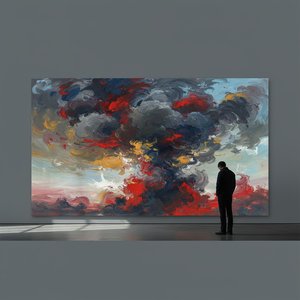
Beyond Representation: Exploring the Emotional Landscape of Abstract Expressionism
Explore the profound emotional world of Abstract Expressionism with OriginalUniqueArt. Discover key artists like Pollock & Rothko, learn about collecting, and find museum-quality reproductions to inspire your space.
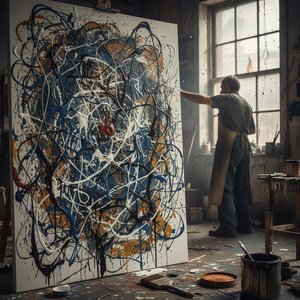
Paul Jackson Pollock: A Radical Departure – Exploring Abstract Expressionism's Pioneering Figure and His Enduring Legacy
Explore the revolutionary art of Jackson Pollock & Abstract Expressionism. Discover his iconic drip paintings, lasting impact, and considerations for collecting this pivotal American artist. Expert insights at OriginalUniqueArt.
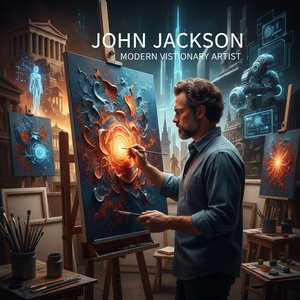
John Jackson: A Comprehensive Exploration of Technique, Context, and the Evolution of a Modern Visionary
Explore the life & work of John Jackson, a pivotal figure in Abstract Expressionism. Discover his innovative techniques, historical context, and lasting influence on modern art. A guide for discerning collectors.

Kandinsky's Meesterwerken: 25 Abstracte Kunstparels voor uw Interieur | OriginalUniqueArt
Ontdek de 25 meest iconische werken van Wassily Kandinsky! Duik in zijn abstracte wereld vol kleur, expressionisme & spirituele diepgang. Vind museumkwaliteit reproducties en interieurinspiratie op OriginalUniqueArt.com.


