Menu
Text size

() ·

A painting made for you, by hand

Five hundred arhats

Handgemaakte olieverfreproductie

Met de hand geschilderd in olieverf op canvas in uw gewenste maat en lijst, op bestelling gemaakt door onze kunstenaars. ( Schakel over naar print Schakel over naar digitale afbeeldingen)

Beschrijving verzamelobject

Explore Ito Jakuchū's mesmerizing 'Five Hundred Arhats,' a monumental silk scroll depicting a serene Zen garden and embodying Japanese artistic brilliance. Discover its symbolism & beauty!

Biografie kunstenaar

Ito Jakuchu (1716-1800): Een revolutionaire Japanse schilder bekend om zijn levendige vogeldrukken en unieke perspectieven, een 'excentrieke' meester die de Japanse kunst radicaal veranderde.

from ·

Chapter 1

How large should it be?

Slide to change the size; the picture on the left shows the frame at its real width. The proportions of the original are kept.

Standaardformaat
op maat gemaakt
CM
INCH

Kies uit onze vooraf ingestelde maten die overeenkomen met de originele verhoudingen van het kunstwerk.

breedte
hoogte

Voer de breedte en hoogte in die u nodig heeft, passend bij uw lijst of uw muur. Omdat dit handgeschilderd is, kan de kunstenaar bij een afmeting met een andere beeldverhouding iets meer rondom het schilderij schilderen of juist iets meer weglaten — u kiest zelf. Wij sturen u een digitaal mockup ter goedkeuring voordat het schilderwerk begint. De afbeelding die op deze pagina wordt getoond, is niet het uiteindelijke resultaat — alleen de mockup geeft dit weer.


Chapter 2

How should it arrive?

Choose the edges of the stretched canvas

Choose your frame

Corner sample of the WhiteWrap canvas edge finish, stretched on massief hout bars
White €1
Corner sample of the BlurSideWrap canvas edge finish, stretched on massief hout bars
Blurside €1
Corner sample of the ExtendedWrap canvas edge finish, stretched on massief hout bars
Extended €1
Corner sample of the P118B picture frame: gegoten polystyreen, 5 cm wide and 3 cm thick
P118B €10
Corner sample of the P118H picture frame: gegoten polystyreen, 5 cm wide and 3 cm thick
P118H €10
Corner sample of the P118W picture frame: gegoten polystyreen, 5 cm wide and 3 cm thick
P118W €10
Corner sample of the P438Z picture frame: gegoten polystyreen, 5.5 cm wide and 3.5 cm thick
P438Z €10
Corner sample of the P508JH picture frame: gegoten polystyreen, 7 cm wide and 3.5 cm thick
P508JH €12
Corner sample of the P508YH picture frame: gegoten polystyreen, 7 cm wide and 3.5 cm thick
P508YH €12
Corner sample of the P805H picture frame: gegoten polystyreen, 5 cm wide and 3.5 cm thick
P805H €10
Corner sample of the P805Z picture frame: gegoten polystyreen, 5 cm wide and 3.5 cm thick
P805Z €10
Corner sample of the P919BZ picture frame: gegoten polystyreen, 7 cm wide and 3.5 cm thick
P919BZ €10
Corner sample of the P919G picture frame: gegoten polystyreen, 7 cm wide and 3.5 cm thick
P919G €10
Corner sample of the P919XJ picture frame: gegoten polystyreen, 7 cm wide and 3.5 cm thick
P919XJ €10
Corner sample of the P959ZH picture frame: gegoten polystyreen, 5 cm wide and 3 cm thick
P959ZH €10
Corner sample of the P968JZ picture frame: gegoten polystyreen, 6 cm wide and 4 cm thick
P968JZ €12
Corner sample of the W106C picture frame: massief hout, 5 cm wide and 3 cm thick
W106C €8
Corner sample of the W218G picture frame: massief hout, 5 cm wide and 3 cm thick
W218G €10
Corner sample of the W218JH picture frame: massief hout, 5 cm wide and 3 cm thick
W218JH €8
Corner sample of the W218Y picture frame: massief hout, 5 cm wide and 3 cm thick
W218Y €10
Corner sample of the W307PJ picture frame: massief hout, 6 cm wide and 3 cm thick
W307PJ €10
Corner sample of the W316G picture frame: massief hout, 6 cm wide and 3 cm thick
W316G €10
Corner sample of the W316PJ picture frame: massief hout, 6 cm wide and 3 cm thick
W316PJ €8
Corner sample of the W316Y picture frame: massief hout, 6 cm wide and 3 cm thick
W316Y €10
Corner sample of the W398PJ picture frame: massief hout, 5 cm wide and 3 cm thick
W398PJ €8
Corner sample of the W4111J picture frame: massief hout, 6.5 cm wide and 3.5 cm thick
W4111J €10
Corner sample of the W500HY picture frame: massief hout, 7 cm wide and 5 cm thick
W500HY €15
Corner sample of the W500JH picture frame: massief hout, 7 cm wide and 5 cm thick
W500JH €15
Corner sample of the W692G picture frame: massief hout, 8 cm wide and 4 cm thick
W692G €12
Corner sample of the W849H picture frame: massief hout, 5 cm wide and 3 cm thick
W849H €8
Corner sample of the W940BG picture frame: massief hout, 7.5 cm wide and 4.5 cm thick
W940BG €15
Corner sample of the W953PJ picture frame: massief hout, 6 cm wide and 3.5 cm thick
W953PJ €8
Corner sample of the H24-GOLD picture frame: gesneden hout met gesso, 10 cm wide and 6 cm thick
H24-GOLD €30
Corner sample of the H24-SILVER picture frame: gesneden hout met gesso, 10 cm wide and 6 cm thick
H24-SILVER €30
Corner sample of the H36-GOLD picture frame: gesneden hout met gesso, 15 cm wide and 6.5 cm thick
H36-GOLD €45
Corner sample of the H36-SILVER picture frame: gesneden hout met gesso, 15 cm wide and 6.5 cm thick
H36-SILVER €45
Lijstvoorbeeld
Ingelijst

Moulding: . Overall size with the frame: .

Chapter 3

Who paints it, and should anything change?

Examples of what can be changed: Replace face with customer photo; Add pet (e.g., replace cat with dog); Include hidden message in background; Change background landscape or elements.
After order, OriginalUniqueArt.com team will email client for instructions and provide a mockup preview

Wereldwijde levering () binnen 3 tot 4 weken in plaats van de standaard 5 weken. (30 oktober). Zonder concessies aan de kwaliteit.

Chapter 4

The finishing touches

A nameplate, as in a museum?

Details van de gegraveerde bronzen plaat

This elegant plaque features the artist's name and the title of the artwork, finely engraved for a timeless presentation.

It is made from bronze with a refined, elegant finish. The text is precisely laser-engraved for a sharp and permanent result. Measuring 9x2 cm, the plaque is compact yet easy to read. It's built to be durable and scratch-resistant, offering a professional, museum-quality look. Mounting is simple thanks to the included adhesive backing.

Details transparante acrylplaat

The plaque includes essential engraved details such as the artist's name, the title of the artwork, the date it was created, the type of media used-like oil on canvas or watercolor-a brief description of the piece, and a QR code that links to the complete artwork information.

It is crafted from clear acrylic, offering a sleek, modern appearance. The text is UV-engraved in black to ensure strong visual contrast. With a size of 10x15 cm, it ensures optimal readability. It comes equipped with two metal hooks for secure wall mounting. The plaque is designed to be weather-resistant, making it suitable for various environments, and it includes interactive features that work seamlessly with smartphone scanning.

Details zwarte acrylplaat

This elegant plaque includes engraved information such as the artist's name, the title of the artwork, the date it was created, the type of media used (like oil on canvas or watercolor), a short description of the artwork, and a QR code for quick access to more information.

The plaque itself is made from refined black acrylic with a premium finish. The text is laser-engraved in white for high contrast and readability. Its size is 10x15 cm, designed to be easy to read. It comes with two metal hooks for professional mounting. The design is sleek and fits any interior style. It is also weather-resistant and durable, with built-in digital integration for mobile compatibility.

A protective varnish?

When do you need it?

Chapter 5

Your painting, as you ordered it

Five hundred arhats

Druktechniek

Afmetingen reproductie

-

Geselecteerde topkunstenaars

Meer detail, verfijning en extra productietijd

-

Lijst voor reproductie

-

-

Voor kunstwerken of reproducties die aan één zijde groter zijn dan 105 cm (ongeveer 41 inch), wordt de lijst als een losse set verzonden. Deze methode garandeert een veilige levering en voorkomt schade tijdens het transport.

Professionele montage vereist - dit is geen doe-het-zelfproduct.
De set moet worden gemonteerd en het canvas moet worden gespannen door een ervaren professionele lijstenmaker, met gebruik van houtlijm (niet inbegrepen), een doekspanter en klemmen om de sponningen recht te houden terwijl de lijm droogt. Onjuiste montage of een ongelijkmatige spanning op het canvas kan het kunstwerk permanent beschadigen en wordt niet gedekt door onze garantie.

  • Alle massief houten onderdelen zijn inbegrepen, nauwkeurig op maat gesneden voor montage.

  • Te monteren met de meegeleverde schroeven, plus houtlijm voor de hoekverbindingen, die niet wordt meegeleverd en door uw lijstenmaker moet worden aangeschaft.

  • Professioneel gereedschap is vereist en niet inbegrepen: een spanner voor canvas en klemmen om de latten recht te houden terwijl de lijm droogt.

Belangrijk:
De hoekverbindingen vereisen houtlijm, de latten moeten met lijmklemmen worden vastgehouden tot de lijm volledig is opgedroogd, en het spannen van het canvas op het samengestelde frame vereist een doekspanter. Geen van deze artikelen is inbegrepen in de set. Wij adviseren u om een ervaren professionele lijstenmaker te raadplegen voordat u deze maat bestelt.

Naamplaatje

-

-

Beschermende vernislaag

Glanzende vernis (versterkt de kleuren en biedt bescherming tegen licht en vocht)

-

Mijn kunstwerk aanpassen

Voorbeelden van aanpassingen: vervang het gezicht door een eigen foto; voeg een huisdier toe (bijv. vervang de kat door een hond); verwerk een verborgen boodschap in de achtergrond; wijzig het landschap of andere elementen op de achtergrond.

-

Spoedlevering

Wereldwijde levering () binnen 3 tot 4 weken in plaats van de standaard 5 weken. (30 oktober). Geen concessies aan de kwaliteit.

-

Spoedlevering

Wereldwijde levering naar binnen 5 weken. (6 november).

Inbegrepen

Eindtotaal

€ 265

Totaalprijs € 265

De optie voor glas is alleen beschikbaar bij een formaat kleiner dan 110 cm.

Included with every order

  • Gratis wereldwijde expressverzending
  • Hoogwaardig linnen canvas
  • Volledige verzendverzekering
  • Garantie op terugbetaling van invoerrechten
  • Garantie op exacte kleurweergave
  • Retourbeleid van 100 dagen (alleen bij defecten)
  • 100% Geld-terug-garantie
  • Korting bij meerdere afnames

A Vision of Zen Serenity: The Spiritual Landscape of Itō Jakuchū

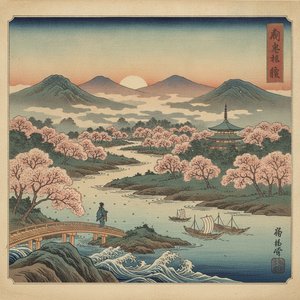
In the quietude of the late 18th century, amidst the vibrant merchant culture of Kyoto, Itō Jakuchū breathed life into a masterpiece that transcends the boundaries of mere ink and silk. His 1789 work, “Five Hundred Arhats,” is not simply a depiction of religious figures; it is an immersive spiritual journey. As one gazes upon this monumental scroll, the viewer is transported to the serene gardens of Sekiho-ji Temple, where the boundaries between the physical world and the divine begin to dissolve. Jakuchū, born into a prosperous family of grocers, utilized his unique position—blending the practical observations of a merchant with the profound contemplations of Zen Buddhism—to create a visual narrative that captures the very essence of enlightenment.

The composition is a breathtaking feat of storytelling, where each arhat, or enlightened disciple, serves as a brushstroke in a larger tapestry of devotion. Through a masterful command of the ink wash technique, Jakuchū orchestrates a scene that feels both intimately detailed and vast in its spiritual scope. The painting invites the eye to wander through a meticulously recreated landscape, where trees, mountains, and architectural elements provide a grounded reality to the celestial assembly. This delicate balance between the tangible and the transcendent is what makes the piece so captivating for the modern observer; it offers a moment of stillness in an otherwise chaotic world.

Mastery of Technique and the Art of Observation

What sets Jakuchū apart from his contemporaries was his refusal to be bound by the rigid stylistic lineages of the Edo period. While he was trained in the Chinese realist style, he possessed an experimental spirit that allowed him to infuse his work with a startling vitality. In “Five Hundred Arhats,” this is evident in the way light and shadow are suggested through subtle gradations of ink, creating a sense of depth and atmosphere that feels remarkably modern. The artist’s ability to render the textures of silk, stone, and foliage with such precision demonstrates a profound engagement with the natural world—a hallmark of his unique artistic voice.

For the collector or interior designer, this piece offers more than just aesthetic beauty; it provides a focal point of profound emotional resonance. The painting’s ability to evoke Zen serenity makes it an ideal centerpiece for spaces dedicated to reflection, study, or sophisticated relaxation. Whether displayed in a contemporary gallery setting or integrated into a classic, curated interior, the "Five Hundred Arhats" brings with it an aura of historical weight and meditative peace. To possess a high-quality reproduction of this work is to invite the timeless wisdom of the Edo period into one's personal environment, fostering a connection to the enduring pursuit of spiritual clarity.

Veelgestelde vragen

Geeft het auteursrecht van "Five hundred arhats" door Ito Jakuchū toestemming voor reproducties?

"Five hundred arhats" door Ito Jakuchū, onderdeel van de collectie van National Gallery of Victoria, is bevindt zich in het publiek domein - de auteursrechten zijn verlopen. Deze status bepaalt of er reproducties van de afbeelding mogen worden gemaakt.

Voor welke kamer wordt "Five hundred arhats" door Ito Jakuchū aanbevolen?

De aanbevolen ruimte voor "Five hundred arhats" door Ito Jakuchū is een Living Room. Dit advies kan uiteraard worden aangepast aan uw interieur.

Hoe oud was Ito Jakuchū bij het creëren van "Five hundred arhats" in 1789?

Toen "Five hundred arhats" werd gemaakt in 1789, was Ito Jakuchū - geboren in 1716 - 73 jaar oud.

More about this painting

Voorvertoning Bekijk in AR Schakel over naar print Schakel over naar digitale afbeeldingen Verstuur
Details bekijken Gids Toevoegen aan favorieten Download Vergelijkbare items Röntgenonderzoek Diavoorstelling Q&A Statistieken

In numbers

  • 1789the year it was painted
  • 29frames to choose from
  • standard sizes, in its own proportions
  • 5weeks to paint and deliver it
Ito Jakuchū

Ito Jakuchū

1716 - 1800, Japan

Quick facts about Ito Jakuchū

  • Artistic Movement Or Style: Kano school stijl
  • Artists Or Movements Influenced By This Artist: ['Ukiyo-e']
  • Artists Who Influenced This Artist: ['Ōoka Shunboku']
  • Date Of Birth: 2 maart 1716
  • Date Of Death: 27 oktober 1800
  • Full Name: Ito Jakuchū
  • Nationality: Japanse
  • Notable Artworks:
    • Vijfhonderd Arhats
    • Hanshan en Shide
    • Kreeft en Peonies
  • Place Of Birth: Kyoto, Japan

Biografie kunstenaar

De visie van een Kyoto-koopman: De wereld van Itō Jakuchū

Geboren in 1716 te midden van de bruisende Nishiki-markt in Kyoto, kwam Itō Jakuchū naar voren als een van de meest originele en boeiende kunstenaars van Japan. In tegenstelling tot veel van zijn tijdgenoten die vasthielden aan gevestigde artistieke tradities, werd het pad van Jakuchū uniek gevormmed door de welvarende commerciële achtergrond van zijn familie en een diep persoonlijke betrokkenheid bij de Zen-boeddhistische filosofie. Zijn vader, Itō Genzaemon, was een succesvolle kruidenier, wat de jonge Jakuchū een comfortabele opvoeding bood waardoor hij zich vanaf jonge leeftijd kon wijden aan zijn ontluikende talent voor de schilderkunst. Deze commerciële omgeving gaf hem echter ook een bewustzijn van maatschappelijke verschuivingen en de groeiende invloed van de koopmansklasse in Kyoto—een perspectief dat zijn artistieke visie op subtiele wijze zou voeden. Hoewel van hem werd verwacht dat hij uiteindelijk de familiezaak zou overnemen, lag Jakuchū's passie elders, in de drang om de essentie van het leven vast te leggen met penseel en inkt. Na het overlijden van zijn vader, toen hij pas 23 was, leidde Jakuchū de winkel kortstondig voordat hij deze aan zijn broer toevertrouwde, om zich uiteindelijk volledig toe te wijden aan de kunst.

Breken met traditie: Stijl en onderwerp

De artistieke stijl van Itō Jakuchū vormt een fascinerende versmelting van minutieus realisme en speelse experimenteerdrift. Hoewel diep geworteld in traditionele Japanse thema's—met name vogels, bloemen en landschappen—vulde hij zijn werk met een innovatieve geest die hem onderscheidde van velen uit zijn tijd. Hij verwierf bekendheid naast Maruyama Ōkyō door zijn realistische weergaven, maar Jakuchū ging verder dan loutere imitatie van de natuur. Zijn schilderijen kenmerken zich door levendige kleuren, dynamische composities en een bereidheid om conventionele perspectieven uit te dagen. Kippen werden in het bijzonder een terugkerend motief in zijn oeuvre, verheven van bescheiden boerderijdieren tot onderwerpen die waardig waren aan diepgaande artistieke verkenning. Hij schilderde niet simpelweg *wat* hij zag, maar verkende de inherente vitaliteit en het karakter van elk wezen. Naast vogels weerspiegelt Jakuchū's werk vaak Zen-boeddhistische thema's—een contemplatieve stilte, een waardering voor vergankelijkheid en een eerbied voor de natuurlijke wereld. Zijn beroemde Bonthout (Bean Vine) is bijvoorbeeld niet slechts een botanische studie, maar een meditatie over groei, verval en de onderlinge verbondenheid van alle dingen. Zijn meesterlijke polychrome weergaven – *dofshoku sai-e* – worden bijzonder geprezen vanwege de buitengewone aandacht voor detail en een levendig palet dat zelden werd gezien in de Japanse schilderkunst van die periode.

Zen-invloed en artistieke ontwikkeling

De invloed van het Zen-boeddhisme op de kunst van Jakuchū is onmiskenbaar. Hij werd een lekenbroeder (*koji*) in de Shōkoku-ji tempel in Kyoto, waar hij zich onderdompelde in Zen-principes die de nadruk legden op directe ervaring, intuïtie en het zoeken naar verlichting door contemplatie. Deze spirituele basis vormde zijn artistieke benadering diepgaand, door een gevoel van onthechting van wereldse zaken te bevorderen en een onwankelbare focus te creëren op het vastleggen van de essentie van zijn onderwerpen. Er wordt gezegd dat hij zelfs speciale toestemming kreeg om klassieke Chinese schilderijen uit de collectie van de tempel te bestuderen, waardoor hij eeuwen aan artistieke traditie absorbeerde terwijl hij tegelijkertijd zijn eigen unieke pad effende. Hoewel Jakuchū aanvankelijk mogelijk studeerde onder Ōoka Shunboku, een kunstenaar van de Kano-school gespecialiseerd in bloem- en vogelkunst, oversteeg hij al snel de conventionele training en ontwikkelde hij een idiosyncratische stijl die zich niet gemakkelijk liet categoriseren. Zijn bereidheid om te breken met gevestigde normen plaatste hem binnen de "Lineage of Eccentets" (Stamboom van de Excentriekelingen)—een beweging die werd uitgelicht in het invloedrijke boek *Kisō no Keifu* van Nobuo Tsuji. Dit werk verdedigde kunstenaars die artistieke conventies uitdaagden, waarmee Jakuchū's plaats als een cruciaal figuur in de Japanse kunstgeschiedenis werd bezegeld.

Erfenis en herontdekking

Ondanks zijn talent en toewijding bleef Itō Jakuchū tijdens zijn leven relatief onbekend. Pas in de 20e eeuw begon zijn werk brede erkenning te krijgen, grotendeels dankzij het wetenschappelijke werk van Tsuji, dat de perceptie van de schilderkunst uit de Edo-periode revolutioneerde. De verdediging van Jakuchū door Tsuji als een sleutelfiguur binnen de "Lineage of Eccentrics" wekte hernieuwde interesse in zijn kunst en vestigde hem als een van de belangrijkste en meest innovatieve schilders van Japan. Zijn invloed is ook terug te zien in de ontwikkeling van Ukiyo-e, het populaire genre van houtsneden, wat duidt op een bredere impact op de Japanse kunstcultuur. Jakuchū's bereidheid om te experimenteren met perspectief, kleur en onderwerp baande de weg voor toekomstige generaties kunstenaars om conventies uit te dagen en nieuwe creatieve mogelijkheden te verkennen. Een biografie geschreven door de Zen-monnik Daiten Kenjō in 1766 biedt waardevol inzicht in Jakuchū's artistieke filosofie, waarbij zijn bewuste vermijding van menselijke figuren wordt onthuld—een keuze die zijn focus op de natuurlijke wereld en haar inherente schoonheid onderstreept. Vandaag de dag wordt Itō Jakuchū niet alleen gevierd om zijn technische vaardigheid, maar ook om zijn unieke visie; een testament aan de blijvende kracht van een kunstenaar die durfde zijn eigen pad te volgen en de geest van zijn tijd met ongekende originaliteit vastlegde.

Opmerkelijke werken

  • Vijfhonderd Arhats: Een monumentaal werk dat Jakuchū's buitengewone vaardigheid en toewijding toont.
  • Hanshan en Shide (Kanzan en Jittoku): Demonstreert zijn vermogen om de essentie van de Japanse cultuur en folklore te vangen.
  • Krabbten en Pioenrozen: Een klassiek voorbeeld van zijn kenmerkende stijl, waarbij minutieus detail wordt gecombineerd met levendige kleur.
  • Bonthout (Bean Vine): Een sumi-e meesterwerk dat de Zen-filosofie belichaamt en complexe details laat zien.
  • Twee Kraanvogels: Toont zijn artistieke kracht in het afbeelden van vogelonderwerpen met gratie en precisie.
  • Oude Pijnboom: Een indrukwekkend werk dat zijn meesterlijke penseelvoering demonstreert (101 x 40 cm, zijde).

Snelle feiten

  • Dimensions: 50 x 71 cm
  • Location: National Gallery of Victoria, Melbourne
  • Title: Five hundred arhats
  • Subject or theme: Buddhist Sculpture Garden
  • Notable elements or techniques: Zen Buddhist influences
  • Artist: Itō Jakuchū

Kunstquiz

Er is slechts één goed antwoord op elke vraag.

Vraag 1:
What is Ito Jakuchū primarily known for?
Vraag 2:
Where was Ito Jakuchū's sculpture garden located?
Vraag 3:
What does the inscription ‘ASOBI’ on the gateway symbolize?
Vraag 4:
The landscape depicted in Five Hundred Arhats resembles what famous place?
Vraag 5:
What artistic style is Ito Jakuchū's work characterized by?
Ontdek kunstwerken georganiseerd op thema, stijl en kenmerk.