Bekijk op ware grootte
 Verstuur
 Delen
Delen
 Details bekijken
 Gids voor studentenkunstwerken

 Download
 Vergelijkbare items
 Röntgenonderzoek
 Diavoorstelling
 Statistieken
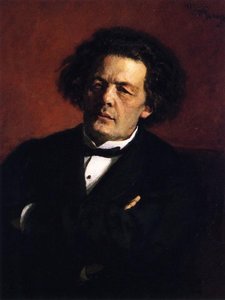
Portret van de componist Anton Rubinstein
 Acryl op canvas
- Wanddecoratie
- Realist Portraiture
 1881
1881 80.0 x 62.0 cm
 Tretyakovgalerie
 Lees meer
Giclée / Kunstafdrukken
Giclée- of canvasafdruk van museumkwaliteit met een snelle productie en flexibele afwerkingsmogelijkheden. ( Koop handgeschilderd kunstwerk Schakel over naar digitale afbeeldingen)




P118B €10

P118H €10

P118W €10

P438Z €10

P508JH €12

P508YH €12

P805H €10

P805Z €10

P919BZ €10

P919G €10

P919XJ €10

P959ZH €10

P968JZ €12

W106C €8

W218G €10

W218JH €8

W218Y €10

W307PJ €10

W316G €10

W316PJ €8

W316Y €10

W398PJ €8

W4111J €10

W500HY €15

W500JH €15

W692G €12

W849H €8

W940BG €15

W953PJ €8




Kies uit onze vooraf ingestelde maten die overeenkomen met de originele verhoudingen van het kunstwerk.

Voer de breedte en de hoogte in die u nodig heeft, passend bij uw lijst of uw muur. Een afdruk kan alleen worden ingekort, nooit groter worden gemaakt dan het origineel, waardoor een formaat met een andere verhouding een deel van de afbeelding verliest. Wij sturen u een digitaal mockup ter goedkeuring voordat we iets drukken. De afbeelding op deze pagina toont niet de werkelijke uitsnede — dit is alleen te zien op het mockup.
Wereldwijde levering () binnen 2 weken in plaats van de standaard 4/5 weken. (22 oktober)

Gratis wereldwijde expressverzending

Hoogwaardig linnen canvas

Volledige verzendverzekering

Garantie op terugbetaling van invoerrechten

Garantie op exacte kleurweergave

Retourbeleid van 100 dagen (alleen bij defecten)

100% Geld-terug-garantie

Korting bij meerdere afnames
 De optie voor glas is alleen beschikbaar bij een formaat kleiner dan 110 cm.

Portret van de componist Anton Rubinstein
Giclée / Kunstafdrukken
Formaat reproductie
-


Totaalprijs
€ 71
De Intieme Kracht van een Geest: Portret van Anton Rubinstein
Het portret van de componist Anton Rubinstein, geschapen door de briljante Ilya Yefimovich Repin in 1881, is meer dan slechts een afbeelding; het is een raadselachtige blik in de ziel van een muzikaal genie. Huidig te bewonderen in de Tretyakov Gallery in Moskou, dit schilderij straalt een diepe introspectie uit, gevangen in de doordringende blik van Rubinstein zelf. Repin, een meester in het vastleggen van emoties en realisme, heeft hier een onvergetelijke figuur tot leven gewekt, niet door overdreven theatraliteit, maar door subtiele nuances in licht, kleur en compositie.
De compositie is doordrenkt van Repins kenmerkende techniek: het gebruik van schaduw om volume te creëren, de zorgvuldige selectie van aardse tinten die een gevoel van warmte en sereniteit oproepen. De donkere haren en baard van Rubinstein, in contrast met de lichte achtergrond, benadrukken zijn karakter en geven het portret een gevoel van diepte. De houding – de blik naar beneden gericht – suggereert een moment van reflectie, misschien een poging om de complexiteit van zijn muziek te verwerken of simpelweg verloren in gedachten.
Ilya Repin: Een Realistische Pionier
Om het portret volledig te begrijpen, is het essentieel om Ilya Yefimovich Repin’s artistieke context te kennen. Geboren in 1844 in Chuguev, Oekraïne, groeide Repin op met een diepe waardering voor de realiteit van het leven – een invloed die zich duidelijk aftekent in zijn werk. Zijn vroege jaren, gevuld met het observeren van het eenvoudige leven van het platteland, legden de basis voor zijn schilderstijl: een eerlijke en onversierde weergave van menselijke emoties en ervaringen. Repin was niet alleen een getalenteerd kunstenaar; hij was ook een kritische waarnemer van de Russische samenleving, en zijn werk is vaak doordrenkt van sociale commentaar.
De fascinatie van Repin voor portretten leidde hem tot het creëren van iconische beelden van andere prominente figuren van zijn tijd, zoals Modest Mussorgsky. Deze werken tonen een vergelijkbare focus op de innerlijke wereld van de onderwerpen, waarbij Repin probeert hun persoonlijkheid en karakter vast te leggen.
Symboliek en Historische Betekenis
Het portret van Rubinstein is niet alleen een visueel aangename ervaring; het is ook rijk aan symboliek. De keuze om Rubinstein naar beneden te kijken kan worden geïnterpreteerd als een weerspiegeling van zijn introspectieve aard en de diepte van zijn muzikale wereld. De setting, met de donkere achtergrond, suggereert misschien een gevoel van isolatie of concentratie – de perfecte omgeving voor een componist om zich te verdiepen in zijn creaties. Het schilderij is ook een belangrijk document uit de Russische kunstgeschiedenis, dat getuigt van de bloeiende culturele scene aan het einde van de 19e eeuw.
De connectie met Pavel Tretyakov, de stichter van de Tretyakov Gallery, voegt een extra laag betekenis toe. Tretyakov was een fervent kunstliefhebber en verzamelaar, en zijn collectie is een schat aan Russische meesterwerken. Het feit dat dit portret in de galerie te vinden is, benadrukt de belangrijke rol die Repin speelde in het vormgeven van de Russische kunstidentiteit.
Een Handgeschilderde Reproduktie – Een Unieke Ervaring
OriginalUniqueArt biedt prachtige, handgeschilderde reproducties van dit meesterwerk aan. Deze reproducties zijn niet alleen een visuele herinnering aan het origineel; ze zijn ook een bewijs van de kunstenaar’s vaardigheid en passie. Door het gebruik van traditionele schildertechnieken en hoogwaardige materialen, creëren we reproducties die de essentie van het originele schilderij vastleggen – de lichtval, de textuur, de emotie. Bezoek https://OriginalUniqueArt.com om uw eigen replica te bestellen en deze prachtige kunst in uw interieur te brengen.
Vragen & Antwoorden
Wat stelt "Portret van de componist Anton Rubinstein" door Ilja Repin voor, en welke stemming straalt het uit?
"Portret van de componist Anton Rubinstein" toont composer, rubinstein, repin, portrait, russia, music, 1881, introspection, en de vastgelegde stemming is Elegant.
Hoe licht is "Portret van de componist Anton Rubinstein" in zijn geheel?
De waargenomen helderheid van "Portret van de componist Anton Rubinstein" door Ilja Repin is diepe schaduw. Deze kan worden afgestemd op het licht in de beoogde ruimte.
In welke oriëntatie staat "Portret van de componist Anton Rubinstein" door Ilja Repin?
"Portret van de componist Anton Rubinstein" door Ilja Repin heeft een Staand formaat-formaat. Het formaat beschrijft de verhoudingen van de compositie.
Biografie van de kunstenaar
Early Life and the Seeds of Realism
Ilya Yefimovich Repin, a name that resonates deeply within the heart of Russian art, was born in 1844 in the unassuming Ukrainian town of Chuguev. His origins were far removed from the opulent circles often associated with artistic patronage; his father, a former soldier who traded horses, and his mother, rooted firmly in local traditions, instilled in young Ilya a profound connection to the land and its people – a connection that would become the very foundation of his artistic vision. This early immersion into rural life—its hardships, its vibrant spirit, and its unwavering resilience—shaped his perspective in ways he could scarcely have imagined as a boy. Formal education began at a local school where his mother served as teacher, but a brief period followed at a military cantonist school, an experience he later recalled with a touch of wryness. Yet, even within the regimented structure of military life, his innate talent for drawing blossomed, hinting at the extraordinary artist he would become. At sixteen, he made a pivotal decision: to apprentice himself to Ivan Bunakov, an icon painter, embarking on a rigorous training in religious art that honed his skills in meticulous detail and compositional precision. These formative years weren’t merely exercises in technical proficiency; they represented a crucial immersion into the visual language of Russian culture—a deep understanding of symbolism, color, and form—laying the groundwork for his later explorations of national identity and social commentary. Through restoring ancient icons and fulfilling portrait commissions, Repin began to observe and capture the essence of human character – a skill he would master with remarkable insight throughout his illustrious career.St. Petersburg and the Embrace of Social Consciousness
Driven by an unyielding ambition, Repin journeyed to St. Petersburg in 1863, seeking admission to the prestigious Imperial Academy of Arts. Initial rejection didn’t deter him; instead, he diligently audited classes, immersing himself completely in the city's vibrant artistic milieu. It was here that he encountered Ivan Kramskoi, a towering figure within the Peredvizhniki movement – a collective of realist artists who boldly rejected the rigid conventions of academic art and sought to depict Russian life with unflinching honesty and social awareness. Kramskoi became Repin’s mentor, guiding him towards a more politically engaged approach to his work. The influence of critic Vladimir Stasov was also profoundly significant, encouraging Repin to focus on contemporary themes—the lives of ordinary Russians, the injustices they faced, and the struggles for social change. Repin's talent quickly flourished, earning recognition and prestigious awards – including gold medals for works like “Job and His Friends” in 1869 and "The Raising of Jairus’ Daughter" in 1871. These early successes signaled the arrival of a powerful new voice in Russian art—one that would challenge established norms and capture the spirit of a rapidly changing nation. A particularly formative experience was his journey to the Volga River in 1870, sketching the arduous lives of barge haulers – laborers who dragged boats upstream against the current. This encounter ignited within him a deep empathy for the working class and provided the inspiration for what would become his most celebrated masterpiece: *Barge Haulers on the Volga*.Masterpieces of Realism and Historical Drama
Repin’s name became inextricably linked with realism through works that unflinchingly portrayed the realities of Russian society. “Barge Haulers on the Volga” (1873), a monumental canvas depicting eleven exhausted laborers dragging boats upstream, shocked and captivated audiences. It wasn't merely a depiction of physical hardship; it was a searing indictment of social injustice—a powerful testament to human endurance in the face of exploitation. This painting launched Repin into national prominence and firmly established him as a leading voice for the marginalized. He continued to explore themes of Russian life with both sensitivity and critical insight, producing works such as *“Religious Procession in Kursk Province”* (1883), which offered a nuanced portrayal of faith, superstition, and social hierarchy; and *“Ivan the Terrible and His Son Ivan”* (1885), a psychologically intense depiction of a father’s rage and his son's tragic demise. The latter painting caused a scandal upon its unveiling, but it remains one of Repin’s most enduring masterpieces—a chilling exploration of power, guilt, and the devastating consequences of violence. Perhaps his most celebrated work is *“Reply of the Zaporozhian Cossacks”* (1880-91), a vibrant and dynamic scene capturing the defiant spirit of Ukrainian Cossacks composing a satirical letter to the Ottoman Sultan – a bold symbol of resistance and national pride. These paintings were not simply historical recreations; they were imbued with psychological depth, emotional intensity, and a profound understanding of human nature, bringing the past vividly to life for viewers.Legacy and Enduring Influence
Throughout his long and prolific career, Repin continued to paint portraits of prominent figures—Leo Tolstoy, Modest Mussorgsky, Pavel Tretyakov—capturing their personalities with remarkable insight and empathy. He also served as a teacher at the Imperial Academy of Arts in St. Petersburg, shaping the artistic sensibilities of generations of young painters. His commitment to realism and social commentary resonated deeply within Russia and beyond, establishing him as a major figure in European art. While he initially embraced the February Revolution of 1917, Repin was profoundly disillusioned by the subsequent violence and terror unleashed by the Bolsheviks following the October Revolution. He retreated to his estate, Penates, in Kuokkala (now part of Finland), where he continued to paint until his death in 1930. Repin’s legacy extends far beyond his individual paintings—his work profoundly influenced the development of Russian art and continues to inspire artists today. His ability to capture the human condition with both empathy and unflinching honesty ensures that he will remain one of Russia's most important cultural figures, a testament to the power of art as a force for social change and artistic expression. Penates, his beloved country estate, now stands as a museum—a poignant reminder of the life and work of this extraordinary artist.
Ilja Repin
1844 - 1930 , Rusland
Snelle feiten
- Artistic Movement Or Style: Realisme
- Artists Or Movements Influenced By This Artist: ['Peredvizhniki']
- Artists Who Influenced This Artist:
- Kramskoi
- Stasov
- Date Of Birth: 1844
- Date Of Death: 1930
- Full Name: Ilya Yefimovich Repin
- Nationality: Russisch
- Notable Artworks:
- Barge Haulers
- Cossacks
- Ivan Terrible
- Place Of Birth (City And Country): Chuguev, Rusland
Gerelateerde artikelen

Oil on Canvas: A Historical & Technical Exploration of a Timeless Artistic Medium
Explore the rich history & enduring techniques of oil painting on canvas. Discover the science behind its longevity, conservation practices, and contemporary relevance. Expert insights for art enthusiasts.
Ilya Repin: Realism, Revolution & the Russian Soul – A Comprehensive Exploration of Life and Legacy
Explore the life & legacy of Ilya Repin, Russia's leading realist painter. Discover his iconic works like 'Barge Haulers on the Volga,' social commentary, and profound portraits. A comprehensive guide for art enthusiasts.

The Enduring Legacy of Oil on Canvas: Technique, History & Aesthetic Impact
Explore the rich history & techniques of oil painting – from Renaissance masters to Impressionism. Discover pigments, layering methods, and why this timeless medium endures. Expert insights for artists & art enthusiasts.

Vladimir Makovsky: Realism, Social Commentary & Russian Life in Late 19th-Century Painting
Explore the captivating world of Vladimir Makovsky, a leading Russian realist painter. Discover his insightful depictions of 19th-century life, social commentary & legacy with OriginalUniqueArt.

Ivan Bilibin: A Synthesis of Folklore, Modernism & National Identity in Russian Illustration
Explore the enchanting world of Ivan Bilibin, a master Russian illustrator who synthesized folklore, Art Nouveau & national identity. Discover his iconic fairy tale illustrations and legacy with OriginalUniqueArt.