

 Bekijk op ware grootte
 Verstuur
 Delen
Delen
 Details bekijken
 Gids voor studentenkunstwerken

 Download
 Vergelijkbare items
 Röntgenonderzoek
 Diavoorstelling
 Statistieken
Wandering Minstrels
 Oil On Canvas
- WallArt
- Romantic Antiquarianism
 1777
1777 175.0 x 123.0 cm
 Metropolitan Museum of Art
 Lees meer
Koop een digitale afbeelding in hoge resolutie met verbeterde kwaliteit, die veel superieur is aan de online voorvertoning.
Elk bestand wordt met uiterste precisie voorbereid door onze interne specialisten, met behulp van geavanceerde tools en deskundige handmatige retouche. Wij garanderen dat elke afbeelding een uitzonderlijke helderheid, nauwkeurige kleurweergave en verfijnde details bezit.
Het uiteindelijke bestand wordt binnen 72 uur per e-mail geleverd, geoptimaliseerd voor direct gebruik in professionele, redactionele en printomgevingen. Dit is dezelfde kwaliteit waarop vooraanstaande designstudio's, uitgevers en galerieën vertrouwen.
Digitale afbeeldingen
Download een bestand met hoge resolutie voor persoonlijke weergave, afdrukken en creatieve projecten. ( Schakel over naar print Koop handgeschilderd kunstwerk)
Inbegrepen bij elke bestelling van een digitale afbeelding
Professionele digitale levering, gegarandeerd
Wanneer u kiest voor OriginalUniqueArt.com, ontvangt u niet alleen een afbeelding – u krijgt een professioneel verbeterd digitaal kunstwerk, met precisie vervaardigd en voorzien van een tevredenheidsgarantie. Dit is alles wat automatisch bij uw bestelling is inbegrepen:

Directe levering per e-mail
Uw hoogwaardige digitale afbeeldingsbestand wordt binnen 72 uur na bestelling naar u gemaild – klaar voor direct gebruik.

AI-geoptimaliseerd digitaal bestand
Uw kunstwerk wordt professioneel geoptimaliseerd met behulp van geavanceerde AI-tools en handmatige bewerkingen, waardoor maximale details, helderheid en kleurnauwkeurigheid worden gegarandeerd.

Gratis levenslange herlevering
Je bestand per ongeluk verwijderd of kwijtgeraakt? Geen zorgen – we sturen het u op elk gewenst moment gratis opnieuw toe.

Geen invoerkosten – nooit
Geniet direct van uw kunstwerk zonder invoerrechten, belastingen of verzendkosten – digitale downloads zijn altijd belastingvrij.

Garantie op kleurgetrouwheid
Met behulp van professionele hulpmiddelen en kleurbeheer zorgen wij ervoor dat uw digitale afbeelding de originele kleuren zo nauwkeurig mogelijk weergeeft.

100 dagen tevredenheidsgarantie
Als u niet tevreden bent met uw digitale afbeelding, passen wij deze aan of storten wij 100% terug binnen 100 dagen - zonder vragen te stellen.

100% Geld-terug-garantie
Niet tevreden? Ontvang een volledige terugbetaling binnen 100 dagen na ontvangst van uw digitale bestand – zonder vragen te stellen.

Korting bij grote bestellingen
Koop 3 afbeeldingen, bespaar 10% - Koop 5, bespaar 15% - Koop 10+, bespaar 20%. Ideaal voor creatieve projecten, galerieën en bureaus.
A Vision of Leisure: Hubert Robert’s “Wandering Minstrels”
Hubert Robert's "Wandering Minstrels," painted in 1777, is more than just a picturesque landscape; it’s a meticulously constructed illusion, a fleeting moment captured with the artist’s signature blend of observation and romantic fancy. Commissioned by the Comte d’Artois as part of his extravagant pleasure pavilion at Bagatelle – a project undertaken with astonishing speed – the painting embodies the Rococo spirit of playful extravagance and the burgeoning fascination with ruins that would define much of the late 18th century. Robert, deeply influenced by his years spent in Italy, masterfully synthesizes elements of Roman architecture and sculpture with a distinctly French sensibility, creating a scene brimming with theatricality and an almost palpable sense of nostalgia.
The composition immediately draws the eye to the central obelisk, flanked by two elegant statues – likely representations of goddesses or allegorical figures. These monumental forms anchor the scene, providing a dramatic backdrop for the lively gathering below. The figures themselves are rendered with a remarkable degree of detail and movement; musicians strumming instruments, dancers twirling, and individuals engaged in various social interactions populate the foreground. Robert’s skill lies not just in depicting these figures accurately but also in conveying their energy and the overall atmosphere of merriment. Notice how he uses light to sculpt the forms, creating a sense of depth and volume that brings the scene vividly to life.
The Art of Illusion: Technique and Style
Robert’s technique is characterized by a loose, almost improvisational brushstroke – a hallmark of his “capriccio” style. He wasn't striving for photographic realism; instead, he prioritized capturing the *feeling* of a place, imbuing it with atmosphere and emotion. The use of color is particularly noteworthy: muted tones dominate, creating a hazy, dreamlike quality that reinforces the painting’s sense of timelessness. He expertly employs atmospheric perspective – objects in the distance appear paler and less distinct – to further enhance the illusion of depth and space. This technique, combined with his masterful handling of light and shadow, is what truly elevates “Wandering Minstrels” beyond a simple landscape depiction.
The painting’s genesis within the Bagatelle project offers crucial context. Robert was tasked with creating a series of six paintings for the pleasure pavilion's bathing room, all centered around the theme of water. This constraint – and the incredibly tight deadline – undoubtedly influenced his approach, leading him to draw upon diverse sources and synthesize them into a cohesive whole. The obelisk itself, for instance, likely derives from Roman architectural models studied by Robert during his time in Italy, while other elements are subtly adapted from French decorative motifs.
Symbolism and Historical Context
“Wandering Minstrels” is deeply rooted in the intellectual currents of the late 18th century. The fascination with ruins – a trend popularized by antiquarians like Johann Joachim Winckelmann – reflected a broader cultural preoccupation with the past, particularly the glories of antiquity. Robert’s incorporation of Roman architectural elements speaks to this interest, but he doesn't simply replicate classical forms; rather, he reimagines them within a distinctly French context. The figures themselves can be interpreted as symbols of leisure and social interaction, reflecting the aristocratic lifestyle enjoyed by the Comte d’Artois and his court.
The painting also subtly alludes to the changing role of art in society. During this period, artists were increasingly expected to create works that not only depicted reality but also evoked emotion and imagination. Robert's “capriccio” style – a genre characterized by fantastical landscapes and idealized scenes – perfectly embodies this shift. The scene is not meant to be a literal representation of a specific place or event; it’s an invented world, designed to transport the viewer to a realm of beauty and delight.
A Legacy of Romantic Vision
“Wandering Minstrels” stands as a testament to Hubert Robert's unique artistic vision. It is a captivating blend of observation, imagination, and technical skill – a painting that continues to enchant viewers with its evocative atmosphere and timeless appeal. Reproductions of this work offer an exceptional opportunity to bring this exquisite scene into your home, allowing you to experience the beauty and artistry of one of France’s most celebrated landscape painters. The intricate details and masterful use of light and color are particularly striking when reproduced on high-quality canvas or aluminum, capturing the essence of Robert's original vision with remarkable fidelity.
Vragen & Antwoorden
Waarvan is "Wandering Minstrels" gemaakt en in welke stijl?
"Wandering Minstrels" is vervaardigd in Oil On Canvas, in de Romantic Antiquarianism-stijl.
Is "Wandering Minstrels" gebleven in het geboorteland van de kunstenaar?
Nee - het kunstwerk wordt in het buitenland bewaard. Hubert Robert werd geboren in Frankrijk, en het originele werk "Wandering Minstrels" wordt bewaard in een museum in United States of America.
Met welk gevoel wordt "Wandering Minstrels" geassocieerd?
"Wandering Minstrels" roept een Nostalgic gevoel op. De emotionele toon beschrijft de indruk die het werk achterlaat.
Biografie van de kunstenaar
Hubert Robert: A Painter of Ruins and Visions
Hubert Robert, a name inextricably linked to the evocative beauty of ruins and the romantic allure of bygone eras, stands as a singular figure in 18th-century French art. Born in Paris in 1733, his life unfolded against a backdrop of profound artistic transformation—a journey from the ornate elegance of the Rococo to the nascent spirit of Neoclassicism, all while navigating the tumultuous currents of the French Revolution. Robert’s genius wasn't merely in replicating decay; it resided in crafting meticulously detailed visions that resonated with both a poignant nostalgia for the past and an anticipation of the future—a delicate balance between observation and imaginative reconstruction. His formative years were spent within the structured environment of artistic training, initially under the tutelage of the sculptor Michel-Ange Slodtz, who recognized Robert’s innate talent but wisely steered him towards painting, sensing a deeper calling in capturing light, atmosphere, and the subtle poetry inherent in form.Roman Reveries: Shaping an Artistic Identity
The defining moment in Robert's artistic development arrived with his extended sojourn to Rome between 1754 and 1765. Accompanying Étienne-François de Choiseul, he immersed himself completely within the ancient city’s captivating world—a realm steeped in history, architectural grandeur, and a palpable sense of timelessness. This wasn't simply a matter of documenting what he saw; it was an act of profound interpretation, reimagining Rome through his own artistic lens. He spent countless hours sketching the crumbling temples, majestic arches, and overgrown gardens of the Eternal City, absorbing its essence with an almost obsessive intensity. His work during this period is profoundly influenced by Giovanni Paolo Panini, whose meticulous depictions of Roman ruins served as a crucial foundation. However, Robert quickly transcended mere imitation, developing his own distinctive style characterized by an unparalleled level of detail, masterful atmospheric perspective, and a remarkable sensitivity to the interplay of light and shadow—qualities that elevated his *capriccio* compositions – fanciful views juxtaposing classical ruins with contemporary life – into something truly exceptional. His sketchbook pages from this period are invaluable windows into his creative process, revealing not just drawings but also a deep understanding of architectural nuance and landscape composition.Parisian Acclaim and Royal Patronage
Robert’s return to Paris in 1765 marked a significant turning point in his career trajectory. He swiftly gained recognition within the established artistic circles, securing admission to the Académie Royale de Peinture et de Sculpture with “The Port of Rome, Ornamented with Different Monuments of Architecture, Ancient and Modern.” This painting, showcasing his newfound mastery of capturing atmosphere and detail, immediately captivated audiences. His subsequent exhibitions at the Salon – the official art exhibition of the French Academy – garnered widespread acclaim, drawing considerable attention to his evocative depictions of ruins and picturesque landscapes. The critic Denis Diderot, a leading figure of the Enlightenment, famously lauded Robert’s ability to transport viewers to another time and place, recognizing in his work a profound connection between history, memory, and artistic vision. This success swiftly led to royal patronage; he was commissioned to design decorative projects for various palaces and estates, and later appointed as “Designer of the King's Gardens” – a prestigious position reflecting his growing influence within the court. He became a highly sought-after artist, not only for his easel paintings but also for his innovative designs for gardens and palatial interiors—demonstrating a remarkable versatility and an understanding of how art could enhance and elevate the spaces around it.Revolution, Resilience, and Lasting Legacy
The French Revolution presented Robert with unprecedented challenges. As the political landscape shifted dramatically, many artists struggled to navigate the turbulent times. However, Robert demonstrated remarkable resilience, continuing to paint prolifically despite the upheaval. He even experienced a harrowing period of imprisonment during the Reign of Terror, an ordeal that profoundly impacted his work and ultimately fueled a series of drawings documenting his confinement—testaments to both his artistic spirit and his enduring commitment to truth. Following the Revolution, Robert was appointed curator of the newly established Muséum Central des Arts – later known as the Louvre – a testament to his expertise and dedication to preserving France’s cultural heritage. He played a crucial role in organizing and cataloging the museum's vast collection, ensuring that its artistic treasures were safeguarded for future generations. Hubert Robert died in Paris in 1808, leaving behind an extraordinary body of work—a legacy that continues to captivate and inspire with its evocative beauty, technical mastery, and profound understanding of the relationship between art, history, and memory.- Key Influences: Giovanni Paolo Panini, Piranesi, the architectural landscape of Rome.
- Major Themes: Ruins, landscapes, *capriccio* paintings, historical memory, the passage of time.
- Artistic Style: Meticulous detail, atmospheric perspective, evocative lighting, blending observation with imagination.
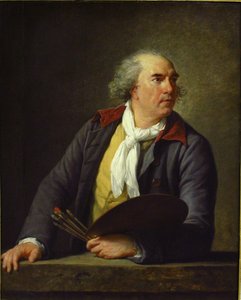
Hubert Robert
1733 - 1808 , Frankrijk
Kerngegevens
- Artistic Movement Or Style: Romantiek, Neoklassiek
- Artists Or Movements Influenced By This Artist: ['Romantiek']
- Artists Who Influenced This Artist:
- Giovanni Panini
- Piranesi
- Date Of Birth: 22 mei 1733
- Date Of Death: 15 april 1808
- Full Name: Hubert Robert
- Nationality: Frans
- Notable Artworks:
- De Haven van Rome
- Vlucht van Galatea
- Place Of Birth: Parijs, Frankrijk