
 Voorvertoning
 Verstuur
 Delen
Delen
 Details bekijken
 Gids
Gids

 Download
 Vergelijkbare items
 Röntgenonderzoek
 Diavoorstelling
 Vraag & antwoord
 Statistieken
VUE D'UN PARC.LE JET D'EAU


 Lees meer
Giclée / Kunstafdrukken
Giclée- of canvasafdruk van museumkwaliteit met een snelle productie en flexibele afwerkingsmogelijkheden. ( Bestel handgeschilderde reproductie Schakel over naar digitale afbeeldingen)




P118B €10

P118H €10

P118W €10

P438Z €10

P508JH €12

P508YH €12

P805H €10

P805Z €10

P919BZ €10

P919G €10

P919XJ €10

P959ZH €10

P968JZ €12

W106C €8

W218G €10

W218JH €8

W218Y €10

W307PJ €10

W316G €10

W316PJ €8

W316Y €10

W398PJ €8

W4111J €10

W500HY €15

W500JH €15

W692G €12

W849H €8

W940BG €15

W953PJ €8




Kies uit onze vooraf ingestelde maten die overeenkomen met de originele verhoudingen van het kunstwerk.

Voer de gewenste breedte en hoogte in, passend bij uw lijst of muur. Een afdruk kan alleen worden ingekort en nooit groter worden gemaakt dan het origineel; een formaat met andere verhoudingen zal daarom een deel van de afbeelding verliezen. Wij sturen u een digitaal mockup ter goedkeuring voordat we tot drukwerk overgaan. De afbeelding op deze pagina toont niet de werkelijke uitsnede — dit is alleen te zien op het mockup.
Wereldwijde levering () binnen 2 weken in plaats van de standaard 4/5 weken. (3 november)

Gratis wereldwijde expressverzending

Hoogwaardig linnen canvas

Volledige verzendverzekering

Garantie op terugbetaling van invoerrechten

Garantie op exacte kleurweergave

Retourbeleid van 100 dagen (alleen bij defecten)

100% Geld-terug-garantie

Korting bij meerdere afnames
 De optie voor glas is alleen beschikbaar bij een formaat kleiner dan 110 cm.

VUE D'UN PARC.LE JET D'EAU
Giclée / Kunstafdrukken
Afmetingen reproductie
-


Eindtotaal
€ 72
A Vision of Tranquility: Hubert Robert's Masterpiece
Hubert Robert (1733-1808), a luminary of the French Romantic landscape movement, transcends mere depiction; he crafts immersive visions that capture the ethereal beauty of decay and the sublime grandeur of nature. His oeuvre stands apart for its meticulous attention to detail—particularly in his “capricci”—semi-fictitious scenes infused with imagination and imbued with an irresistible nostalgia for antiquity.
Composition & Technique: Capturing Atmospheric Depth
“Vue D’Un Parc, Le Jet D’Eau,” executed in oil on canvas, exemplifies Robert's signature style. The composition is vertically oriented, prioritizing the imposing presence of a water fountain as its central focal point—a deliberate choice reflecting the artist’s fascination with architectural ruins and idealized landscapes. Careful layering of thin washes creates subtle gradations of color and tone, mirroring the diffused light characteristic of overcast days. Robert's technique skillfully employs glazing to achieve remarkable luminosity, bringing forth an astonishing level of realism.
Historical Context & Symbolism: Echoes of Classical Elegance
Robert’s artistic journey unfolded against a backdrop of profound change—from the opulent Rococo to the burgeoning Neoclassicism. However, he steadfastly adhered to Romantic principles, prioritizing emotion and imagination over strict academic conventions. The scene itself speaks volumes about Robert's worldview: it portrays a formal garden bathed in soft hues, reminiscent of Roman villas and idealized pastoral settings. The fountain symbolizes purity and renewal—a poignant reminder of classical ideals juxtaposed with the inevitable passage of time.
Color Palette & Texture: A Symphony of Subtle Shades
The artwork’s color palette is dominated by muted greens, blues, and grays—a deliberate aesthetic decision mirroring the atmospheric conditions prevalent in Robert's favored locations. Touches of brown and beige enrich the foreground, grounding the composition while highlighting textural nuances. The smooth surface of the water fountain contrasts sharply with the rough texture of surrounding trees, creating a dynamic interplay between form and materiality. These meticulous details contribute to an overall impression of serene contemplation.
Emotional Impact & Legacy: An Enduring Impression
"Vue D’Un Parc, Le Jet D’Eau" transcends its formal elements—it evokes feelings of peace, serenity, and profound connection with the natural world. Robert's ability to distill complex emotions into visual form cemented his place as one of France’s most celebrated landscape painters. Today, reproductions offer a captivating glimpse into this artistic genius, allowing admirers to experience the timeless beauty and intellectual depth of his vision.
Veelgestelde vragen
Wat is de reden voor de auteursrechtelijke status van "VUE D'UN PARC.LE JET D'EAU" door Hubert Robert?
"VUE D'UN PARC.LE JET D'EAU" van Hubert Robert is bevindt zich in het publiek domein - de auteursrechten zijn verlopen. De auteursrechten worden berekend vanaf het jaar van overlijden van de kunstenaar; Hubert Robert is overleden in 1808.
Is er een factsheet over "VUE D'UN PARC.LE JET D'EAU" door Hubert Robert voor studenten?
Er is een Informatieblad pagina beschikbaar voor "VUE D'UN PARC.LE JET D'EAU" door Hubert Robert: een printbaar informatieblad over het kunstwerk, ontworpen voor studenten en gebruik in de klas.
Is "VUE D'UN PARC.LE JET D'EAU" typerend voor het werk van Hubert Robert?
"VUE D'UN PARC.LE JET D'EAU" verbeeldt garden, landscape, fountain, trees, classical, atmosphere, ruins, terwijl de bekende thema's van Hubert Robert romantic idealism, observation, classical elegance, tradition, landscape visions, ruins, robert’s signature style, formal garden zijn. Een vergelijking tussen beide laat zien hoe het werk zich verhoudt tot de gebruikelijke onderwerpen van de kunstenaar.
Biografie kunstenaar
Hubert Robert: A Painter of Ruins and Visions
Hubert Robert, a name inextricably linked to the evocative beauty of ruins and the romantic allure of bygone eras, stands as a singular figure in 18th-century French art. Born in Paris in 1733, his life unfolded against a backdrop of profound artistic transformation—a journey from the ornate elegance of the Rococo to the nascent spirit of Neoclassicism, all while navigating the tumultuous currents of the French Revolution. Robert’s genius wasn't merely in replicating decay; it resided in crafting meticulously detailed visions that resonated with both a poignant nostalgia for the past and an anticipation of the future—a delicate balance between observation and imaginative reconstruction. His formative years were spent within the structured environment of artistic training, initially under the tutelage of the sculptor Michel-Ange Slodtz, who recognized Robert’s innate talent but wisely steered him towards painting, sensing a deeper calling in capturing light, atmosphere, and the subtle poetry inherent in form.Roman Reveries: Shaping an Artistic Identity
The defining moment in Robert's artistic development arrived with his extended sojourn to Rome between 1754 and 1765. Accompanying Étienne-François de Choiseul, he immersed himself completely within the ancient city’s captivating world—a realm steeped in history, architectural grandeur, and a palpable sense of timelessness. This wasn't simply a matter of documenting what he saw; it was an act of profound interpretation, reimagining Rome through his own artistic lens. He spent countless hours sketching the crumbling temples, majestic arches, and overgrown gardens of the Eternal City, absorbing its essence with an almost obsessive intensity. His work during this period is profoundly influenced by Giovanni Paolo Panini, whose meticulous depictions of Roman ruins served as a crucial foundation. However, Robert quickly transcended mere imitation, developing his own distinctive style characterized by an unparalleled level of detail, masterful atmospheric perspective, and a remarkable sensitivity to the interplay of light and shadow—qualities that elevated his *capriccio* compositions – fanciful views juxtaposing classical ruins with contemporary life – into something truly exceptional. His sketchbook pages from this period are invaluable windows into his creative process, revealing not just drawings but also a deep understanding of architectural nuance and landscape composition.Parisian Acclaim and Royal Patronage
Robert’s return to Paris in 1765 marked a significant turning point in his career trajectory. He swiftly gained recognition within the established artistic circles, securing admission to the Académie Royale de Peinture et de Sculpture with “The Port of Rome, Ornamented with Different Monuments of Architecture, Ancient and Modern.” This painting, showcasing his newfound mastery of capturing atmosphere and detail, immediately captivated audiences. His subsequent exhibitions at the Salon – the official art exhibition of the French Academy – garnered widespread acclaim, drawing considerable attention to his evocative depictions of ruins and picturesque landscapes. The critic Denis Diderot, a leading figure of the Enlightenment, famously lauded Robert’s ability to transport viewers to another time and place, recognizing in his work a profound connection between history, memory, and artistic vision. This success swiftly led to royal patronage; he was commissioned to design decorative projects for various palaces and estates, and later appointed as “Designer of the King's Gardens” – a prestigious position reflecting his growing influence within the court. He became a highly sought-after artist, not only for his easel paintings but also for his innovative designs for gardens and palatial interiors—demonstrating a remarkable versatility and an understanding of how art could enhance and elevate the spaces around it.Revolution, Resilience, and Lasting Legacy
The French Revolution presented Robert with unprecedented challenges. As the political landscape shifted dramatically, many artists struggled to navigate the turbulent times. However, Robert demonstrated remarkable resilience, continuing to paint prolifically despite the upheaval. He even experienced a harrowing period of imprisonment during the Reign of Terror, an ordeal that profoundly impacted his work and ultimately fueled a series of drawings documenting his confinement—testaments to both his artistic spirit and his enduring commitment to truth. Following the Revolution, Robert was appointed curator of the newly established Muséum Central des Arts – later known as the Louvre – a testament to his expertise and dedication to preserving France’s cultural heritage. He played a crucial role in organizing and cataloging the museum's vast collection, ensuring that its artistic treasures were safeguarded for future generations. Hubert Robert died in Paris in 1808, leaving behind an extraordinary body of work—a legacy that continues to captivate and inspire with its evocative beauty, technical mastery, and profound understanding of the relationship between art, history, and memory.- Key Influences: Giovanni Paolo Panini, Piranesi, the architectural landscape of Rome.
- Major Themes: Ruins, landscapes, *capriccio* paintings, historical memory, the passage of time.
- Artistic Style: Meticulous detail, atmospheric perspective, evocative lighting, blending observation with imagination.
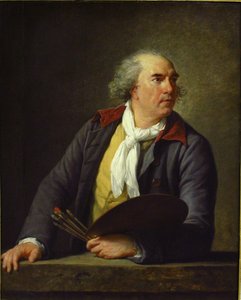
Hubert Robert
1733 - 1808 , Frankrijk
Belangrijkste feiten
- Artistic Movement Or Style: Romantiek, Neoklassiek
- Artists Or Movements Influenced By This Artist: ['Romantiek']
- Artists Who Influenced This Artist:
- Giovanni Panini
- Piranesi
- Date Of Birth: 22 mei 1733
- Date Of Death: 15 april 1808
- Full Name: Hubert Robert
- Nationality: Frans
- Notable Artworks:
- De Haven van Rome
- Vlucht van Galatea
- Place Of Birth: Parijs, Frankrijk
Gerelateerde artikelen

Romantische Landschappen: Top 10 Meesterwerken voor een Sfeervol Interieur | OriginalUniqueArt.nl
Ontdek de 10 meest iconische meesterwerken van de Romantiek! Reis door de tijd met Caspar David Friedrich, Turner & Delacroix. Laat je inspireren en vind museumkwaliteit kunst reproducties voor een sfeervol interieur op OriginalUniqueArt.com.

Evocations of Place: A Historical Journey Through Landscape Art
Explore the rich history of landscape art with OriginalUniqueArt. Discover renowned artists, movements like Impressionism & Romanticism, and expert guidance for collecting timeless pieces. Find your perfect serene escape today!

Hubert Robert: Picturing Ruins, Preserving Memory – A Study of Romantic Antiquarianism & Artistic Innovation
Explore the captivating world of Hubert Robert, master of Romantic landscape painting & 'capriccio' ruins. Discover his historical context, artistic innovations, and collecting insights with OriginalUniqueArt.

John Constable's Top 25 Meesterwerken: Landschappen die de Ziel Raaken | OriginalUniqueArt
Ontdek de 25 mooiste schilderijen van John Constable, meester van de Engelse Romantiek. Van idyllische landschappen tot iconische Hay Wain – bewonder zijn techniek en emotie. Museumkwaliteit reproducties & decoratie op OriginalUniqueArt.com.
Cultivating Paradise: A Historical & Artistic Exploration of Gardens in Painting
Explore the rich history of gardens in painting! Discover masterpieces from Renaissance to Impressionism & beyond. Learn about symbolism, artists like Monet & Klimt, and find your perfect artwork at OriginalUniqueArt.


