

 Voorvertoning
 Verstuur
 Delen
Delen
 Details bekijken
 Gids
Gids

 Download
 Vergelijkbare items
 Röntgenonderzoek
 Diavoorstelling
 Statistieken
RUINES ROMAINES AVEC LE COLISEE


 Lees meer
Get a print-ready file that goes far beyond the web preview. Every digital image we sell comes from a high-resolution master in our stock database — usually 5,000 to 15,000 pixels wide — so you can print large, crop tightly, or reproduce fine detail with confidence.
No file leaves our studio untouched. A digital expert checks the colors against the original painting and corrects them if needed, then improves clarity and detail with professional retouching tools — always staying faithful to the artist's brushwork and style. The result is an image that looks like the painting, not like a filtered scan.
You approve before you're done: our expert sends the image by e-mail within 72 hours for your review. Not satisfied? Ask for improvements or corrections, or request a refund if the quality falls short.
This is the quality relied on by publishers, design studios, galleries and print shops.
Digitale afbeeldingen
Download een bestand met hoge resolutie voor persoonlijke weergave, afdrukken en creatieve projecten. ( Schakel over naar print Bestel handgeschilderde reproductie)
Inbegrepen bij elke bestelling van een digitale afbeelding
Professionele digitale levering, gegarandeerd
Wanneer u kiest voor OriginalUniqueArt.com, ontvangt u niet alleen een afbeelding – u krijgt een professioneel verbeterd digitaal kunstwerk, met precisie vervaardigd en voorzien van een tevredenheidsgarantie. Dit is alles wat automatisch bij uw bestelling is inbegrepen:

Snelle levering per e-mail
Uw hoogwaardige digitale afbeeldingsbestand wordt binnen 72 uur na bestelling naar u gemaild – klaar voor direct gebruik.

AI-verbeterd digitaal bestand
Uw kunstwerk wordt professioneel geoptimaliseerd met behulp van geavanceerde AI-tools en handmatige bewerkingen, waardoor maximale details, helderheid en kleurnauwkeurigheid worden gegarandeerd.

Gratis levenslange herlevering van digitale bestanden
Je bestand per ongeluk verwijderd of kwijtgeraakt? Geen zorgen – we sturen het u op elk gewenst moment gratis opnieuw toe.

Geen invoerkosten – nooit
Geniet direct van uw kunstwerk zonder invoerrechten, belastingen of verzendkosten – digitale downloads zijn altijd belastingvrij.

Garantie op kleurgetrouwheid
Met behulp van professionele hulpmiddelen en kleurbeheer zorgen wij ervoor dat uw digitale afbeelding de originele kleuren zo nauwkeurig mogelijk weergeeft.

100 dagen tevredenheidsgarantie
Mocht u niet tevreden zijn met uw digitale afbeelding, dan passen wij deze aan of storten wij 100% terug binnen 100 dagen – zonder vragen te stellen.

100% Geld-terug-garantie
Niet tevreden? Ontvang een volledige terugbetaling binnen 100 dagen na ontvangst van uw digitale bestand – zonder vragen te stellen.

Korting bij grote bestellingen
Koop 3 afbeeldingen, bespaar 10% - Koop 5, bespaar 15% - Koop 10+, bespaar 20%. Ideaal voor creatieve projecten, galerieën en bureaus.
A Glimpse of Lost Grandeur: Hubert Robert’s “RUINES ROMAINES AVEC LE COLISEE”
Hubert Robert's "Ruines Romaines avec le Colisée" isn’t merely a depiction of crumbling stone; it’s an invitation to step back in time, a poignant meditation on the relentless march of history and the enduring allure of vanished civilizations. Painted around 1788, this captivating artwork transports us to a world where the echoes of Roman power resonate through the fragmented remains of its once-magnificent structures. Robert, a master of the "capriccio," skillfully blends meticulous observation with imaginative flourishes, creating an atmosphere thick with nostalgia and a subtle sense of melancholy. The painting’s strength lies not just in its technical brilliance – the masterful use of light, perspective, and texture – but also in its ability to evoke profound emotional responses, prompting us to contemplate our own place within the vast sweep of time.
Composition and Visual Narrative
The composition immediately draws the eye towards a central vista, a carefully orchestrated pathway leading into the distance where the imposing silhouette of the Colosseum dominates the horizon. Robert employs a strong sense of linear perspective, subtly diminishing the scale of the ruins as they recede, reinforcing their age and isolation. The foreground is dominated by colossal, fragmented columns – remnants of temples and public buildings – arranged in a deliberate framework that guides the viewer’s gaze. A circular basin, populated by figures sketching and observing, acts as an intriguing focal point within this ruinous landscape, suggesting a contemporary appreciation for the past amidst its decay. Scattered rubble and architectural fragments are not simply decorative elements; they actively contribute to the painting's narrative of loss and transformation.
Color, Light, and Atmospheric Effects
The color palette is deliberately muted, reflecting the weathered stone and the passage of centuries. Predominantly shades of grey, beige, brown, and pale blue create a tranquil yet somber atmosphere – a testament to time’s relentless work. Subtle touches of green from the foliage in the left foreground offer a delicate contrast, hinting at nature's persistent reclamation of these ancient spaces. Robert masterfully utilizes diffused light, suggesting an overcast day, which softens shadows and enhances the painting’s overall sense of tranquility. The lighting is particularly effective in highlighting the textures of the stone, emphasizing its roughness and age while simultaneously illuminating the figures within the scene, drawing our attention to their contemplative presence.
Romanticism, Antiquarianism, and Robert's Vision
“Ruines Romaines avec le Colisée” firmly resides within the realm of French Romanticism, yet it transcends simple picturesque landscapes. Robert’s work is deeply rooted in antiquarianism – a fascination with the past and a desire to preserve its memory through art. He wasn't simply documenting ruins; he was actively constructing imagined scenes, blending historical accuracy with poetic license. Influenced by artists like Piranesi, Robert created "capricci" that were not merely realistic depictions but rather evocative narratives of lost grandeur. The painting speaks to the Romantic sensibility’s preoccupation with emotion, imagination, and the sublime—the awe-inspiring beauty found in decay and ruin. Robert's own experiences – his time in Rome, his arrest during the Revolution, and his subsequent role as a guardian of Parisian gardens – undoubtedly shaped his artistic vision, imbuing his work with a profound sense of longing for a bygone era.
OriginalUniqueArt offers exquisite hand-painted reproductions of Hubert Robert’s “Ruines Romaines avec le Colisée,” allowing you to bring this evocative masterpiece into your home or office. Each reproduction is created by skilled artists using traditional oil painting techniques, faithfully capturing the original's atmospheric depth and emotional resonance. Explore our collection today and experience the timeless beauty of Robert’s vision.
Veelgestelde vragen
Wat is de dominante kleur in "RUINES ROMAINES AVEC LE COLISEE" door Hubert Robert?
"RUINES ROMAINES AVEC LE COLISEE" neigt naar een Ochre to Sepia tint.
Is een download met hoge resolutie van "RUINES ROMAINES AVEC LE COLISEE" beschikbaar?
Een digitale afbeelding van "RUINES ROMAINES AVEC LE COLISEE" door Hubert Robert is verkrijgbaar op de Digitale afbeelding pagina: een digitale afbeelding in hoge resolutie om te downloaden.
Is "RUINES ROMAINES AVEC LE COLISEE" door Hubert Robert een schilderij, een tekening of een prent?
In de catalogus is "RUINES ROMAINES AVEC LE COLISEE" door Hubert Robert geclassificeerd als WallArt. Deze categorie helpt bij het vinden van vergelijkbare werken.
Kunstenaarsbiografie
Hubert Robert: A Painter of Ruins and Visions
Hubert Robert, a name inextricably linked to the evocative beauty of ruins and the romantic allure of bygone eras, stands as a singular figure in 18th-century French art. Born in Paris in 1733, his life unfolded against a backdrop of profound artistic transformation—a journey from the ornate elegance of the Rococo to the nascent spirit of Neoclassicism, all while navigating the tumultuous currents of the French Revolution. Robert’s genius wasn't merely in replicating decay; it resided in crafting meticulously detailed visions that resonated with both a poignant nostalgia for the past and an anticipation of the future—a delicate balance between observation and imaginative reconstruction. His formative years were spent within the structured environment of artistic training, initially under the tutelage of the sculptor Michel-Ange Slodtz, who recognized Robert’s innate talent but wisely steered him towards painting, sensing a deeper calling in capturing light, atmosphere, and the subtle poetry inherent in form.Roman Reveries: Shaping an Artistic Identity
The defining moment in Robert's artistic development arrived with his extended sojourn to Rome between 1754 and 1765. Accompanying Étienne-François de Choiseul, he immersed himself completely within the ancient city’s captivating world—a realm steeped in history, architectural grandeur, and a palpable sense of timelessness. This wasn't simply a matter of documenting what he saw; it was an act of profound interpretation, reimagining Rome through his own artistic lens. He spent countless hours sketching the crumbling temples, majestic arches, and overgrown gardens of the Eternal City, absorbing its essence with an almost obsessive intensity. His work during this period is profoundly influenced by Giovanni Paolo Panini, whose meticulous depictions of Roman ruins served as a crucial foundation. However, Robert quickly transcended mere imitation, developing his own distinctive style characterized by an unparalleled level of detail, masterful atmospheric perspective, and a remarkable sensitivity to the interplay of light and shadow—qualities that elevated his *capriccio* compositions – fanciful views juxtaposing classical ruins with contemporary life – into something truly exceptional. His sketchbook pages from this period are invaluable windows into his creative process, revealing not just drawings but also a deep understanding of architectural nuance and landscape composition.Parisian Acclaim and Royal Patronage
Robert’s return to Paris in 1765 marked a significant turning point in his career trajectory. He swiftly gained recognition within the established artistic circles, securing admission to the Académie Royale de Peinture et de Sculpture with “The Port of Rome, Ornamented with Different Monuments of Architecture, Ancient and Modern.” This painting, showcasing his newfound mastery of capturing atmosphere and detail, immediately captivated audiences. His subsequent exhibitions at the Salon – the official art exhibition of the French Academy – garnered widespread acclaim, drawing considerable attention to his evocative depictions of ruins and picturesque landscapes. The critic Denis Diderot, a leading figure of the Enlightenment, famously lauded Robert’s ability to transport viewers to another time and place, recognizing in his work a profound connection between history, memory, and artistic vision. This success swiftly led to royal patronage; he was commissioned to design decorative projects for various palaces and estates, and later appointed as “Designer of the King's Gardens” – a prestigious position reflecting his growing influence within the court. He became a highly sought-after artist, not only for his easel paintings but also for his innovative designs for gardens and palatial interiors—demonstrating a remarkable versatility and an understanding of how art could enhance and elevate the spaces around it.Revolution, Resilience, and Lasting Legacy
The French Revolution presented Robert with unprecedented challenges. As the political landscape shifted dramatically, many artists struggled to navigate the turbulent times. However, Robert demonstrated remarkable resilience, continuing to paint prolifically despite the upheaval. He even experienced a harrowing period of imprisonment during the Reign of Terror, an ordeal that profoundly impacted his work and ultimately fueled a series of drawings documenting his confinement—testaments to both his artistic spirit and his enduring commitment to truth. Following the Revolution, Robert was appointed curator of the newly established Muséum Central des Arts – later known as the Louvre – a testament to his expertise and dedication to preserving France’s cultural heritage. He played a crucial role in organizing and cataloging the museum's vast collection, ensuring that its artistic treasures were safeguarded for future generations. Hubert Robert died in Paris in 1808, leaving behind an extraordinary body of work—a legacy that continues to captivate and inspire with its evocative beauty, technical mastery, and profound understanding of the relationship between art, history, and memory.- Key Influences: Giovanni Paolo Panini, Piranesi, the architectural landscape of Rome.
- Major Themes: Ruins, landscapes, *capriccio* paintings, historical memory, the passage of time.
- Artistic Style: Meticulous detail, atmospheric perspective, evocative lighting, blending observation with imagination.
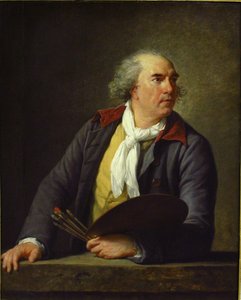
Hubert Robert
1733 - 1808 , Frankrijk
Belangrijkste feiten
- Artistic Movement Or Style: Romantiek, Neoklassiek
- Artists Or Movements Influenced By This Artist: ['Romantiek']
- Artists Who Influenced This Artist:
- Giovanni Panini
- Piranesi
- Date Of Birth: 22 mei 1733
- Date Of Death: 15 april 1808
- Full Name: Hubert Robert
- Nationality: Frans
- Notable Artworks:
- De Haven van Rome
- Vlucht van Galatea
- Place Of Birth: Parijs, Frankrijk