
() ·
Een schilderij speciaal voor u gemaakt, met de hand
Handgemaakte olieverfreproductie
Met de hand geschilderd in olieverf op canvas in uw gewenste maat en lijst, op bestelling gemaakt door onze kunstenaars. ( Schakel over naar print Schakel over naar digitale afbeeldingen)
Biografie kunstenaar
"meta_description": "Homer Dodge Martin (1836-1897) was een Amerikaanse landschapsschilder die de overgang markeerde tussen de Hudson River School en het Impressionisme. Bekend om zijn melancholische, atmosferische schilderijen geïnspireerd door de Barbizon School en de schoonheid van de Adirondacks."
 Lees meer
vanaf ·
Hoofdstuk 1
Hoe groot moet het zijn?
Schuif om de afmetingen te wijzigen; de afbeelding aan de linkerzijde toont de lijst in de werkelijke breedte. De oorspronkelijke verhoudingen blijven behouden.
Kies uit onze vooraf ingestelde maten die overeenkomen met de originele verhoudingen van het kunstwerk.

Voer de breedte en hoogte in die u nodig heeft, passend bij uw lijst of uw muur. Omdat dit handgeschilderd is, kan de kunstenaar bij een afmeting met een andere beeldverhouding iets meer rondom het schilderij schilderen of juist iets meer weglaten — u kiest zelf. Wij sturen u een digitaal mockup ter goedkeuring voordat het schilderwerk begint. De afbeelding die op deze pagina wordt getoond, is niet het uiteindelijke resultaat — alleen de mockup geeft dit weer.
Hoofdstuk 2
Hoe moet het worden geleverd?
Kies de randen van het canvas
Kies uw lijst

Wit €1

Vervagende randen €1

Doorlopende rand €1

P118B €10

P118H €10

P118W €10

P438Z €10

P508JH €12

P508YH €12

P805H €10

P805Z €10

P919BZ €10

P919G €10

P919XJ €10

P959ZH €10

P968JZ €12

W106C €8

W218G €10

W218JH €8

W218Y €10

W307PJ €10

W316G €10

W316PJ €8

W316Y €10

W398PJ €8

W4111J €10

W500HY €15

W500JH €15

W692G €12

W849H €8

W940BG €15

W953PJ €8

H24-GOLD €30

H24-SILVER €30

H36-GOLD €45

H36-SILVER €45
Ingelijst
Lijstrand: . Totale afmetingen inclusief lijst: .
Hoofdstuk 3
Wie schildert het, en moet er iets veranderen?
Na de bestelling zal het team van OriginalUniqueArt.com per e-mail contact opnemen met de klant voor instructies en een mockup-voorbeeld verstrekken
Wereldwijde levering () binnen 3 tot 4 weken in plaats van de standaard 5 weken. (8 november). Zonder concessies aan de kwaliteit.
Hoofdstuk 4
De laatste hand aan
Een naambordje, zoals in een museum?
Details van de gegraveerde bronzen plaat
This elegant plaque features the artist's name and the title of the artwork, finely engraved for a timeless presentation.
It is made from bronze with a refined, elegant finish. The text is precisely laser-engraved for a sharp and permanent result. Measuring 9x2 cm, the plaque is compact yet easy to read. It's built to be durable and scratch-resistant, offering a professional, museum-quality look. Mounting is simple thanks to the included adhesive backing.
Details transparante acrylplaat
The plaque includes essential engraved details such as the artist's name, the title of the artwork, the date it was created, the type of media used-like oil on canvas or watercolor-a brief description of the piece, and a QR code that links to the complete artwork information.
It is crafted from clear acrylic, offering a sleek, modern appearance. The text is UV-engraved in black to ensure strong visual contrast. With a size of 10x15 cm, it ensures optimal readability. It comes equipped with two metal hooks for secure wall mounting. The plaque is designed to be weather-resistant, making it suitable for various environments, and it includes interactive features that work seamlessly with smartphone scanning.
Details zwarte acrylplaat
This elegant plaque includes engraved information such as the artist's name, the title of the artwork, the date it was created, the type of media used (like oil on canvas or watercolor), a short description of the artwork, and a QR code for quick access to more information.
The plaque itself is made from refined black acrylic with a premium finish. The text is laser-engraved in white for high contrast and readability. Its size is 10x15 cm, designed to be easy to read. It comes with two metal hooks for professional mounting. The design is sleek and fits any interior style. It is also weather-resistant and durable, with built-in digital integration for mobile compatibility.
Een beschermende vernis?
Wanneer heeft u het nodig?
Hoofdstuk 5
Uw schilderij, zoals u het heeft besteld

A Wilderness Pool
Druktechniek
Afmetingen reproductie
-

Geselecteerde topkunstenaars
Meer detail, verfijning en extra productietijd
-

Lijst voor reproductie
-
-
Voor kunstwerken of reproducties die aan één zijde groter zijn dan 105 cm (ongeveer 41 inch), wordt de lijst als een losse set verzonden. Deze methode garandeert een veilige levering en voorkomt schade tijdens het transport.
Professionele montage vereist - dit is geen doe-het-zelfproduct.
De set moet worden gemonteerd en het canvas moet worden gespannen door een ervaren professionele lijstenmaker, met gebruik van houtlijm (niet inbegrepen), een doekspanter en klemmen om de sponningen recht te houden terwijl de lijm droogt. Onjuiste montage of een ongelijkmatige spanning op het canvas kan het kunstwerk permanent beschadigen en wordt niet gedekt door onze garantie.
 Voor kunstwerken of reproducties die aan één zijde groter zijn dan 105 cm (ongeveer 41 inch), wordt de lijst als een losse set verzonden. Deze methode garandeert een veilige levering en voorkomt schade tijdens het transport.
Alle massief houten onderdelen zijn inbegrepen, nauwkeurig op maat gesneden voor montage.
Te monteren met de meegeleverde schroeven, plus houtlijm voor de hoekverbindingen, die niet wordt meegeleverd en door uw lijstenmaker moet worden aangeschaft.
Professioneel gereedschap is vereist en niet inbegrepen: een spanner voor canvas en klemmen om de latten recht te houden terwijl de lijm droogt.
Belangrijk:
De hoekverbindingen vereisen houtlijm, de latten moeten met lijmklemmen worden vastgehouden tot de lijm volledig is opgedroogd, en het spannen van het canvas op het samengestelde frame vereist een doekspanter. Geen van deze artikelen is inbegrepen in de set. Wij adviseren u om een ervaren professionele lijstenmaker te raadplegen voordat u deze maat bestelt.

Naamplaatje
-
-

Beschermende vernislaag
Glanzende vernis (versterkt de kleuren en biedt bescherming tegen licht en vocht)
-

Mijn kunstwerk aanpassen
Voorbeelden van aanpassingen: vervang het gezicht door een eigen foto; voeg een huisdier toe (bijv. vervang de kat door een hond); verwerk een verborgen boodschap in de achtergrond; wijzig het landschap of andere elementen op de achtergrond.
-

Spoedlevering
Wereldwijde levering () binnen 3 tot 4 weken in plaats van de standaard 5 weken. (8 november). Geen concessies aan de kwaliteit.
-
Spoedlevering
Wereldwijde levering naar binnen 5 weken. (15 november).
Inbegrepen
Eindtotaal
€ 268
De optie voor glas is alleen beschikbaar bij een formaat kleiner dan 110 cm.
Inbegrepen bij elke bestelling
- Gratis wereldwijde expressverzending
- Hoogwaardig linnen canvas
- Volledige verzendverzekering
- Garantie op terugbetaling van invoerrechten
- Garantie op exacte kleurweergave
- Retourbeleid van 100 dagen (alleen bij defecten)
- 100% Geld-terug-garantie
- Korting bij meerdere afnames


 Voorvertoning
 Verstuur
 Delen
Delen
 Details bekijken
 Gids
Gids

 Download
 Vergelijkbare items
 Röntgenonderzoek
 Diavoorstelling
 Vraag & antwoord
 Statistieken
In cijfers
- 29lijsten om uit te kiezen
- standaardmaten, in hun eigen verhoudingen
- 5weken om te schilderen en te leveren
Over het origineel

Homer Dodge Martin
1836 - 1897, Verenigde Staten van Amerika
Snelle feiten over Homer Dodge Martin
- Artistic Movement Or Style: Hudson River & Imp.
- Artists Or Movements Influenced By This Artist:
- Impressionisme
- Hudson River
- Artists Who Influenced This Artist:
- Hart
- Barbizon
- Corot
- Date Of Birth: 28 okt 1836
- Date Of Death: 12 feb 1897
- Full Name: Homer Dodge Martin
- Nationality: Amerikaans
- Notable Artworks:
- Harp van de Wind
- Bosje
- Rivier
- Place Of Birth: Albany, USA
Biografie kunstenaar
A Bridge Between Worlds: The Life and Art of Homer Dodge Martin
Born in Albany, New York, in 1836, Homer Dodge Martin emerged as a pivotal figure in American landscape painting, a transitional artist who gracefully navigated the shifting currents between the established grandeur of the Hudson River School and the burgeoning innovations of Impressionism. His early life was steeped in artistic promise; briefly tutored by William Hart, he quickly absorbed the prevailing aesthetic of his time—a reverence for detailed realism and the sublime beauty of the American wilderness. Martin’s formative years were also shaped by a vibrant community of artists in Albany, including George Boughton and Edward Gay, fostering an environment of creative exchange that would prove crucial to his development. These early landscapes, meticulously rendered, reflected the Hudson River School's commitment to capturing the majesty of nature, yet even then, hints of a more personal and atmospheric vision were beginning to surface. He spent summers sketching in the Adirondacks, Catskills, and White Mountains, translating those plein air studies into finished works within his New York City studio—a practice common among artists seeking both inspiration from nature and the convenience of urban life. His dedication earned him recognition; election as an associate, and later a full academician, of the National Academy of Design solidified his standing within the art world of the late 19th century.European Awakening and Artistic Transformation
A watershed moment in Martin’s artistic journey arrived with a transformative trip to Europe in 1876. This was not merely a sightseeing excursion, but an immersion into the heart of avant-garde art. Exposure to the Barbizon School—with its emphasis on direct observation and naturalistic depictions of rural life—and the nascent Impressionist movement profoundly altered his artistic sensibilities. The carefully constructed compositions and polished surface of his earlier work began to yield to a looser brushstroke, a more evocative use of color, and a heightened sensitivity to atmospheric effects. He wasn’t simply adopting these new techniques; he was internalizing them, filtering them through his own unique vision. This shift didn't happen overnight. It was a gradual evolution, a subtle but significant departure from the established norms of American landscape painting. The influence is not one of imitation, but rather of inspiration—a broadening of horizons that allowed Martin to explore new possibilities in his art. Artists like Camille Corot and the Barbizon painters provided a model for capturing light and atmosphere with a more spontaneous approach, while the Impressionists demonstrated how color could be used to convey mood and emotion.Years in Normandy and the Essence of Place
The culmination of this artistic awakening came during a four-year residency in France, from 1882 to 1886, primarily in Normandy. He became part of the vibrant artist colony at Étaples, exchanging ideas with fellow painters and immersing himself in the French countryside. This period proved remarkably fruitful, yielding some of his most celebrated works. *The Harbour at Étaples* showcases his growing mastery of topographical detail and his ability to capture the bustling energy of a working port. *Cottage in the Forest*, painted during this time, demonstrates his increasing skill in conveying mood through subtle shifts in light and color—a hallmark of his mature style. However, it was Harp of the Winds, painted at Villerville on the Seine, that truly cemented his reputation. This iconic painting, now housed in the Metropolitan Museum of Art, exemplifies Martin’s artistic synthesis—a harmonious blend of observation and emotion, capturing not just a scene but a feeling, an essence of place. The loose brushwork, vibrant colors, and atmospheric perspective combine to create a powerfully evocative image that resonates with viewers even today.Later Years, Legacy, and Enduring Appeal
Despite his artistic achievements, Martin faced hardship in his later years. Poverty and failing eyesight forced him to relocate to St. Paul, Minnesota, in 1893, where he lived with relatives. Remarkably, even as his vision diminished, his creative spirit remained undeterred. *Adirondack Scenery*, painted from memory while nearly blind, stands as a poignant testament to his enduring passion and artistic skill—a powerful reminder that true artistry transcends physical limitations. This late work, characterized by its muted colors and evocative atmosphere, reveals the depth of Martin’s understanding of landscape painting. Shortly after his death in 1897, *Adirondack Scenery* sold for an impressive $5500, signaling a belated recognition of his talent. Today, Martin's paintings are held in numerous prestigious American museums—the Metropolitan Museum of Art, the Smithsonian American Art Museum, the Addison Gallery of American Art, and many others—ensuring that his work continues to inspire and captivate audiences. Homer Dodge Martin is now rightfully recognized as a transitional figure, a bridge between the Hudson River School’s meticulous realism and the atmospheric poetry of American Impressionism. His innovative approach to landscape painting, characterized by its evocative moodiness and loose brushwork, secures his place as a significant and enduring voice in 19th-century American art.Influences and Techniques
Martin's artistic development was shaped by several key influences. Initially, he absorbed the detailed realism and dramatic lighting of the Hudson River School, mirroring the works of artists like Thomas Cole and Frederic Church. However, his exposure to European art—particularly the Barbizon School’s emphasis on direct observation and the Impressionist movement’s focus on capturing fleeting moments of light and color—led him to adopt a more expressive and atmospheric style. He skillfully blended these influences, creating landscapes that retained a sense of realism while also conveying mood and emotion through his use of color, brushwork, and composition. Martin's technique involved working *en plein air* (outdoors) whenever possible, allowing him to directly observe the effects of light and atmosphere. Back in his New York City studio, he would refine his sketches and create finished paintings using a combination of oil paints and layering techniques to build up color and texture. His compositions often featured expansive vistas, carefully arranged elements, and a sense of depth that drew viewers into the scene.Gerelateerde artikelen

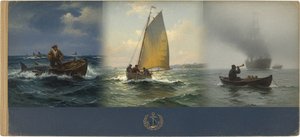
Mastering the Elements: The Top 25 Winslow Homer Artworks
Immerse yourself in the raw power of American Realism with our curated guide to the top 25 Winslow Homer artworks. From dramatic seascapes to iconic landscapes, explore the stories behind these timeless masterpieces and find museum-quality reproductions on OriginalUniqueArt.com.

Mastering the Elements: The 25 Greatest Artworks by Winslow Homer
Explore 25 iconic Winslow Homer masterpieces. Discover the raw power of American Realism on OriginalUniqueArt.com.
Winslow Homer's Top 25 Meesterwerken: Kunst voor uw Interieur | OriginalUniqueArt
Ontdek de 25 meest iconische schilderijen van Winslow Homer! Duik in zijn realistische marineschilderijen, Amerikaanse landschappen & emotionele kunstwerken. Vind museumkwaliteit reproducties en inspiratie voor uw interieur op OriginalUniqueArt.com.

Mastering the Elements: The Top 25 Winslow Homer Artworks
Immerse yourself in the raw power of American Realism with our curated guide to the top 25 Winslow Homer artworks. From dramatic seascapes to iconic landscapes, explore the stories behind these timeless masterpieces. Find museum-quality reproductions at OriginalUniqueArt.com.