
 Voorvertoning
 Verstuur
 Delen
Delen
 Details bekijken

 Download
 Vergelijkbare items
 Röntgenonderzoek
 Diavoorstelling
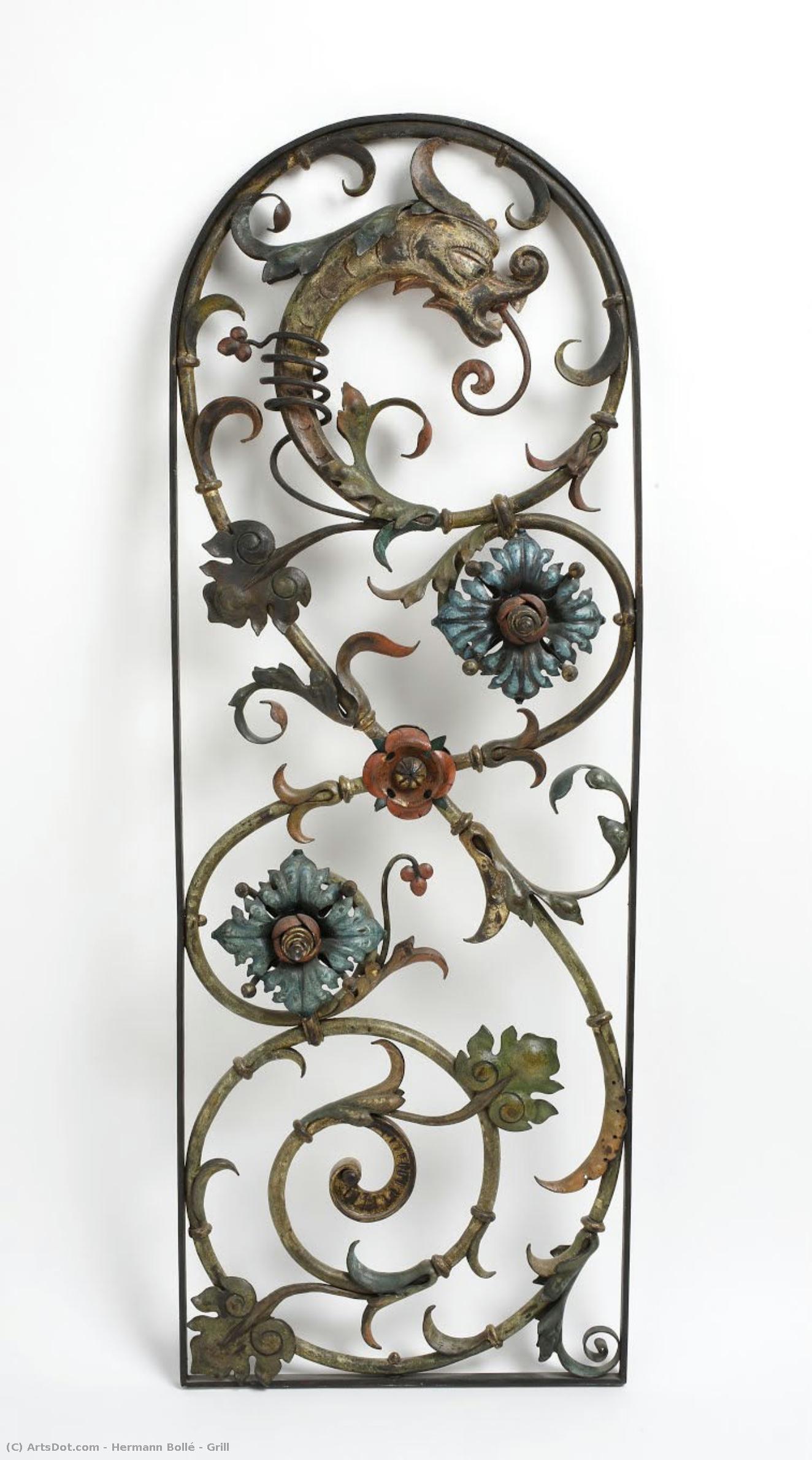
Grill
 1800
1800 100.0 x 36.0 cm
 The Museum of Arts and Crafts
 Lees meer
Koop een digitale afbeelding in hoge resolutie met verbeterde kwaliteit, die veel superieur is aan de online voorvertoning.
Elk bestand wordt met uiterste precisie voorbereid door onze interne specialisten, met behulp van geavanceerde tools en deskundige handmatige retouche. Wij garanderen dat elke afbeelding een uitzonderlijke helderheid, nauwkeurige kleurweergave en verfijnde details bezit.
Het uiteindelijke bestand wordt binnen 72 uur per e-mail geleverd, geoptimaliseerd voor direct gebruik in professionele, redactionele en printomgevingen. Dit is dezelfde kwaliteit waarop vooraanstaande designstudio's, uitgevers en galerieën vertrouwen.
Digitale afbeeldingen
Download een bestand met hoge resolutie voor persoonlijke weergave, afdrukken en creatieve projecten. ( Bestel print Bestel handgeschilderde reproductie)
Inbegrepen bij elke bestelling van een digitale afbeelding
Professionele digitale levering, gegarandeerd
Wanneer u kiest voor OriginalUniqueArt.com, ontvangt u niet alleen een afbeelding – u krijgt een professioneel verbeterd digitaal kunstwerk, met precisie vervaardigd en voorzien van een tevredenheidsgarantie. Dit is alles wat automatisch bij uw bestelling is inbegrepen:

Snelle levering per e-mail
Uw hoogwaardige digitale afbeeldingsbestand wordt binnen 72 uur na bestelling naar u gemaild – klaar voor direct gebruik.

AI-verbeterd digitaal bestand
Uw kunstwerk wordt professioneel geoptimaliseerd met behulp van geavanceerde AI-tools en handmatige bewerkingen, waardoor maximale details, helderheid en kleurnauwkeurigheid worden gegarandeerd.

Gratis levenslange herlevering van digitale afbeeldingen
Je bestand per ongeluk verwijderd of kwijtgeraakt? Geen zorgen – we sturen het u op elk gewenst moment gratis opnieuw toe.

Geen invoerkosten – nooit
Geniet direct van uw kunstwerk zonder invoerrechten, belastingen of verzendkosten – digitale downloads zijn altijd belastingvrij.

Garantie op kleurgetrouwheid
Met behulp van professionele hulpmiddelen en kleurbeheer zorgen wij ervoor dat uw digitale afbeelding de originele kleuren zo nauwkeurig mogelijk weergeeft.

60 dagen tevredenheidsgarantie
Als u niet tevreden bent met uw digitale afbeelding, passen wij deze aan of storten wij 100% terug binnen 60 dagen – zonder vragen gesteld.

100% Geld-terug-garantie
Niet tevreden? Ontvang binnen 60 dagen na ontvangst van uw digitale bestand uw volledige aankoopbedrag terug – zonder vragen te stellen.

Korting bij grote bestellingen
Koop 3 afbeeldingen, bespaar 10% - Koop 5, bespaar 15% - Koop 10+, bespaar 20%. Ideaal voor creatieve projecten, galerieën en bureaus.
Kunstenaarsbiografie
The Architect of a Nation's Soul
In the grand tapestry of Austro-Hungarian history, few figures have woven as indelible a thread into the urban fabric of Croatia as Hermann Bollé. Born in the storied city of Cologne in 1845, Bollé’s journey was one of profound transformation, moving from the precise calculations of civil engineering to the sublime heights of architectural artistry. His early training in the studio of Heinrich Wiethase provided a foundational intimacy with ecclesiastical design, an experience that instilled in him a lifelong reverence for the spiritual weight of stone and spire. This technical rigor, paired with a burgeoning aesthetic sensibility, set the stage for a career that would transcend mere construction, evolving into a mission to define the very identity of a region.
The trajectory of Bollé’s life took a decisive turn through his academic pursuits at the Academy of Fine Arts in Vienna. It was here, amidst the intellectual ferment of one of Europe's great cultural capitals, that he worked under the mentorship of the legendary Friedrich von Schmidt. This collaboration was much more than a professional apprenticeship; it was an immersion into the Gothic Revival movement, a style that sought to recapture the grandeur and moral clarity of the Middle Ages. Through Schmidt, Bollé mastered the language of monumentalism, learning how light, shadow, and verticality could be harnessed to evoke the divine. This period of intense study prepared him for his fateful encounter with Bishop Josip Juraj Strossmayer in Italy, a meeting that would redirect his talents toward the burgeoning cultural landscape of Croatia.
A Legacy Carved in Stone
Upon settling in Zagreb in 1878, Bollé embarked on an ambitious crusade to revitalize the architectural heritage of the Croatian lands. He did not merely build; he restored, breathed life into ruins, and reimagined the skyline. His work was characterized by a meticulous attention to historical authenticity, blended with a visionary approach to urban planning. The restoration of St. Mark’s Church served as an early testament to his ability to honor the past while preparing it for the future. As his influence grew, so did the scale of his contributions, moving from individual monuments to the comprehensive shaping of the city itself.
The breadth of his achievements is nothing short of breathtaking, encompassing a variety of styles that reflect both his technical versatility and his deep respect for tradition:
- The Zagreb Cathedral: Perhaps his most iconic achievement, where his work on the completion of this monumental structure solidified his status as a master of the Neo-Gothic style.
- Mirogoj Cemetery: A masterpiece of funerary architecture, where Bollé’s design creates a serene, dignified space that serves as a profound reflection on life and mortality.
- The Museum of Arts and Crafts: A testament to his ability to integrate functional urban needs with aesthetic elegance, contributing to the cultural sophistication of Zagreb.
- Ecclesiastical Grandeur: His involvement in projects like the Cathedral of St. Peter and St. Paul in Đakovo and the Holy Trinity Greek Catholic Cathedral in Križevci showcased his mastery of religious architecture across different denominations.
The Enduring Silhouette of Zagreb
Beyond the physical structures that bear his name, Hermann Bollé’s true significance lies in his role as a cultural architect. He was a man who understood that a city is not merely a collection of buildings, but a living organism shaped by its history and its aspirations. Through his comprehensive city planning initiatives, he prioritized a harmony between functionality and beauty, ensuring that the expansion of Zagreb was both orderly and aesthetically cohesive. His work provided a sense of continuity for a people navigating the complexities of the late 19th and early 20th centuries.
When Bollé passed away in Zagreb in 1926, he left behind a landscape that had been fundamentally transformed. To walk through the streets of Zagreb or to stand beneath the soaring arches of his cathedrals is to encounter his enduring spirit. He remains a pivotal figure whose work bridged the gap between German technical precision and Croatian cultural identity, leaving an indelible mark on the architectural soul of Central Europe.

hermann bollé
1845 - 1926 , Germany
Belangrijkste feiten
- Artistic Movement Or Style: Neo-Gothic
- Artists Or Movements Influenced By This Artist: ['Zagreb']
- Artists Who Influenced This Artist: ['Friedrich von Schmidt']
- Date Of Birth: 18 September 1845
- Date Of Death: 17 April 1926
- Full Name: Hermann Bollé
- Nationality: Austro-Hungarian
- Notable Artworks: ['Grill']
- Place Of Birth: Cologne, Germany

