- Home

- Digitale afbeeldingen
- heri dono
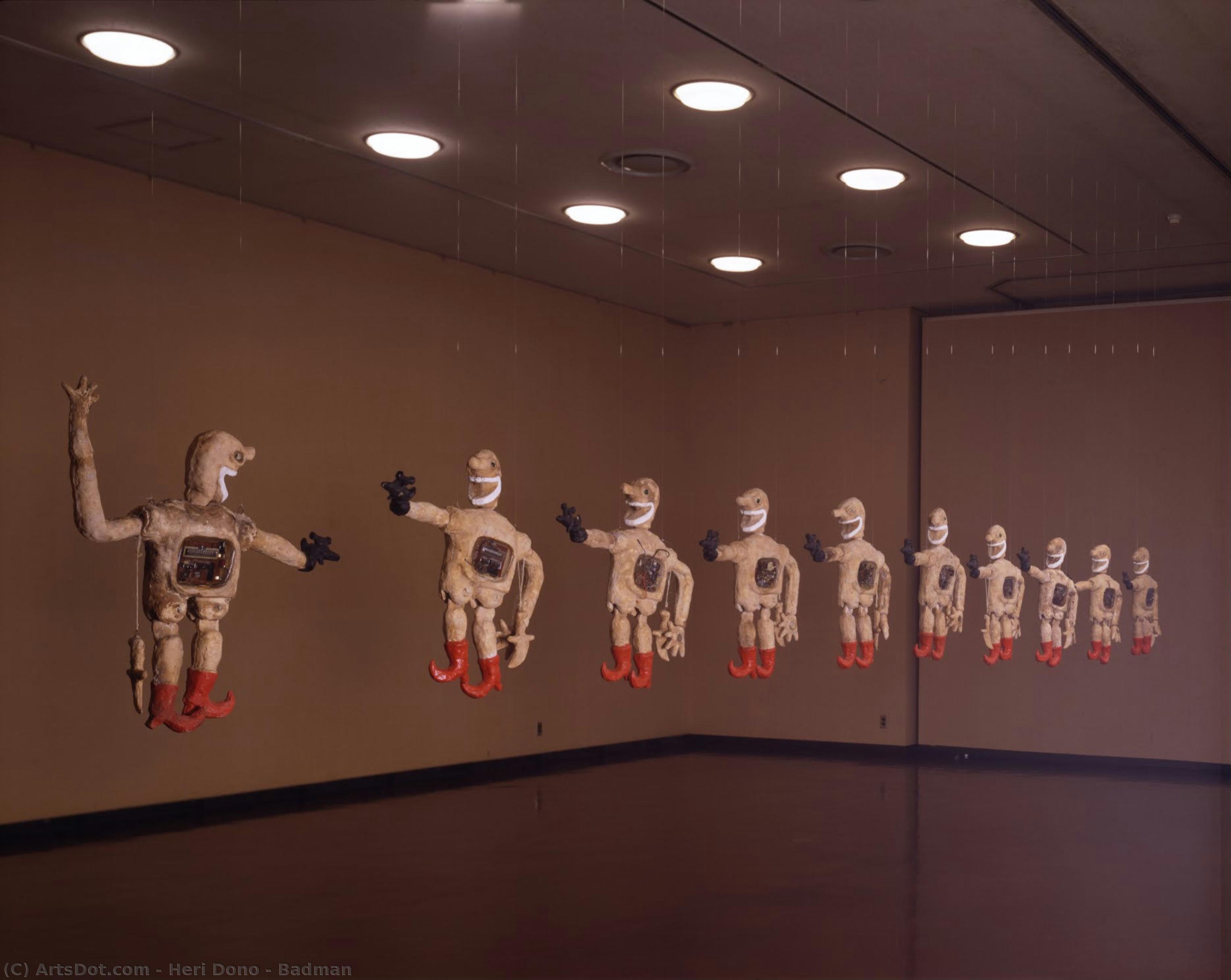
- Badman
 Preview
 Print kopen Bestel schilderij
 Verstuur
 Delen
Delen
 Details bekijken
 Toevoegen aan favorieten

 Download
 Vergelijkbare werken
 Röntgenonderzoek
 Diavoorstelling
Badman
 Fiberglass
- Contemporary Art
 Contemporary
 64.0 x 58.0 cm
 Fukuoka Asian Art Museum
 Lees meer
Koop een digitale afbeelding met hoge resolutie en verbeterde kwaliteit, die veel superieur is aan de online voorvertoning.
Elk bestand wordt met uiterste precisie voorbereid door onze interne specialisten, met behulp van geavanceerde tools en deskundige handmatige retouche. Wij garanderen dat elke afbeelding een uitzonderlijke helderheid, nauwkeurige kleurweergave en verfijnde details bezit.
Het uiteindelijke bestand wordt binnen 72 uur per e-mail geleverd, geoptimaliseerd voor direct gebruik in professionele, redactionele en printomgevingen. Dit is dezelfde kwaliteit waarop topontwerpstudio's, uitgevers en galerieën vertrouwen.
Digitale afbeeldingen
Download een bestand met hoge resolutie voor persoonlijke weergave, afdrukken en creatieve projecten.
Inbegrepen bij elke bestelling van een digitale afbeelding
Professionele digitale levering, gegarandeerd
Wanneer u kiest voor OriginalUniqueArt.com, ontvangt u niet alleen een afbeelding – u krijgt een professioneel verbeterd digitaal kunstwerk, met precisie vervaardigd en voorzien van een tevredenheidsgarantie. Dit is alles wat automatisch bij uw bestelling is inbegrepen:

Snelle digitale levering
Uw hoogwaardige digitale afbeeldingsbestand wordt binnen 72 uur na bestelling naar u gemaild – klaar voor direct gebruik.

Met AI verbeterd digitaal bestand
Uw kunstwerk wordt professioneel geoptimaliseerd met behulp van geavanceerde AI-tools en handmatige bewerkingen, waardoor maximale details, helderheid en kleurnauwkeurigheid worden gegarandeerd.

Gratis levenslange herlevering van digitale afbeeldingen
Je bestand per ongeluk verwijderd of kwijtgeraakt? Geen zorgen – we sturen het u op elk gewenst moment gratis opnieuw toe.

Geen invoerkosten - Altijd
Geniet direct van uw kunstwerk zonder invoerrechten, belastingen of verzendkosten – digitale downloads zijn altijd belastingvrij.

Garantie op kleurgetrouwheid
Met behulp van professionele hulpmiddelen en kleurbeheer zorgen wij ervoor dat uw digitale afbeelding de originele kleuren zo nauwkeurig mogelijk weergeeft.

60 dagen tevredenheidsgarantie
Als u niet tevreden bent met uw digitale afbeelding, passen wij deze aan of storten wij 100% terug binnen 60 dagen – zonder vragen gesteld.

100% Geld-terug-garantie
Niet tevreden? Ontvang binnen 60 dagen na ontvangst van uw digitale bestand uw volledige aankoopbedrag terug – zonder vragen te stellen.

Korting bij grote bestellingen
Koop 3 afbeeldingen, bespaar 10% - Koop 5, bespaar 15% - Koop 10+, bespaar 20%. Ideaal voor creatieve projecten, galerieën en bureaus.
Beschrijving verzamelobject
A Mechanical Symphony of Tradition and Satire
In the evocative realm of contemporary Indonesian art, few works capture the tension between ancient heritage and modern anxiety as poignantly as Heri Dono’s "Badman." This mesmerizing installation transcends the boundaries of traditional painting, presenting a kinetic world where the shadows of the past meet the cold, robotic pulse of the future. At first glance, the viewer is greeted by a troupe of figures—robotic, yet strangely soulful—suspended in a state of perpetual motion. These are not merely sculptures; they are characters in a silent, mechanical drama that reflects the artist's profound connection to wayang kulit, the traditional Javanese shadow puppetry. Through these fiberglass forms, Dono breathes life into a narrative that feels both deeply rooted in the soil of Yogyakarta and strikingly relevant to our globalized, technological age.
The technique employed in "Badman" is a masterclass in multidisciplinary innovation. By integrating electronic circuits with sculptural elements, Dono creates an immersive experience where movement becomes a language of its own. The figures, meticulously painted and arranged in a rhythmic row, possess a whimsical yet unsettling quality. Each robot, though part of a collective, carries a unique expression and pose, suggesting a fragmented society caught in the gears of progress. For the discerning collector or interior designer, this piece offers more than just visual interest; it provides a conversational centerpiece that challenges the stillness of a room, inviting onlookers to contemplate the delicate dance between organic tradition and synthetic innovation.
The Shadow of History and Social Critique
To understand "Badman," one must look through the lens of Indonesia’s complex sociopolitical landscape. Growing up in the shadow of the New Order authoritarian regime, Heri Dono learned to use the subtle language of puppetry to bypass censorship and deliver biting social critiques. In this work, the robotic figures serve as metaphors for the loss of individual agency within larger, often oppressive, systems. The "badman" of the title suggests a confrontation with the darker aspects of human nature and governance, yet the execution remains layered with a sense of playfulness and satire. It is this duality—the ability to be simultaneously playful and profound—that makes Dono’s work so enduringly captivating.
The emotional impact of the piece lies in its uncanny ability to evoke nostalgia and apprehension simultaneously. There is a haunting beauty in the way these mechanical puppets hang, reminiscent of the flickering shadows on a traditional wayang screen, yet their metallic, robotic nature speaks to the alienation of the modern era. For those seeking to adorn a space with art that possesses intellectual depth and emotional resonance, a high-quality reproduction of "Badman" offers an opportunity to bring this powerful dialogue into the home. It is a piece that does not merely decorate a wall; it invites a deeper reflection on where we have come from and the mechanical trajectories of where we are headed.
Kunstenaarsbiografie
Heri Dono: Bridging Tradition and Innovation in Indonesian Art
Heri Dono (born June 12, 1960) stands as a pivotal figure in contemporary Indonesian art, recognized for his distinctive approach that seamlessly blends the rich heritage of Javanese folklore—particularly wayang kulit shadow puppetry—with influences from Western artistic movements and global cultural dialogues. His journey began amidst the vibrant intellectual landscape of Yogyakarta’s Indonesian Art Institute (ISI), where he honed his skills and established a foundational understanding of both traditional aesthetics and experimental techniques.
- Early Influences: Dono's formative years were marked by exposure to the artistic legacy of Indonesia’s masters, notably Sukarno’s collection at the Presidential Palace in Bogor. This early encounter instilled within him a profound appreciation for visual art and fueled his ambition to emulate the celebrated painters whose canvases adorned the palace walls.
- Formal Education: He pursued undergraduate studies in Painting at ISI Yogyakarta from 1980 to 1987, immersing himself in rigorous artistic training and developing a mastery of painting techniques that would underpin his subsequent creative endeavors.
- Exploration Beyond Painting: Recognizing the limitations of solely focusing on painting, Dono ventured into sculpture and installation art, experimenting with diverse materials—from reclaimed wood to found objects—to convey complex narratives and engage audiences in immersive experiences.
His artistic vision is characterized by a deliberate juxtaposition of seemingly disparate elements: traditional Indonesian motifs like wayang kulit figures and tau tau sculptures alongside references to Western pop culture, animation, and comics. This fusion reflects Dono’s belief that art should transcend cultural boundaries and challenge conventional perspectives on artistic expression.
- Wayang Kulit Inspiration: The profound influence of wayang kulit performances—characterized by storytelling, music, visual spectacle, and symbolic representation—is evident throughout his oeuvre. He seeks to capture the essence of these traditions while simultaneously incorporating multimedia elements to amplify their impact on viewers.
- Social Commentary: Dono’s artworks frequently grapple with pressing social issues, addressing themes of identity, displacement, and cultural preservation. His artistic practice serves as a conduit for critical reflection and encourages dialogue about societal concerns.
Throughout his prolific career spanning decades, Dono has garnered international acclaim, participating in numerous exhibitions and biennales across continents—from Asia Pacific Triennial to Venice Biennale—and securing prestigious awards recognizing his contributions to the art world. Notably, he was awarded the Dutch Prince Claus Award for Culture and Development in 1998, acknowledging his commitment to fostering intercultural understanding and promoting artistic innovation.
- Notable Exhibitions: Dono’s work has graced venues worldwide including Asia Pacific Triennial (1993 & 2000), Gwangju Biennale (1995 & 2006), Sydney Biennale (1996), Shanghai Biennale (2000), Venice Biennale (2003 & 2015), Sharjah Biennial (2005 & 2023), Guangzhou Triennale (2011), Kochi-Muziris Biennale (2018), Bangkok Art Biennale (2018), and Gangwon Kids Triennale (2020).
- Awards Recognition: He received UNESCO Prize in 2000, Indonesian Art Award by the Government of Republic of Indonesia (2014)
Heri Dono’s enduring legacy resides not only in his artistic output but also in his role as a champion of intercultural dialogue and a visionary artist who dared to reimagine art's capacity for social transformation. His distinctive style—characterized by bold colors, dynamic compositions, and evocative imagery—continues to inspire artists globally and solidify his position as one of Indonesia’s most influential contemporary voices.

heri dono
1960 - , Indonesia
Belangrijkste feiten
- Artistic Movement Or Style: Contemporary Installation Art
- Artists Or Movements Influenced By This Artist: ['Animism']
- Artists Who Influenced This Artist:
- Walt Disney
- Hanna-Barbera
- Date Of Birth: June 12, 1960
- Full Name: Heri Dono
- Nationality: Indonesian
- Notable Artworks:
- In the Fridge and Fire (Di dalam Kulkas dan..., 2009)
- A Small Dog With His Guardian (Seekor Anjing , 2015)
- Place Of Birth: Jakarta, Indonesia

