

 Voorvertoning
 Verstuur
 Delen
Delen
 Details bekijken

 Download
 Vergelijkbare items
 Röntgenonderzoek
 Diavoorstelling
Professor James Gregory (1753–1821)
 Acrylic On Canvas
- WallArt
- Contemporary Realism
 1798
1798 124.0 x 100.0 cm
 The National Trust For Scotland
 Lees meer
Giclée / Kunstafdrukken
Giclée- of canvasafdruk van museumkwaliteit met een snelle productie en flexibele afwerkingsmogelijkheden. ( Bestel handgeschilderde reproductie Koop afbeelding)




P118B $10

P118H $10

P118W $10

P438Z $10

P508JH $12

P508YH $12

P805H $10

P805Z $10

P919BZ $10

P919G $10

P919XJ $10

P959ZH $10

P968JZ $12

W106C $8

W218G $10

W218JH $8

W218Y $10

W307PJ $10

W316G $10

W316PJ $8

W316Y $10

W398PJ $8

W4111J $10

W500HY $15

W500JH $15

W692G $12

W849H $8

W940BG $15

W953PJ $8




Kies uit onze vooraf ingestelde maten die overeenkomen met de originele verhoudingen van het kunstwerk.

U kunt uw eigen afmetingen opgeven om in een specifieke lijst of ruimte te passen. Als de door u gekozen maat niet overeenkomt met de proporties van het originele kunstwerk, zullen wij de afbeelding bijsnijden of uitbreiden met een gespiegelde of effen rand. Een digitaal mockup wordt ter goedkeuring naar u verzonden voordat de productie begint.
Houd er rekening mee dat de preview op het scherm de werkelijke bijsneding of uitbreiding niet weergeeft. Alleen de mockup toont de uiteindelijke compositie nauwkeurig.
Hoewel aangepaste maten beschikbaar zijn, raden wij aan een afmeting uit de vooraf bepaalde lijst te kiezen om de originele proporties te behouden.
Wereldwijde levering () binnen 2 weken in plaats van de standaard 4/5 weken. (20 augustus)

Gratis wereldwijde expressverzending

Hoogwaardig linnen canvas

Volledige verzendverzekering

Garantie op terugbetaling van invoerrechten

Garantie op exacte kleurweergave

Retourbeleid van 60 dagen (alleen bij defecten)

100% Geld-terug-garantie

Korting bij meerdere afnames
 De optie voor glas is alleen beschikbaar bij een formaat kleiner dan 110 cm.

Professor James Gregory (1753–1821)
Giclée / Kunstafdrukken
Afmetingen reproductie
-


Eindtotaal
$ 81
Beschrijving verzamelobject
A Portrait Steeped in Dignity: Exploring Henry Raeburn’s Professor James Gregory
Professor James Gregory (1753–1821), painted by Henry Raeburn in 1798, stands as a testament to the Scottish Enlightenment's fascination with portraiture and its celebration of intellectual achievement. This striking depiction captures not merely a likeness but an embodiment of respectability and scholarly distinction—qualities highly valued during the period’s cultural landscape. The painting resides within the Fyvie Castle collection of the National Trust for Scotland, offering visitors a glimpse into a pivotal moment in Scottish artistic history.The Artist's Vision: Raeburn's Mastery of Realism
Henry Raeburn (1756–1823), born in Stockbridge, Scotland, revolutionized British portraiture with his unwavering commitment to realism. Unlike the idealized depictions favored by many contemporaries, Raeburn sought to portray subjects as they truly were—individuals imbued with character and intellect. His meticulous attention to detail—evident in the subtle nuances of Gregory’s expression and the textured fabric of his suit—demonstrates a profound understanding of how to convey psychological depth through visual representation. He eschewed theatrical poses and contrived expressions, favoring instead a dignified stillness that reflects Gregory's contemplative nature. This approach established Raeburn as the first native Scottish painter to achieve widespread acclaim and royal patronage, marking him as an innovator who championed naturalism over convention.Technical Brilliance: Ivory Miniature and Precise Brushwork
Raeburn’s technique—primarily employed in ivory miniatures—was characterized by painstaking precision and masterful blending. The miniature format demanded exceptional skill in capturing minute details while maintaining tonal harmony. Raeburn achieved this feat through layering thin glazes of pigment onto the ivory surface, creating a luminous effect that subtly illuminates Gregory's features. His brushstrokes were deliberate and controlled, meticulously building up textures to convey the materiality of clothing and skin—a hallmark of his style. The artist’s dedication to capturing light and shadow contributes significantly to the painting’s emotional resonance, conveying both Gregory’s composure and the quiet grandeur of Fyvie Castle's setting.Historical Context: Enlightenment Values Reflected
The portrait emerged during the Scottish Enlightenment, a period marked by intellectual ferment and a fervent belief in reason and empirical observation. Gregory was a prominent figure in Edinburgh’s scientific community, specializing in botany and demonstrating an unwavering commitment to scholarly pursuits. Raeburn's decision to depict Gregory not as a flamboyant aristocrat but as a man of intellect—seated calmly with crossed hands—reflects the Enlightenment’s emphasis on virtue and moral seriousness. The painting serves as a visual embodiment of these values, celebrating intellectual accomplishment alongside social decorum.Symbolism: Dignity and Quiet Reflection
Beyond its technical prowess and historical significance, Professor James Gregory embodies several symbolic elements that enrich its interpretation. The chair itself represents stability and contemplation—a deliberate choice by Raeburn to convey Gregory’s inner life and unwavering focus on his studies. The muted color palette reinforces the painting's solemn mood, emphasizing Gregory’s dignified demeanor and conveying a sense of quiet introspection. Ultimately, Raeburn’s masterpiece transcends mere likeness; it communicates an enduring appreciation for intellectual integrity and the pursuit of knowledge—themes that continue to resonate with audiences today.Biografie van de kunstenaar
A Scottish Master of Realism: The Life and Art of Sir Henry Raeburn
Sir Henry Raeburn, a name synonymous with the vibrant spirit of 18th-century Scotland, was more than just a painter; he was a cultural icon. Born in Stockbridge, near Edinburgh, in 1756, his journey from an orphaned boy to one of Britain’s most celebrated portraitists is a testament to artistic talent, relentless dedication, and a profound connection to his homeland. His life unfolded against the backdrop of the Scottish Enlightenment, a period of intellectual and cultural flourishing that profoundly shaped his art and worldview.Early Years and Artistic Beginnings
Raeburn's early life was marked by hardship and resilience. Orphaned at the tender age of six, he found solace and guidance in the care of his elder brother, William, who secured him a place at Heriot’s Hospital in Edinburgh – an institution renowned for its classical education. While initially destined for a career as an engraver, Raeburn's innate artistic inclinations soon led him down a different path. He began to hone his skills by apprenticing himself to James Gilliland, a goldsmith and craftsman known for his intricate miniature portraits. This early experience instilled in him a meticulous attention to detail and a deep appreciation for the subtleties of form and texture – qualities that would become hallmarks of his later work. It was during this period that Raeburn’s talent for capturing likenesses with remarkable accuracy began to emerge, laying the foundation for his future success as a portrait painter.From Miniature Precision to Grand Portraiture
Raeburn's artistic evolution wasn’t linear; it was a process of constant refinement and experimentation. Initially focused on miniature portraits – delicate works executed on ivory – he gradually expanded his scale, embracing the challenge of larger-scale oil paintings. This transition was fueled by a desire to capture not just physical resemblance but also the inner character and personality of his subjects. He sought to portray individuals with honesty and immediacy, eschewing the idealized representations that were common in many contemporary portraits. A pivotal moment in his career came with his marriage to Ann Edgar in 1778. This union provided him with financial stability, allowing him to dedicate himself fully to painting without the constraints of commercial obligations. He immersed himself in studying the works of masters like Joshua Reynolds, whom he met during a brief sojourn in London en route to Italy – though the Italian journey itself was ultimately cut short. Raeburn’s style began to coalesce around a powerful realism, characterized by dramatic lighting and an ability to capture not just physical resemblance but also the inner character of his sitters.Capturing Character: Raeburn's Artistic Signature
Raeburn’s portraits are not merely representations of individuals; they are psychological studies rendered in oil paint. He possessed an extraordinary ability to convey the personality, status, and even the mood of his subjects. His technique was masterful – a combination of meticulous observation, confident brushwork, and a sophisticated understanding of light and shadow. The Young Polo Player, for example, is not simply a depiction of a sporting gentleman; it’s an energetic snapshot of youthful vitality and aristocratic leisure. Similarly, his portrait of Alexander Allan, a prominent figure in Scottish art, reveals a man of intellect and refinement. Raeburn's use of chiaroscuro – the dramatic contrast between light and dark – became a hallmark of his style, lending depth and intensity to his compositions. He often positioned his subjects against dark backgrounds, allowing their faces and figures to emerge with striking clarity. This technique not only enhanced the visual impact of his portraits but also served to focus attention on the individual’s character and presence.Recognition and Legacy: A Scottish Icon
Throughout his career, Raeburn enjoyed considerable success and recognition. He became a leading member of Edinburgh society, attracting commissions from prominent families and individuals. In 1815, he was elected to the Royal Academy in London, solidifying his reputation on a national level. His appointment as Portrait Painter to King George IV in Scotland in 1822 – shortly before his death in 1823 – was the ultimate acknowledgment of his artistic achievements. Raeburn’s influence on Scottish art is immeasurable. He established a standard for portraiture that subsequent generations would strive to emulate, and his work continues to inspire artists today. His paintings are now held in prestigious collections around the world, including the Scottish National Gallery in Edinburgh and The Frick Collection in New York.- His dedication to realism and psychological insight set him apart from many of his contemporaries.
- He helped establish a distinctly Scottish identity within British art.
- His masterful technique continues to be studied and admired by artists and scholars alike.

Henry Raeburn
1756 - 1823 , Verenigd Koninkrijk
Belangrijkste feiten
- Artistic Movement Or Style: Realistisch portret
- Artists Or Movements Influenced By This Artist: ['Schotse kunst']
- Artists Who Influenced This Artist:
- David Martin
- Joshua Reynolds
- Date Of Birth: 4 maart 1756
- Date Of Death: 8 juli 1823
- Full Name: Henry Raeburn
- Nationality: Schots
- Notable Artworks:
- De jonge polo speler
- Alexander Allan
- Place Of Birth: Stockbridge, VK
Gerelateerde artikelen

Top 25 Meesterwerken van Henri Matisse: Kleur, Vorm & Emotie voor uw Interieur
Ontdek de top 25 meesterwerken van Henri Matisse! Duik in de wereld van Fauvisme, kleurrijke composities & expressieve kunst. Vind museumkwaliteit reproducties en decoratie-inspiratie op OriginalUniqueArt.com. Exploreer de collectie online!
Top 10 Meesterwerken van het Academisch Realisme | OriginalUniqueArt
Ontdek de 10 meesterwerken van het Academisch Realisme! Van David tot Bouguereau, leer over iconische schilderijen en hun tijdloze schoonheid. Vind museumkwaliteit reproducties & decoratie-inspiratie op OriginalUniqueArt.com.
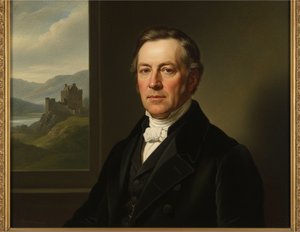
Henry Raeburn: A Scottish Portraitist's Mastery of Light, Character & National Identity
Explore the life & work of Henry Raeburn, a master Scottish portraitist. Discover his innovative techniques, captivating portraits of the Enlightenment era, and lasting legacy in art history. Learn more at OriginalUniqueArt.

Henry Raeburn Dobson: A Scottish Colourist Bridging Tradition & Modernity
Explore the life & work of Henry Raeburn Dobson, a key figure bridging Scottish tradition & modern art. Discover his neoclassical portraits, landscapes, and connection to the Colourists. Learn about collecting his works.
Academic Realism: Technique, History & Enduring Influence on Art
Explore the captivating world of Academic Realism! Discover key artists, techniques & its lasting impact on art history. Expert insights & high-quality reproductions at OriginalUniqueArt.

