

 Voorvertoning
 Verstuur
 Delen
Delen
 Details bekijken

 Download
 Vergelijkbare items
 Röntgenonderzoek
 Diavoorstelling
Mrs. Anne Hart
 Oil On Canvas
- WallArt
- Neoclassical Portraiture
 1810
1810 135.0 x 109.0 cm
 Staatliche Museen zu Berlin
 Lees meer
Giclée / Kunstafdrukken
Giclée- of canvasafdruk van museumkwaliteit met een snelle productie en flexibele afwerkingsmogelijkheden. ( Bestel handgeschilderde reproductie Koop afbeelding)




P118B $10

P118H $10

P118W $10

P438Z $10

P508JH $12

P508YH $12

P805H $10

P805Z $10

P919BZ $10

P919G $10

P919XJ $10

P959ZH $10

P968JZ $12

W106C $8

W218G $10

W218JH $8

W218Y $10

W307PJ $10

W316G $10

W316PJ $8

W316Y $10

W398PJ $8

W4111J $10

W500HY $15

W500JH $15

W692G $12

W849H $8

W940BG $15

W953PJ $8




Kies uit onze vooraf ingestelde maten die overeenkomen met de originele verhoudingen van het kunstwerk.

U kunt uw eigen afmetingen opgeven om in een specifieke lijst of ruimte te passen. Als de door u gekozen maat niet overeenkomt met de proporties van het originele kunstwerk, zullen wij de afbeelding bijsnijden of uitbreiden met een gespiegelde of effen rand. Een digitaal mockup wordt ter goedkeuring naar u verzonden voordat de productie begint.
Houd er rekening mee dat de preview op het scherm de werkelijke bijsneding of uitbreiding niet weergeeft. Alleen de mockup toont de uiteindelijke compositie nauwkeurig.
Hoewel aangepaste maten beschikbaar zijn, raden wij aan een afmeting uit de vooraf bepaalde lijst te kiezen om de originele proporties te behouden.
Wereldwijde levering () binnen 2 weken in plaats van de standaard 4/5 weken. (29 augustus)

Gratis wereldwijde expressverzending

Hoogwaardig linnen canvas

Volledige verzendverzekering

Garantie op terugbetaling van invoerrechten

Garantie op exacte kleurweergave

Retourbeleid van 60 dagen (alleen bij defecten)

100% Geld-terug-garantie

Korting bij meerdere afnames
 De optie voor glas is alleen beschikbaar bij een formaat kleiner dan 110 cm.

Mrs. Anne Hart
Giclée / Kunstafdrukken
Afmetingen reproductie
-


Eindtotaal
$ 81
The Enigmatic Beauty of Mrs. Anne Hart
Henry Raeburn’s “Mrs. Anne Hart,” painted in 1810, is more than just a portrait; it's a carefully constructed tableau of domestic tranquility and quiet contemplation. The canvas immediately draws the eye to its subject – a woman radiating an understated elegance within a richly appointed interior. She occupies a space that feels both familiar and subtly mysterious, her gaze directed towards a distant window, seemingly lost in thought. This isn’t a boisterous celebration of wealth or social standing; instead, Raeburn masterfully captures a moment of introspective peace, a rare intimacy within the confines of 19th-century aristocratic life.
The painting's neoclassical style is evident in its balanced composition and classical references. The arrangement of figures – Mrs. Hart seated gracefully, flanked by two gentlemen on either side – adheres to established portrait conventions, yet Raeburn imbues the scene with a distinctly personal touch. Notice how he subtly incorporates elements of the room itself into the narrative; the ornate fireplace, the richly patterned wallpaper, and even the shadows cast by the window all contribute to a sense of depth and realism. The use of light is particularly noteworthy – it’s diffused and warm, bathing the scene in a gentle glow that softens the edges and emphasizes the subject's serene expression.
A Window into Georgian Society
To fully appreciate “Mrs. Anne Hart,” it’s crucial to understand the social context of its creation. The painting emerged during the early 19th century, a period of significant change in Britain – the rise of the industrial revolution, the expansion of the empire, and the gradual shift from the rigid formality of the Georgian era to the more relaxed sensibilities of the Regency. Portraits like this were not merely decorative; they served as powerful statements of status and lineage, meticulously documenting the lives and achievements of the wealthy elite. Raeburn’s depiction of Mrs. Hart reflects these values – her attire, her demeanor, and the luxurious setting all speak to her position within society.
The inclusion of the two gentlemen adds another layer of complexity to the scene. They are not simply observers; they actively participate in the narrative, suggesting a close relationship with Mrs. Hart. Their presence hints at the social obligations and expectations that governed aristocratic life – the importance of family, friendship, and maintaining appearances within one’s social circle. The subtle gestures between them—a slight nod, a shared glance—add an element of unspoken communication, inviting the viewer to speculate about their connection.
The Artistry of Detail: Technique and Symbolism
Raeburn's technical skill is immediately apparent in the meticulous detail with which he renders every aspect of the painting. The textures of the fabrics—the velvet cushions, the silk shawl draped across Mrs. Hart’s lap—are rendered with astonishing realism. He employs a technique known as “sfumato,” blurring the edges and softening the forms to create an atmosphere of depth and luminosity. This is particularly evident in the depiction of the window, where the light seems to spill out onto the scene, casting long shadows and creating a sense of atmospheric perspective.
Beyond technical mastery, Raeburn incorporates subtle symbolism into the composition. The distant landscape visible through the window—a rolling hillside dotted with trees—represents escape and contemplation. It’s a visual metaphor for Mrs. Hart's inner life, suggesting that she is seeking solace and inspiration in nature. The red sash around her neck, a vibrant splash of color against the muted tones of the room, could symbolize passion or perhaps even remembrance – a subtle nod to a past love or cherished memory.
A Timeless Portrait of Intimacy
“Mrs. Anne Hart” endures as one of Henry Raeburn’s most celebrated works, and for good reason. It's not simply a likeness; it’s a profound exploration of human emotion and the complexities of domestic life. The painting’s enduring appeal lies in its ability to evoke a sense of quiet intimacy—a feeling that we are privy to a private moment of reflection within a world of privilege and restraint. It remains a testament to Raeburn's remarkable talent for capturing not just appearances, but also the very essence of his subjects.
Biografie van de kunstenaar
A Scottish Master of Realism: The Life and Art of Sir Henry Raeburn
Sir Henry Raeburn, a name synonymous with the vibrant spirit of 18th-century Scotland, was more than just a painter; he was a cultural icon. Born in Stockbridge, near Edinburgh, in 1756, his journey from an orphaned boy to one of Britain’s most celebrated portraitists is a testament to artistic talent, relentless dedication, and a profound connection to his homeland. His life unfolded against the backdrop of the Scottish Enlightenment, a period of intellectual and cultural flourishing that profoundly shaped his art and worldview.Early Years and Artistic Beginnings
Raeburn's early life was marked by hardship and resilience. Orphaned at the tender age of six, he found solace and guidance in the care of his elder brother, William, who secured him a place at Heriot’s Hospital in Edinburgh – an institution renowned for its classical education. While initially destined for a career as an engraver, Raeburn's innate artistic inclinations soon led him down a different path. He began to hone his skills by apprenticing himself to James Gilliland, a goldsmith and craftsman known for his intricate miniature portraits. This early experience instilled in him a meticulous attention to detail and a deep appreciation for the subtleties of form and texture – qualities that would become hallmarks of his later work. It was during this period that Raeburn’s talent for capturing likenesses with remarkable accuracy began to emerge, laying the foundation for his future success as a portrait painter.From Miniature Precision to Grand Portraiture
Raeburn's artistic evolution wasn’t linear; it was a process of constant refinement and experimentation. Initially focused on miniature portraits – delicate works executed on ivory – he gradually expanded his scale, embracing the challenge of larger-scale oil paintings. This transition was fueled by a desire to capture not just physical resemblance but also the inner character and personality of his subjects. He sought to portray individuals with honesty and immediacy, eschewing the idealized representations that were common in many contemporary portraits. A pivotal moment in his career came with his marriage to Ann Edgar in 1778. This union provided him with financial stability, allowing him to dedicate himself fully to painting without the constraints of commercial obligations. He immersed himself in studying the works of masters like Joshua Reynolds, whom he met during a brief sojourn in London en route to Italy – though the Italian journey itself was ultimately cut short. Raeburn’s style began to coalesce around a powerful realism, characterized by dramatic lighting and an ability to capture not just physical resemblance but also the inner character of his sitters.Capturing Character: Raeburn's Artistic Signature
Raeburn’s portraits are not merely representations of individuals; they are psychological studies rendered in oil paint. He possessed an extraordinary ability to convey the personality, status, and even the mood of his subjects. His technique was masterful – a combination of meticulous observation, confident brushwork, and a sophisticated understanding of light and shadow. The Young Polo Player, for example, is not simply a depiction of a sporting gentleman; it’s an energetic snapshot of youthful vitality and aristocratic leisure. Similarly, his portrait of Alexander Allan, a prominent figure in Scottish art, reveals a man of intellect and refinement. Raeburn's use of chiaroscuro – the dramatic contrast between light and dark – became a hallmark of his style, lending depth and intensity to his compositions. He often positioned his subjects against dark backgrounds, allowing their faces and figures to emerge with striking clarity. This technique not only enhanced the visual impact of his portraits but also served to focus attention on the individual’s character and presence.Recognition and Legacy: A Scottish Icon
Throughout his career, Raeburn enjoyed considerable success and recognition. He became a leading member of Edinburgh society, attracting commissions from prominent families and individuals. In 1815, he was elected to the Royal Academy in London, solidifying his reputation on a national level. His appointment as Portrait Painter to King George IV in Scotland in 1822 – shortly before his death in 1823 – was the ultimate acknowledgment of his artistic achievements. Raeburn’s influence on Scottish art is immeasurable. He established a standard for portraiture that subsequent generations would strive to emulate, and his work continues to inspire artists today. His paintings are now held in prestigious collections around the world, including the Scottish National Gallery in Edinburgh and The Frick Collection in New York.- His dedication to realism and psychological insight set him apart from many of his contemporaries.
- He helped establish a distinctly Scottish identity within British art.
- His masterful technique continues to be studied and admired by artists and scholars alike.

Henry Raeburn
1756 - 1823 , Verenigd Koninkrijk
Belangrijkste feiten
- Artistic Movement Or Style: Realistisch portret
- Artists Or Movements Influenced By This Artist: ['Schotse kunst']
- Artists Who Influenced This Artist:
- David Martin
- Joshua Reynolds
- Date Of Birth: 4 maart 1756
- Date Of Death: 8 juli 1823
- Full Name: Henry Raeburn
- Nationality: Schots
- Notable Artworks:
- De jonge polo speler
- Alexander Allan
- Place Of Birth: Stockbridge, VK
Gerelateerde artikelen

Top 25 Meesterwerken van Henri Matisse: Kleur, Vorm & Emotie voor uw Interieur
Ontdek de top 25 meesterwerken van Henri Matisse! Duik in de wereld van Fauvisme, kleurrijke composities & expressieve kunst. Vind museumkwaliteit reproducties en decoratie-inspiratie op OriginalUniqueArt.com. Exploreer de collectie online!
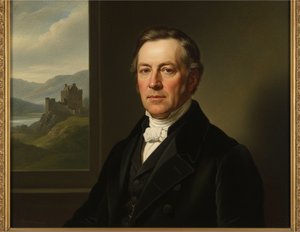
Henry Raeburn: A Scottish Portraitist's Mastery of Light, Character & National Identity
Explore the life & work of Henry Raeburn, a master Scottish portraitist. Discover his innovative techniques, captivating portraits of the Enlightenment era, and lasting legacy in art history. Learn more at OriginalUniqueArt.

Henry Raeburn Dobson: A Scottish Colourist Bridging Tradition & Modernity
Explore the life & work of Henry Raeburn Dobson, a key figure bridging Scottish tradition & modern art. Discover his neoclassical portraits, landscapes, and connection to the Colourists. Learn about collecting his works.
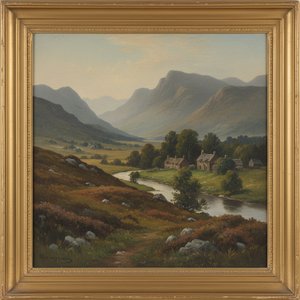
Sir John Watson Gordon: A Study in Scottish Landscape Painting & Tonal Impressionism
Explore the captivating portraits of Sir John Watson Gordon, a leading Scottish master. Discover his evolution from neoclassical style to atmospheric Tonalism and influence on 19th-century British art. Learn about his iconic sitters & legacy.

The Enduring Legacy of Oil on Canvas: Technique, History & Aesthetic Impact
Explore the rich history & techniques of oil painting – from Renaissance masters to Impressionism. Discover pigments, layering methods, and why this timeless medium endures. Expert insights for artists & art enthusiasts.

