

 Bekijk op ware grootte
 Verstuur
 Delen
Delen
 Details bekijken
 Gids voor studentenkunstwerken

 Download
 Vergelijkbare items
 Röntgenonderzoek
 Diavoorstelling
 Statistieken
George Malcolm
 Oil On Canvas
- WallArt
- Neoclassicism
 1790
1790- 19th Century
 76.0 x 64.0 cm
 Courtauld Gallery
 Lees meer
Giclée / Kunstafdrukken
Giclée- of canvasafdruk van museumkwaliteit met een snelle productie en flexibele afwerkingsmogelijkheden. ( Koop handgeschilderd kunstwerk Schakel over naar digitale afbeeldingen)




P118B €10

P118H €10

P118W €10

P438Z €10

P508JH €12

P508YH €12

P805H €10

P805Z €10

P919BZ €10

P919G €10

P919XJ €10

P959ZH €10

P968JZ €12

W106C €8

W218G €10

W218JH €8

W218Y €10

W307PJ €10

W316G €10

W316PJ €8

W316Y €10

W398PJ €8

W4111J €10

W500HY €15

W500JH €15

W692G €12

W849H €8

W940BG €15

W953PJ €8




Kies uit onze vooraf ingestelde maten die overeenkomen met de originele verhoudingen van het kunstwerk.

Voer de breedte en de hoogte in die u nodig heeft, passend bij uw lijst of uw muur. Een afdruk kan alleen worden ingekort, nooit groter worden gemaakt dan het origineel, waardoor een formaat met een andere verhouding een deel van de afbeelding verliest. Wij sturen u een digitaal mockup ter goedkeuring voordat we iets drukken. De afbeelding op deze pagina toont niet de werkelijke uitsnede — dit is alleen te zien op het mockup.
Wereldwijde levering () binnen 2 weken in plaats van de standaard 4/5 weken. (24 oktober)

Gratis wereldwijde expressverzending

Hoogwaardig linnen canvas

Volledige verzendverzekering

Garantie op terugbetaling van invoerrechten

Garantie op exacte kleurweergave

Retourbeleid van 100 dagen (alleen bij defecten)

100% Geld-terug-garantie

Korting bij meerdere afnames
 De optie voor glas is alleen beschikbaar bij een formaat kleiner dan 110 cm.

George Malcolm
Giclée / Kunstafdrukken
Formaat reproductie
-


Totaalprijs
€ 71
A Glimpse into Georgian Dignity: The Portrait of George Malcolm
To stand before this portrait of George Malcolm is to step directly into the refined drawing rooms of the late eighteenth century. Painted around 1790, this oil on canvas captures more than just a likeness; it arrests a moment of profound contemplation. The subject, depicted as a gentleman in his prime with distinguished white hair, meets the viewer's gaze with an intensity that is both direct and deeply thoughtful. His attire—the rich blue coat contrasted by the warm glow of a yellow vest—speaks volumes about the social standing and sartorial elegance of the period. It is a masterful study in controlled emotion, where every fold of fabric and nuance of expression contributes to a narrative of quiet authority.
The Artistry of Henry Raeburn: Capturing the Soul
The hand that rendered this portrait belongs to Henry Raeburn, an artist whose genius elevated British portraiture to new heights. While Raeburn’s career spanned decades and encompassed numerous celebrated figures, his ability to imbue his sitters with palpable inner life remains consistent. His technique, honed through years of meticulous observation—a skill perhaps initially sharpened in the delicate work of goldsmithing—allows him to achieve a remarkable sense of realism without ever sacrificing artistic grace. Observe the texture of the oil paint; it lends a rich depth that seems to absorb and reflect candlelight simultaneously. Raeburn did not merely record features; he captured the very essence of character, making George Malcolm feel both historically distant and intimately present.
Composition and Emotional Resonance
The composition itself is a lesson in balanced grandeur. The subject occupies the frame with confident poise, yet the surrounding space is managed with such care that it prevents the portrait from feeling claustrophobic. This balance allows the viewer's eye to wander, appreciating the subtle interplay between the sitter’s serious mien and the carefully arranged backdrop. Emotionally, the painting resonates with a sense of dignified introspection. It invites us, the modern observer, to pause our hurried pace and consider the weight of thought—a timeless invitation that transcends the specific year of 1790.
A Legacy for the Modern Collector
For those who collect art not merely as decoration but as a conduit to history, this piece offers unparalleled depth. Whether adorning a formal study or serving as a centerpiece in an elegantly appointed drawing-room, a reproduction of George Malcolm by Raeburn brings with it the weight of Georgian sophistication and artistic mastery. The quality of the original oil on canvas ensures that even reproductions retain the richness and velvety texture characteristic of this era's finest portraiture. It is an heirloom piece, promising not just visual beauty, but a continuous dialogue with the masters of British art.
Vragen & Antwoorden
Maakt "George Malcolm" door Henry Raeburn gebruik van sterke contrasten of zachte harmonieën?
De kleuranalyse van "George Malcolm" door Henry Raeburn legt een Gentle contrast en een Unified Palette harmonie vast.
Waar kan ik "George Malcolm" door Henry Raeburn downloaden?
"George Malcolm" door Henry Raeburn kan worden gedownload via de Downloaden-pagina van het kunstwerk, als een download van een digitale afbeelding in hoge resolutie.
Wat zijn de techniek en de afmetingen van het originele werk "George Malcolm" door Henry Raeburn?
De techniek van "George Malcolm" door Henry Raeburn is Oil On Canvas en de afmetingen zijn 76 x 64 cm.
Biografie van de kunstenaar
A Scottish Master of Realism: The Life and Art of Sir Henry Raeburn
Sir Henry Raeburn, a name synonymous with the vibrant spirit of 18th-century Scotland, was more than just a painter; he was a cultural icon. Born in Stockbridge, near Edinburgh, in 1756, his journey from an orphaned boy to one of Britain’s most celebrated portraitists is a testament to artistic talent, relentless dedication, and a profound connection to his homeland. His life unfolded against the backdrop of the Scottish Enlightenment, a period of intellectual and cultural flourishing that profoundly shaped his art and worldview.Early Years and Artistic Beginnings
Raeburn's early life was marked by hardship and resilience. Orphaned at the tender age of six, he found solace and guidance in the care of his elder brother, William, who secured him a place at Heriot’s Hospital in Edinburgh – an institution renowned for its classical education. While initially destined for a career as an engraver, Raeburn's innate artistic inclinations soon led him down a different path. He began to hone his skills by apprenticing himself to James Gilliland, a goldsmith and craftsman known for his intricate miniature portraits. This early experience instilled in him a meticulous attention to detail and a deep appreciation for the subtleties of form and texture – qualities that would become hallmarks of his later work. It was during this period that Raeburn’s talent for capturing likenesses with remarkable accuracy began to emerge, laying the foundation for his future success as a portrait painter.From Miniature Precision to Grand Portraiture
Raeburn's artistic evolution wasn’t linear; it was a process of constant refinement and experimentation. Initially focused on miniature portraits – delicate works executed on ivory – he gradually expanded his scale, embracing the challenge of larger-scale oil paintings. This transition was fueled by a desire to capture not just physical resemblance but also the inner character and personality of his subjects. He sought to portray individuals with honesty and immediacy, eschewing the idealized representations that were common in many contemporary portraits. A pivotal moment in his career came with his marriage to Ann Edgar in 1778. This union provided him with financial stability, allowing him to dedicate himself fully to painting without the constraints of commercial obligations. He immersed himself in studying the works of masters like Joshua Reynolds, whom he met during a brief sojourn in London en route to Italy – though the Italian journey itself was ultimately cut short. Raeburn’s style began to coalesce around a powerful realism, characterized by dramatic lighting and an ability to capture not just physical resemblance but also the inner character of his sitters.Capturing Character: Raeburn's Artistic Signature
Raeburn’s portraits are not merely representations of individuals; they are psychological studies rendered in oil paint. He possessed an extraordinary ability to convey the personality, status, and even the mood of his subjects. His technique was masterful – a combination of meticulous observation, confident brushwork, and a sophisticated understanding of light and shadow. The Young Polo Player, for example, is not simply a depiction of a sporting gentleman; it’s an energetic snapshot of youthful vitality and aristocratic leisure. Similarly, his portrait of Alexander Allan, a prominent figure in Scottish art, reveals a man of intellect and refinement. Raeburn's use of chiaroscuro – the dramatic contrast between light and dark – became a hallmark of his style, lending depth and intensity to his compositions. He often positioned his subjects against dark backgrounds, allowing their faces and figures to emerge with striking clarity. This technique not only enhanced the visual impact of his portraits but also served to focus attention on the individual’s character and presence.Recognition and Legacy: A Scottish Icon
Throughout his career, Raeburn enjoyed considerable success and recognition. He became a leading member of Edinburgh society, attracting commissions from prominent families and individuals. In 1815, he was elected to the Royal Academy in London, solidifying his reputation on a national level. His appointment as Portrait Painter to King George IV in Scotland in 1822 – shortly before his death in 1823 – was the ultimate acknowledgment of his artistic achievements. Raeburn’s influence on Scottish art is immeasurable. He established a standard for portraiture that subsequent generations would strive to emulate, and his work continues to inspire artists today. His paintings are now held in prestigious collections around the world, including the Scottish National Gallery in Edinburgh and The Frick Collection in New York.- His dedication to realism and psychological insight set him apart from many of his contemporaries.
- He helped establish a distinctly Scottish identity within British art.
- His masterful technique continues to be studied and admired by artists and scholars alike.

Henry Raeburn
1756 - 1823 , Verenigd Koninkrijk
Snelle feiten
- Artistic Movement Or Style: Realistisch portret
- Artists Or Movements Influenced By This Artist: ['Schotse kunst']
- Artists Who Influenced This Artist:
- David Martin
- Joshua Reynolds
- Date Of Birth: 4 maart 1756
- Date Of Death: 8 juli 1823
- Full Name: Henry Raeburn
- Nationality: Schots
- Notable Artworks:
- De jonge polo speler
- Alexander Allan
- Place Of Birth: Stockbridge, VK
Gerelateerde artikelen
Top 25 Meesterwerken van Henri Matisse: Kleur, Vorm & Emotie voor uw Interieur
Ontdek de top 25 meesterwerken van Henri Matisse! Duik in de wereld van Fauvisme, kleurrijke composities & expressieve kunst. Vind museumkwaliteit reproducties en decoratie-inspiratie op OriginalUniqueArt.com. Exploreer de collectie online!

The Enduring Legacy of Oil on Canvas: Technique, History & Aesthetic Impact
Explore the rich history & techniques of oil painting – from Renaissance masters to Impressionism. Discover pigments, layering methods, and why this timeless medium endures. Expert insights for artists & art enthusiasts.

Top 10 Meesterwerken gedomineerd door 'Slate Blue': Kunst voor uw interieur
Ontdek 10 beroemde schilderijen gedomineerd door de prachtige tint 'Slate Blue'. Van Monet tot Van Gogh, leer over kunstgeschiedenis & techniek. Museumkwaliteit reproducties voor uw interieur op OriginalUniqueArt.com! Ontdek de collectie online.
The Allure of Azure: Exploring the Symbolic & Aesthetic Depths of Blue in Art History
Explore the rich history of blue in art! Discover its symbolism, from ancient pigments to modern masterpieces by Kandinsky & Seurat. Uncover the psychological impact and cultural meanings behind this captivating hue.
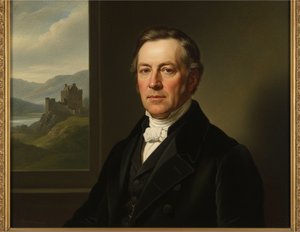
Henry Raeburn: A Scottish Portraitist's Mastery of Light, Character & National Identity
Explore the life & work of Henry Raeburn, a master Scottish portraitist. Discover his innovative techniques, captivating portraits of the Enlightenment era, and lasting legacy in art history. Learn more at OriginalUniqueArt.