

 Bekijk op ware grootte
 Verstuur
 Delen
Delen
 Details bekijken
 Gids voor studentenkunstwerken

 Download
 Vergelijkbare items
 Röntgenonderzoek
 Diavoorstelling
 Statistieken
Packing Stocks


 Lees meer
Handgemaakte olieverfreproductie
Met de hand geschilderd in olieverf op canvas in uw gewenste maat en lijst, op bestelling gemaakt door onze kunstenaars. ( Schakel over naar print Schakel over naar digitale afbeeldingen)




P118B €10

P118H €10

P118W €10

P438Z €10

P508JH €12

P508YH €12

P805H €10

P805Z €10

P919BZ €10

P919G €10

P919XJ €10

P959ZH €10

P968JZ €12

W106C €8

W218G €10

W218JH €8

W218Y €10

W307PJ €10

W316G €10

W316PJ €8

W316Y €10

W398PJ €8

W4111J €10

W500HY €15

W500JH €15

W692G €12

W849H €8

W940BG €15

W953PJ €8




Kies uit onze vooraf ingestelde maten die overeenkomen met de originele verhoudingen van het kunstwerk.

Voer de breedte en de hoogte in die u nodig heeft, passend bij uw lijst of uw muur. Dit is handgeschilderd, dus bij een afmeting met een andere vormverhouding kan de kunstenaar iets meer rondom het schilderij schilderen of juist iets meer weglaten — u kiest zelf. Wij sturen u een digitaal mockup ter goedkeuring voordat het schilderwerk begint. De afbeelding die op deze pagina wordt getoond, is niet het uiteindelijke resultaat — alleen de mockup geeft dit weer.
Na de bestelling zal het team van OriginalUniqueArt.com per e-mail contact opnemen met de klant voor instructies en een mockup-voorbeeld sturen.
Wereldwijde levering () binnen 3 tot 4 weken in plaats van de standaard 5 weken. (24 oktober). Zonder concessies aan de kwaliteit.

Gratis wereldwijde expressverzending

Hoogwaardig linnen canvas

Volledige verzendverzekering

Garantie op terugbetaling van invoerrechten

Garantie op exacte kleurweergave

Retourbeleid van 100 dagen (alleen bij defecten)

100% Geld-terug-garantie

Korting bij meerdere afnames
 De optie voor glas is alleen beschikbaar bij een formaat kleiner dan 110 cm.

Packing Stocks
Reproductiemethode
Formaat reproductie
-


Totaalprijs
€ 264
A Pastoral Symphony: The Gentle Grace of Packing Stocks
In the quietude of a sun-drenched afternoon, Henry Herbert La Thangue captures a moment of profound connection between humanity and the earth in his evocative masterpiece, Packing Stocks. This exquisite oil on canvas invites the viewer into a lush, floral sanctuary where a woman, draped in the simple elegance of her attire, bends gracefully over her task. The scene is far more than a mere depiction of agricultural labor; it is a poetic meditation on the rhythms of rural life. Surrounded by a vibrant tapestry of wildflowers and carefully tended potted plants, the subject becomes an integral part of the landscape itself. As she works, the soft interplay of light and shadow dances across the petals and her form, creating a sense of warmth that feels almost tangible to the observer.
The composition is masterfully layered, offering depth that draws the eye from the intimate foreground into the gentle distance. While the woman remains our primary focus, La Thangue subtly introduces other figures in the background—shadowy presences that suggest a communal spirit or perhaps a shared seasonal event. This addition transforms the painting from a solitary portrait into a narrative of community and tradition. The presence of a nearby building provides a structural anchor to the organic chaos of the garden, grounding the ethereal beauty of the flowers within the reality of a lived-in, working landscape. It is this delicate balance between the wildness of nature and the order of human habitation that gives the work its enduring charm.
Mastery of Light and the Newlyn Influence
As a prominent figure associated with the Newlyn School, La Thangue brings a sophisticated command of plein air techniques to this work. His training in Paris under Jean-Léon Gérôme and his exposure to the Barbizon School are evident in the way he captures the fleeting atmosphere of the English countryside. The technique is characterized by a rich, textured application of oil paint that lends a tactile quality to the canvas. One can almost feel the weight of the petals and the coarse texture of the earth. His palette, though grounded in naturalistic tones, is infused with a luminous quality; the light does not merely illuminate the scene but seems to emanately from within the very fabric of the landscape.
For the discerning collector or interior designer, Packing Stocks offers an unparalleled opportunity to introduce a sense of tranquility and timelessness into a space. The painting’s ability to evoke a nostalgic, romanticized vision of the British countryside makes it a versatile centerpiece for any sophisticated interior. Whether placed in a sunlit morning room or a stately library, the work serves as a window into a more serene era. A high-quality reproduction of this piece allows one to possess not just a beautiful image, but a fragment of art history—a way to surround oneself with the warmth, light, and enduring peace that La Thangue so masterfully distilled onto his canvas.
Vragen & Antwoorden
In welk jaar werd "Packing Stocks" gemaakt?
De creatie van "Packing Stocks" door Henry Herbert La Thangue dateert uit 1920.
Waar kan ik statistieken vinden over "Packing Stocks" door Henry Herbert La Thangue?
De Statistieken-pagina van "Packing Stocks" door Henry Herbert La Thangue presenteert statistieken over publieksbezoeken: de maandelijkse bezoeken aan dit kunstwerk, een vergelijking met de meest bekeken werken van de kunstenaar en de herkomst van de bezoekers.
Waar past "Packing Stocks" binnen het oeuvre van Henry Herbert La Thangue?
"Packing Stocks" behoort tot het Newlyn School-werk van Henry Herbert La Thangue, waarvan de bekende thema's onder meer barbizon school influence, plein air painting style, british rural realism, newlyn school movement, capturing natural light, detailed landscape scenes omvatten.
Biografie van de kunstenaar
Het Visionaire Realisme van Henry Herbert La Thangue
Henry Herbert La Thangue vormt een cruciaal figuur in het weefsel van de Britse realistische landschapsschilderkunst, een meester wiens penseel de stille waardigheid van het Engelse platteland en het vluchtige licht van het Europese continent wist te vangen. Geboren in Croydon, Surrey, in 1859, begon zijn artistieke reis te midden van de intellectuele fermentatie van het Victoriaanse Londen. Gevoed door connecties met andere grootheden zoals Stanhope Forbes en Frederick Goodall tijdens zijn tijd aan het Dulwich College, ontwikkelde La Thangende een vroegtijdig, diepgaand waardering voor minutieuze observatie. Deze vormende periode plantte in hem een toewijding aan detail die de kenmerkende stempel van zijn blijvende nalatenschap zou worden.
Zijn formele opleiding werd gekenmerkt door strikte discipline, waarbij hij zowel de Lambeth School of Art als de prestigieuze Royal Academy in Londen bezocht. Het jaar 1879 bleek een keerpunt te zijn toen hij een begeerde gouden medaille ontving, een prestatie die hem naar een transformerende beurs in het atelier van Jean-Léon Gérôme in Parijs loodste. Het was binnen deze Franse setting dat La Thangue kennismaakte met de ethiek van de Barbizon-school. Hoewel zijn instructeurs soms kritiek uitten op zijn neiging tot romantiek, slaagde La Thangue erin de principes van plein air schilderen te verenigen met een onwankelbare toewijding aan het realisme, waardoor hij leerde de directe, atmosferische essentie van natuurlijk licht vast te leggen.
Een Reis door Licht en Landschap
De creatieve geest van La Thangue liet zich nooit door grenzen beperken. Tussen 1881 en 1882 stelden zijn expedities naar Bretagne en de Rhône-vallei in Donzère hem in staat om zichzelf te onderdompelen in de diverse landschappen van Frankrijk. Deze reizen verbreedden zijn artistische horizon en introduceerden een palet van zachte kleuren en serene schoonheid, wat later tot uiting zou komen in werken zoals "A Provençal Stream." Dit stuk dient als een rustgevend getuigenis van zijn impressionistische invloeden, waarbij de beweging van het water en de warmte van de zon met een delicate, evocatieve toets worden weergegeven.
Bij zijn terugkeer naar Engeland in 1886 werd La Thangue een actieve deelnemer aan de veranderende stromingen binnen de Britse kunstwereld. Zijn lidmaatschap van het Royal Institute of Oil Painters verstevigde zijn professionele positie, maar in hart en nieren bleef hij een hervormer. Zijn betrokkenheid bij de beweging om de traditionalistische greep van de Royal Academy uit te dagen, droeg uiteindelijk bij aan de oprichting van de New English Art Club (NEAC). Via dit nieuwe platform pleitte hij voor een democratischere benadering van kunst, waarbij hij werken toonde die de eerlijke, ongepolijste schoonheid van het landleven en de arbeid van de werkende klasse vierden.
Meesterschap van het Landelijke Narratief
De ware ziel van La Thangues oeuvre ligt in zijn vermogen om alledaagse agrarische scènes te transformeren tot diepgaande emotionele ervaringen. Zijn latere jaren, met name zijn tijd in South Walsham, Norfolk, brachten een verdieping van zijn focus op de ritmes van het land. In meesterwerken zoals "The Last Furrow" (1895) legt hij de aangrijpende schoonheid van de oogst vast, gebruikmakend van een realistische techniek die de kracht en de gratie van het rurale bestaan eert. Zijn werk maakt vaak gebruik van een rijke, impasto textuur om fysiek gewicht te geven aan de aarde en de lucht die op zijn canvas worden afgebeeld.
Misschien wel geen enkel werk vat zijn vermogen om symboliek met naturalisme te versmelten beter samen dan "Nightfall," ook bekend als "The Gleaners." In dit aangrijpende olieverfschilderij uit 1895 gebruikt La Thangue warme kleuren en een gevoel van naderende schaduw om de plechtigheid van het oogstseizoen op te roepen. Door zijn ogen is het landschap niet louter een decor, maar een levend personage, doordrenkt met de geschiedenis van hen die erop zwoegen. Zijn nalatenschap blijft een essentieel onderdeel van de traditie van de Newlyn School, en biedt een venster op een verdwenen tijdperk van het Britse pastorale leven door een lens van voortreffelijk, lichtgevend realisme.

Henry Herbert La Thangue
1859 - 1929
Snelle feiten
- Artistic Movement Or Style: Realistisch landschap & genrekunst
- Artists Or Movements Influenced By This Artist: ['Newlyn School']
- Artists Who Influenced This Artist:
- Jean-Léon Gérôme
- Bastien Lepage
- Dagnan Bouveret
- Date Of Birth: 1859
- Full Name: Henry Herbert La Thangue
- Nationality: Engels
- Notable Artworks:
- The Mulberry Tree
- Return of the Reapers
- The Man with the Scythe
- Place Of Birth: Croydon, Verenigd Koninkrijk
Gerelateerde artikelen
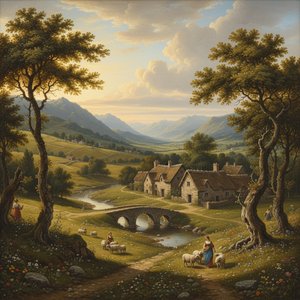
Evoking Arcadia: A Historical & Aesthetic Exploration of Rural Landscape Art
Explore the rich history of pastoral landscape art, from classical Arcadia to Impressionism & beyond. Discover key artists, movements, and how to collect serene rural scenes for your home. Expert insights at OriginalUniqueArt.

Romantische Landschappen: Top 10 Meesterwerken voor een Sfeervol Interieur | OriginalUniqueArt.nl
Ontdek de 10 meest iconische meesterwerken van de Romantiek! Reis door de tijd met Caspar David Friedrich, Turner & Delacroix. Laat je inspireren en vind museumkwaliteit kunst reproducties voor een sfeervol interieur op OriginalUniqueArt.com.

John Constable's Top 25 Meesterwerken: Landschappen die de Ziel Raaken | OriginalUniqueArt
Ontdek de 25 mooiste schilderijen van John Constable, meester van de Engelse Romantiek. Van idyllische landschappen tot iconische Hay Wain – bewonder zijn techniek en emotie. Museumkwaliteit reproducties & decoratie op OriginalUniqueArt.com.

Evoking Nature's Sublime: A Comprehensive Exploration of 19th-Century Landscape Painting
Explore the captivating world of 19th-century landscape painting! Discover renowned artists like Friedrich & Monet, key movements, and find the perfect artwork to bring nature's serenity into your home. Expert insights at OriginalUniqueArt.

Cultivating Visions: A Historical Journey Through Rural Landscapes in Art
Explore the rich history of rural landscape painting with OriginalUniqueArt. Discover Impressionist masterpieces, key artists & movements. Find your perfect serene artwork and bring nature's beauty home.