
 Voorvertoning
 Verstuur
 Delen
Delen
 Details bekijken

 Download
 Vergelijkbare items
 Röntgenonderzoek
 Diavoorstelling
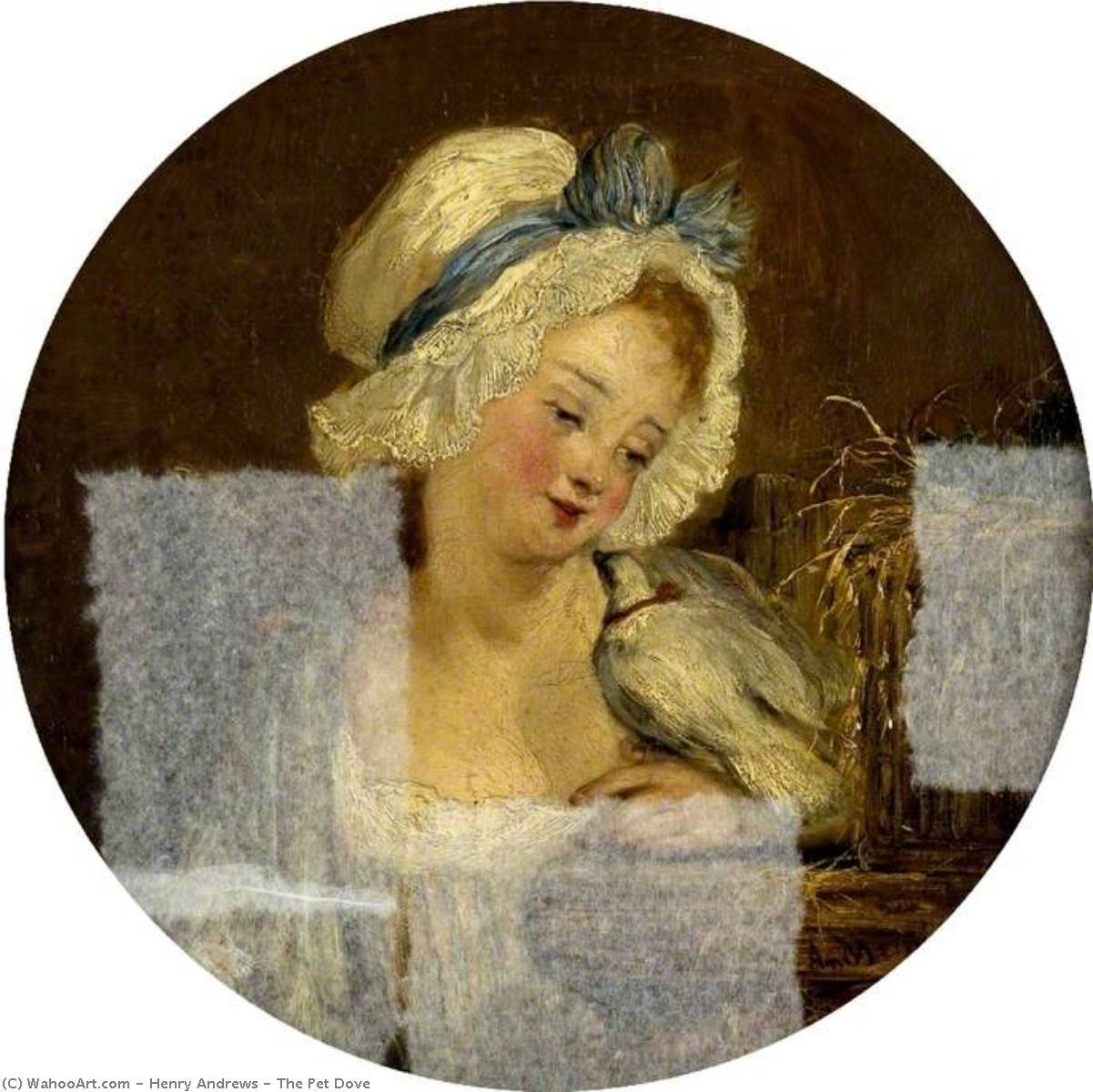
The Pet Dove
 28.0 x 28.0 cm
 Lees meer
Giclée / Kunstafdrukken
Giclée- of canvasafdruk van museumkwaliteit met een snelle productie en flexibele afwerkingsmogelijkheden. ( Bestel handgeschilderde reproductie Koop afbeelding)




































Kies uit onze vooraf ingestelde maten die overeenkomen met de originele verhoudingen van het kunstwerk.

U kunt uw eigen afmetingen opgeven om in een specifieke lijst of ruimte te passen. Als de door u gekozen maat niet overeenkomt met de proporties van het originele kunstwerk, zullen wij de afbeelding bijsnijden of uitbreiden met een gespiegelde of effen rand. Een digitaal mockup wordt ter goedkeuring naar u verzonden voordat de productie begint.
Houd er rekening mee dat de preview op het scherm de werkelijke bijsneding of uitbreiding niet weergeeft. Alleen de mockup toont de uiteindelijke compositie nauwkeurig.
Hoewel aangepaste maten beschikbaar zijn, raden wij aan een afmeting uit de vooraf bepaalde lijst te kiezen om de originele proporties te behouden.
Wereldwijde levering () binnen 2 weken in plaats van de standaard 4/5 weken. (18 augustus)

Gratis wereldwijde expressverzending

Hoogwaardig linnen canvas

Volledige verzendverzekering

Garantie op terugbetaling van invoerrechten

Garantie op exacte kleurweergave

Retourbeleid van 60 dagen (alleen bij defecten)

100% Geld-terug-garantie

Korting bij meerdere afnames
 De optie voor glas is alleen beschikbaar bij een formaat kleiner dan 110 cm.

The Pet Dove
Giclée / Kunstafdrukken
Afmetingen reproductie
-


Eindtotaal
$ 81
Beschrijving verzamelobject
Artistic Significance
The painting depicts a woman gently holding a dove in her arms, exuding a sense of warmth and serenity. The backdrop features a dining table and a vase, adding depth and context to the scene. The overall atmosphere is inviting, highlighting the special bond between humans and animals. As seen in other works by Henry Andrews, such as those available on OriginalUniqueArt.com, this piece showcases the artist's mastery of color and composition.Style and Technique
Henry Andrews' style is characterized by his use of soft, delicate brushstrokes and a muted color palette. This technique creates a sense of intimacy and tranquility, drawing the viewer into the scene. The Pet Dove is a prime example of oil on canvas painting, with the artist's skilled use of light and shadow adding depth and dimension to the piece.- The painting's size, 28 x 28 cm, makes it an intimate and personal work.
- The Glasgow Museums Resource Centre provides a fitting home for this beautiful piece.
- Henry Andrews' work can be found on OriginalUniqueArt.com, alongside other famous artists like Marc Nattier and Vincent Van Gogh.
The Pet Dove is a testament to Henry Andrews' skill as an artist and his ability to capture the beauty in everyday life. This painting, along with others by renowned artists, can be found on OriginalUniqueArt.com, a leading online platform for handmade oil paintings reproductions.
Biografie van de kunstenaar
Henry Andrews: A Painter of English Landscapes and Social Scenes
Henry Andrews (1796 – 1868) stands as a significant, yet often overlooked, figure in 19th-century British art. His career spanned several decades, marked by a remarkable versatility that encompassed idyllic landscapes, lively social scenes, and meticulously detailed botanical studies. While he never achieved the widespread fame of his contemporaries like Turner or Constable, Andrews’s work offers a unique window into the evolving artistic landscape of England during a period of rapid industrialization and societal change. His paintings capture both the beauty of the natural world and the nuances of everyday life, reflecting a keen observational eye and a subtle yet powerful sense of storytelling.
Born in London, Andrews received his early artistic training under the guidance of John Christian Neale, a landscape painter known for his depictions of rural England. This foundational education instilled in him a deep appreciation for the English countryside – its rolling hills, picturesque villages, and vibrant flora and fauna. However, Andrews’s artistic journey wasn't confined to purely topographical representation. He quickly developed an interest in capturing the social dynamics of his time, frequently depicting scenes of hunting parties, country dances, and gatherings amongst the landed gentry. This dual focus – landscape and society – became a defining characteristic of his oeuvre.
Andrews’s artistic style evolved considerably throughout his career. Initially influenced by the Romantic movement's emphasis on dramatic light and atmospheric effects, his early works are characterized by loose brushwork and a sense of immediacy. As he matured, however, his technique became more refined and controlled, adopting a smoother, more polished approach. He mastered the art of capturing subtle tonal variations and creating a convincing illusion of depth and space. His compositions often feature a carefully arranged foreground, middle ground, and background, drawing the viewer’s eye into the scene and inviting contemplation.
A key element of Andrews's artistic practice was his fascination with botanical illustration. He produced numerous meticulously detailed studies of plants and flowers, showcasing an impressive knowledge of botany and a remarkable ability to render their delicate forms and textures. These botanical works were not merely decorative; they often served as visual companions to his landscape paintings, enriching the overall narrative and providing insights into the natural world depicted.
Andrews’s work gained recognition through inclusion in several prestigious exhibitions, including those of the Royal Academy and the Society of British Artists. His paintings found a ready market among wealthy collectors and were frequently purchased by members of the aristocracy and landed gentry. Notably, his works have been held in public collections such as the National Gallery and the Tate Britain, testament to their enduring artistic merit. Despite this recognition, Andrews remained largely outside the mainstream art world, often overshadowed by more commercially successful artists. However, a closer examination of his paintings reveals a wealth of subtle details, nuanced observations, and a genuine appreciation for the beauty of England’s landscape and its people.
Key Themes and Artistic Techniques
Andrews's paintings are rich in thematic complexity, exploring not only the visual splendor of the English countryside but also the social customs and values of his time. Recurring motifs include hunting scenes – often depicted with a keen awareness of animal behavior and human interaction – country dances, and gatherings amongst the landed gentry. These scenes offer glimpses into the leisure activities and social hierarchies of 19th-century England.
His landscapes are characterized by a meticulous attention to detail, capturing the subtle variations in light, color, and texture that define the English countryside. Andrews skillfully employed atmospheric perspective – using lighter tones and softer brushwork to create a sense of distance – to convey the vastness and grandeur of the landscape. He also demonstrated a remarkable ability to depict foliage, rendering the intricate patterns of leaves and branches with astonishing accuracy.
Andrews’s botanical studies are notable for their precision and detail. He meticulously observed the forms and colors of plants, capturing their delicate features with remarkable skill. His works often feature detailed annotations identifying the species depicted, reflecting his deep knowledge of botany. The integration of these botanical elements into his landscape paintings adds another layer of meaning to his work, suggesting a harmonious relationship between humanity and nature.
Influences and Artistic Context
Andrews’s artistic development was undoubtedly influenced by the prevailing trends of the Romantic era, particularly its emphasis on the beauty of nature and the importance of individual experience. However, he also drew inspiration from earlier traditions of landscape painting, such as those of Claude Lorrain and Nicolas Poussin. These influences are evident in his compositions, which often feature classical architectural elements and a sense of idealized beauty.
Andrews’s work was produced during a period of significant social and economic change in England. The Industrial Revolution was transforming the country's landscape and its way of life, leading to urbanization, displacement, and social unrest. Andrews’s paintings offer a poignant reflection on these changes, capturing both the beauty of the pre-industrial countryside and the anxieties associated with modernization.
Furthermore, Andrews’s interest in botanical illustration reflects the broader scientific developments of his time. The 18th and 19th centuries witnessed an explosion of knowledge about plants and animals, driven by advances in taxonomy, anatomy, and microscopy. Andrews's detailed studies demonstrate a keen awareness of these scientific advancements and a desire to document the natural world with accuracy and precision.
Legacy and Historical Significance
Despite not achieving widespread fame during his lifetime, Henry Andrews’s work has been increasingly recognized for its artistic merit and historical significance in recent decades. His paintings offer a valuable insight into the social and cultural landscape of 19th-century England, capturing both the beauty of the countryside and the complexities of human relationships.
Andrews's meticulous attention to detail and his skillful use of light and color have earned him a place among the leading landscape painters of his era. His botanical studies are particularly noteworthy for their scientific accuracy and artistic elegance. His legacy lies not only in his individual works but also in his contribution to the broader development of British art, demonstrating a unique blend of observation, skill, and sensitivity.
Today, Andrews’s paintings can be found in public collections around the world, serving as reminders of a talented artist who deserves greater recognition for his artistic achievements. His work continues to inspire artists and viewers alike, offering a timeless celebration of the beauty of England's landscape and its people.

henry andrews
1796 - 1868
Belangrijkste feiten
- Artistic Movement Or Style: Romantic Landscape
- Artists Or Movements Influenced By This Artist: ['Romanticism']
- Artists Who Influenced This Artist: ['Nicolaes Berchem']
- Date Of Birth: 1796
- Date Of Death: 1868
- Full Name: Henry Andrews
- Nationality: British
- Notable Artworks:
- Dog Skipping Rope
- FIESTA GALANTE
- Hunting Party
- The Card Players
- Place Of Birth: WahooArt

