Schakel over naar print
 Lees meer







































 Voor kunstwerken of reproducties die aan één zijde groter zijn dan 105 cm (ongeveer 41 inch), wordt de lijst als een losse set verzonden. Deze methode garandeert een veilige levering en voorkomt schade tijdens het transport.


Studio Interior by Henri Matisse
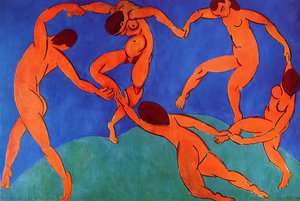
Henri Matisse’s “Studio Interior,” painted circa 1903–4, stands as a cornerstone of Fauvist art—a movement that irrevocably altered the course of painting in the early 20th century. More than just a depiction of a workspace, it's an intensely expressive exploration of color and form, capturing not merely what Matisse saw but how he felt about his creative process.
- Subject Matter: The canvas portrays a domestic interior—a room bathed in diffused light featuring a wooden cabinet, several vases brimming with flowers, a chair positioned prominently in the foreground, and a dining table anchoring the composition. Two figures inhabit the space, subtly engaging in conversation, adding an element of human presence to the carefully constructed visual landscape.
- Style: Matisse’s signature Fauvist style is immediately apparent. Rejecting Impressionistic realism, he prioritized pure color—unmixed hues applied directly onto the canvas without any blending or shading. This bold chromatic approach abandons naturalistic representation in favor of emotional impact and artistic intuition.
- Technique: Executed in oil paint on canvas, Matisse employed a technique characterized by thick impasto – applying pigment thickly to create textured surfaces that capture light and shadow with remarkable vibrancy. The deliberate roughness of the brushstrokes contributes significantly to the painting’s expressive power, conveying a sense of immediacy and spontaneity.
The historical context surrounding “Studio Interior” is crucial to understanding its significance. Emerging in France around 1905, Fauvism challenged artistic conventions established by academic traditions. Artists like Matisse sought inspiration from primitive art forms—particularly African masks—drawing upon their expressive use of color and simplified shapes. This stylistic rebellion signaled a rejection of illusionistic representation and an embrace of subjective experience.
Symbolically, the painting speaks volumes about Matisse’s artistic philosophy. The vibrant colors – predominantly shades of pink, orange, and yellow – aren't merely decorative; they represent Matisse’s belief in color as a vehicle for conveying emotion. The arrangement of objects—the cabinet, vases, bottles—creates a harmonious yet dynamic composition that reflects the artist’s preoccupation with creating beauty and capturing the essence of his surroundings. Furthermore, the presence of two figures suggests contemplation and artistic dialogue – an embodiment of Matisse's own creative spirit.
Ultimately, “Studio Interior” transcends its subject matter to become a powerful statement about art itself. Its emotional impact is undeniable—a celebration of color, texture, and form that continues to inspire artists and collectors alike. Reproductions offer a remarkable opportunity to experience the brilliance of Matisse’s vision and incorporate this iconic artwork into interior design schemes, bringing a touch of Fauvist vibrancy and artistic contemplation into any space.
Veelgestelde vragen
Behoort "Studio interior" door Henri Matisse tot de meest gezochte Fauvist Expression kunstwerken?
"Studio interior" door Henri Matisse wordt geclassificeerd als Iconic en behoort tot de Fauvist Expression-stroming.
Waarvoor wordt een afdruk van "Studio interior" aanbevolen?
Een afdruk van "Studio interior" wordt aanbevolen voor Accent.
Uit welk land komt het Fauvist Expression werk "Studio interior"?
"Studio interior" werd gecreëerd door Henri Matisse, geboren in Frankrijk, binnen de Fauvist Expression-stroming. De herkomst van de kunstenaar verbindt het werk met Fauvist Expression, zoals beoefend door kunstenaars uit Frankrijk.
 Voorvertoning
 Verstuur
 Delen
Delen
 Details bekijken
 Gids
Gids

 Download
 Vergelijkbare items
 Röntgenonderzoek
 Diavoorstelling
 Q&A
Q&A Statistieken