

 Bekijk op ware grootte
 Verstuur
 Delen
Delen
 Details bekijken
 Gids voor studentenkunstwerken

 Download
 Vergelijkbare items
 Röntgenonderzoek
 Diavoorstelling
 Statistieken
Crémieu
 Oil On Canvas
- WallArt
- Romanticism
 1847
1847 38.0 x 46.0 cm
 Fitzwilliam College
 Lees meer
Giclée / Kunstafdrukken
Giclée- of canvasafdruk van museumkwaliteit met een snelle productie en flexibele afwerkingsmogelijkheden. ( Koop handgeschilderd kunstwerk Schakel over naar digitale afbeeldingen)




P118B €10

P118H €10

P118W €10

P438Z €10

P508JH €12

P508YH €12

P805H €10

P805Z €10

P919BZ €10

P919G €10

P919XJ €10

P959ZH €10

P968JZ €12

W106C €8

W218G €10

W218JH €8

W218Y €10

W307PJ €10

W316G €10

W316PJ €8

W316Y €10

W398PJ €8

W4111J €10

W500HY €15

W500JH €15

W692G €12

W849H €8

W940BG €15

W953PJ €8




Kies uit onze vooraf ingestelde maten die overeenkomen met de originele verhoudingen van het kunstwerk.

Voer de breedte en de hoogte in die u nodig heeft, passend bij uw lijst of uw muur. Een afdruk kan alleen worden ingekort, nooit groter worden gemaakt dan het origineel, waardoor een formaat met een andere verhouding een deel van de afbeelding verliest. Wij sturen u een digitaal mockup ter goedkeuring voordat we iets drukken. De afbeelding op deze pagina toont niet de werkelijke uitsnede — dit is alleen te zien op het mockup.
Wereldwijde levering () binnen 2 weken in plaats van de standaard 4/5 weken. (25 oktober)

Gratis wereldwijde expressverzending

Hoogwaardig linnen canvas

Volledige verzendverzekering

Garantie op terugbetaling van invoerrechten

Garantie op exacte kleurweergave

Retourbeleid van 100 dagen (alleen bij defecten)

100% Geld-terug-garantie

Korting bij meerdere afnames
 De optie voor glas is alleen beschikbaar bij een formaat kleiner dan 110 cm.

Crémieu
Giclée / Kunstafdrukken
Formaat reproductie
-


Totaalprijs
€ 71
A Dramatic Vista of the French Countryside
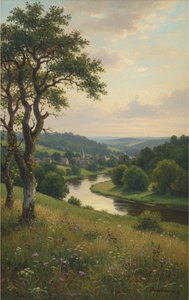
Henri-Joseph Harpignies’ “Crémieu” (1847) is more than just a landscape painting; it's an immersive experience, a carefully constructed tableau that invites contemplation on the relationship between humanity and the vastness of nature. The scene unfolds within the foothills of the French Alps, depicting a rugged, almost primordial terrain dominated by towering cliffs and a winding path that draws the eye relentlessly into the distance. The painting immediately establishes a sense of solitude and grandeur – an emotional resonance deeply rooted in the Romantic tradition, yet subtly informed by Harpignies’ meticulous observation of light and texture.

The composition is masterfully executed, utilizing a strong diagonal line created by the path to guide the viewer’s gaze and establish a dynamic flow through the scene. The foreground, rendered in earthy browns and ochres, features a dirt road and scattered rocks, gradually transitioning into the imposing cliffs that form the central focus of the painting. These cliffs aren't merely geological formations; they possess an almost sculptural quality, their weathered surfaces hinting at centuries of exposure to the elements. In the distance, a subtle atmospheric perspective – a softening of colors and details as depth increases – suggests the immense scale of the landscape and evokes a feeling of both awe and vulnerability.
The Barbizon School and Luminism
Harpignies’ work firmly places him within the context of the Barbizon School, a movement that championed direct observation of nature and a rejection of academic artifice. Unlike earlier landscape painters who relied heavily on idealized representations, the Barbizon artists sought to capture the essence of the French countryside as they experienced it – with its rough textures, subtle shifts in light, and inherent imperfections. “Crémieu” exemplifies this approach, eschewing smooth brushstrokes and carefully blended colors in favor of visible marks that convey a sense of immediacy and spontaneity. Furthermore, the painting’s emphasis on atmospheric effects aligns closely with Luminism, a style characterized by its soft, diffused lighting and focus on capturing the subtle nuances of light and shadow.
Born in Valenciennes in 1819, Harpignies initially pursued a business career before dedicating himself to art. His early training under Jean Achard instilled in him a solid foundation in draughtsmanship, while his subsequent journey to Italy exposed him to the principles of the Barbizon School and fostered a deep appreciation for the Italian landscape tradition. The painting’s muted palette – dominated by browns, greens, and grays – contributes significantly to its evocative atmosphere, creating a sense of quiet contemplation and timelessness.
Symbolism and Emotional Resonance
Beyond its technical merits, “Crémieu” carries a subtle symbolic weight. The solitary path winding through the landscape can be interpreted as a metaphor for the human journey – a quest for meaning and purpose amidst the vast uncertainties of life. The towering cliffs represent both strength and vulnerability, reminding us of our own smallness in the face of nature’s power. The painting's overall mood is one of serene solitude, inviting viewers to pause and reflect on their place within the natural world.
Interestingly, the village of Crémieu itself, depicted in the painting, holds a rich history. Situated near Lyon, it served as an important trading center throughout the Middle Ages, benefiting from its strategic location along trade routes. The presence of a medieval castle and monastic settlements further adds to the painting’s historical context.
A Masterpiece for Collectors
“Crémieu” is a testament to Harpignies' skill as a landscape painter and his ability to capture the beauty and drama of the French countryside. Reproductions of this captivating artwork are available through OriginalUniqueArt, offering an opportunity to bring its evocative atmosphere into your home or office. Its timeless appeal and rich symbolism make it a valuable addition to any art collection.
Vragen & Antwoorden
Welke emotie straalt "Crémieu" door Henri-Joseph Harpignies uit?
"Crémieu" door Henri-Joseph Harpignies straalt een Nostalgic emotionele toon uit.
Welke afmeting wordt aanbevolen voor "Crémieu" in een Living Room?
Voor een Living Room is de aanbevolen afmeting voor de print van "Crémieu" door Henri-Joseph Harpignies Medium.
Hoe kan ik een print van "Crémieu" door Henri-Joseph Harpignies verkrijgen?
Om een print van "Crémieu" door Henri-Joseph Harpignies te bemachtigen, kunt u deze eenvoudig bestellen op de Fine Art Print pagina: een fine art print op katoenen canvas of archiefwaardig canvaspapier.
Biografie van de kunstenaar
Henri-Joseph Harpignies: Een Leven in het Landschap
Vroege Jaren en Opleiding
Geboren op 28 juni 1819 in Valenciennes, Frankrijk, werd Henri-Joseph Harpignies aanvankelijk geconfronteerd met de ouderlijke verwachting om een carrière in het bedrijfsleven na te streven. Zijn passie voor de kunst bleek echter te sterk om te negeren. Van Belgische afkomst, en ondanks de oorspronkelijke plannen van zijn familie, zette hij alles op het spel om zich volledig aan het kunstenaarschap te wijden. Op een leeftijd van zevenentwintig jaar begon hij formeel zijn artistieke opleiding in Parijs, waar hij het atelier van Jean Achard betrad. Deze fundamentele periode lag in het teken van het ontwikkelen van solide tekenvaardigheden – een cruciaal element dat de kern zou blijven vormen van het latere werk van Harpignies.
De Barbizon-school en Italiaanse Invloeden
Na twee jaar onder de begeleiding van Achard, vertrok Harpignies in 1848 op een cruciale reis naar Italië. Deze ervaring vormde zijn artistische visie op diepgaande wijze. Bij zijn terugkeer in 1850 maakte hij kennis met de vooraanstaande figuren van de Barbizon-school, waaronder Jean-Baptiste-Camille Corot. De nadruk van de Barbizon-schilders op directe observatie van de natuur en hun realistische weergave van het landelijke leven resoneerden diep met Harpignies. In 1860 verstevigde hij zijn artistieke band met Corot verder tijdens een gezamenlijke reis terug naar Italië.
Artistieke Ontwikkeling en Stijl
De stijl van Harpignies kenmerkt zich door serene en idyllische afbeeldingen van het Franse platteland. Hij wist de subtiele nuances van licht en atmosfeer meesterlijk te vangen, waardoor landschappen ontstonden die een gevoel van rust en harmonie oproepen. Zijn techniek combineerde zorgvuldige observatie met een verfijnd begrip van compositie. Hoewel beïnvloed door het realisme van de Barbizon-school, ontwikkelde Harpignies zijn eigen, unieke stem, waarin hij vaak een poëtische gevoeligheid in zijn werk verweefde.
Opmerkelijke Werken
- Soir sur les bords de la Loire (Avond aan de oevers van de Loire) – 1861: Een essentieel voorbeeld van zijn atmosferische landschappen, die de schoonheid van de Loirevallei tentoonstellen.
- Les corbeaux (De raven) – 1865: Toont zijn vaardigheid in het vastleggen van stemming en detail binnen een natuurlijke omgeving.
- Le soir (Avond) – 1866: Een meeslepende weergave van de stille schoonheid van de schemering.
- La loire (De Loire) – 1882: Een ander prachtig tafereel van de rivier de Loire, dat zijn beheersing van licht en water onderstreept.
- Vue de Saint-Privé (Gezicht op Saint-Privé) – 1883: Een schilderachtig tafereel van een charmant Frans dorpje.
Nalatenschap en Invloed
De artistieke nalatenschap van Harpignies reikt verder dan zijn eigen schilderijen. Hij was een toegewijde docent die zijn kennis en vaardigheden overdroeg aan talrijke studenten, waaronder Émile Appay (1876-1935) en James Wilson Morrice (1865-1924). Zijn invloed is zichtbaar in de ontwikkeling van de Franse landschapsschilderkunst gedurende de late 19e en vroege 20e eeuw. Hij droeg bij aan het verankeren van de impact van de Barbizon-school op opeenvolgende generaties kunstenaars.
Historisch Belang
Henri-Joseph Harpignies neemt een belangrijke plaats in binnen de geschiedenis van de Franse landschapsschilderkunst. Zijn werk weerspiegelt een diepe waardering voor de natuur en een toewijding om haar schoonheid met eerlijkheid en gevoeligheid vast te leggen. Hij overleed in 1916, maar liet een rijk artistiek erfgoed na dat tot op de dag van vandaag publiek blijft inspireren en fascineren. Zijn schilderijen zijn opgenomen in vooraanstaande museumcollecties, waaronder het Musée des Beaux-Arts Valence, wat zijn blijvende erkenning als meester van de landschapskunst waarborgt.
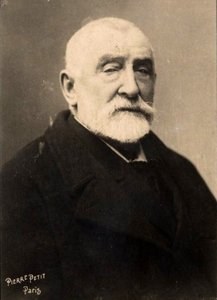
Henri-Joseph Harpignies
1819 - 1916 , België
Snelle feiten
- Artistic Movement Or Style: Barbizon School
- Artists Or Movements Influenced By This Artist: ['Barbizon School']
- Artists Who Influenced This Artist:
- Jean Achard
- Jean Baptiste Camille Corot
- Date Of Birth: 28 juni 1819
- Date Of Death: 28 augustus 1916
- Full Name: Henri-Joseph Harpignies
- Nationality: Frans
- Notable Artworks:
- Soir sur les bords de la Loire
- Les Corbeaux
- Le Soir
- Le Saut-du-Loup
- La Loire
- Place Of Birth: Valenciennes, België
Gerelateerde artikelen

Romantische Landschappen: Top 10 Meesterwerken voor een Sfeervol Interieur | OriginalUniqueArt.nl
Ontdek de 10 meest iconische meesterwerken van de Romantiek! Reis door de tijd met Caspar David Friedrich, Turner & Delacroix. Laat je inspireren en vind museumkwaliteit kunst reproducties voor een sfeervol interieur op OriginalUniqueArt.com.
Evoking Nature's Sublime: A Comprehensive Exploration of 19th-Century Landscape Painting
Explore the captivating world of 19th-century landscape painting! Discover renowned artists like Friedrich & Monet, key movements, and find the perfect artwork to bring nature's serenity into your home. Expert insights at OriginalUniqueArt.
Paul Huet: Capturing the Essence of French Romanticism Through Light and Landscape
Explore the captivating world of Paul Huet (1803-1869), a master of French Romantic landscape painting. Discover his influence on Barbizon & Impressionism, and browse high-quality reproductions at OriginalUniqueArt.
Evoking Emotion & Transcendence: Romantic Landscape Painting (18th-19th Century)
Explore the emotional depth of Romantic landscape painting (18th-19th century). Discover key artists like Friedrich & Cole, and the concepts of the sublime. Expert insights for art lovers & collectors.
Henri-Joseph Harpignies: Capturing the Poetic Essence of the French Landscape
Explore the serene landscapes of Henri-Joseph Harpignies, a master of the Barbizon School. Discover his atmospheric paintings, recurring themes & enduring legacy in 19th-century French art. Learn more at OriginalUniqueArt.
