

 Bekijk op ware grootte
 Verstuur
 Delen
Delen
 Details bekijken
 Gids voor studentenkunstwerken

 Download
 Vergelijkbare items
 Röntgenonderzoek
 Diavoorstelling
 Statistieken
Minerva
 Oil On Panel
- WallArt
- Northern Mannerism
 1611
1611- Early Modern
 214.0 x 120.0 cm
 Frans Halsmuseum
 Lees meer
Handgemaakte olieverfreproductie
Met de hand geschilderd in olieverf op canvas in uw gewenste maat en lijst, op bestelling gemaakt door onze kunstenaars. ( Schakel over naar print Schakel over naar digitale afbeeldingen)




P118B €10

P118H €10

P118W €10

P438Z €10

P508JH €12

P508YH €12

P805H €10

P805Z €10

P919BZ €10

P919G €10

P919XJ €10

P959ZH €10

P968JZ €12

W106C €8

W218G €10

W218JH €8

W218Y €10

W307PJ €10

W316G €10

W316PJ €8

W316Y €10

W398PJ €8

W4111J €10

W500HY €15

W500JH €15

W692G €12

W849H €8

W940BG €15

W953PJ €8




Kies uit onze vooraf ingestelde maten die overeenkomen met de originele verhoudingen van het kunstwerk.

Voer de breedte en de hoogte in die u nodig heeft, passend bij uw lijst of uw muur. Dit is handgeschilderd, dus bij een afmeting met een andere vormverhouding kan de kunstenaar iets meer rondom het schilderij schilderen of juist iets meer weglaten — u kiest zelf. Wij sturen u een digitaal mockup ter goedkeuring voordat het schilderwerk begint. De afbeelding die op deze pagina wordt getoond, is niet het uiteindelijke resultaat — alleen de mockup geeft dit weer.
Na de bestelling zal het team van OriginalUniqueArt.com per e-mail contact opnemen met de klant voor instructies en een mockup-voorbeeld sturen.
Wereldwijde levering () binnen 3 tot 4 weken in plaats van de standaard 5 weken. (22 oktober). Zonder concessies aan de kwaliteit.

Gratis wereldwijde expressverzending

Hoogwaardig linnen canvas

Volledige verzendverzekering

Garantie op terugbetaling van invoerrechten

Garantie op exacte kleurweergave

Retourbeleid van 100 dagen (alleen bij defecten)

100% Geld-terug-garantie

Korting bij meerdere afnames
 De optie voor glas is alleen beschikbaar bij een formaat kleiner dan 110 cm.

Minerva
Reproductiemethode
Formaat reproductie
-


Totaalprijs
€ 262
A Symphony of Wisdom and Power: The Allure of Goltzius’s Minerva
In the quiet halls of the Frans Halsmuseum in Haarlem, there exists a window into the intellectual fervor of the early seventeenth century. Hendrick Goltzius’s "Minerva," completed in 1611, is far more than a mere mythological portrait; it is a cornerstone of Dutch Baroque Mannerism that continues to command attention through its refined elegance and psychological depth. As a masterpiece of Northern Mannerism, the painting captures the Roman goddess of wisdom and warfare not as a distant deity, but as a presence that feels both monumental and intimately human. For the discerning collector or interior designer, this work offers a profound sense of gravitas, bringing an atmosphere of classical sophistication and timeless intellect to any curated space.
The composition is a masterclass in the deliberate tension characteristic of the Mannerist style. Eschewing the overly idealized forms of the High Renaissance, Golt_zius embraced a more expressive, almost unsettling realism. The goddess is depicted with a regal yet relaxed posture, her figure possessing a dynamic energy that seems to pulse beneath the surface of the oil on panel. Through the masterful application of chiaroscuro, the artist orchestrates a dramatic interplay between light and shadow; pools of luminous light wash over Minerva’s face and torso, while deep, velvety shadows retreat into the folds of her drapery. This technique does more than create volume—it imbues the goddess with an ethereal, almost supernatural glow, making her appear to emerge from the very fabric of history.
Symbolic Resonance and Technical Mastery
Every element within this monumental work serves a higher narrative purpose, weaving a complex tapestry of humanist philosophy. Perched upon Minerva’s arm, the owl—the traditional emblem of nocturnal vigilance and prophetic insight—gazes toward the viewer, acting as a silent sentinel of wisdom. The presence of the spear in her hand reminds us of her role in strategic warfare, yet it is her serene expression that dominates the emotional landscape. Goltzius utilized sophisticated glazing techniques, applying thin, translucent layers of pigment to achieve a luminous skin tone and a rich, tactile quality in the fabrics. This meticulous attention to detail ensures that even a high-quality reproduction retains the sense of luxury and historical weight found in the original.
For those seeking to infuse a room with inspiration, "Minerva" provides an unparalleled focal point. The subtle earth tones and the antique feel of the palette allow it to integrate seamlessly into both classical and contemporary interiors, acting as a conversation piece that invites deep contemplation. To possess a reproduction of this caliber is to invite the spirit of the Dutch Golden Age into one's home—a celebration of the enduring triumph of wisdom over chaos, and the breathtaking beauty of technical perfection.
Vragen & Antwoorden
Wat zijn de techniek en de datum van "Minerva" door Hendrik Goltzius?
"Minerva" werd gemaakt in 1611, in Oil On Panel.
In welke periode van de carrière van Hendrik Goltzius valt "Minerva"?
"Minerva" behoort tot de Northern Mannerism in de carrière van Hendrik Goltzius. Deze classificatie plaatst het werk in de context van de ontwikkeling van de kunstenaar.
Welke techniek en stijl kenmerken "Minerva" door Hendrik Goltzius?
"Minerva" is vervaardigd in Oil On Panel, in de Northern Mannerism-stijl.
Biografie van de kunstenaar
Early Life and Artistic Foundations
Hendrik Goltzius, a name synonymous with the vibrant dynamism of Northern Mannerism in Dutch art, was born in Mullbracht – now part of Brüggen – in the Lower Rhine region of Germany around 1558. His early life, marked by a childhood tragedy, profoundly shaped his artistic trajectory. A fire when he was just three years old left him with a permanently deformed right hand, an imperfection that surprisingly became a source of strength and distinctive style. His family’s relocation to Duisburg provided him with his initial artistic training under his father, Jan Goltz II, a skilled glass painter. This early exposure instilled in him a deep appreciation for meticulous detail and the transformative power of color – skills he would later adapt to the stark lines of engraving. However, it was Dirck Volckertszoon Coornhert, a renowned polymath and engraver, who truly molded Goltzius into the master printmaker he became. Coornhert’s influence extended beyond mere technical instruction; he introduced Goltzius to the burgeoning world of humanist thought and artistic experimentation prevalent in Haarlem during that era. This period laid the groundwork for Goltzius's later embrace of Mannerist aesthetics, a style characterized by its elegance, stylized figures, and dramatic compositions.The Rise of a Master Engraver
Around 1577, Goltzius embarked on a pivotal chapter in his career, relocating to Haarlem – the heart of the Dutch Republic’s artistic scene – alongside Coornhert. This move marked a significant shift from his father's craft and propelled him into the vibrant world of printmaking. Initially, he found employment with Philip Galle, a prominent Antwerp-based publisher, where he honed his skills by reproducing works by renowned artists like Dürer and Van Leyden. Crucially, this early experience exposed him to diverse artistic styles and techniques, allowing him to develop his own unique approach. However, Goltzius’s ambition extended beyond mere replication; he quickly began designing and engraving original compositions, establishing himself as a distinct voice within the Dutch art world. His marriage in 1579 to Margaretha Jansdr., a widow with considerable wealth, provided him with the financial stability necessary to establish his own printing workshop – a bold move that signaled his determination to control every aspect of his artistic output. This independence allowed him to cultivate a distinctive style and attract a loyal clientele throughout Europe.The Influence of Spranger and Italian Renaissance
A defining moment in Goltzius’s career arrived with the arrival of Karel van Mander in Haarlem in 1583, bringing with him the influence of Bartholomeus Spranger, a leading figure in the Mannerist style. Spranger's opulent, theatrical compositions – characterized by elongated figures, dramatic poses, and intricate details – captivated Goltzius, profoundly shaping his artistic vision. Goltzius’s engravings during this period are deeply indebted to Spranger, mirroring his use of exaggerated forms, dynamic diagonals, and a sense of heightened emotion. He produced masterful reproductions of Spranger's celebrated works, such as *The Wedding of Cupid and Psyche*, demonstrating an unparalleled level of technical skill and artistic understanding. Furthermore, Goltzius’s journey to Italy in 1590 proved transformative. His time spent studying the classical sculptures and paintings of Rome fueled a renewed interest in antiquity and informed his later works with a sense of balance and harmony. He meticulously documented these encounters through engravings, capturing the essence of Renaissance art for a European audience.Technique and Legacy
Hendrik Goltzius’s mastery of engraving was legendary. His command of the burin – the primary tool used in printmaking – was unparalleled, allowing him to create lines of astonishing delicacy and power. He pioneered the “swelling line” technique, manipulating the pressure applied to the burin to produce varying thicknesses of line, effectively mimicking tonal shading and adding depth to his prints. He also developed the "dot and lozenge" technique, a sophisticated method of creating subtle gradations through strategically placed dots within lozenge-shaped spaces – a testament to his innovative approach. His engravings are characterized by their meticulous detail, dramatic compositions, and a remarkable sense of movement. Goltzius’s influence extended far beyond his own lifetime; he mentored numerous engravers who went on to become prominent artists in their own right. His work is celebrated in major print rooms across the globe – including the Rijksmuseum in Amsterdam, the British Museum in London, and the Metropolitan Museum of Art in New York – solidifying his place as one of the most important figures in the history of Dutch art. His legacy continues to inspire artists and scholars alike, a testament to his enduring genius and innovative spirit.
Hendrik Goltzius
1558 - 1617 , Duitsland
Snelle feiten
- Artistic Movement Or Style: Noordelijke Manierisme
- Artists Or Movements Influenced By This Artist: ['Bartholomeus Spranger']
- Artists Who Influenced This Artist: ['Dirck Coornhert']
- Date Of Birth: Jan/Feb 1558
- Date Of Death: 1617
- Full Name: Hendrik Goltzius
- Nationality: Nederlands
- Notable Artworks:
- De Aanbidding der Herders
- Arcadië Landschap
- Place Of Birth: Braunschweig, Duitsland
Gerelateerde artikelen

Top 10 Barok Meesterwerken: Kunstgeschiedenis voor uw Interieur | OriginalUniqueArt.nl
Ontdek de 10 meest iconische Barok meesterwerken van Caravaggio, Rembrandt & Rubens! Duik in de geschiedenis en passie achter deze klassieke schilderijen. Vind museumkwaliteit reproducties voor uw interieur op OriginalUniqueArt.com.
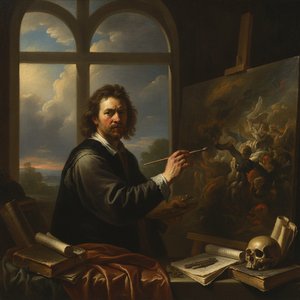
Dutch Baroque Unlocked: Mastering Chiaroscuro, Epic Drama, and the High-Impact Legacy of Rembrandt
Explore the dramatic power of Dutch Baroque art. Master the secrets of Rembrandt’s chiaroscuro, discover the epic scale of the Golden Age, and learn how to bring high-impact, hand-painted historical masterpieces into your modern collection with expert precision.

Hendrick Goltzius: Master Engraver & the Flourishing of Dutch Mannerism
Explore the life & art of Hendrick Goltzius, a master engraver of Dutch Mannerism. Discover his innovative techniques, iconic engravings like 'Jahel', and lasting influence on Baroque art. Learn about collecting Goltzius today.

Golden Age Reflections: Dutch Baroque Painting & Cultural Innovation
Explore the Dutch Golden Age of painting! Discover key artists like Vermeer & ter Borch, their innovative techniques, and the rich cultural context behind these Baroque masterpieces. Learn about collecting & appreciating this iconic art period.

Top 10 Nederlandse Barok Meesterwerken: Kunstgeschiedenis voor uw Interieur
Ontdek de 10 meest iconische meesterwerken van de Nederlandse Barok! Leer over Rembrandt, Vermeer en andere Hollandse meesters. Prachtige reproducties voor uw interieur op OriginalUniqueArt.com – museumkwaliteit kunstprints & decoratie.

