

 Bekijk op ware grootte
 Verstuur
 Delen
Delen
 Details bekijken
 Gids voor studentenkunstwerken

 Download
 Vergelijkbare items
 Röntgenonderzoek
 Diavoorstelling
 Statistieken
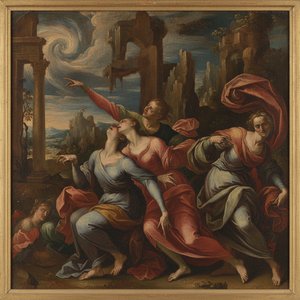
Helios
 Woodcut
- WallArt
- Northern Mannerism
 1589
1589 35.0 x 27.0 cm
 Los Angeles County Museum of Art
 Lees meer
Handgemaakte olieverfreproductie
Met de hand geschilderd in olieverf op canvas in uw gewenste maat en lijst, op bestelling gemaakt door onze kunstenaars. ( Schakel over naar print Schakel over naar digitale afbeeldingen)




P118B €10

P118H €10

P118W €10

P438Z €10

P508JH €12

P508YH €12

P805H €10

P805Z €10

P919BZ €10

P919G €10

P919XJ €10

P959ZH €10

P968JZ €12

W106C €8

W218G €10

W218JH €8

W218Y €10

W307PJ €10

W316G €10

W316PJ €8

W316Y €10

W398PJ €8

W4111J €10

W500HY €15

W500JH €15

W692G €12

W849H €8

W940BG €15

W953PJ €8




Kies uit onze vooraf ingestelde maten die overeenkomen met de originele verhoudingen van het kunstwerk.

Voer de breedte en de hoogte in die u nodig heeft, passend bij uw lijst of uw muur. Dit is handgeschilderd, dus bij een afmeting met een andere vormverhouding kan de kunstenaar iets meer rondom het schilderij schilderen of juist iets meer weglaten — u kiest zelf. Wij sturen u een digitaal mockup ter goedkeuring voordat het schilderwerk begint. De afbeelding die op deze pagina wordt getoond, is niet het uiteindelijke resultaat — alleen de mockup geeft dit weer.
Na de bestelling zal het team van OriginalUniqueArt.com per e-mail contact opnemen met de klant voor instructies en een mockup-voorbeeld sturen.
Wereldwijde levering () binnen 3 tot 4 weken in plaats van de standaard 5 weken. (23 oktober). Zonder concessies aan de kwaliteit.

Gratis wereldwijde expressverzending

Hoogwaardig linnen canvas

Volledige verzendverzekering

Garantie op terugbetaling van invoerrechten

Garantie op exacte kleurweergave

Retourbeleid van 100 dagen (alleen bij defecten)

100% Geld-terug-garantie

Korting bij meerdere afnames
 De optie voor glas is alleen beschikbaar bij een formaat kleiner dan 110 cm.

Helios
Reproductiemethode
Formaat reproductie
-


Totaalprijs
€ 264
The Radiant Vision of Helios
Hendrik Goltzius’s “Helios,” painted in 1589, isn't merely a depiction of the sun god; it’s an embodiment of his power and majesty. This woodcut, rendered with meticulous detail and a masterful understanding of chiaroscuro, transports us to a moment of profound celestial drama. The image captures Helios not as a distant star, but as a dynamic force, actively commanding the heavens – a truly arresting vision for its time.

A Master of Mannerism
Goltzius, a pivotal figure in the transition from Renaissance to Baroque art, was deeply rooted in the Northern Mannerist style. This period emphasized dramatic contrasts, elongated figures, and an intense emotionality – qualities vividly realized in “Helios.” His technical skill is breathtaking; each line of the woodcut speaks volumes about his dedication to precision and control. The intricate layering of textures, achieved through careful carving and printing techniques, creates a remarkable sense of depth and realism, defying the limitations of the medium.
Born in Braunschweig (Brunswick) in 1558, Goltzius’s early life was shaped by his family's move to Duisburg. His training under Dirck Volkertszoon Coornhert, a renowned engraver and printmaker, provided him with the foundational skills that would define his career. He later worked for Philip Galle, further honing his craft before establishing himself in Haarlem, where he remained until his death in 1617. The slight imperfection of his right hand, sustained during childhood, is a subtle reminder of the human element behind this extraordinary artistic achievement.
Symbolism and Mythological Resonance
“Helios” is steeped in symbolism, drawing upon ancient Greek mythology and religious beliefs. Helios, as the personification of the sun, represents light, warmth, life-giving energy, and divine authority. The figure’s outstretched arms and raised hands evoke a sense of command and control over the cosmos. The inclusion of the cloth or flag – often interpreted as a banner – reinforces his role as a sovereign ruler of the heavens. The composition itself is carefully constructed to convey this power: the solitary figure dominates the landscape, dwarfing the clouds beneath him, emphasizing his supreme position.
Furthermore, the image resonates with themes of fate and destiny. Helios’s journey across the sky mirrors humanity's own passage through life, highlighting the cyclical nature of time and the inevitability of change. The dramatic lighting – a hallmark of chiaroscuro – adds to this sense of drama and underscores the god’s radiant presence.
A Legacy in Print
“Helios” stands as a testament to Goltzius's artistic genius and his mastery of woodcut technique. It is not simply a beautiful image; it’s a window into a world of ancient mythology, religious belief, and artistic innovation. Reproductions of this work offer an opportunity to bring this powerful vision into any space, adding a touch of timeless elegance and spiritual depth. The enduring appeal of “Helios” lies in its ability to capture the essence of divine power – a radiant reminder of the sun’s eternal journey across the sky.
Vragen & Antwoorden
Wat zijn de techniek en de datum van "Helios" door Hendrik Goltzius?
"Helios" werd gemaakt in 1589, in Woodcut.
Is "Helios" beschikbaar als een fine art print?
Om een print van "Helios" door Hendrik Goltzius te bemachtigen, kunt u deze eenvoudig bestellen op de Fine Art Print pagina: een fine art print op katoenen canvas of archiefwaardig canvaspapier.
Hoe intens zijn de kleuren in "Helios" door Hendrik Goltzius?
De kleurintensiteit van "Helios" is Balanced. Intensiteit beschrijft hoe krachtig de kleuren overkomen.
Biografie van de kunstenaar
Early Life and Artistic Foundations
Hendrik Goltzius, a name synonymous with the vibrant dynamism of Northern Mannerism in Dutch art, was born in Mullbracht – now part of Brüggen – in the Lower Rhine region of Germany around 1558. His early life, marked by a childhood tragedy, profoundly shaped his artistic trajectory. A fire when he was just three years old left him with a permanently deformed right hand, an imperfection that surprisingly became a source of strength and distinctive style. His family’s relocation to Duisburg provided him with his initial artistic training under his father, Jan Goltz II, a skilled glass painter. This early exposure instilled in him a deep appreciation for meticulous detail and the transformative power of color – skills he would later adapt to the stark lines of engraving. However, it was Dirck Volckertszoon Coornhert, a renowned polymath and engraver, who truly molded Goltzius into the master printmaker he became. Coornhert’s influence extended beyond mere technical instruction; he introduced Goltzius to the burgeoning world of humanist thought and artistic experimentation prevalent in Haarlem during that era. This period laid the groundwork for Goltzius's later embrace of Mannerist aesthetics, a style characterized by its elegance, stylized figures, and dramatic compositions.The Rise of a Master Engraver
Around 1577, Goltzius embarked on a pivotal chapter in his career, relocating to Haarlem – the heart of the Dutch Republic’s artistic scene – alongside Coornhert. This move marked a significant shift from his father's craft and propelled him into the vibrant world of printmaking. Initially, he found employment with Philip Galle, a prominent Antwerp-based publisher, where he honed his skills by reproducing works by renowned artists like Dürer and Van Leyden. Crucially, this early experience exposed him to diverse artistic styles and techniques, allowing him to develop his own unique approach. However, Goltzius’s ambition extended beyond mere replication; he quickly began designing and engraving original compositions, establishing himself as a distinct voice within the Dutch art world. His marriage in 1579 to Margaretha Jansdr., a widow with considerable wealth, provided him with the financial stability necessary to establish his own printing workshop – a bold move that signaled his determination to control every aspect of his artistic output. This independence allowed him to cultivate a distinctive style and attract a loyal clientele throughout Europe.The Influence of Spranger and Italian Renaissance
A defining moment in Goltzius’s career arrived with the arrival of Karel van Mander in Haarlem in 1583, bringing with him the influence of Bartholomeus Spranger, a leading figure in the Mannerist style. Spranger's opulent, theatrical compositions – characterized by elongated figures, dramatic poses, and intricate details – captivated Goltzius, profoundly shaping his artistic vision. Goltzius’s engravings during this period are deeply indebted to Spranger, mirroring his use of exaggerated forms, dynamic diagonals, and a sense of heightened emotion. He produced masterful reproductions of Spranger's celebrated works, such as *The Wedding of Cupid and Psyche*, demonstrating an unparalleled level of technical skill and artistic understanding. Furthermore, Goltzius’s journey to Italy in 1590 proved transformative. His time spent studying the classical sculptures and paintings of Rome fueled a renewed interest in antiquity and informed his later works with a sense of balance and harmony. He meticulously documented these encounters through engravings, capturing the essence of Renaissance art for a European audience.Technique and Legacy
Hendrik Goltzius’s mastery of engraving was legendary. His command of the burin – the primary tool used in printmaking – was unparalleled, allowing him to create lines of astonishing delicacy and power. He pioneered the “swelling line” technique, manipulating the pressure applied to the burin to produce varying thicknesses of line, effectively mimicking tonal shading and adding depth to his prints. He also developed the "dot and lozenge" technique, a sophisticated method of creating subtle gradations through strategically placed dots within lozenge-shaped spaces – a testament to his innovative approach. His engravings are characterized by their meticulous detail, dramatic compositions, and a remarkable sense of movement. Goltzius’s influence extended far beyond his own lifetime; he mentored numerous engravers who went on to become prominent artists in their own right. His work is celebrated in major print rooms across the globe – including the Rijksmuseum in Amsterdam, the British Museum in London, and the Metropolitan Museum of Art in New York – solidifying his place as one of the most important figures in the history of Dutch art. His legacy continues to inspire artists and scholars alike, a testament to his enduring genius and innovative spirit.
Hendrik Goltzius
1558 - 1617 , Duitsland
Snelle feiten
- Artistic Movement Or Style: Noordelijke Manierisme
- Artists Or Movements Influenced By This Artist: ['Bartholomeus Spranger']
- Artists Who Influenced This Artist: ['Dirck Coornhert']
- Date Of Birth: Jan/Feb 1558
- Date Of Death: 1617
- Full Name: Hendrik Goltzius
- Nationality: Nederlands
- Notable Artworks:
- De Aanbidding der Herders
- Arcadië Landschap
- Place Of Birth: Braunschweig, Duitsland
Gerelateerde artikelen

Barokke Pracht: Kunst die Grootsheid in Huis Brengt
Ontdek de barokke pracht! Leer over de geschiedenis, kenmerken en toepassingen van deze weelderige kunststijl in uw interieur. Laat u inspireren door meesters en breng grootsheid in huis.
Drama & Distortion: A Journey Through the Captivating World of Baroque Mannerism
Explore the dramatic tension of Mannerism and the opulent grandeur of Baroque art. Discover how masters used light, shadow, and distortion to redefine European history through a captivating journey of emotional intensity and spiritual fervor.

Drama and Distortion: A Definitive Guide to the Mastery of Mannerism and Baroque Art
Explore the dramatic evolution from Mannerist distortion to Baroque grandeur. Discover how light, shadow, and emotion redefined art history through a masterclass in technical mastery and religious fervor.

Drama & Distortion: The High-Voltage Energy of Baroque Mannerism
Dive into the high-voltage world of Baroque Mannerism. Explore how artists traded Renaissance harmony for dramatic distortion, intense light, and pure visual energy. Discover the masters of tension and learn to bring this bold, cinematic aesthetic into your modern space.

Hendrick Goltzius: Master Engraver & the Flourishing of Dutch Mannerism
Explore the life & art of Hendrick Goltzius, a master engraver of Dutch Mannerism. Discover his innovative techniques, iconic engravings like 'Jahel', and lasting influence on Baroque art. Learn about collecting Goltzius today.

