
 Voorvertoning
 Verstuur
 Delen
Delen
 Details bekijken
 Gids
Gids

 Download
 Vergelijkbare items
 Röntgenonderzoek
 Diavoorstelling
 Vraag & antwoord
 Statistieken
Duet

- 101.0 x 81.0 cm


 Lees meer
Giclée / Kunstafdrukken
Giclée- of canvasafdruk van museumkwaliteit met een snelle productie en flexibele afwerkingsmogelijkheden. ( Bestel handgeschilderde reproductie Schakel over naar digitale afbeeldingen)




P118B €10

P118H €10

P118W €10

P438Z €10

P508JH €12

P508YH €12

P805H €10

P805Z €10

P919BZ €10

P919G €10

P919XJ €10

P959ZH €10

P968JZ €12

W106C €8

W218G €10

W218JH €8

W218Y €10

W307PJ €10

W316G €10

W316PJ €8

W316Y €10

W398PJ €8

W4111J €10

W500HY €15

W500JH €15

W692G €12

W849H €8

W940BG €15

W953PJ €8




Kies uit onze vooraf ingestelde maten die overeenkomen met de originele verhoudingen van het kunstwerk.

Voer de gewenste breedte en hoogte in, passend bij uw lijst of muur. Een afdruk kan alleen worden ingekort en nooit groter worden gemaakt dan het origineel; een formaat met andere verhoudingen zal daarom een deel van de afbeelding verliezen. Wij sturen u een digitaal mockup ter goedkeuring voordat we tot drukwerk overgaan. De afbeelding op deze pagina toont niet de werkelijke uitsnede — dit is alleen te zien op het mockup.
Wereldwijde levering () binnen 2 weken in plaats van de standaard 4/5 weken. (3 november)

Gratis wereldwijde expressverzending

Hoogwaardig linnen canvas

Volledige verzendverzekering

Garantie op terugbetaling van invoerrechten

Garantie op exacte kleurweergave

Retourbeleid van 100 dagen (alleen bij defecten)

100% Geld-terug-garantie

Korting bij meerdere afnames
 De optie voor glas is alleen beschikbaar bij een formaat kleiner dan 110 cm.

Duet
Giclée / Kunstafdrukken
Afmetingen reproductie
-


Eindtotaal
€ 72
Hendrick Terbrugghen’s “Duet”: A Window into Dutch Baroque Sensuality
“Duet,” painted in 1628 by Hendrick Jansz ter Brugghen, is more than just a depiction of two young musicians; it's a vibrant snapshot of the burgeoning artistic and social landscape of the Dutch Golden Age. This captivating oil on canvas, now residing within the esteemed collection of the Louvre Museum in Paris, offers a glimpse into the world of Caravaggism – a movement that profoundly influenced Terbrugghen’s distinctive style and approach to portraying human emotion.
Ter Brugghen, born in 1588 in Overijssel, Netherlands, was deeply connected to the artistic currents of his time. His father, Jan Egbertsz ter Brugghen, served as secretary to Prince William the Silent, exposing young Hendrick to a world of courtly patronage and artistic refinement. This early exposure undoubtedly shaped his trajectory, leading him to study under Abraham Bloemaert, a prominent Mannerist painter, before embracing the dramatic intensity of Caravaggio’s style – characterized by intense contrasts of light and shadow, known as *chiaroscuro*. The Utrecht Caravaggisti group, of which Terbrugghen was a key member alongside Gerrit van Hondhorst and Dirck van Baburen, sought to capture the same emotional depth and dynamism found in Caravaggio's works, adapting them to the Dutch context.
A Symphony of Light and Color: Artistic Technique
The painting’s immediate impact lies in its masterful use of light. Terbrugghen expertly employs *chiaroscuro* to sculpt the figures, creating a dramatic interplay between illumination and shadow that draws the viewer's eye and imbues the scene with a palpable sense of drama. The strong directional lighting highlights the youthful faces of the musicians, emphasizing their expressions of joy and engagement. Notice how the light catches the feathered cap of the male figure, adding to his theatrical presence, while simultaneously casting subtle shadows across his face, hinting at an underlying intensity.
Terbrugghen’s brushwork is remarkably fluid and expressive. He utilizes loose, gestural strokes to convey movement and energy, particularly in the depiction of the lute and the flowing garments. The vibrant palette – dominated by rich reds, blues, and yellows – contributes significantly to the painting's overall dynamism. These colors aren’t merely decorative; they are carefully chosen to evoke a sense of warmth, sensuality, and youthful exuberance.
Symbolism and Social Context
Beyond its technical brilliance, “Duet” is rich in symbolic meaning. The lute itself, a prominent instrument in the Baroque era, was often associated with pleasure, music, and even eroticism. The young men’s attire – featuring flamboyant colors and feathered accessories – reflects the influence of theatrical traditions and suggests a world of entertainment and indulgence. The low-cut dress worn by the female musician is particularly noteworthy; it subtly challenges conventional notions of modesty, hinting at a playful disregard for social norms.
Furthermore, the scene can be interpreted as an allegory for harmony and balance – both musical and emotional. The two figures, engaged in a shared activity, represent a union of spirits, reflecting the broader humanist ideals prevalent during the Dutch Golden Age. The inclusion of the clock in the background subtly reminds us of the fleeting nature of time and the importance of savoring these moments of joy.
A Timeless Masterpiece: Emotional Resonance
“Duet” transcends its historical context to resonate with viewers today. The painting’s depiction of youthful exuberance, musical passion, and intimate connection evokes a powerful sense of nostalgia and delight. Terbrugghen's ability to capture the fleeting expressions of human emotion – the joy in the male musician’s gaze, the gentle affection in the female musician’s expression – is truly remarkable. It’s a painting that invites us to step into the scene, to feel the warmth of the music, and to share in the simple pleasures of companionship.
Reproductions of “Duet” offer an accessible way to experience this masterpiece firsthand, bringing its vibrant colors and captivating imagery into your home or office. Consider a high-quality reproduction to add a touch of Dutch Baroque elegance to any space – a reminder of the enduring power of art to inspire and uplift.
Veelgestelde vragen
Wat zijn de vorm en afmetingen van "Duet" door Hendrick Terbrugghen?
"Duet" door Hendrick Terbrugghen is een Portrait compositie met de originele afmetingen van 101 x 81 cm.
Is "Duet" door Hendrick Terbrugghen een schilderij, een tekening of een prent?
In de catalogus is "Duet" door Hendrick Terbrugghen geclassificeerd als WallArt. Deze categorie helpt bij het vinden van vergelijkbare werken.
In welk jaar werd "Duet" gemaakt?
"Duet" dateert uit 1628. Deze datum plaatst het werk binnen de carrière van Hendrick Terbrugghen en het betreffende tijdperk.
Biografie kunstenaar
vroege jaren en invloeden
Hendrick Jansz Terbrugghen, een vooraanstaand figuur binnen de schilderkunst van de Nederlandse Gouden Eeuw, werd in 1588 geboren in Overijssel, Nederland. Zijn vader, Jan Egbertsz Terbrugghen, diende als secretaris aan het hof van Utrecht onder prins Willem de Zwijger. Deze nabijheid tot de macht en cultuur heeft waarschijnlijk de vroege artistieke interesses van Hendrick diepgaand beïnvloed.artistieke carrière en stijl
De artistieke reis van Terbrugghen begon met zijn studie onder Abraham Bloemaert, een manieristische schilder. Later groeide hij uit tot een van de belangrijkste leden van de Utrechtse Caravaggisten, een groep Nederlandse schilders die sterk geïnspireerd waren door de dramatiek van Caravaggio. Zijn werk wordt gekenmerkt door het meesterlijke en dramatische gebruik van licht en schaduw, zoals prachtig te zien is in werken als De Annunciatie (Alte Pinakothek, München, Duitsland) en De Revelier (Alte Pinakothek, München, Duitsland).opmerkelijke werken en nalatenschap
* De zingende luitspeler (The Kremer Collection, Amsterdam, Nederland), een authentieke replica van een schilderij in de National Gallery, Londen, die zijn rijke kleurgebruik tentoonstelt. * De Annunciatie, een meesterwerk dat zijn beheersing van de Caravaggistische stijl weerspiegelt. Invloed op latere kunstenaars: Het werk van Terbrugghen had een diepgaande impact op latere grootmeesters, waaronder Rembrandt van Rijn, wiens beroemde schilderij De Nachtwacht (Rijksmuseum, Amsterdam, Nederland) een blijvend bewijs is van de invloed van de Utrechtse Caravaggisten.musea en collecties met het werk van Terbrugghen
* Mauritshuis (Den Haag, Nederland), met werken zoals Nimf en satyr door Sir Peter Paul Rubens. * The Kremer Collection (Amsterdam, Nederland), waar de zingende luitspeler van Terbrugghen te bewonderen is.- Ontdek meer werken van Terbrugghen op OriginalUniqueArt.com
- Ontdek de schilderkunst van de Nederlandse Gouden Eeuw en de invloeden ervan in de kunstgeschiedenis-sectie van OriginalUniqueArt.com
- Leer meer over andere kunstenaars zoals Dirck van Baburen, een tijdgenoot en mede-Caravaggist, op OriginalUniqueArt.com
conclusie
Het mysterieuze leven van Terbrugghen en zijn significante bijdragen aan de Nederlandse schilderkunst uit de Gouden Eeuw hebben een onuitwisbare indruk achtergelaten op de kunstgeschiedenis. Zijn dramatische spel met licht en schaduw blijft kunstenaars en liefhebbers tot op de dag van vandaag inspireren, wat hem tot een fascinerende figuur in de kunstwereld maakt.
Hendrick Terbrugghen
1627 - 1629 , Nederland
Belangrijkste feiten
- Artistic Movement Or Style: Caravaggisti-schilderkunst
- Artists Or Movements Influenced By This Artist: Rembrandt van Rijn
- Artists Who Influenced This Artist: Abraham Bloemaert
- Date Of Birth: 1588
- Date Of Death: november 1629
- Full Name: Hendrick Jansz Terbrugghen
- Nationality: Nederlands
- Notable Artworks:
- De zingende luitspeler
- Annunciatie
- David geprezen door de Israëlische vrouwen
- Place Of Birth: Overijssel, Nederland
Gerelateerde artikelen

Top 10 Meesterwerken van de Gouden Eeuw: Kunst voor uw interieur | OriginalUniqueArt.nl
Ontdek de 10 meesterwerken van de Gouden Eeuw! Leer over Rembrandt, Vermeer & andere Hollandse schilders. Prachtige kunst reproducties voor uw interieur. Museumkwaliteit prints op OriginalUniqueArt.com.
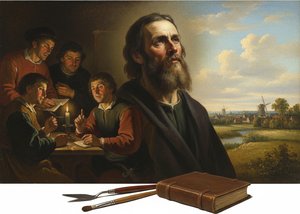
Hendrick Terbrugghen: Caravaggism, Spirituality & the Dutch Golden Age Painter's Evolving Style
Explore the captivating world of Hendrick Terbrugghen, a leading Dutch Golden Age painter influenced by Caravaggio. Discover his dramatic use of light, spiritual depth & lasting legacy. Learn more at OriginalUniqueArt.

Golden Age Reflections: Dutch Baroque Painting & Cultural Innovation
Explore the Dutch Golden Age of painting! Discover key artists like Vermeer & ter Borch, their innovative techniques, and the rich cultural context behind these Baroque masterpieces. Learn about collecting & appreciating this iconic art period.

Mastering Light & Shadow: A Journey Through the Dutch Golden Age's Luminous Legacy
Embark on a cultural journey through the Dutch Golden Age. Explore the masterful interplay of light and shadow in 17th-century masterpieces, from Rembrandt to Vermeer, and discover how this era of profound realism continues to inspire fine art collectors today.

Golden Light & Dutch Skies: The Timeless Magic of Dutch Golden Age Landscapes
Discover the breathtaking beauty of Dutch Golden Age landscapes. Explore the mastery of light, chiaroscuro, and 17th-century realism through an expert art history lens, celebrating the enduring legacy of the Dutch Masters for discerning collectors and art lovers.
